Aerial Silks
Also known as: Tissu, Aerial tissu, Aerial fabric, Aerial ribbons
- Origin
- France / contemporary circus
- Era
- 1990–Present
- Rhythm
- Set by chosen music
- Tempo
- Varies
- Character
- Lyrical, dramatic, strong
History & Cultural Context
Aerial silks (tissu) is performed on two lengths of fabric suspended from a high rigging point. The performer climbs, wraps the fabric around the body to create poses and 'locks,' and executes dramatic 'drops' that unwind the silk in a controlled fall. It rose to prominence in the 1990s within contemporary circus and is among the most popular studio aerial disciplines. Choreography weaves continuous, music-led movement with apparatus skill, demanding significant grip, core, and upper-body strength alongside dance line.
Cultural Significance
A signature contemporary-circus and studio aerial discipline; widely seen in shows, events, and music videos.
Characteristic Movement & Technique
Climbs, wraps, poses, inversions, and controlled drops on suspended fabric.
Partnering Dynamics
Usually solo; doubles silks exists.
Competitive Context
Showcased in circus and aerial competitions/showcases rather than a single governing sport.
Regional Variations
Global studio practice; rooted in European contemporary circus.
Common Misconceptions
The dramatic 'drops' are pre-wrapped, controlled releases of the fabric—not free falls or improvised danger.
Aerial Silks — In Depth
Aerial silks (also called aerial tissu, aerial ribbons, or aerial fabric) is a form of performance in which an acrobat climbs, wraps, suspends, and drops on two lengths of specialized fabric hung from a single high point. The apparatus is a low-stretch or moderate-stretch fabric — the amount of give changes how climbs, "locks," and drops behave — and the artist builds sequences from three core skill families: climbs, poses/wraps, and drops (in which a pre-set wrap is released so the body falls a controlled distance before the fabric catches it). Because there is no net, silks demands significant grip strength, core control, and precise memory of wrap sequences.
The discipline grew out of the modern and contemporary circus of the late 20th century and was propelled into mainstream visibility by companies such as Cirque du Soleil, becoming a staple of circus schools, galas, and stage shows worldwide. It also crossed into popular music: violinist-dancer Lindsey Stirling has incorporated aerial silks into her live performances, combining the apparatus with choreographed violin playing.
Dance Lineage
Aerial Silks Music & Tempo
Drawn from 31 Aerial Silks tracks in the LODance music library.
Example tracks at practice tempo
- 16-Papillon — Cirque du Soleil160 BPM
- Master of Tides — Lindsey Stirling129 BPM
- Anti Gravity — Lindsey Stirling129 BPM
- Minimal Beat — Lindsey Stirling129 BPM
- Another One Bites the Dust — Queen110 BPM
- Aurora — Lindsey Stirling123 BPM
Who governs Aerial Silks
Federations, councils and examining bodies with a recorded role in this style. No single organisation can tell you this — each one knows only itself.
Legends of Aerial Silks
Dancers, choreographers and teachers whose work shaped this style.
Aerial Silks on screen
Films and television where Aerial Silks appears, with the sequences worth watching for.
 This site uses TMDB and the TMDB APIs but is not endorsed, certified, or otherwise approved by TMDB.
Aerial Silks in performance
4 staged works in the Limelight catalogue contain Aerial Silks, 1998–2008 — 3 of them in a named act or number.
- La Nouba1998Cirque · defining styleAerial ballet in silk
Aerial ballet in silk — A solo male performer holds sustained aerial poses while four female artists wrap themselves in silk and unwrap through spinning, flipping descents, explicitly called a 'sky high ballet.' Source: "four female artists wrapped themselv…
- Zumanity2003CirqueTissus
Tissus (original version) — An aerial fabric duet in which two performers meet and entwine mid-flight on suspended fabric. Source: "their two worlds entwine mid-flight in mesmerizing aerial dance"
- Zed2008CirqueSolo tissue
Solo tissue act — Performer wraps aerial silk fabric around her body, then executes flips and twists to unwrap herself in mid-air, a full aerial-silks sequence. Source: "the artist wrapped the silk around her body, she flipped and twisted to unwrap herself"
- Koozå2007Cirque
Aerial Silks, listed among retired acts — Suspended fabric work involving climbs, wraps and controlled falls; retired from the current touring programme. Source: "Solo Trapeze Aerial Straps Aerial Silks Icarian Games (Réserve)"
Every claim above is quoted from a cited source and names where in the work the style appears. Claims we could not place or could not quote are held back from this list and shown on the work’s own page instead. Browse the full performance catalogue →
Sources & Further Reading
Cultural & Historical Context
Aerial Silks emerged from France / contemporary circus during the 1990s—present day. Understanding the cultural roots, musical traditions, and social circumstances of this era enriches appreciation for the dance's characteristics and significance.
Primary Source Documents
The Library of Dance contains public-domain primary sources for dance history. Copyrighted modern syllabi are indexed with purchase links to their respective copyright owners. Search by dance name or codifier to discover primary source documents.
Last reviewed: September 2026 — This dance profile synthesizes historical research, cultural documentation, and contemporary practice knowledge to provide authoritative context.
Related Dances
More in Aerial Dance
Aerial Lyra (Hoop)
Dance and poses performed on and around a suspended steel hoop, spinning or static, blending circus skill with choreographed movement.
Aerial Hammock (Sling)
A loop of fabric (both ends rigged together) forming a hammock/sling that cradles the body for poses, rolls, and gentler aerial dance.
Corde Lisse (Aerial Rope)
An aerial circus discipline performed on a single vertically hung soft rope, combining climbs, wraps, held shapes and controlled drops without a safety line.
Aerial Straps
An aerial discipline using two suspended fabric or webbing straps looped around the wrists, built on gymnastic strength holds, swings and high-speed rotational sequences.
Aerial Dance in art
Browse the gallery →Works from the wider Aerial Dance tradition — we have not yet identified enough that depict Aerial Silks specifically.
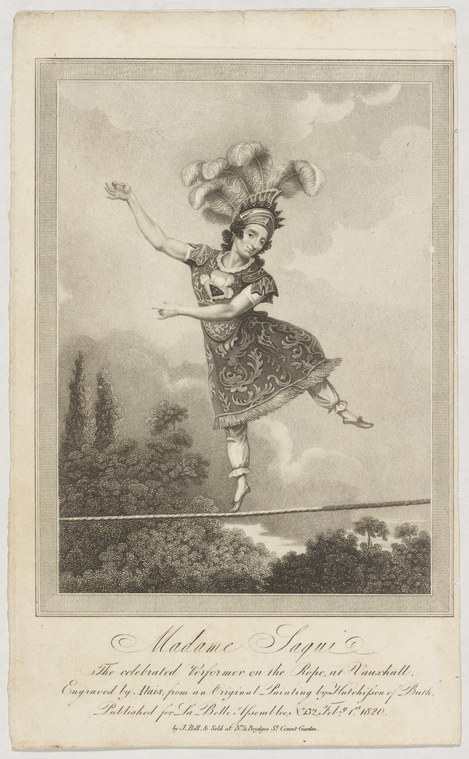
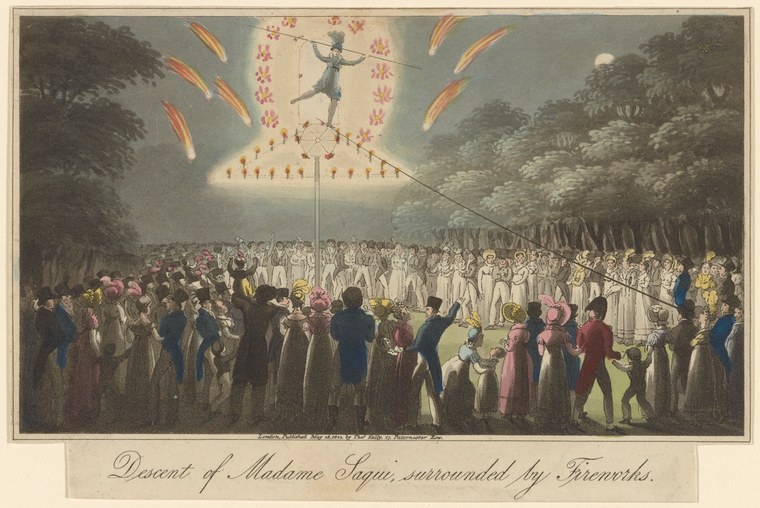
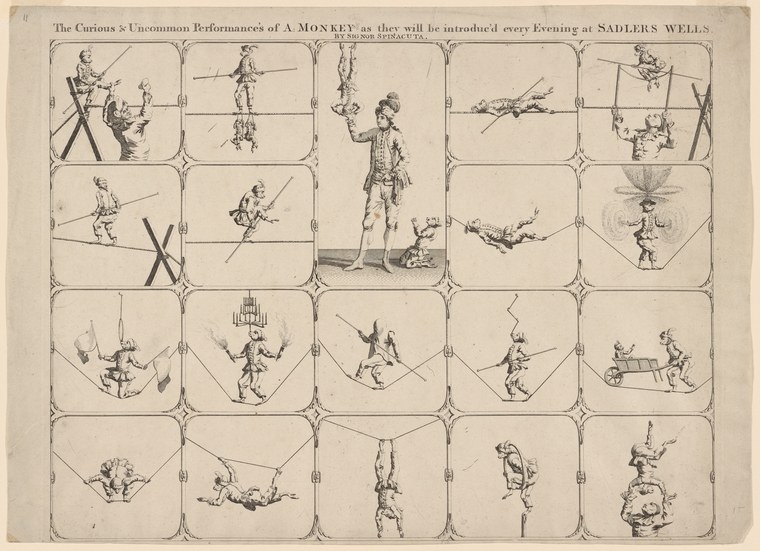
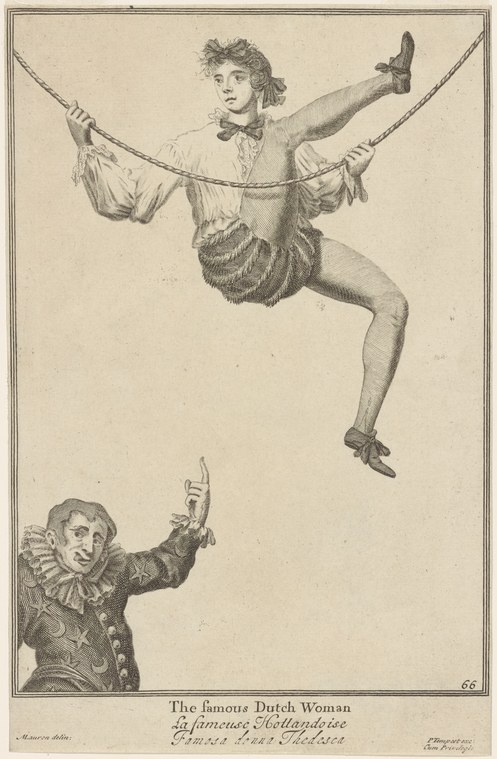
The famous Dutch woman
Unknown artist
Public Domain
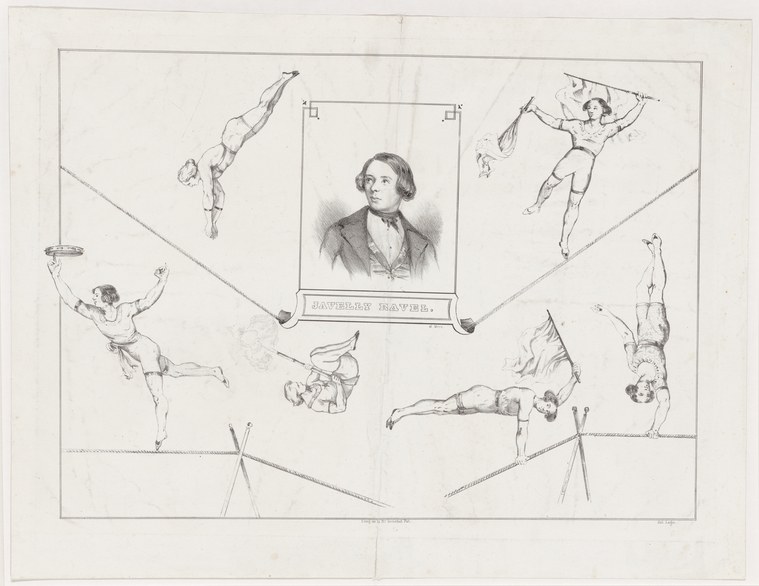
Rope dancing
Unknown artist
Public Domain
Festivities and spectacles
Unknown artist
Public Domain
Continue Exploring
Lineage of Dance
500 years of dance evolution
Champions of Dance
Winners of marquee national & world titles
Language of Dance
161 dance terms & translations
Listening of Dance
Tempo, timing & musicality tools
Gallery of Dance
5,700+ artworks from museum collections
Attire of Dance
Evolution of dance dress across eras
Keep the thread going
Dance history, technique, and the occasional rabbit hole — in your inbox. Thoughtful, infrequent, unsubscribe anytime.
Free. No spam. One click to leave.