Kara-Jorga (Kara Jorgo)
History & Cultural Context
Kara-Jorga (Kazakh: Qara jorga, "black pacer") is a Kazakh folk dance depicting a horseman riding an ambling pacer horse. Its characteristic movements — rhythmic shoulder sways, springy bounces, and articulated joint work — imitate the pacer's distinctive gait. Kazakh dance historians Dauren Abirov and Aubakir Ismailov (Kazakh Folk Dances, 1961) documented the dance under several names, including Zhorgalau ("riding a pacer") and Zhorgany elikteu ("imitating a pacer"), and record a staged performance in Petropavlovsk in 1928; a version choreographed by Ali Ibragimov appeared in the 1934 play Ayman-Sholpan.\n\nThe dance's deeper origins are debated; see Sources. Researchers at the Kazakh National Academy of Choreography connect the form performed today as Kara-Jorga to the older Buyn bi ("dance of the joints"), an improvisational practice linked to bakhsy (shamanic) healing ritual, while the name Kara-Jorga historically denoted a horseman's dance.\n\nAfter near-disappearance during the Soviet era, the dance was preserved among Kazakh communities in China and revived in Kazakhstan after independence, gaining mass popularity from the 2000s onward — notably through Arystan Shadetuly, a Kazakh repatriate from China. It is now common at weddings, festivals, and flash mobs in Kazakhstan, and a closely related dance, Kara Jorgo, is performed in Kyrgyzstan.
Kara-Jorga (Kara Jorgo) — In Depth
Origin & history: Kara Jorga (Kazakh: Qara Zhorga / Кара жорга) is a traditional Kazakh folk dance. Its name joins "kara" (black — also connoting simple, strong or resilient) and "jorga/zhorga" (an ambling, pacing horse), so it is often rendered "black pacer"; an alternative name, "buwin biyi," means "dance of the joints." The dance depicts a horse moving at its characteristic ambling gait, reflecting the deep place of the horse in Kazakh nomadic life, with roots linked to pre-Islamic Tengrian and shamanic ritual.
Cultural & social context: The tradition was nearly destroyed during the Soviet period by collectivization, urbanization and the Kazakh famine of 1930–1933. It was preserved among Kazakhs who migrated to China (Xinjiang) in the early 20th century — where National Geographic documented it in the 1950s — and among the diaspora in Mongolia and Turkey, before being reintroduced to Kazakhstan by repatriates such as the dancer Arystan Shadetuly. Since independence in 1991 it has become a celebrated national symbol.
Character & feel: Kara Jorga is upbeat, joyful and playful, evoking the rhythm and spirit of a horse and rider.
Technique & movement: The dance emphasizes rhythmic movements of the shoulders and hand/arm joints and a stepping motion echoing a horse's amble; it is performed solo or in groups.
Music & rhythm: It is set to a lively instrumental melody, characteristically played on the dombyra, in a brisk duple meter.
Notable events: The dance has featured in large mass performances during the revival — a record gathering of 399 dancers was held in Astana on 16 December 2011 — and Kazakhstan advanced it for UNESCO intangible-heritage recognition in 2013.
Kara-Jorga (Kara Jorgo) Playlists
Curated collections on the LODance YouTube channel — performances to watch, lessons to learn from, and the right music to practice with. Tap a collection to play.
▶ Practice Music · Open on YouTube →
Kara-Jorga (Kara Jorgo) Music & Tempo
Drawn from 20 Kara-Jorga (Kara Jorgo) tracks in the LODance music library.
Example tracks at practice tempo
- Kara Jorga — Dauren Nurkoja120 BPM
- Қара жорға — Қажымұрат Шешенқұлұлы
- Қара жорға — Дос тобы
- Кара жорго — Асель Касмакунова & Эсенбаев Кубанычбек
- Қара жорға — Алатау серiлерi
- KARA ZHORGA — Toktaganov Aitzhan
What to Wear
Attire guidance for Kara-Jorga (Kara Jorgo) and other Global Central Asian Nomadic & Folk dances. Each card below is sized to the moment — class, practice, social, or competition — because the wardrobe shifts as the stakes do.
Reading the cards
In Class
Comfortable clothing allowing wide arm and leg movements. Long skirts or wide pants for women's traditions.
Social Dancing
Traditional dress of the specific cultural tradition for celebrations and performances.
Competition
Full traditional costume specific to the dance's origin culture — often featuring embroidered fabrics, headdresses, and culturally significant jewelry.
Shoes
Soft leather boots or flat shoes traditional to the culture. Some forms use heeled character boots. Modern practice: flat dance shoes or character shoes.
In Practice
Long practice skirts or wide pants are useful early — the dances assume the silhouette and the foot has to learn how the fabric moves.
Price Range
- Budget: Long skirt or wide pants from existing wardrobe; flat dance shoes $30–80.
- Mid: Soft leather character boots $150–350; traditional embroidered pieces $200–700.
- Premium: Hand-embroidered ceremonial costumes $1,500–6,000+.
Quick Tips
- •Suede-soled shoes allow controlled sliding and pivoting — essential for most partner dances.
- •Avoid rubber soles on dance floors; they grip too much and can cause knee injuries.
- •Bring a separate pair of clean shoes for the dance floor to keep it in good condition.
Sources & Further Reading
Cultural & Historical Context
Kara-Jorga (Kara Jorgo) emerged from Kazakhstan / Kyrgyzstan during 1000 BCE—present day. Understanding the cultural roots, musical traditions, and social circumstances of this era enriches appreciation for the dance's characteristics and significance.
Primary Source Documents
The Library of Dance contains public-domain primary sources for dance history. Copyrighted modern syllabi are indexed with purchase links to their respective copyright owners. Search by dance name or codifier to discover primary source documents.
Last reviewed: October 2026 — This dance profile synthesizes historical research, cultural documentation, and contemporary practice knowledge to provide authoritative context.
More in Global Central Asian Nomadic & Folk
Kiyiz
Dance depicting felt production process; starts with light running steps and includes stamping movements.
Lazgi
Folk dance of the Khorazm region of Uzbekistan, danced on half-bent legs with trembling shoulder and arm movements and ringing bells; inscribed by UNESCO in 2019 on the Representative List of the Intangible Cultural Heritage of Humanity.
Tajik Eagle Dance
Male dance mimicking eagle movements in majestic flight; demonstrates ancient Tajik culture.
Uzbek Classical Dances
High art classical dances characterized by complex hand gestures and vivid facial expressions; three regional schools.
Global Central Asian Nomadic & Folk in art
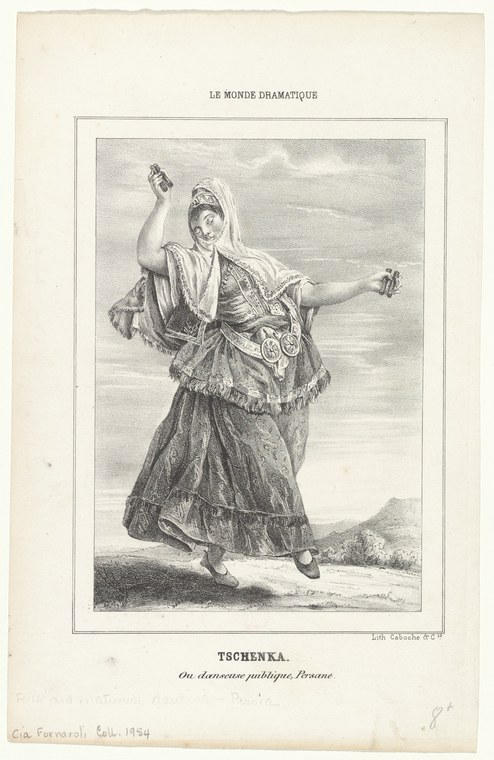
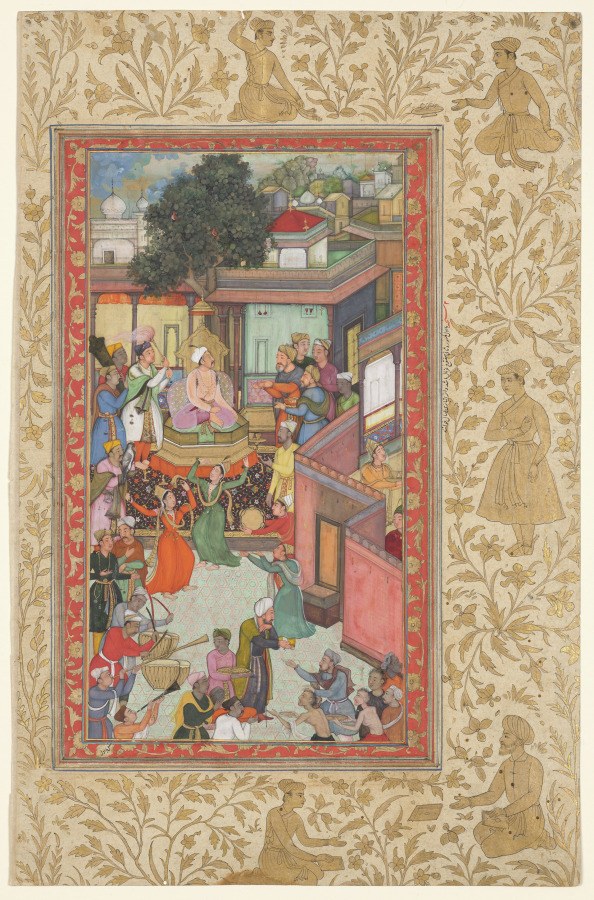
Browse the gallery →Works from the wider Global Central Asian Nomadic & Folk tradition — we have not yet identified enough that depict Kara-Jorga (Kara Jorgo) specifically.

Continue Exploring
Lineage of Dance
500 years of dance evolution
Champions of Dance
Winners of marquee national & world titles
Language of Dance
161 dance terms & translations
Listening of Dance
Tempo, timing & musicality tools
Gallery of Dance
5,700+ artworks from museum collections
Attire of Dance
Evolution of dance dress across eras
Keep the thread going
Dance history, technique, and the occasional rabbit hole — in your inbox. Thoughtful, infrequent, unsubscribe anytime.
Free. No spam. One click to leave.