49 works in this view — arrow keys or swipe to move between them.
Dance in Art · 1855
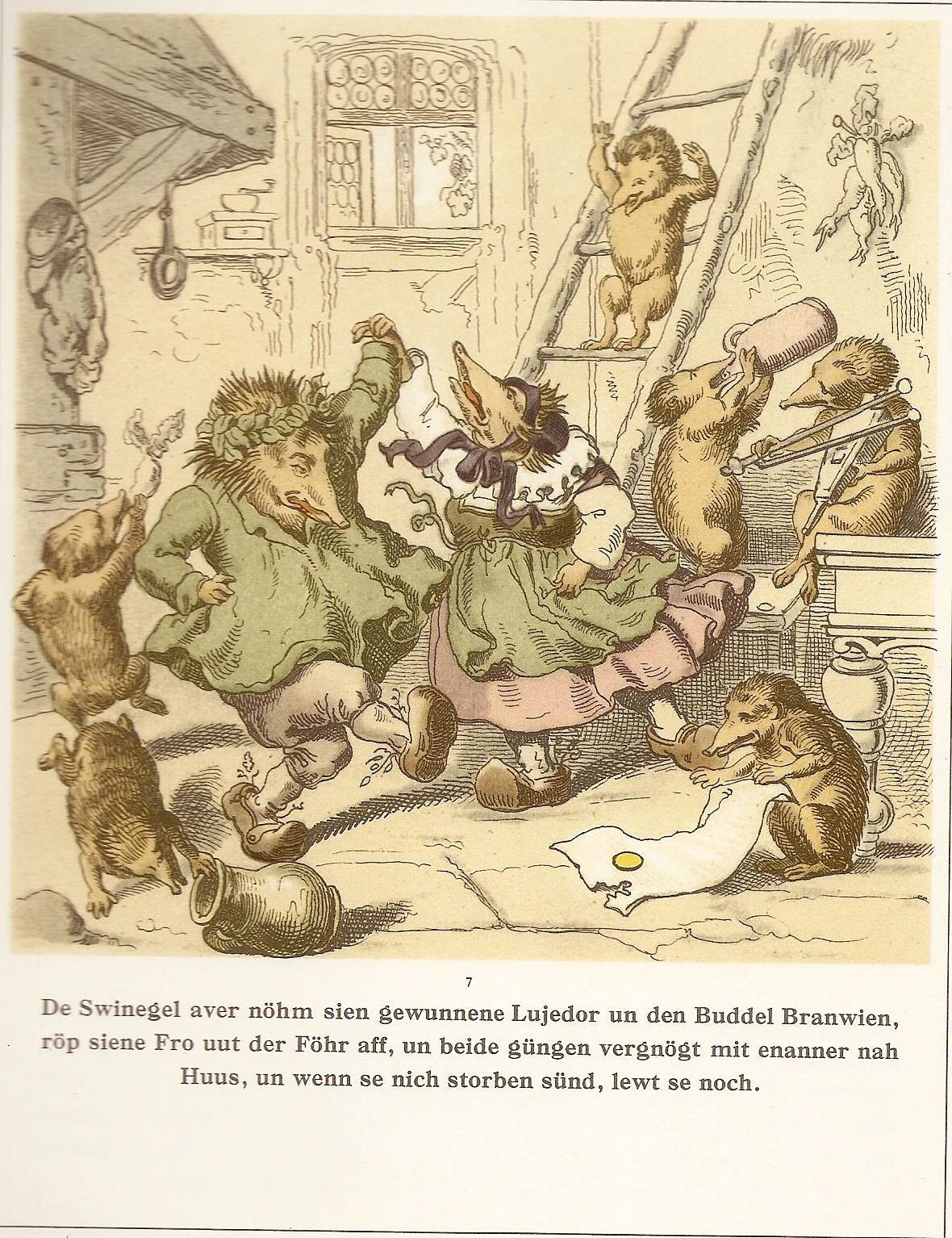
Swinegel4
Gustav Konrad Sus
- Medium:
- Oil Painting
- Era:
- Mid 1800s (Polka Era)
- Source:
- Wikimedia Commons
- Rights:
- Public domain — free to use, share and adapt.
- Recorded as:
- Public Domain
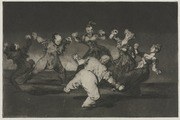
For dance historians, this work is valuable not as a record of actual dance practice but as evidence of how movement, gesture, and bodily chaos were represented in popular visual culture. The exaggerated poses and tumultuous composition reveal Renaissance attitudes toward the body, comedy, and the expression of disorder or festivity. The engraving also documents the intersection of folk narrative, print culture, and visual satire in a period before systematic documentation of vernacular dance.
What you are looking at
A crowded domestic interior in which anthropomorphic animals—a swineherd, a hare, and various other creatures—enact a tumultuous scene around a central figure. The composition is dense and chaotic, with multiple figures gesturing animatedly. A sow or pig in the center wears clothing and appears to be the focus of the action, surrounded by other animals in human dress. To the left, a figure hangs from what appears to be cloth or a rope; above, a monkey clings to timber supports. The setting is a modest cottage interior with a window visible in the background showing vine leaves or plants, and domestic objects—a pot, a jug—scattered on the floor. The engraving employs fine hatching and cross-hatching to create depth and shadow, typical of 16th-century German printmaking.
The dancing
The central sow stands on hind legs, dressed in human garments, with arms raised in an animated gesture of distress or exertion. Surrounding figures—also in human clothing—adopt a variety of postures: some reach toward the sow, others gesture with hands aloft, and at least one figure hangs suspended. The limbs are elongated and exaggerated in the manner of satirical Northern Renaissance print culture. The arrangement suggests violent or agitated movement rather than organized choreography, with overlapping bodies and limbs creating visual chaos.
The dance depicted
This is not a depiction of formal dance but rather a satirical or moralizing narrative scene, likely illustrating a fable or folk tale—the accompanying German text references a race between a hedgehog (Swinegel) and a hare. The animals' animated poses and tumultuous arrangement evoke boisterous rural festivity, carnival chaos, or folk comedy rather than any structured dance form. The work belongs to the tradition of Northern Renaissance comic and didactic prints in which animal characters enact human follies and antics. No recognizable dance style or hold is present; instead, the image trades in gestural exaggeration and physical comedy.
How it was made
This is an engraving on paper, identified from the fine parallel and cross-hatching lines that model form and shadow throughout the composition. The technique allowed for precise linear detail and wide circulation through printing. The style and execution are consistent with mid-16th-century German printmaking, likely from a series or broadsheet. The use of engraving suggests a work intended for a relatively literate, urban audience capable of appreciating the narrative and satirical content accompanying the image.
About this work
This engraving depicts a narrative scene from a fable or folk tale involving anthropomorphic animals in a moment of chaos or festive disorder. The sow, hare, and other creatures are dressed as humans and arranged in a composition that emphasizes animated, exaggerated gesture rather than dance in any formal sense. The work is an artifact of Northern Renaissance satirical print culture, where animal characters and rural settings served as vehicles for moral instruction, social commentary, and entertainment. It survives as evidence of how pre-modern visual culture deployed the human body in comic and didactic contexts, often drawing on folk narrative traditions that remain difficult to fully reconstruct.
How to look at it
Attend to the overlapping, interlocking limbs and the variety of arm gestures—none form a coherent dance pattern, but rather convey excitement, struggle, and emotional arousal. The artist has chosen a moment of maximum chaos and bodily expressiveness, with figures reaching, hanging, and gesticulating in all directions. The hanging figure on the left and the monkey climbing the timber above draw the eye upward, while the central sow anchors the composition. The fine hatching throughout creates a sense of movement and agitation through technique as well as composition.
The artist
The catalogue identifies the artist as Gustav Konrad Sus, though verification of this attribution and biographical details about Sus are not available in standard print references. The style is consistent with mid-16th-century German or Dutch satirical printmaking, a tradition that included works by figures such as Sebald Beham and Hanns Burgkmair. If the attribution is correct, Sus was part of a flourishing culture of engravers producing narrative and satirical prints for a mercantile and educated urban audience.
The period
This engraving dates to a period of vigorous development in northern European print culture, when engraving and woodcut allowed wide dissemination of satirical, moral, and narrative imagery. The mid-16th century saw intense interest in fables, folk tales, and animal allegory as vehicles for both entertainment and instruction. In the visual arts, exaggerated gesture and distorted anatomy were deployed for comic and didactic effect. The dress and domestic setting place the scene in a recognizably contemporary context, allowing viewers to see themselves and their own follies reflected in animal antics.
Where it lives
The work is recorded as sourced from Wikimedia Commons, with no collection or holding institution specified in the catalogue record. It survives as a print, likely from an original plate, and its current location is unknown. The image appears to be a digital reproduction of an engraving held in a public or institutional archive.
Questions about this work
Is this a depiction of actual dance practice?
No. This is a narrative or satirical scene from a fable, likely the Hare and the Hedgehog tale referenced in the text. The animated poses express emotional excitement and physical chaos rather than any recognizable dance form. The artist used exaggerated gesture and tumultuous composition to create comic and didactic effect, following Northern Renaissance conventions for satirical prints.
What is the title text saying?
The German caption translates to: 'The swineherd took his won lover the hare and the Buddy Brännwien, red his wife out of the chair away, and both creatures enjoyed themselves with each other toward the house, and if they aren't dead, they still live.' The text is fragmentary and may reference a folk tale or comic narrative about a swineherd, a hare, and figures named Brännwien. The passage is somewhat obscure in modern German and may contain archaic or dialectal language.
Who was Gustav Konrad Sus?
The attribution in the catalogue identifies the artist as Gustav Konrad Sus, active in the mid-16th century. However, biographical information is limited in standard art-historical references. The style is consistent with German or Dutch satirical printmaking of the period. Verification of the attribution and further details about Sus's life and practice would require consultation of specialized print catalogues and archives.
More dance artwork