49 works in this view — arrow keys or swipe to move between them.
Dance in Art · 1855
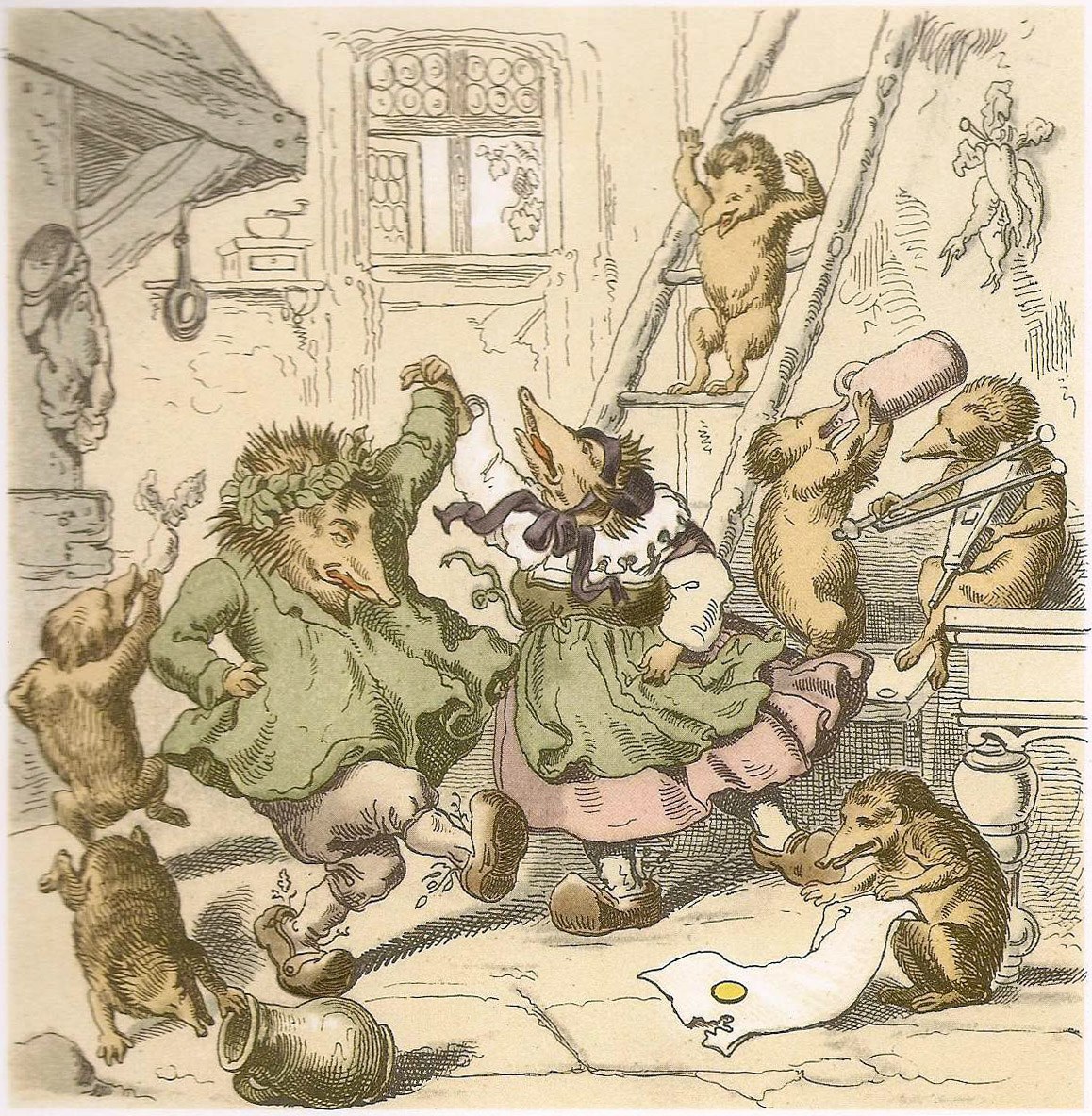
Swinegel4 (cropped)
Gustav Konrad Sus
- Medium:
- Oil Painting
- Era:
- Mid 1800s (Polka Era)
- Source:
- Wikimedia Commons
- Rights:
- Public domain — free to use, share and adapt.
- Recorded as:
- Public Domain
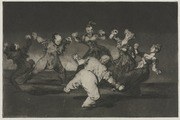
This work documents folk carnival and masked performance traditions that sit outside formal dance history but are foundational to European popular culture and movement practice. It shows how masks, animal characters, and exaggerated physicality were used in communal celebration, and captures a moment of social leveling and anarchic play that carnival enabled.
What you are looking at
This is a crowded interior scene rendered in hand-colored engraving, depicting what appears to be a folk or domestic gathering, possibly a dance or celebration. The room is humble—visible through a window in the background are domestic furnishings and a calendar or almanac on the wall. The composition is densely populated with figures rendered in earthy greens, pinks, and browns. In the center, two figures in green dresses appear to be in motion or engaged with each other. Surrounding them are numerous animal-headed or masked figures—bears, badgers, and other creatures—in various poses: some climbing wooden poles or beams that frame the scene, others standing or crouching, several holding implements or engaged in playful gestures. The overall effect is chaotic and carnivalesque, with bodies overlapping and interweaving across the picture plane. The setting appears to be indoors, with wooden structural elements prominent.
The dancing
The two central human figures in green are positioned close together in what might be a dance contact or embrace, though their exact hold is obscured by the density of the surrounding animal-masked figures. Their bodies lean toward each other with visible weight shift. The masked figures show varied postures—some in animated, contorted positions suggesting acrobatic or exaggerated movement; others climbing or grasping at wooden poles with both hands; several in quadrupedal or bent-knee stances. The overall gestural language is playful and anarchic rather than formally structured, suggesting folk carnival rather than courtly dance.
The dance depicted
This appears to depict a German or Northern European masked carnival or folk celebration, most likely a Fastnacht (carnival) scene, based on the animal masks, the domestic setting, and the overall anarchic energy. The title reference to 'Swinegel' (hedgehog) and a race ('Wettloopen'—racing or running) suggests a narrative element tied to a folk tale or carnival performance. The movement vocabulary—climbing, grasping, bent-knee postures—suggests mummery or animal-masked play rather than structured dance steps. This is folk revelry performed by and for common people, possibly in connection with seasonal celebration or storytelling.
How it was made
This is a hand-colored engraving, identifiable by the characteristic fine linear hatching, crisp line-work, and the restrained application of watercolor or gouache for tinting. The technique allowed for precise detail in the figural composition while the color wash adds visual liveliness. The method suggests this was a reproduction or print for circulation, typical of 19th-century popular illustration or satirical prints, meaning it was designed for a broad audience rather than as a unique artwork.
About this work
This is a 19th-century hand-colored engraving depicting a Northern European carnival or folk celebration scene, likely German, built around animal-masked participants in what may be a competitive or narrative-driven game or dance. The work captures the anarchic, playful energy of popular carnival performance—the kind of folk revelry that existed outside courtly structures and formal dance training. It is valuable documentation of how masked performance, physical play, and collective celebration functioned in domestic and popular settings, distinct from both theatrical and ballroom contexts.
The image belongs in a dance history collection as evidence of folk carnival practices and the use of animal masking and exaggerated gesture in ritualized play. While the specific dance steps are not the focus, the work records embodied movement practices and social choreography—how groups of people organized themselves in revelry.
How to look at it
Attend to the layering of human and animal-masked figures and how the artist used overlapping and the wooden structural elements to create a sense of cramped, energetic space. Notice how the two central green-dressed figures are positioned amid rather than dominating the scene—they are participants in collective revelry rather than virtuoso performers. The hand-colored technique, with its restrained palette and visible hatching, creates a sense of lively but popular (rather than elite) entertainment. Look at the varied postures of the masked figures: climbing, bending, crouching—this is not choreographed movement but exuberant, rule-breaking physicality.
The artist
Gustav Konrad Sus (active mid-19th century) was a German artist whose work included satirical and genre scenes, often drawing on folk subjects and popular culture. This work is characteristic of his practice of illustrating folk tales, carnival scenes, and scenes of popular life, rendered in the accessible medium of hand-colored engraving.
The period
The mid-19th century saw growing romantic and antiquarian interest in folk traditions, carnival practices, and Germanic folk culture, particularly in German-speaking regions. This period coincided with both the documentation and idealization of folk culture as part of nationalist sentiment, and with the height of popular lithographic and engraving production for mass consumption. Carnival scenes were a standard genre of popular illustration, capturing both the chaos and the social significance of these seasonal inversions.
Where it lives
The work is recorded as sourced from Wikimedia Commons, with no institutional holding currently recorded. It is a mass-produced print, typical of 19th-century popular circulation, and may exist in multiple copies in various collections.
Dance in this work
Questions about this work
What are the animal-headed figures doing?
They appear to be masked carnival performers or mummers, part of a folk celebration or game. The masks allow for role-play and the breaking of social hierarchies—a central feature of European carnival traditions. Their varied postures—climbing, grasping, crouching—suggest physical play and exaggerated movement rather than formal steps.
Is this depicting an actual dance?
Not a codified or formal dance, but rather folk carnival and masked performance—a form of collective, embodied play with its own physical vocabulary. The movement is playful, anarchic, and rule-breaking rather than structured, which is precisely the point of carnival.
Why are there so many figures crowded into one space?
The crowding is intentional: it conveys the chaos, energy, and collective nature of carnival. Everyone participates; there is no separation between performers and spectators. The dense composition captures the sensory and social experience of popular celebration.
What does the title tell us?
The reference to a 'Swinegel' (hedgehog) and 'Wettloopen' (racing or running) suggests this may be connected to a folk tale or carnival game with a narrative element, possibly an adaptation of Aesop or a German folk story. This was common in carnival performance.
More dance artwork