49 works in this view — arrow keys or swipe to move between them.
Dance in Art · 1912
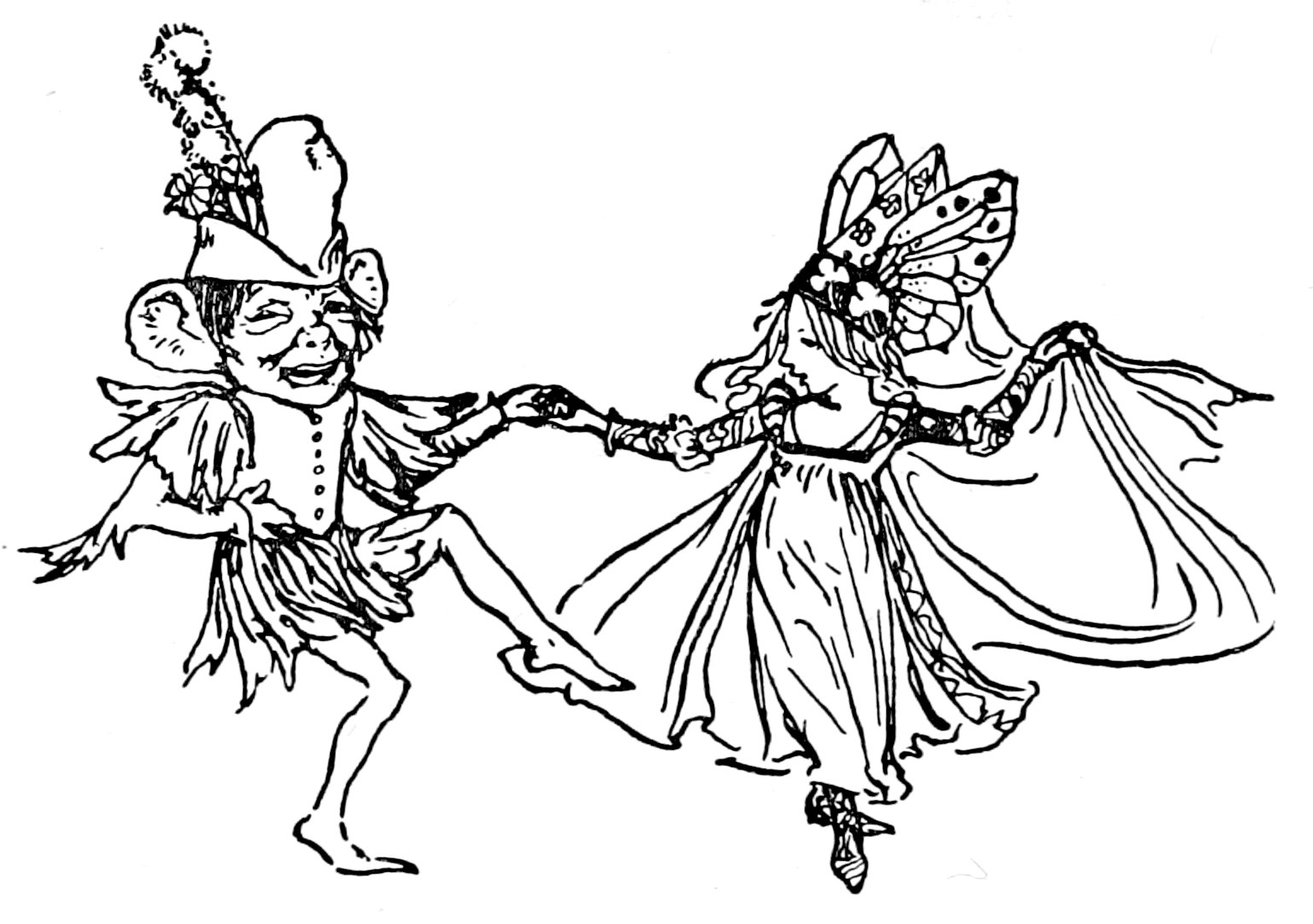
Illustration at page 232 in Grimm's Household Tales (Edwardes, Bell)
Robert Anning Bell
- Medium:
- Illustration
- Era:
- 1900-1920 (Ragtime/Early Jazz)
- Source:
- Wikimedia Commons
- Rights:
- Public domain — free to use, share and adapt.
- Recorded as:
- Public Domain
For dancers and choreographers interested in how movement vocabulary is used to signal transformation, otherworldliness, and non-human character, this illustration offers an early 20th-century example of how an illustrator conveys enchantment and supernatural agency through posture and gesture alone. The work is also significant as evidence of how thoroughly dance and movement permeated visual storytelling for children and general readers during this period, even when no actual dance form is being performed.
What you are looking at
Two winged fairy-tale figures meet and clasp hands in a moment of sprightly encounter. The figure on the left, smaller and more diminutive, wears a pointed cap topped with a flowering plant or feathered plume, with gossamer wings spread wide and a garment of layered, feathered or leaf-like panels falling from the waist. The figure on the right is taller and more elaborately dressed: crowned with an ornate butterfly or moth-wing headdress of geometric patterning, adorned with spots and linear markings, and wearing a long gown of voluminous drapery that sweeps across the composition. Both figures are barefoot. The setting is undefined—a white ground with no landscape or interior detail—which focuses all attention on the two characters and their gesture of greeting or dance. The line work is confident and linear, with hatching used sparingly to suggest volume and shadow.
The dancing
Both figures stand on straightened legs with weight forward, leaning slightly toward each other in a posture of active engagement rather than stillness. Their joined hands form the compositional center. The smaller figure's upper body twists slightly, creating a sense of liveliness and forward momentum. The larger figure's pose is more frontal and stable, anchoring the composition. Neither figure displays the rigid balletic frame of classical ballet; instead, the postures suggest a lighter, more naturalistic movement vocabulary appropriate to fairy-tale fantasy. The barefoot stance and the ease of the gesture suggest freedom of movement rather than technical formality.
The dance depicted
This is an illustration of a fairy-tale encounter rather than a depiction of a recognizable historical or social dance form. The subject, per the catalogue record, is from "Cat-skin," a Grimm tale in which transformation, magic, and supernatural beings are central. The dancing here, if present at all, is gestural and symbolic rather than technical—a moment of recognition, greeting, or enchantment between two otherworldly creatures. The image belongs to the long tradition of illustrating folk and fairy narrative through movement and gesture, but it does not document any specific dance practice or technique. The artist has chosen a moment of connection and forward motion rather than a formalized dance step.
How it was made
This is a pen-and-ink line drawing, rendered in the graphic style typical of early 20th-century book illustration. The medium is economical: lines define form with little modeling or tonal variation, and white paper provides the background. This technique was ideal for book reproduction via wood engraving or photographic process, allowing sharp, clear reproduction at small scale and multiple impressions. The linear, almost calligraphic quality of the line work—particularly in the rendering of fabric folds and the delicate wing structures—suggests familiarity with both naturalistic observation and decorative design. The technique demands decisiveness: lines cannot be easily corrected, which accounts for the confident, economical mark-making throughout.
About this work
This is an illustration from Robert Anning Bell's 1912 edition of Grimm's Household Tales, depicting a moment from the tale "Cat-skin." Two supernatural or fairy-tale figures meet and clasp hands in a gesture of greeting or enchantment, rendered in fine pen-and-ink line work characteristic of Edwardian book illustration. The work sits within the broader tradition of narrative illustration for fairy tales and fantasy literature, a domain in which movement, gesture, and bodily display were as important to the storytelling as the written text. Bell's figure style—with its attention to costume, wingforms, and the energy of the pose—reflects the heightened interest in fairy-tale imagery, decorative design, and theatrical costume that characterized the 1900s–1910s in Britain. The image belongs to the history of dance in art not because it documents a real dance form, but because gesture, pose, and the vocabulary of the body in motion are essential to how the narrative and the character interaction are conveyed.
How to look at it
Attend to the hands: the clasping of hands is the narrative and emotional center of the composition, the moment of meeting and acknowledgment. Notice how both figures lean slightly inward, creating a sense of shared attention and mutual recognition despite their very different scales and forms. The wings and the elaborate headdress on the larger figure draw the eye to the head and shoulders, but the gesture is led by the hands and the forward tilt of the torso. The barefoot stance and the informal, unrigid posture distinguish this from balletic representation; the artist is evoking a more naturalistic, almost intimate moment of encounter between magical beings rather than staging a formal spectacle.
The artist
Robert Anning Bell (1863–1933) was a prominent British illustrator, designer, and painter active in the Arts and Crafts and Art Nouveau movements. He was trained at the Royal Academy Schools and became known for decorative and narrative illustration, book design, and theatrical costume and set design. Bell's work for Grimm's Tales reflects the late 19th and early 20th-century taste for fairy-tale illustration, which often drew on both naturalistic figure drawing and ornamental, stylized design. His linear, elegant style was well-suited to book production and influenced the visual culture of children's literature and narrative art during the Edwardian period.
The period
The 1910s saw a global revival of interest in fairy tales, folklore, and fantasy as subjects for high art and commercial illustration. In Britain, the Art Nouveau movement and the Arts and Crafts philosophy had elevated book design and illustration to the status of fine art. Simultaneously, the early 20th-century dance world was undergoing profound change: Isadora Duncan's revolutionary barefoot technique, the Ballets Russes' exotic and often non-Western-inspired choreography, and the influence of theatrical modernism all encouraged artists to depict bodies in motion in new ways. Fairy-tale illustration of this period often borrowed visual vocabularies from contemporary dance—the flowing drapery, the expressive arm gestures, the sense of weightlessness—even when the narrative itself made no reference to dance. Bell's barefoot figures and their fluid, naturalistic postures reflect this broader cultural convergence.
Where it lives
This illustration appears in the 1912 Edwardes and Bell edition of Grimm's Household Tales, a well-known English-language collection of the tales. The source record notes Wikimedia Commons as the source, indicating the work is likely now in the public domain or held in a major research collection with open-access digitization. The work is a page illustration, integral to the book's design and narrative function.
Questions about this work
Is this a real dance or a made-up fairy-tale gesture?
It is a gesture and pose meant to convey encounter and enchantment within a fairy-tale narrative. While the posture and movement vocabulary reflect early 20th-century ideas about graceful, expressive movement—influenced by modern dance and theatrical practice—this is not a depiction of any historical or social dance form. The artist used the language of movement to tell the story.
Why are the figures barefoot?
Barefoot figures in early 20th-century illustration often signaled naturalness, freedom, otherworldliness, or non-human status. The barefoot stance also reflects the influence of Isadora Duncan's modern dance aesthetic, which rejected the constraints of ballet pointe shoes and suggested a more authentic, unencumbered movement. In a fairy-tale context, bare feet also mark these beings as magical or supernatural rather than ordinary humans bound by social convention.
Who is Robert Anning Bell?
Robert Anning Bell (1863–1933) was a leading British illustrator and designer of the Arts and Crafts era. He was trained at the Royal Academy and worked extensively in book design, narrative illustration, and theatrical design. His elegant linear style and his attention to decorative detail made him a major influence on Edwardian-era illustration and book arts.
What is the 'Cat-skin' tale?
"Cat-skin" is a folktale collected by the Brothers Grimm that involves transformation, magic, and a protagonist who escapes hardship through supernatural aid. The two figures in this illustration likely represent the protagonist in cat form or disguise and an enchantress or magical helper. The tale was popular in 19th and early 20th-century children's literature.
More dance artwork