49 works in this view — arrow keys or swipe to move between them.
Dance in Art · 1910
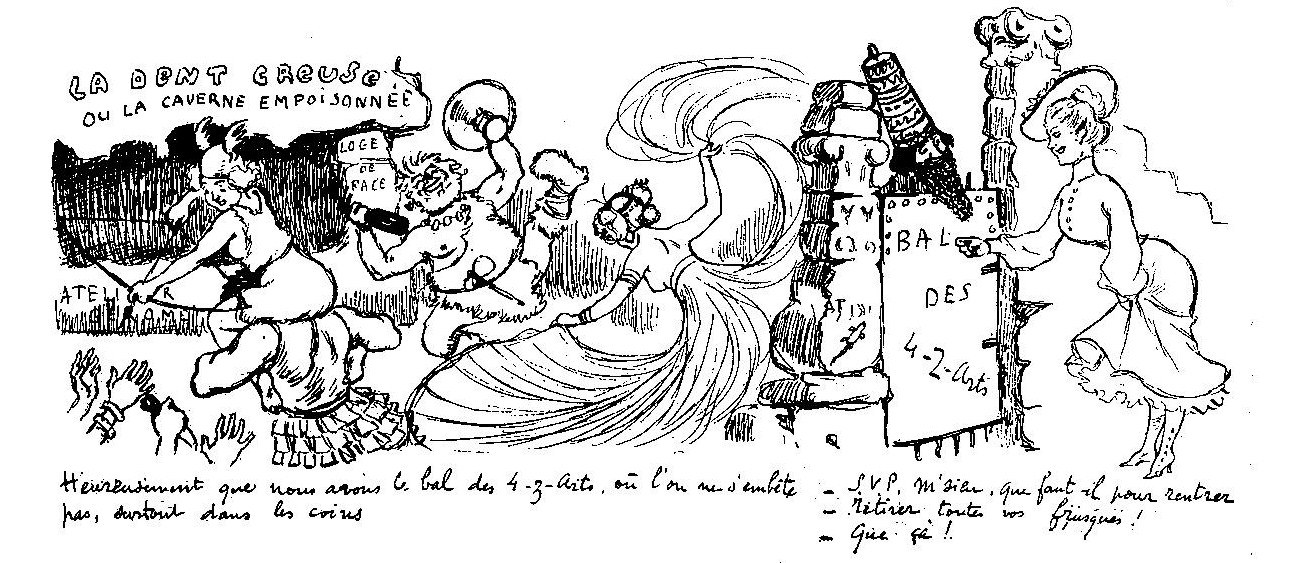
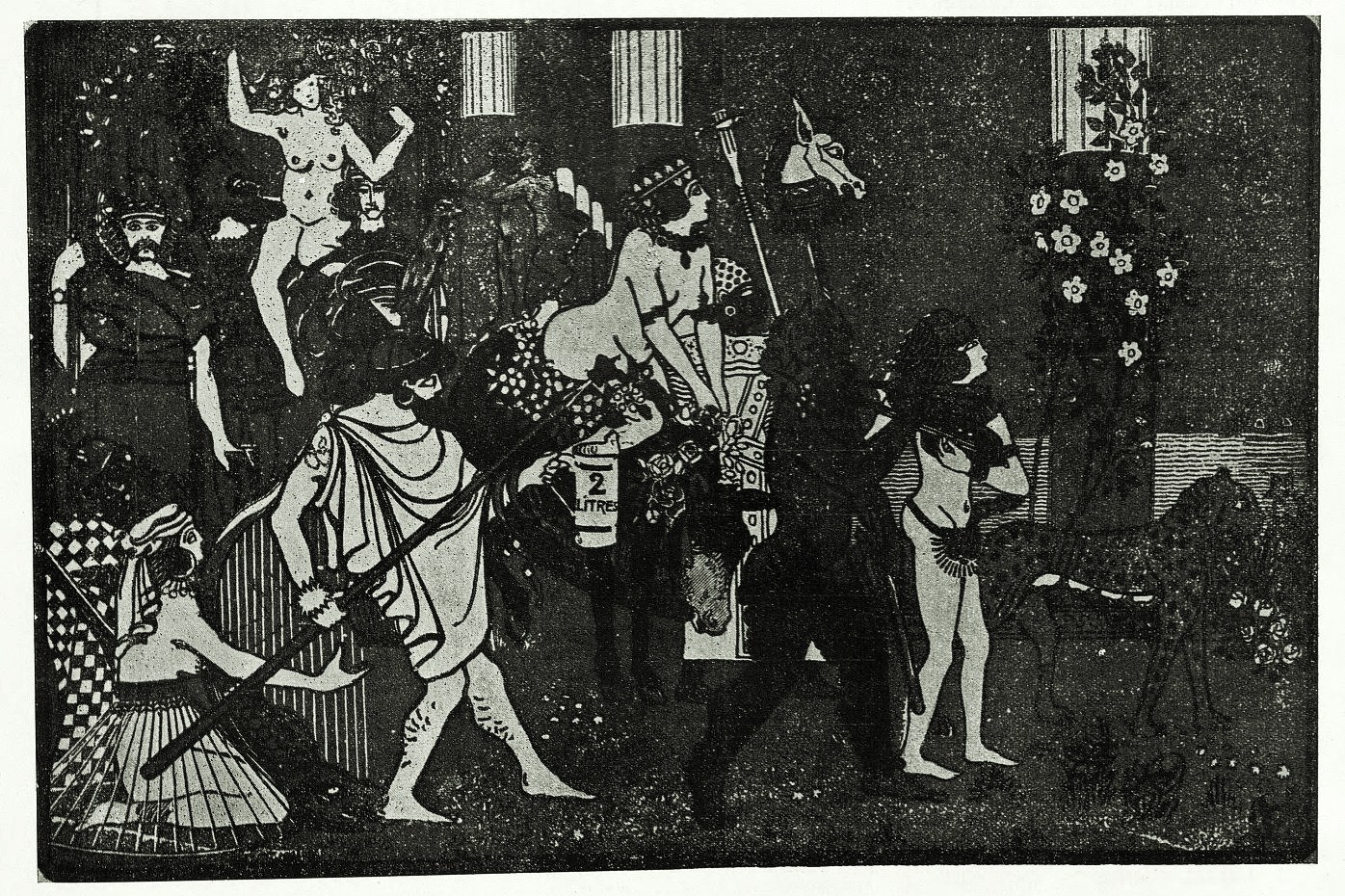
"5h du matin" - dessin de Yves Marevéry - btv1b531039841 (1 of 2)
Marevéry, Yves (1888-1914). Dessinateur
- Medium:
- Oil Painting
- Era:
- 1900-1920 (Ragtime/Early Jazz)
- Source:
- Wikimedia Commons
- Rights:
- Public domain — free to use, share and adapt.
- Recorded as:
- Public Domain
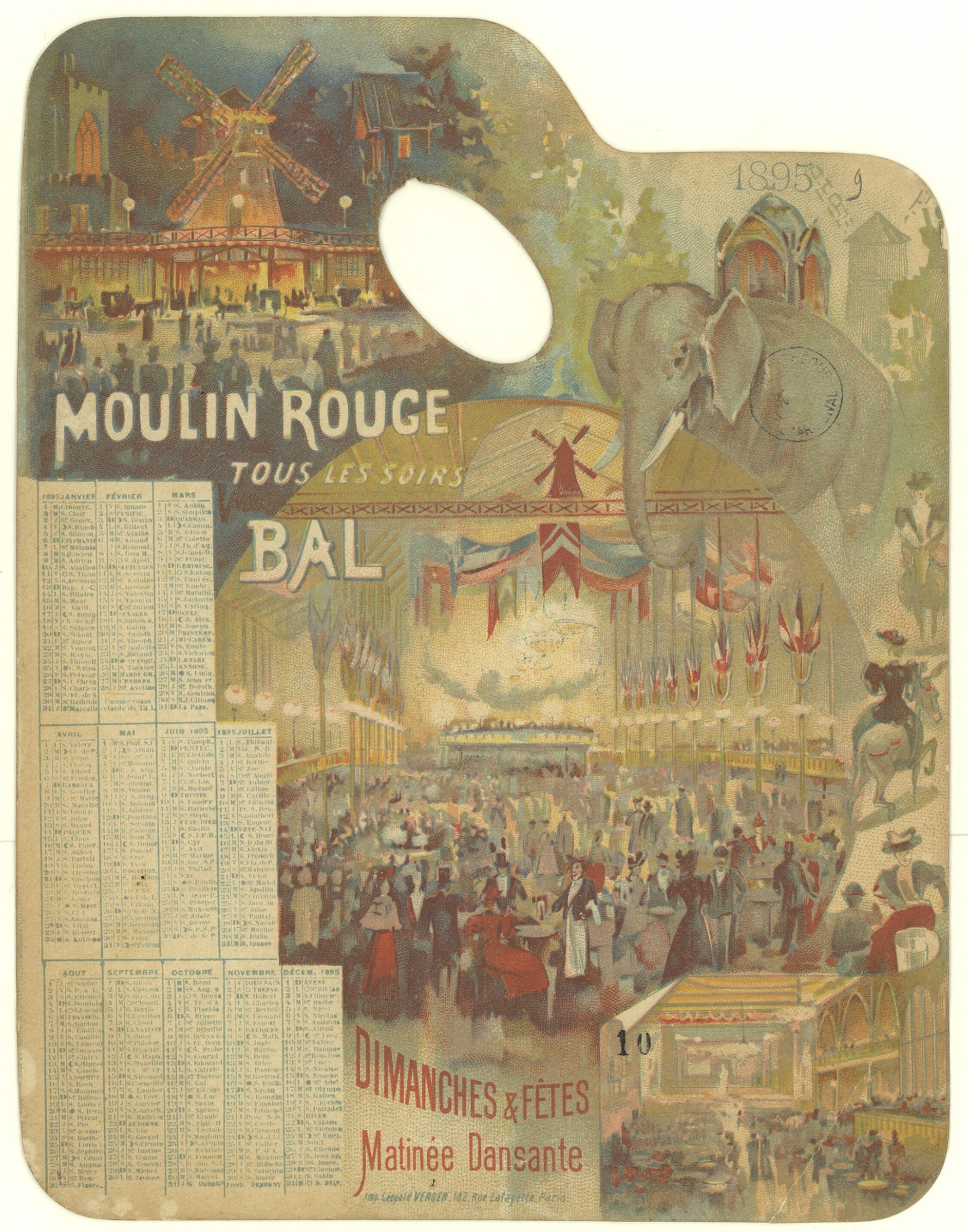
The poster is essential evidence of how the Moulin Rouge marketed itself in the 1890s—not as a venue for transgressive or exotic performance, but as the height of respectable Parisian social dancing and entertainment. For historians of dance venues, leisure culture, and commercial spectacle, this image shows how ballroom and social dance were packaged and sold to the public.
What you are looking at
A decorative calendar poster for 1895 advertising the Moulin Rouge nightclub in Paris, organized as a shaped die-cut fan or palette with a central oval cutout. The poster is dominated by two grand interior scenes: the upper half shows the famous Moulin Rouge cabaret interior at night, with its distinctive red windmill visible on the roof, a crowded dance floor lit by warm golden light, and elaborately dressed figures in movement. The lower half depicts the Bal (Ball) held on Sundays and holidays, again crowded with figures in formal dress within an ornate interior space. The composition is rich with period detail—the Belle Époque architectural elements, the warm color palette of ochres, reds, and blues typical of the era, and the sense of frenetic social activity. On the left side of the poster, a detailed calendar grid lists the dates and events for each month of 1895. The shaped die-cut edge gives the poster a sculptural presence; small vignettes in the corners show additional Moulin Rouge attractions and scenes.
The dancing
The figures throughout are rendered in a sketchy impressionistic style typical of fin-de-siècle chromolithography. Hundreds of small silhouettes populate both interior scenes, creating a sense of crowded excitement rather than precise anatomical study. Most are shown in upright posture in animated clusters—facing inward toward a central performance or dance space, with arms raised or gesturing. The women's silhouettes show the characteristic S-bend posture and full-skirted forms of 1890s evening dress. Men appear in dark formal wear. No individual dancers are isolated or shown in detailed hold or frame; the effect is of a social gathering rather than a focused dance performance.
The dance depicted
This is a promotional poster for the Moulin Rouge cabaret and its regular Sunday and holiday balls, not a representation of a specific named dance. The poster documents the venue's social function in the 1890s rather than the technical practice of any single form. The scenes suggest social ballroom dancing—waltzes, quadrilles, and the fashionable dances of Parisian high society—rather than the staged performance of the can-can for which the Moulin Rouge became famous. The image captures the Moulin Rouge's identity as a destination for evening entertainment and social dancing among the Parisian elite and bourgeoisie.
How it was made
This is a chromolithographic poster die-cut and shaped as a decorative object, not a painting as the catalogue states. The technique allowed the artist to render the detailed architectural interiors and crowd scenes in multiple layers of color without the expense of hand-painting. The die-cut shape—resembling an artist's palette or hand fan—transforms the poster into a functional domestic object; it could hang in a frame or be used as a fan, extending its circulation beyond the street and café walls. The calendar printing on the left demonstrates its commercial purpose as both advertisement and useful desk or wall calendar for 1895.
About this work
This 1895 chromolithographic poster advertises the Moulin Rouge nightclub in Paris through two crowded interior scenes—the famous cabaret and its Sunday ball—arranged on a die-cut shaped support. The poster combines commercial advertising with a functional calendar, reaching Parisian consumers through utility as much as spectacle. It documents the social world of Belle Époque Paris, where the Moulin Rouge was the premier destination for evening entertainment, music, and ballroom dancing among the fashionable classes.
How to look at it
Examine the two interior scenes separately: the upper cabaret scene shows a full dance floor under theatrical lighting, with a raised stage area and the famous Moulin windmill silhouetted against the night sky. The lower ball scene is similarly crowded but emphasizes the formal architectural setting. Note how the artist uses perspective and color—warm golden light filling the interiors—to convey the energy of the space rather than the detail of individual dance movements. The die-cut edges and calendar grid remind us this was a functional object meant to sit on a wall or desk, not a fine-art print.
The artist
Yves Marevéry (1888–1914) was a French graphic designer and illustrator active in the Belle Époque period. He worked in the chromolithographic poster tradition of the era, creating commercial advertisements and promotional material. His brief career (he died at 26) centered on the design and illustration of posters for Parisian venues and products, making use of the expressive color and stylized figuration characteristic of fin-de-siècle design.
The period
In the 1890s, the Moulin Rouge (opened 1889) had become one of Paris's most famous entertainment venues, though its reputation for the scandalous can-can dance alternated with its function as a respectable cabaret and ballroom for Parisian society. Chromolithographic posters were the dominant medium for advertising such venues, and artists like Toulouse-Lautrec and others had established the visual language of cabaret and dance-hall promotion. The calendar poster merged advertising with functional design—a common commercial strategy of the period. Ballroom dancing (waltzes, quadrilles, one-steps) remained the dominant social dance form among the middle and upper classes, even as the Moulin Rouge gained notoriety for the transgressive movements of the can-can.
Where it lives
The poster comes from Wikimedia Commons, which lists it as btv1b531039841 (1 of 2), suggesting it is part of a larger collection, likely the Bibliothèque Nationale de France. It is a chromolithographic poster from 1895 advertising the Moulin Rouge.
Dance in this work
Questions about this work
Is this a photograph or a painting?
This is a chromolithographic poster—a commercial printing technique that allowed artists to reproduce images in vivid color across many copies. The technique layered colored inks to create the effect of a painted scene, but this is fundamentally a printed advertisement, not a one-of-a-kind work on canvas or paper.
What dances are shown?
The poster does not depict a specific named dance. Instead, it shows the social ballroom dancing that took place at the Moulin Rouge's regular Sunday and holiday balls—likely waltzes, quadrilles, and one-steps—rather than the staged performances or the can-can for which the venue became famous.
Was the Moulin Rouge really like this?
This is promotional material, so it emphasizes elegance, crowds, and excitement rather than documentary accuracy. The crowded interiors and formal dress suggest the venue's appeal to respectable Parisian society, though the Moulin Rouge's actual reputation mixed respectability with scandal.
Why is it shaped like that?
The die-cut shape—like a palette or fan—transforms the poster into a functional domestic object that could hang as décor or be used as a fan. This increased its circulation and appeal beyond street advertising, placing it in homes and offices as a useful and beautiful object.
More dance artwork