49 works in this view — arrow keys or swipe to move between them.
Dance in Art
Grotesque — Plate 45
Gregorio Lambranzi
- Medium:
- Copper-plate engraving
- Dance:
- Notation/Choreography
- Era:
- 1700s (Enlightenment/Minuet Era)
- Collection:
- Nuova e curiosa scuola de' balli theatrali (1716)
- Source:
- Library of Congress
- Rights:
- Public domain — free to use, share and adapt.
- Recorded as:
- Public Domain
Grotesque dance is rarely represented in visual art, and this engraving is part of one of the only systematic records of how the form was danced and costumed. For dancers and historians studying the breadth of early modern performance—beyond ballet and courtly forms—Lambranzi's manual and this specific image document a theatrical tradition that has largely disappeared from historical memory.
What you are looking at
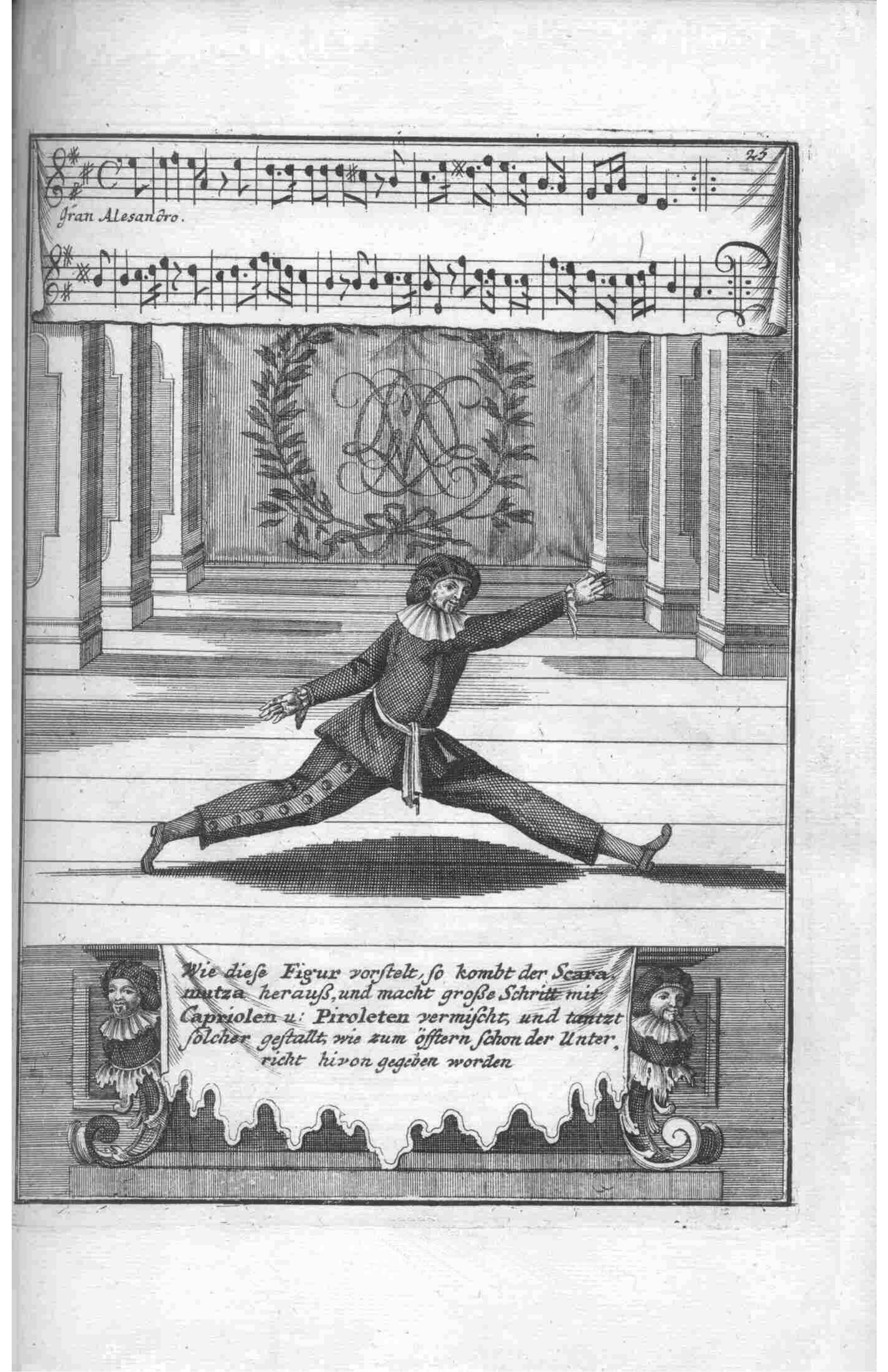
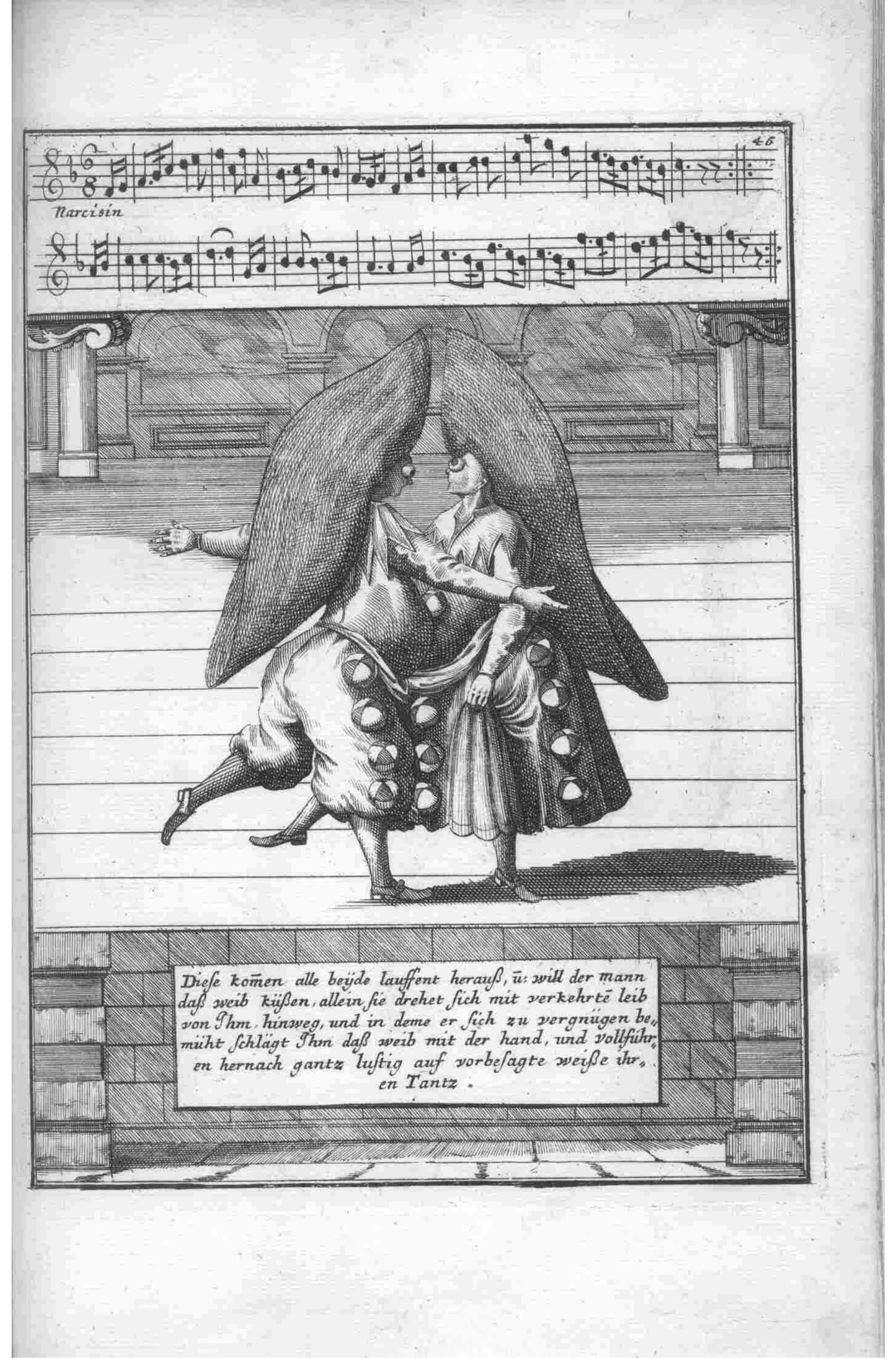
A single grotesque figure dominates the stage, captured mid-movement in theatrical costume. The dancer wears an enormous pair of feathered wings—rendered in precise crosshatching—that extend nearly the full height of the composition, paired with a richly decorated coat or tunic studded with large buttons or ornaments arranged in rows down the front. The figure's legs are splayed in an exaggerated, unbalanced stance, one knee bent sharply forward while the other extends back, creating a pose of deliberate awkwardness. The dancer holds one arm raised and extended outward while the other gestures across the body. The setting is a bare stage framed by curtains and classical architectural elements—fluted columns visible at either side—establishing this as a formal theatrical presentation. The engraving's clean lines and fine hatching suggest careful documentation of both costume detail and bodily position. Below the stage, a German caption in italic script provides instruction or commentary on the movement.
The dancing
A single dancer occupies the entire composition. The body adopts an unstable, asymmetrical pose: knees bent at different angles, torso twisted slightly, weight distributed unevenly across the legs in a manner that reads as deliberately comic or grotesque rather than balanced. The arms are separated, one raised to roughly shoulder height with elbow bent, the other lower and angled across the torso. The exaggerated wing costume dominates the silhouette, forcing the body into a profile-to-three-quarter view that makes the distorted posture unmistakable. The pose suggests arrested motion—caught between steps or suspended in an ungainly moment—rather than a held position of repose.
The dance depicted
This is a theatrical grotesque, a form of comic or carnivalesque character dance from the early 18th-century German theatrical tradition. The grotesque was a recognized genre in theatrical dance of the period, performed by professional dancers in comedic roles, often involving exaggerated posture, animal-like movements, and absurd costume. The wing costume suggests a hybrid figure—neither purely human nor purely bird—consistent with the commedia dell'arte and popular theatre vocabulary from which grotesque dance drew. The deliberately unstable body position and the title 'Narcissin' (though without seeing the German caption fully legible) suggest this may depict a specific character or narrative moment. Grotesque dancing was performed in courts and public theatres across German-speaking lands and was documented in dance manuals like this precisely because it represented a distinct, teachable style within the theatrical repertoire.
How it was made
This is a copper-plate engraving, a technique that allowed precise, finely detailed linear marks and hatching to render both costume ornament and bodily form with clarity. The fineness of the line work—visible in the feathering of the wings, the button details on the coat, and the musculature of the legs—is characteristic of engraving's capacity for intricate surface detail. As one plate in a printed dance manual, this engraving was reproduced in multiple copies, making the choreographic information portable and distributable across courts and performing circles. The technique's precision and reproducibility suited a didactic purpose: dancers and choreographers could study the exact body position and costume required for the role.
About this work
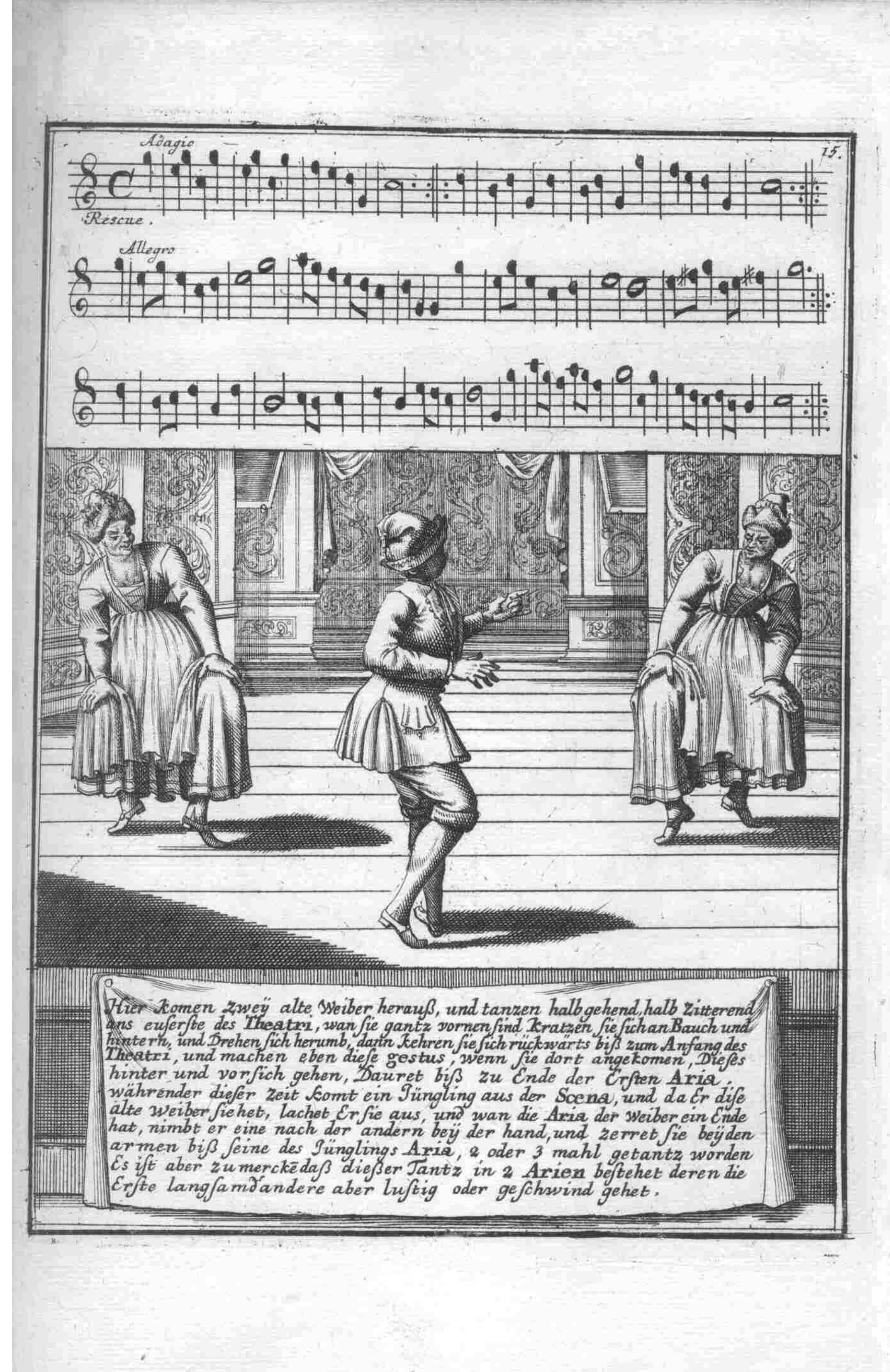
This engraving documents a grotesque character dance, a theatrical genre that flourished in 17th and 18th-century European courts and public stages. The work is a page from Gregorio Lambranzi's *Nuova e curiosa scuola de' balli theatrali* (1716), one of the era's most comprehensive guides to theatrical dance practice. Each plate pairs a musical score (notated above) with a single dancer in costume, frozen in a characteristic posture, creating a visual-musical archive of contemporary performance technique.
The grotesque represents a distinct dance aesthetic: anti-classical, comic, and rooted in popular performance traditions rather than courtly elegance. Where other dance manuals documented minuets and courtly pieces, Lambranzi included grotesques, peasant dances, and character roles, acknowledging that theatrical dance encompassed not only refinement but absurdity, physical excess, and narrative characterization. This plate survives as evidence of what 18th-century performers studied, memorized, and performed.
How to look at it
Look at the leg position first: one knee drives forward while the other extends back, creating rotational tension through the torso that reads as unstable and comic. The wings are not incidental costume but compositional anchors that frame and unbalance the figure—they prevent symmetry and push the eye toward the body's awkwardness. Note the arm positions: unequal, unbalanced, one raised and one lowered, which reinforces the anti-classical aesthetic. The engraver has chosen to capture the figure at what appears to be an arrested moment of motion—the body neither resting nor fully committed to a direction—which is precisely what makes grotesque dance grotesque: bodies in motion that resist grace or predictability.
The artist
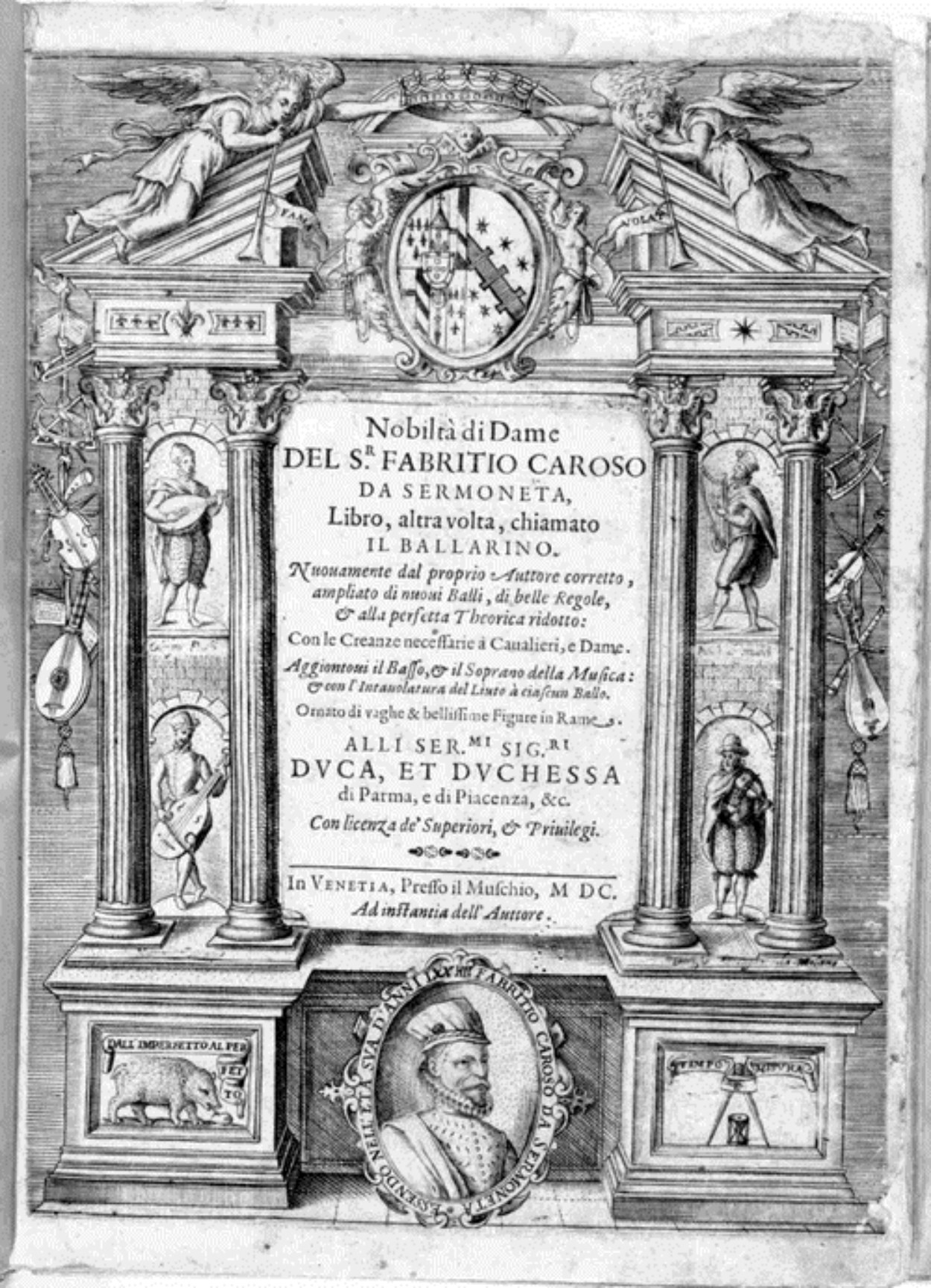
Gregorio Lambranzi was a German or Italian theatrical dancing master active in the late 17th and early 18th centuries. His *Nuova e curiosa scuola de' balli theatrali*, published in Nuremberg in 1716, represents one of the most detailed and comprehensive illustrated dance manuals of its era, encompassing courtly dances, grotesques, character dances, peasant dances, and balletic forms. The manual was conceived as a teaching tool for professional dancers and choreographers, offering both musical notation and engraved figures to guide performance. Lambranzi's work circulated across German-speaking courts and theatrical centers, establishing itself as a reference document for theatrical dance practice.
The period
In the early 18th century, theatrical dance occupied a broad spectrum stretching from the refined courtly minuet to the comic grotesque. Louis XIV's court ballet had established ballet as an art form, but theatrical practice remained more heterogeneous, drawing on commedia dell'arte, popular festival traditions, and improvisation. Dance manuals of the period—including those by Feuillet and others—typically focused on courtly social dances or the newly codified ballet vocabulary. Lambranzi's inclusion of grotesque, peasant, and character dances reflects the reality of theatrical performance, where comedic or narrative roles required equally skilled but radically different physical vocabularies. The engraving technique itself was the standard method for distributing choreographic information in printed form, making dance teachable at a distance.
Where it lives
This plate is from *Nuova e curiosa scuola de' balli theatrali*, a two-volume illustrated dance manual published in Nuremberg in 1716. The work comprises a sequence of similarly formatted pages, each pairing a musical score with an engraved figure. The manual survives in multiple copies in European libraries and collections, and this image is held in the Library of Congress.
Questions about this work
What is a grotesque dance?
Grotesque dance was a theatrical comedy form that used exaggerated, asymmetrical, and ungainly body movements, often in animal or hybrid costumes, to create humor or absurdist effect. It was a recognized genre within professional theatrical performance in 17th and 18th-century courts and public stages, distinct from both courtly social dance and the emerging ballet technique. Grotesques were typically performed by skilled actors or dancers and drew vocabulary from commedia dell'arte and popular festival traditions.
Why would a serious dance manual include a grotesque?
Lambranzi's manual documents the full range of professional theatrical dance as practiced in early 18th-century stages, not only refined courtly forms. Grotesques, peasant dances, and character roles were essential parts of theatrical repertoire and required disciplined performance technique even though they appeared chaotic or comic. By including them alongside minuets and formal dances, Lambranzi acknowledged that theatrical skill encompassed multiple and sometimes contradictory physical vocabularies.
How did dancers learn from these engravings?
Each plate presented a figure frozen in a characteristic posture paired with musical notation, allowing a reader to study the body position and costume required for a role. A professional dancer or choreographer could learn the shape and movement quality from the engraved image and the rhythmic or melodic structure from the notated score. The manual functioned as a visual-musical archive: portable, reproducible, and distributable across theaters and courts where it could be studied and taught.
Is there a grotesque dance tradition today?
Grotesque as a codified early modern form has disappeared, though circus performance, commedia dell'arte revival, and some contemporary theatrical dance draw on related vocabularies of exaggeration and physical absurdity. The grotesque documented in Lambranzi's manual represents a historical moment when theatrical dance encompassed wider aesthetic ranges than later ballet codification would allow.
More Notation/Choreography artwork