49 works in this view — arrow keys or swipe to move between them.
Dance in Art
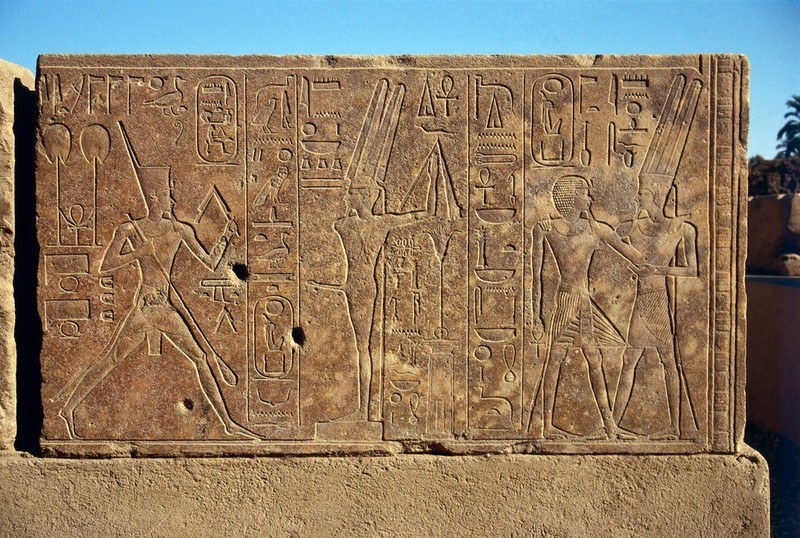
Queen Hatshepsut dancing before a representation of Min
Unknown artist
- Source:
- Wellcome Collection
- Rights:
- Rights vary by item — check the source record before reusing this image. Source record ↗
- Recorded as:
- Check
This relief is a rare surviving depiction of how bodies were positioned and moved in ancient Egyptian religious ceremony, offering material evidence for ritual and ceremonial practice that would otherwise be known only through texts. For historians of sacred movement and ceremonial dance, it documents the visual conventions and spatial relationships through which formal devotion was expressed and preserved.
What you are looking at
This limestone or sandstone relief carving depicts a ritual scene from ancient Egypt, likely from a temple wall or tomb. The composition is divided into vertical registers of hieroglyphic text and figural scenes. On the left, a standing figure in a broad collar and formal dress faces right; on the right, another figure in similar dress stands in a more dynamic pose. Between and above them are columns of hieroglyphic cartouches and symbolic imagery including the ankh sign and what appears to be a representation of the god Min, identifiable by his distinctive crown and ithyphallic form. The carving is executed in raised relief, with figures cut into a flat background. The stonework shows age and some surface wear, consistent with ancient Egyptian temple decoration. The scale and formal arrangement suggest this records an official or sacred ceremony rather than a secular social event.
The dancing
The two human figures stand upright in formal poses characteristic of Old Kingdom Egyptian art—frontal, with one leg advanced slightly in the conventional walking stance. The figure on the left appears static and presentational; the figure on the right, identified in the title as Queen Hatshepsut, leans forward with a more animated posture, suggesting active movement or genuflection toward the Min image. Their arms are positioned in gestures of veneration or ritual greeting. The bodies are rendered in the Egyptian composite view (head and legs in profile, torso frontal) standard to temple reliefs. No physical contact or partnering occurs between the figures.
The dance depicted
This relief likely documents a ritual performance or ceremonial gesture rather than a social dance. The forward lean of the queen's figure and her arm positioning suggest a formal act of obeisance or devotion before a divine image—a movement that falls within sacred ceremonial practice rather than any recognizable dance idiom. In ancient Egyptian temple contexts, such ritual gestures were sometimes accompanied by music and stylized movements, but the carved image captures a moment of religious observance. The specific movements are too constrained by the formal conventions of Egyptian relief sculpture to determine whether this represents an actual dance form or a religious gesture conventionalized into visual form.
How it was made
This is a limestone or sandstone relief carving, executed in raised relief technique where figures are cut into a flat background so that they project outward. The medium is characteristic of Egyptian temple and tomb decoration from the dynastic period. Relief carving allowed for permanent architectural integration of narrative and ritual imagery; the durability of stone and the scale of temple walls meant such carvings functioned as both religious records and public display. The shallow depth of the carving and the linear, almost sculptural treatment of the hieroglyphic text suggest skilled stonework typical of official commissions. The technique constrains the depiction of movement—figures cannot truly rotate in space, only advance and retreat along the surface—which shaped how Egyptian artists represented bodily gesture and action.
About this work
This temple relief documents a moment in ancient Egyptian sacred practice: the queen or worshipper approaching a divine image with a gesture of veneration. The carving is a primary visual record of how ritual—potentially involving movement, music, and formal gesture—was performed and commemorated in dynastic Egypt. It belongs in a dance gallery not because it depicts a recognizable dance style, but because it captures the borderland between ritual gesture, ceremonial movement, and religious practice, a territory where dance and religion were inseparable in ancient cultures. The image shows us how bodies moved in sacred space and what that movement meant to those who commissioned and viewed the work.
How to look at it
Observe the subtle forward inclination of the right-hand figure's torso and the positioning of the arms—these small departures from strict frontality suggest movement or gesture within the rigid constraints of Egyptian artistic convention. Note how the figure's body angles toward the Min image in a gesture of approach or devotion. The careful placement of hieroglyphic text alongside the figures indicates that the carved image was meant to be read as a complete textual and visual statement, with the body position carrying ceremonial and religious meaning that the inscriptions would have specified or reinforced.
The period
This relief dates to the period of Egyptian temple decoration, likely the 18th Dynasty based on the reference to Hatshepsut (1479–1458 BCE), though the exact date of carving cannot be established from the image alone. Temple reliefs served as permanent records of royal piety and divine interaction, functioning as both religious acts and visual propaganda. The formal, hieratic style—with its rigid frontality and hierarchical scale—was the dominant convention for depicting significant figures and sacred moments. Movement in such carvings was always constrained by the demands of clarity and formality; the Egyptian artistic system prioritized communicating status, identity, and ritual correctness over naturalistic depiction of bodily motion.
Where it lives
This relief is held in the Wellcome Collection, a museum in London founded to preserve historical medical, scientific, and cultural artifacts. The work entered the collection as part of the Wellcome's acquisition of Egyptian antiquities; such pieces were typically sourced through excavation or the antiquities market in the late 19th and early 20th centuries.
Dance in this work
Questions about this work
Is this actually a dance?
This relief depicts a ritual gesture or moment of formal obeisance before a divine image, likely part of a sacred ceremony. It falls on the border between religious ritual and dance—in ancient Egypt, as in many cultures, the distinction between formal ceremonial movement and dance was not always clear. The image captures a moment of ritual performance rather than a social dance form.
Why is a queen shown dancing before a god?
In ancient Egypt, the pharaoh or queen performed acts of ritual devotion and sacrifice on behalf of the state and people. These were not dances in the modern sense, but formal, stylized movements and gestures that were part of religious ceremony. Such acts were recorded in temple reliefs as permanent records of royal piety and divine obligation.
What does Min represent?
Min was an ancient Egyptian fertility and harvest god, typically depicted with an erect phallus and a distinctive crown with two tall plumes. His presence in this relief indicates that the ritual being performed was related to fertility, abundance, or the agricultural cycle—matters of state concern that required royal ceremonial action.
How do we know this shows movement?
The forward lean of the figure's torso and the positioning of the arms toward the divine image suggest active approach or gesture, distinguishing this moment from a static presentation. Within the formal constraints of Egyptian relief sculpture, such subtle departures from strict frontality convey movement or ritual action.
More dance artwork