49 works in this view — arrow keys or swipe to move between them.
Dance in Art
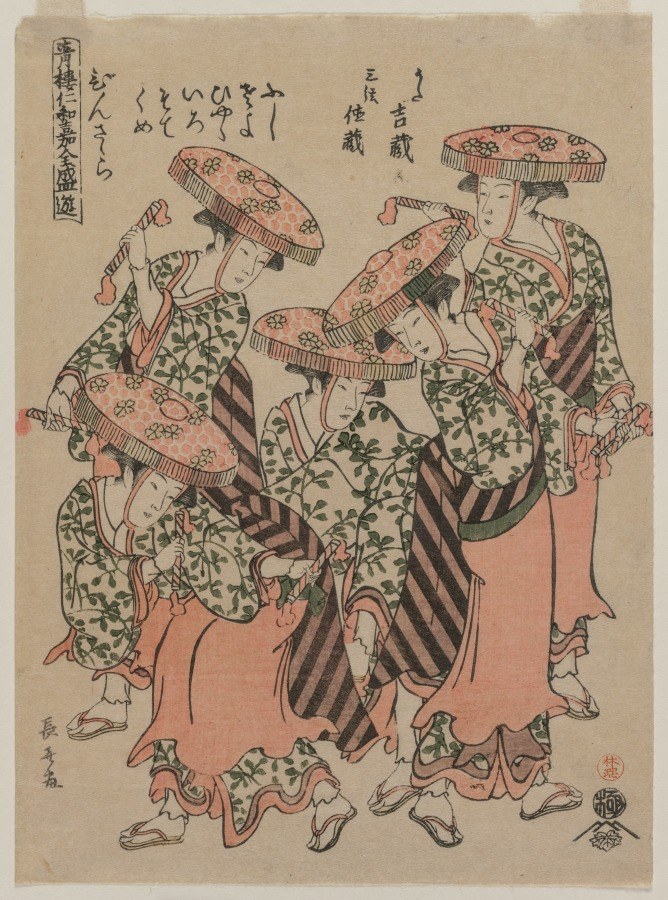
Binzasara A Dance with Clappers From the series Entertainm
Eishōsai Chōki (Japanese)
- Source:
- Cleveland Museum of Art
- Rights:
- Public domain — free to use, share and adapt.
- Recorded as:
- CC0 (Public Domain)
The binzasara is rarely documented in Western scholarship on Japanese dance, which has historically privileged Noh and Kabuki over vernacular traditions. This print is a direct visual record of popular entertainment practice and the way such performers were understood and visually marketed to consumers—more authentic as a document of actual performance than theatrical paintings, which filtered tradition through literary and elite aesthetics. For dance historians, it is crucial evidence that entertainment culture in Edo Japan included gender-diverse ensemble work (the figures' identities and the social contexts of binzasara performance merit further research) and that the visual and material culture of dance—costume, props, the visual spectacle—was valued enough to be reproduced and sold to the public.
What you are looking at
Three elegantly dressed figures in a lively outdoor gathering, rendered in a Japanese woodblock print style. The composition centers on festive movement and interaction: the central figure wears a patterned green robe and striking flat umbrella-like hat (which functions as both costume element and visual anchor), while flanking figures in elaborate kimonos with layered fabrics and contrasting patterns lean inward in engagement. All three wear the characteristic flat, broad-brimmed hats associated with the binzasara dance. The figures' postures suggest dynamic interaction rather than static poses—bodies tilted, arms extended, feet positioned as if in motion. The setting appears informal and social, conveyed through the minimal groundline and the emphasis on the bodies themselves rather than environmental detail. The color palette—muted earth tones, coral pinks, deep greens, and dark accents—is typical of mid-to-late Edo period woodblock prints, with subtle gradations suggesting dimensionality.
The dancing
The three dancers occupy the composition with varied but coordinated poses. The central figure stands more upright, arms positioned to interact with the flanking dancers, while the left and right figures lean dramatically inward—a gesture suggesting either friendly proximity or playful engagement typical of ensemble entertainment dances. All three maintain the characteristic flat posture and arm positions associated with the binzasara style, with arms neither raised high nor held in formal dance position, but rather positioned for the manipulation of the percussion instruments. The weight distribution suggests the figures are mid-movement: the leaning bodies imply shifting weight and the informal stance typical of vernacular, social dance rather than court or theatrical performance. The figures' heights and grouping convey a sense of camaraderie and equal participation.
The dance depicted
This woodblock print depicts the binzasara (literally 'tin clappers'), a Japanese folk dance performed with small wooden clappers or bamboo instruments. The binzasara was a vernacular entertainment tradition, often performed by itinerant entertainers and popular during the Edo period. The three-figure grouping and informal positioning suggest an ensemble performance in a social or street context rather than a formal court setting. The distinctive flat hats and layered, richly patterned costumes identify this unambiguously as binzasara performance. The dance itself involved rhythmic clapping sounds produced by the instruments, combined with simple stepping and body movement; the image captures the pause or staging moment of performance rather than the frenetic movement itself, which was characteristic of how such entertainers were documented in prints—freezing a moment of visual spectacle and costume display rather than the actual percussion sequence.
How it was made
This is a hand-colored woodblock print (likely a later hand-coloring of a black-line woodblock, though the original matrix may have included color blocks). The technique employs the characteristic Edo-period approach: bold outlines defining forms, parallel hatching and pattern-work filling garments and surfaces, and restrained but strategic use of color for visual hierarchy. The flatness of the figures and their bold contours are essential to the woodblock medium's aesthetic; the artist has prioritized clear silhouettes and legible costume detail over atmospheric perspective. This was a mass-reproducible medium, meaning such prints circulated widely as popular entertainment—affordable documentation of current performance fashions and styles, likely purchased by urban audiences as souvenirs or visual records of celebrated entertainers. The cartouche at upper left containing title and artist information (though the artist name is not legible in the image provided) indicates this is one print from a larger series, as suggested by the catalogue title fragment 'From the series Entertainm[ent]'.
About this work
This print documents the binzasara, a vernacular Japanese entertainment dance tradition performed with percussion instruments, frozen at a moment of social spectacle during the Edo period. The image is valuable precisely because it privileges costume and grouping over narrative: we see the performers as they would have appeared to street audiences, identified by their distinctive flat hats and layered patterned dress, interacting in the moment of performance without stage machinery or formal theatrical framing. The work belongs in a dance gallery because it records not a canonical or literarily documented form, but rather the lived practice of popular entertainment—the kind of dance that urban Edo audiences encountered as street performance, and that woodblock artists documented as consumable visual culture. It is evidence of who danced, how they dressed, and what performance contexts existed outside the theater and the court.
How to look at it
Look first at the hats: the flat, umbrella-like structures are the defining costume element of the binzasara and signal the dance's identity immediately. Then trace the gestures—note how all three figures lean inward, creating a triangular composition that conveys both intimacy and social participation rather than a formal line or the structured poses of Kabuki. The patterned garments are not merely decorative; they demonstrate the richness and skill of costume-making and signal that these were professional entertainers, not street amateurs, even if their performance context was informal. Finally, consider the moment: this is not a frozen instant of dramatic crisis (as in Kabuki prints) but rather a moment of display and costume spectacle—the kind of pause or grouping moment that would have been visually compelling and identifiable to an Edo audience.
The artist
The artist is not identified in the catalogue record provided. The print's style and technical approach suggest a mid-to-late Edo period (18th–19th century) artisan-level woodblock practitioner, likely working in the Edo tradition of theatrical and entertainment prints. The series designation (indicated by the cartouche) suggests the artist was part of a workshop producing multiple images of entertainers and performance genres—a common practice for documenting the fashion and celebrity of contemporary performers.
The period
This print dates to a period when woodblock printing in Japan was at its height as a medium of mass visual culture, particularly for recording entertainment and street performance. The Edo period (1603–1868) saw the flourishing of urban entertainment culture in cities like Edo (modern Tokyo), with diverse performance traditions—some, like Kabuki and Noh, supported by elite patrons, and others, like the binzasara, sustained through street performance and popular demand. The print tradition both reflected and shaped fashion, celebrity, and performance style: new prints of current entertainers drove demand for tickets to performances, and performance itself evolved in response to how entertainers were visually represented in prints. This image participates in that feedback loop, documenting a fashion and style that would have been recognized by contemporary urban audiences while also helping to canonize and circulate it.
Where it lives
The work is held in the Cleveland Museum of Art collection. It is indexed in the museum's database as part of their dance-related art holdings. The source listed as 'cma' indicates acquisition or cataloging by the Cleveland Museum; the specific provenance history is not provided in the record.
Dance in this work
Questions about this work
What are the flat hats the figures are wearing?
These are the defining costume element of the binzasara dance. The flat, broad umbrella-like structure is part of the traditional costume and was likely visible from a distance, making the performers identifiable to audiences viewing street performances. The hats are as much a marker of the dance tradition as the percussion instruments themselves.
Were the binzasara performers professional entertainers?
Yes, based on the quality and cost of the layered patterned garments shown here. The binzasara was a vernacular tradition—performed on streets and in public spaces rather than in formal theaters—but the performers were skilled professionals who traveled and performed for public audiences. They were celebrated enough to be documented in woodblock prints, indicating they had recognizable celebrity status.
How do we know this depicts the binzasara and not another Japanese dance?
The catalogue record identifies it explicitly as binzasara, and the visual markers support this: the characteristic flat hats and the grouping of three performers in an informal ensemble configuration are consistent with documented binzasara performance. The print's inscription (in the cartouche, though not fully legible in this image) would have contained the title.
What did the binzasara dance actually look like in motion?
This image shows a static moment; the actual performance involved rhythmic percussion sounds produced by clapping or striking the bamboo instruments together, combined with stepping and body movement. Woodblock prints typically froze moments of visual spectacle—costume and grouping—rather than attempting to convey the dynamic quality of percussion and motion.
More dance artwork