49 works in this view — arrow keys or swipe to move between them.
Dance in Art
Dancer
Unknown artist
- Source:
- Cleveland Museum of Art
- Rights:
- Public domain — free to use, share and adapt.
- Recorded as:
- CC0 (Public Domain)
This work represents an important tradition in which dance and the dancer became subjects fit for fine art and monumental materials. For historians of dance and art, it illustrates how the classical past was repeatedly invoked to lend dignity to the figure of the dancer—a figure often excluded from or marginalized within the fine arts despite (or because of) its power to move audiences.
What you are looking at
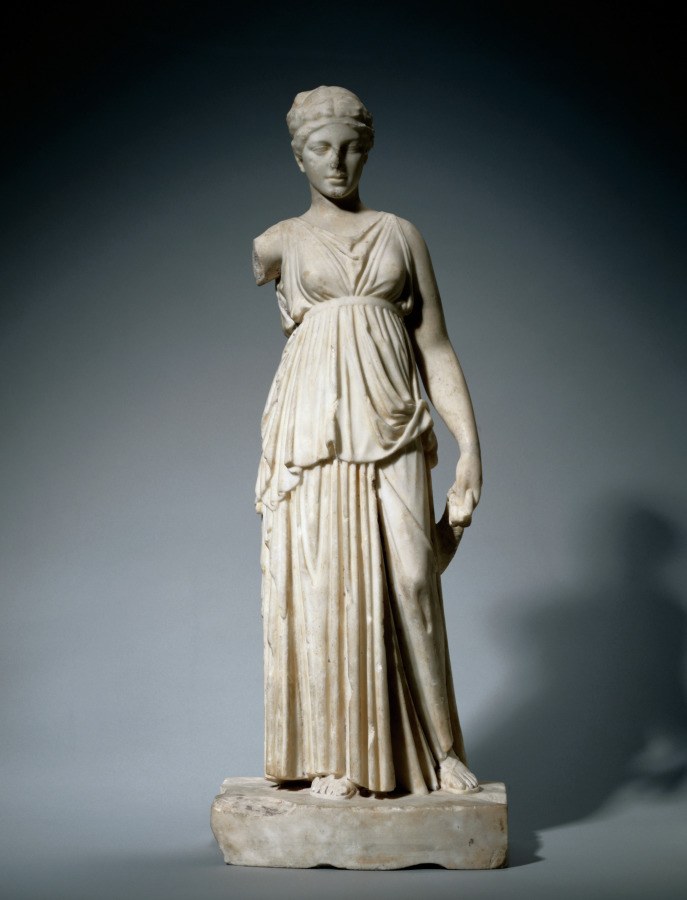
A marble or plaster statue of a standing female figure carved in the neoclassical idiom. The woman wears a high-waisted dress with short, draped sleeves and a skirt of deep vertical pleats falling to her ankles. Her hair is bound up in a cloth or wreath. She stands in a contrapposto pose with her weight on her right leg, her left leg slightly relaxed. Her right arm hangs at her side while her left arm is raised and bent, the hand positioned near her hip or possibly touching the fabric of her dress. The figure's expression is serene and idealized, with refined features typical of neoclassical portraiture. The sculpture is mounted on a simple cylindrical plinth and is photographed against a neutral grey background with dramatic side lighting that throws her form into sharp relief and emphasizes the carved details of the drapery.
The dancing
A single standing figure in an elegant contrapposto stance. The raised left arm and relaxed right leg create a gentle S-curve through the body. The drapery suggests the wearer is in motion or transitioning between positions—the pleated skirt hangs with verticality broken by the body's asymmetrical weight. The pose conveys a moment of pause or transition rather than vigorous movement; the bearing is aristocratic and restrained.
The dance depicted
The work appears to depict a dancer or a figure performing a dance-like pose, though the static nature of sculpture makes the identity of any specific dance style speculative. The neoclassical styling, the elegant contrapposto stance, the idealized female form, and the careful arrangement of drapery all suggest allegory or the representation of dance as an abstract concept rather than a documentary record of a particular choreography. If this represents a dancer, it likely references the balletic or aristocratic dance traditions of the Greco-Roman world as understood by neoclassical artists.
How it was made
Carved from marble or plaster (most likely marble given the refined finish and the museum context). The figure exhibits the high finish typical of neoclassical sculpture: smooth modelling of flesh, precise carving of the linear pleats in the drapery, and careful attention to idealized proportions. The technique allowed for the preservation of a single frozen moment in perpetuity, making this an allegory of dance rather than a record of its temporal reality. The work reflects the neoclassical revival's investment in antique forms and the notion of dance as a subject worthy of monumental art.
About this work
This is a neoclassical marble or plaster sculpture of a female figure in a refined, dance-like pose. The work embodies the 18th or 19th-century European artistic tradition of representing dance and the dancer as an elevated subject—one fit for the materials and techniques of monumental sculpture. The idealized features, the elegant contrapposto stance, and the careful rendering of draped fabric all reflect the period's fascination with classical antiquity and with the human form in motion or repose.
The sculpture stands at the intersection of portraiture, allegory, and the decorative tradition. It may represent a named dancer, an abstract idea of Dance itself, or a figure from classical mythology. Without a signature, date, or title in the record, the work remains somewhat enigmatic, but its place in the Cleveland Museum of Art's dance-related collection testifies to the enduring cultural weight of the dancer as a subject for fine art.
How to look at it
Observe the careful balance of the contrapposto stance: the way the raised left arm and the relaxed right leg work together to create dynamism within stillness. Notice how the vertical pleats of the drapery both accentuate the body's form and suggest motion, as if the figure has just paused mid-step. The sculpture asks the viewer to see dance not as a moment of virtuosic display but as an ideal of grace and composure—a classical virtue made visible in marble.
The period
The work belongs to the neoclassical movement of the late 18th and 19th centuries, when European artists looked to Greco-Roman art and literature for models of ideal form and beauty. During this period, dance—particularly ballet—was undergoing professionalization and was increasingly embraced as a subject worthy of serious artistic attention. Sculptors and painters represented dancers as embodiments of grace, beauty, and the harmonious ideal of human form in motion. The plaster cast or marble carving allowed these fleeting, ephemeral movements to be preserved and monumentalized, granting dancers a permanence usually reserved for kings, philosophers, and gods.
Where it lives
The work is held by the Cleveland Museum of Art and catalogued as part of the museum's dance-related art collection. The bare catalogue record indicates that the artist, date, and medium remain unrecorded in the museum's system.
Dance in this work
Questions about this work
Is this sculpture meant to represent a specific dancer or dance?
The work is most likely allegorical rather than documentary. The neoclassical idiom, the idealized features, and the absence of identifying inscriptions suggest that the artist was representing dance or a dancer as an abstract concept or classical ideal rather than documenting a particular performance or performer.
What does the pose tell us about the dance being represented?
The contrapposto stance and raised arm are consistent with 18th- and 19th-century balletic or aristocratic dance poses. The serene expression and restrained gesture emphasize grace and refinement over athletic virtuosity. The work reflects period values of elegance and composure rather than the dramatic expression or technical display that would later dominate modern dance.
Why would a museum commission a marble sculpture of a dancer?
By the neoclassical period, the dancer had become a subject worthy of fine art and permanent materials. Sculptors sought to preserve and elevate the ephemeral art of dance by rendering it in marble or plaster, much as classical sculptors had immortalized gods and heroes. This reflected both the growing prestige of professional dance and the period's broader investment in idealized, classical beauty.
More dance artwork