49 works in this view — arrow keys or swipe to move between them.
Dance in Art
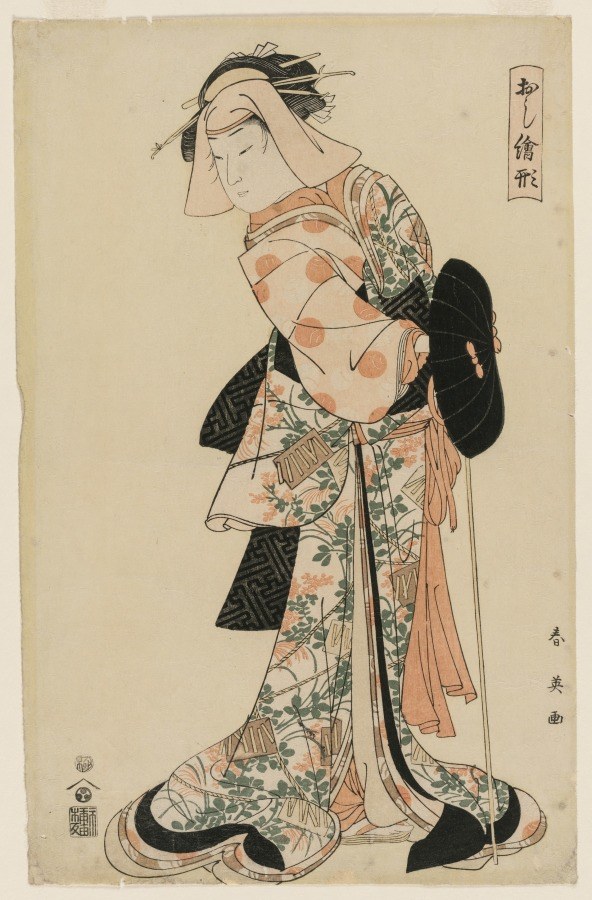
Dancer as Kuzunoha Fox Spirit Disguised as a Woman
Katsukawa Shunei (Japanese, 1762–1819)
- Source:
- Cleveland Museum of Art
- Rights:
- Public domain — free to use, share and adapt.
- Recorded as:
- CC0 (Public Domain)
This work documents Kabuki dance at a moment when the tradition was codified and formalized through centuries of practice, offering a precise visual record of the *kata* (formal movement patterns) and *mie* (signature poses) that structure this genre. It shows how dance, costume, and makeup function as an integrated system of meaning-making in Japanese theatre, where a single poised figure can communicate character, narrative status, and emotional register simultaneously. For Western audiences encountering this work in a museum context, it introduces an alternative dance tradition—one based on symbolic gesture and carefully controlled stance rather than the flowing, naturalistic movement that dominated European dance representation in the same period.
What you are looking at
A single female figure stands in three-quarter profile, her body angled to the viewer's right in a poised, elegant stance. She wears a luxurious layered garment in pale cream and coral tones with elaborate floral and geometric patterning throughout. Over this flows a sheer outer robe with deep indigo-black sleeves pushed back to reveal the decorated inner garments. Her hair is black and intricately styled atop her head with ornamental pins. Her face is rendered in the idealized, slightly abstracted manner typical of Japanese woodblock prints: small mouth, downturned eyes with a serene expression. The composition is spare and vertical, set against an unmodulated cream background. A rectangular cartouche in the upper right contains two columns of Japanese characters. A small seal mark appears in the lower left. The figure's posture—weight shifted, one foot slightly forward, arms positioned with studied grace—suggests she is enacting rather than simply standing.
The dancing
A single dancer occupies the frame, her body held with deliberate formality. Her weight is distributed with control, one leg supporting her frame while the other is subtly positioned forward. Her arms fall at her sides with the hands visible, fingers arranged with precise delicacy. The upper body is held upright but not rigid; there is a slight curve to her spine that conveys both dignity and a performance awareness. The face is turned slightly downward in a measured gaze, which combined with the body's alignment suggests a ritualized, codified movement language rather than naturalistic gesture.
The dance depicted
This is a Kabuki dance figure, most likely a depiction of an *onnagata* (female impersonator) performing in the stylized feminine roles characteristic of Edo-period and early Meiji-period Kabuki theatre. The title references Kuzunoha, the fox-spirit woman from classical Japanese folklore, a popular subject in Kabuki plays including *Kuruwa Bunsho* and *Ashiya Dōman Ōuchi Kagami*. The costume, pose, and facial expression all conform to Kabuki conventions for representing supernatural or aristocratic female characters. The choreography of Kabuki, particularly in these narrative character dances, involves precisely codified body positions and arm gestures (*kata*) that express emotion and narrative meaning through formal, almost sculptural poses held and shifted with control. The figure's downturned eyes and the composed arrangement of her limbs are characteristic of the *mie* (climactic pose) or preparatory stance in this tradition.
How it was made
This is a woodblock print, almost certainly a *ukiyo-e* work in the *bijin-ga* (pictures of beautiful women) or Kabuki actor portraiture genres that dominated Japanese printmaking in the 18th and 19th centuries. The technique involved carving separate blocks for each color layer and hand-printing them in sequence. The subtle gradations visible in the flesh tones and the precision of the line work—particularly in the face, the hair pins, and the floral patterns on the robes—are characteristic of mid-to-late Edo or early Meiji woodblock production. The cartouche in the upper right almost certainly contains the print's title and the artist's seal. This medium allowed for relatively affordable reproduction and wide circulation in Japan and, from the 19th century onward, among Western collectors and museums.
About this work
This is a Japanese woodblock print depicting an onnagata performer in full Kabuki costume, poised in a formalized stance that captures the codified movement language of Kabuki dance. The subject is identified as Kuzunoha, a fox-spirit character from Japanese folklore and a staple of Kabuki narratives. The work exemplifies the ukiyo-e tradition of Kabuki actor portraiture and offers a detailed record of costume, makeup conventions, and the formal bodily comportment expected of elite theatrical performers in Edo and Meiji-period Japan. For dancers and historians, it serves as a visual archive of a sophisticated and long-lived performance tradition in which gesture and stillness, costume and pose, carry specific semantic weight.
How to look at it
Observe the precise arrangement of the figure's hands and arms, which are not naturalistic but follow a formal vocabulary of gesture. Notice how the weight of the body is controlled and the stance is held with visible effort—this is not a moment of rest but of performed composure. The richly patterned robes are not merely decorative; in Kabuki, costume communicates rank, character type, and emotional state. The downturned gaze and the slight curve of the spine convey a particular mode of feminine deportment as understood in the Kabuki tradition. The cartouche and seal in the corners identify this as a commercial print product, circulated among audiences who understood the conventions of Kabuki portraiture and would recognize the character and performer type from these coded visual markers.
The period
This print belongs to the long tradition of Kabuki actor portraiture that flourished from the early 18th century onward. Kabuki itself, which emerged in the early 17th century, developed increasingly elaborate choreography and formalized movement vocabularies over the course of the 18th and 19th centuries. By the Meiji period (1868–1912), Kabuki was both a living theatrical tradition and an object of antiquarian interest and cultural preservation. The subject of Kuzunoha—the fox-woman who bears a child to a human man—appears in multiple Kabuki plays and was a favorite vehicle for celebrated onnagata performers to display their technical mastery and interpretive skill. The distribution of such prints through commercial channels made Kabuki accessible to audiences beyond those who could attend live performances, and also created a visual standard for how these roles should look, move, and be understood.
Where it lives
The work is held in the Cleveland Museum of Art and entered their collection as part of their broader holdings of Japanese prints and East Asian art. The museum's collection includes significant holdings of ukiyo-e prints and provides them as research resources for scholars of Japanese theatre, costume, and printmaking.
Dance in this work
Questions about this work
What is an onnagata and why did men play female roles in Kabuki?
Onnagata are male actors who specialize in female roles in Kabuki theatre. The tradition emerged from the early 17th century when women were banned from performing on stage; male actors then developed an elaborate, highly stylized approach to portraying femininity through gesture, movement, and costume. Over centuries, onnagata refined this into a sophisticated art form in its own right, not an imitation of naturalistic female behavior but a codified theatrical language. The greatest onnagata became the most celebrated actors of their time.
What does the title mean and why would this character be chosen for a print?
Kuzunoha is a fox-spirit woman from classical Japanese folklore who falls in love with a human man, bears his child, and then must return to her animal form. The story appears in multiple Kabuki plays and was a favorite of celebrated onnagata because it allowed them to display technical mastery across a range of emotional registers and movement qualities—aristocratic grace as a woman, supernatural otherworldliness, and pathos as she must abandon her human life. Prints of such celebrated actors in famous roles circulated widely and helped establish visual standards for how these characters should be performed.
How is Kabuki dance different from European ballet?
Kabuki dance is based on codified, symbolic gesture (*kata*) held in carefully composed poses rather than on flowing, continuous movement through space. Rather than aiming to appear weightless or to execute large, sweeping lines with the body, Kabuki emphasizes stillness, control, and the semantic weight of each pose. The facial expression, the angle of the head, the precise position of the hands—each carries specific meaning. Kabuki is also integrated with narrative, music, and dialogue in ways that the 19th-century European ballet tradition typically separated.
What is the cartouche in the upper right?
The rectangular box containing vertical columns of Japanese characters is a title cartouche that would identify the print's title, the character depicted, and often the performer's name or the publisher's mark. The seal mark in the lower left is the artist's signature seal. These elements, standard in ukiyo-e prints, allowed for attribution and cataloging within the commercial print trade.
More dance artwork