49 works in this view — arrow keys or swipe to move between them.
Dance in Art
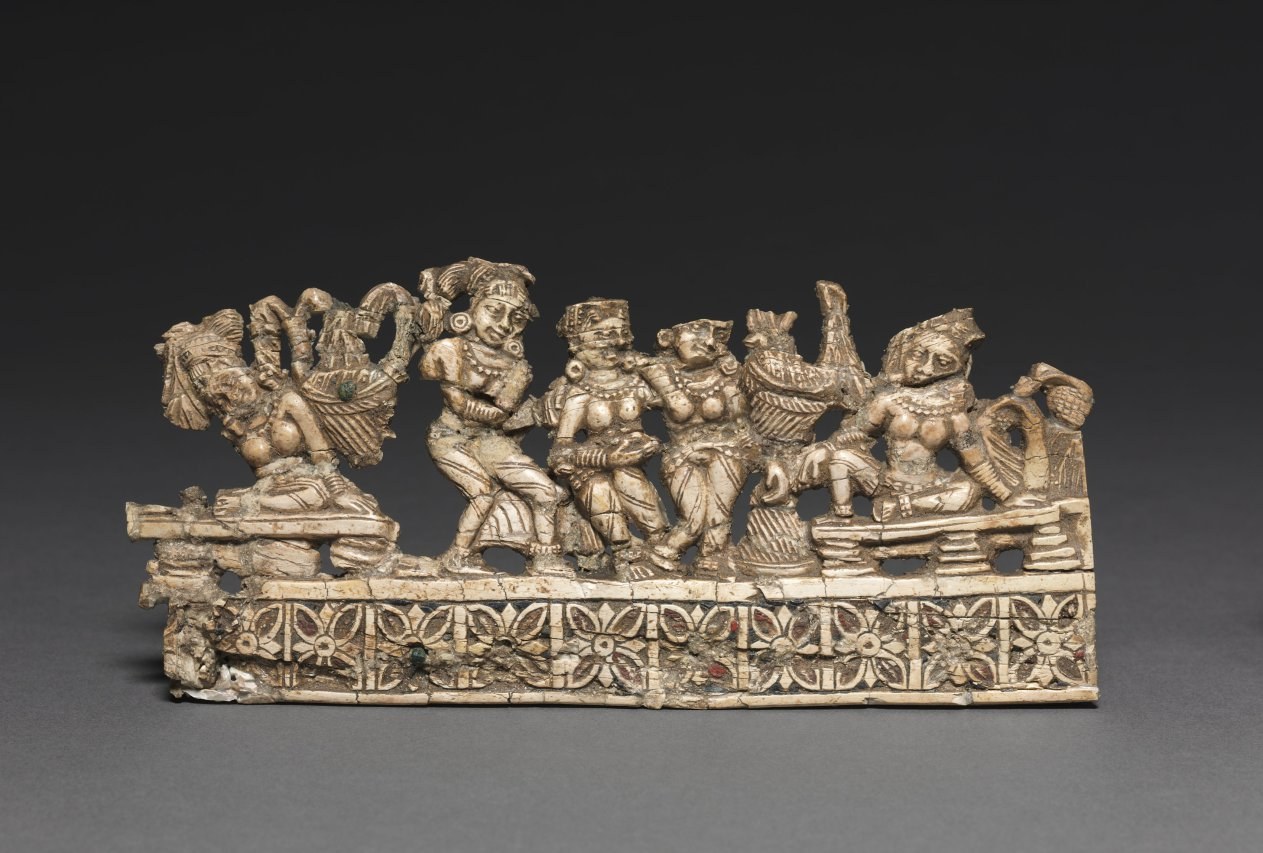
Ladies Entertained by Dancers
Unknown artist
- Source:
- Cleveland Museum of Art
- Rights:
- Public domain — free to use, share and adapt.
- Recorded as:
- CC0 (Public Domain)
This work illustrates how dance occupied the decorative and allegorical imagination of Renaissance makers, even when the image is not primarily about dance technique or performance. The pairing of putti, mythological creatures, and festive gesture reveals assumptions about entertainment, gender, and leisure that shaped courtly culture. For historians of dance iconography, it shows the distance between how dance was celebrated symbolically and how it was actually practiced.
What you are looking at
A horizontal relief panel in gilt bronze depicts a ceremonial or entertainment scene arranged in a single register. Seven figures, all depicted as infants or putti with rounded bodies and idealized proportions, occupy the composition. The central group shows three putti in animated poses—one seated playing a wind instrument, one standing and gesturing expressively, and one in a dynamic twisted posture. Flanking them are additional putti figures, some appearing to dance or move with raised arms. To the far left, a putto rides or sits astride a large bird or mythological creature with elaborate feathering. To the right, another putto in a reclining pose is attended by a standing figure. The figures wear draped garments rendered with linear hatching to suggest fabric and movement. The base features a decorative frieze of alternating palmette or lotus-flower motifs in shallow relief, which anchors the scene and suggests a formal architectural or ceremonial context.
The dancing
The putti demonstrate varied and energetic body positions rather than a unified choreographed formation. Several display asymmetrical stances with raised or extended arms and twisted torsos that suggest spontaneous rather than formal movement. One figure plays a wind instrument while seated, indicating performance rather than spectatorial roles. The musculature is smooth and idealised; no weight distribution or balletic line is evident. The extremities—hands, feet, and heads—are rendered with attention to expression and gesture rather than precise anatomical structure. The grouping is informal and scattered across the composition rather than arranged in patterns typical of period dance.
The dance depicted
This is not depiction of human dance but rather an entertainment or mythological scene rendered in the classical vocabulary of putti. The figures are too varied in action and pose—and too small and cherubic in form—to be dancing together in any recognizable style. What the image documents is a *concept* of entertainment and pleasure rather than dance technique: music-making, festive gesture, and joyful movement in the presence of mythological creatures. The context is almost certainly allegorical or decorative rather than observational. No dance style is identifiable because the work is not primarily concerned with how bodies move in space according to any technique.
How it was made
This is a cast gilt bronze relief, a technique common in Renaissance and early modern decorative arts. The shallow relief allows fine linear detail in the drapery and features of the faces and bodies, while the gilt finish creates a luminous, precious surface. The technique is suited to architectural ornament or luxury objects—plaques, jewelry, vessels—and suggests a wealthy patron or use in a sophisticated interior. The execution shows skilled modeling and finishing typical of professional workshop production, indicating this was made by trained craftspeople rather than a painter or sculptor working in monumental media.
About this work
This is a Renaissance or early modern decorative relief celebrating worldly pleasure and festive entertainment through the classical language of putti. The work belongs not in dance history proper but in the history of how dance and music were represented in luxury arts. The title 'Ladies Entertained by Dancers' implies a court or domestic setting in which professional entertainers—here rendered as mythological beings—provide spectacle for aristocratic women. The object is most likely a component of architectural ornament, jewelry, a vessel, or a pax (liturgical object) rather than a painting or sculpture intended for independent display. It demonstrates how dance imagery functioned in the decorative repertoire of the period—as a sign of refinement, pleasure, and courtly leisure rather than as a serious subject for artistic investigation.
How to look at it
Attend to the variety and informality of the poses—this is not a choreographed group but a theatrical or allegorical gathering. Note the attention to the bird creature on the left and the mythological registers of the scene; this is not a dance lesson or performance but a fantasy of pleasure and abundance. The decorative frieze at the base should alert you that this is ornament rather than narrative, a symbolic rather than documentary image. The gilt surface and shallow relief technique indicate that the work's meaning lies in its precious, luminous quality as much as in the scene depicted.
The period
The style and technique place this work in the Renaissance or early modern period, likely 15th–17th century, when gilt bronze relief was a major medium for luxury decorative arts. The putto as an emblem of divine love, beauty, and festive abundance was ubiquitous in this period, borrowed from classical art and Neoplatonic philosophy. Entertainment scenes involving putti and mythological beings appear frequently in the decorative programs of palaces, chapels, and collector's cabinets. The association of music and dance with female spectatorship or courtly pleasure was conventional in the visual culture of the European court, where women's consumption of entertainment was a marker of elite status.
Where it lives
The work is held in the Cleveland Museum of Art and is recorded as part of their dance-related art collection. No artist, date, or medium is recorded in the catalogue, suggesting it may be a cataloguing note or uncatalogued accession. The object is a gilt bronze relief, likely a decorative plaque, vessel ornament, or architectural element.
Dance in this work
Questions about this work
Are the figures in this relief actually dancing?
No. While the title mentions dancers and the scene is one of entertainment, the figures are putti (cherubic beings) engaged in varied poses and gestures rather than performing a recognizable dance. The work celebrates the idea of festive entertainment more than it documents any actual dance technique or style.
Who were the 'ladies' being entertained?
The title implies aristocratic or courtly women, but the work itself is allegorical rather than documentary. The 'ladies' may be an invention of the cataloguer or may refer to an actual patroness or context that is now lost. The relief was likely made as architectural ornament or a luxury object rather than a record of a specific event.
What is the bird creature on the left?
It appears to be a mythological or fantastical bird, possibly a phoenix, eagle, or other creature from classical tradition. Its presence underscores that this scene is allegorical or divine rather than a representation of courtly entertainment.
What period is this from?
The style, technique, and subject matter suggest the Renaissance or early modern period, likely 15th–17th century, but no firm date is recorded. The use of putti and gilt bronze relief was common across this extended period in European luxury arts.
More dance artwork