49 works in this view — arrow keys or swipe to move between them.
Dance in Art
Nataraja Shiva as the Lord of Dance
Unknown artist
- Source:
- Cleveland Museum of Art
- Rights:
- Public domain — free to use, share and adapt.
- Recorded as:
- CC0 (Public Domain)
Nataraja is the foundational image for understanding South Indian classical dance aesthetics and theology. The sculpture preserves in three-dimensional form the essential poses, arm positions, and philosophical vision that underpin Bharatanatyam and related traditions. For a global dance history, it represents a non-Western sacred dance tradition where the divine is expressed through disciplined, virtuosic bodily performance—a framework entirely different from European ballet or modern dance.
What you are looking at
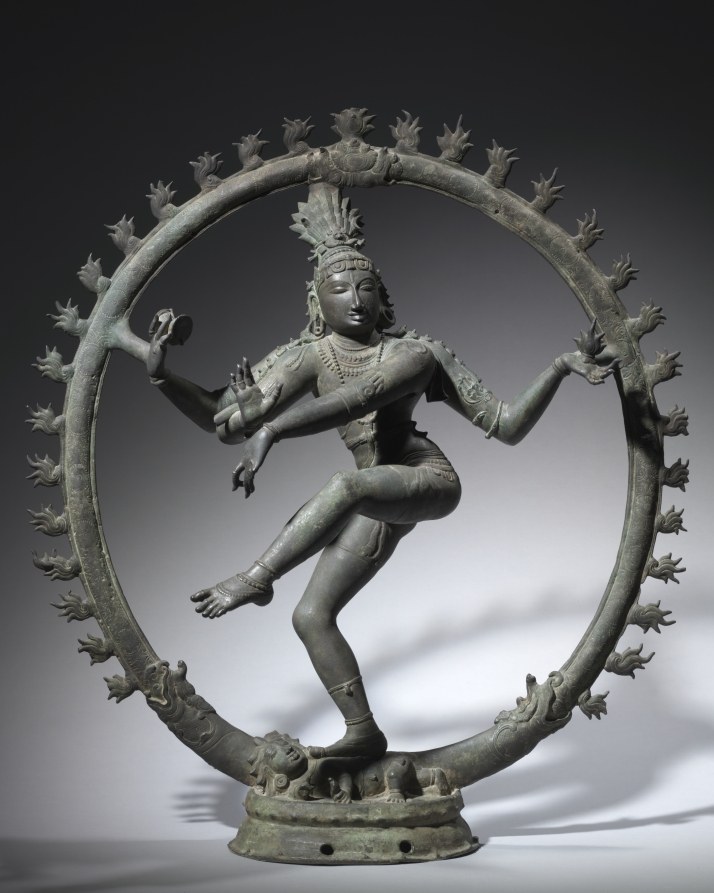
A bronze sculpture depicts a single figure in dynamic movement, captured mid-dance within a towering oval frame. The dancer wears an ornate crown with a tall, flame-like crest and is adorned with jewelry including a broad collar and bracelets. The body is nude except for a jeweled lower garment, positioned in a lively contrapposto with one leg raised and bent, the opposite arm extended upward, and the other arm held at mid-body. The frame itself is the most striking formal element: a massive oval loop studded with small, three-dimensional flame or leaf motifs all around its perimeter, creating a continuous, rhythmic border that echoes the energy of the figure within. The figure stands on a simple rectangular base. The entire composition suggests both theatrical presentation and sacred significance, with the frame functioning as both container and visual amplification of the dancer's movement.
The dancing
The dancer's weight appears to rest on the back (right) leg while the front (left) leg is raised and flexed, knee bent at roughly 90 degrees—a dynamic, weightless position that suggests mid-leap or mid-gesture. The upper body is engaged: one arm (right) rises above the head with the palm open or slightly cupped, while the left arm extends forward at approximately chest height, also with the palm facing forward. The torso twists slightly, creating a sense of rotation and momentum. The head is held erect and faces forward, with the gaze steady despite the dynamic limbs. The posture suggests both vigor and control—this is a virtuosic, intentional movement, not an accidental moment.
The dance depicted
This is Nataraja (Shiva as the Lord of Dance), one of the most iconic sacred images in Hindu philosophy and classical Indian dance. Nataraja represents the cosmic dance that creates, sustains, and destroys the universe; the pose is a foundational image for Bharatanatyam and other South Indian classical dances. The raised leg, the characteristic arm positions, and the dynamic torsion of the spine are consistent with core vocabulary of temple dance and devotional performance. The figure is typically identified with the <i>Ananda Tandava</i> (Dance of Bliss), though the exact mudra (hand position) would need to be read more carefully to confirm which specific narrative or state it represents. This is not a snapshot of social or theatrical dance, but rather a visualization of cosmic principle—the image embodies philosophy as much as choreography.
How it was made
This is a cast bronze sculpture, created through the lost-wax casting process typical of South Indian bronze production. The precision of the frame's repeated motifs and the fine detail of jewelry and facial features indicate skilled metalworking and chasing after casting. Bronze allows both the delicate articulation of the ornaments and the structural integrity of the tall, cantilevered frame. The material's reflective surface and the three-dimensionality of the frame (readable from any angle) suggest this was made for temple worship or ritual use, where it would be seen in the round and by candlelight. The technique enabled the creation of a durable, sacred object that could withstand use and time.
About this work
This is a bronze Nataraja sculpture, representing the Hindu deity Shiva in his cosmic dance form—one of the most profound and widely recognized sacred dance images in world culture. The figure is positioned within an elaborately sculpted oval frame studded with flame or leaf motifs, a formal device that both contains and amplifies the sense of movement. The pose, jewelry, and crown are consistent with South Indian classical temple sculpture from the medieval period or later devotional traditions. The work sits at the intersection of religion, philosophy, and dance: it is simultaneously a visual representation of sacred principle, a record of classical dance vocabulary, and a masterwork of metalcraft. For dancers and dance historians, it represents the embodiment of cosmic meaning in physical form—the idea that a precise, recognizable vocabulary of gesture and posture can express transcendent concepts.
How to look at it
Approach this work by first observing the frame: the tall oval loop with its rhythmic, repeating flame motifs creates a visual rhythm that mirrors the dancer's energy. Then examine the figure within: the asymmetry of the pose—one leg raised, one arm up, one arm forward—creates a sense of arrested motion. The dancer is caught mid-gesture, with the weight clearly shifted and the body in a state of controlled dynamism. Notice how the jewelry (crown, collar, bracelets) emphasizes the limbs and head, drawing the eye to the articulation of movement. The upright gaze and serene facial expression contrast with the vivacity of the limbs, suggesting that this dance is not merely athletic but contemplative and eternal—a paradox the image holds.
The period
South Indian bronze Nataraja sculptures were produced in large numbers from at least the medieval Chola period (9th–13th centuries) onward, and continued to be cast in the Tamil region through the Vijayanagara and colonial periods and into modern times. The style, proportions, and iconography of this work suggest it belongs to a long, continuous tradition of temple and devotional sculpture. In the broader art historical context of the period in which this sculpture was made (unknown), the image would have been understood both as an object of worship and as a teaching tool—a visual aid to understanding classical dance vocabulary and its cosmic significance. The growing awareness of Indian art in Western museums during the 20th century brought Nataraja sculptures to international attention, where they have become iconic representations of Hindu spirituality and Indian classical arts.
Where it lives
This work is held by the Cleveland Museum of Art and is documented in their dance-related art collection. The catalogue record does not provide date, artist, or medium information, suggesting the work may have entered the collection without detailed documentation or that such information is pending research.
Dance in this work
Questions about this work
What is Nataraja, and why is this pose so important?
Nataraja ("Lord of Dance") is Shiva in his form as the cosmic dancer. In Hindu philosophy, Shiva's dance creates, sustains, and destroys the universe. The pose shown here—with one leg raised, one arm extended upward—is the iconic gesture representing divine creative energy. This image has been central to South Indian temple art and classical dance for more than a thousand years.
Is this image related to classical dance?
Yes, directly. The pose and arm positions are foundational to Bharatanatyam and other South Indian classical dances. The image is not a photograph of dancers, but rather a philosophical and aesthetic ideal: it shows how the sacred principle of cosmic creation can be expressed through disciplined bodily movement. Classical dancers learn and perform variations of this pose and its vocabulary.
What does the oval frame with the flame motifs represent?
The frame is called a <i>prabhamanḍala</i> or arch of flames—it typically represents divine light or energy radiating from the figure. The repeated motifs create a visual aura or halo around the dancer, emphasizing the sacred nature of the figure and the energy of the dance. It is both a formal aesthetic device and a theological statement.
When and where was this made?
The catalogue record does not provide a date or place of manufacture. However, this style of bronze Nataraja is characteristic of South Indian sculpture, produced in the Tamil region. Such works were made in significant numbers from the medieval period onward and continue to be cast today.
More dance artwork