49 works in this view — arrow keys or swipe to move between them.
Dance in Art
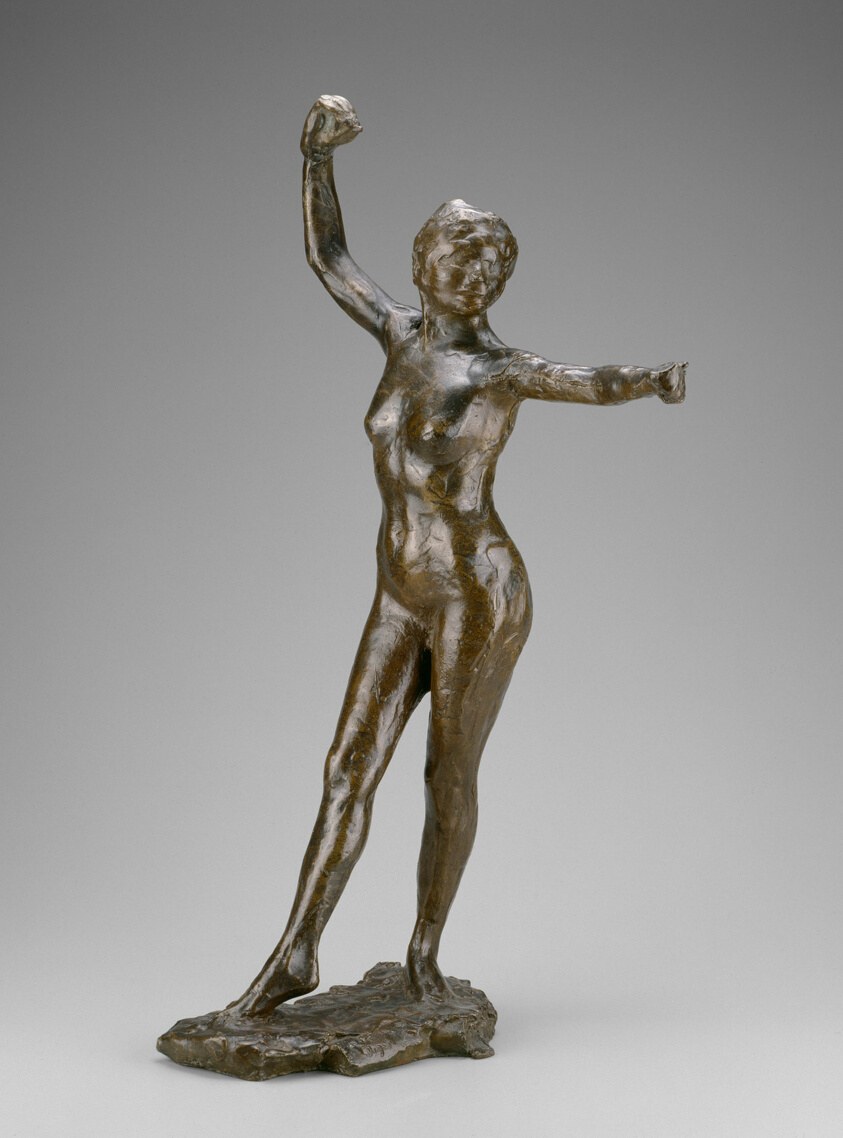
Dancer Ready to Dance Right Foot Forward
Hilaire Germain Edgar Degas
- Source:
- Art Institute of Chicago
- Rights:
- Public domain — free to use, share and adapt.
- Recorded as:
- CC0 (Public Domain)
This work documents the modernist shift toward celebrating the expressive human body and gesture as inherently beautiful and meaningful, separate from balletic or social dance training. It shows how artists working in the early-to-mid twentieth century used sculpture to capture and monumentalize the moment of human vitality and freedom that dance embodied, making the dancing body itself—not the dance—the subject.
What you are looking at
A bronze sculpture of a female nude figure in a dynamic, celebratory pose set against a neutral ground. The figure stands with weight shifted onto one leg, the other extended lightly behind. Both arms are raised in an exuberant gesture—the left arm lifted high with a clenched fist, the right arm extended outward at shoulder height. The figure's gaze is directed upward and to the side, following the line of the raised arm. Her body is taut and muscular, with careful anatomical articulation throughout. The patina is warm and darkened bronze with lighter highlights on the projecting forms, suggesting this is a cast of some age. The figure stands on a roughly textured base, adding visual weight and suggesting outdoor display or exhibition mounting.
The dancing
A single unclothed female figure in a powerful upright stance, supporting her weight on the right leg while the left trails lightly. The arms are fully extended—one raised skyward, one held open to the side—in a gesture of triumph, celebration, or exultant release. The head turns to follow the upper arm, and the torso maintains the elongation that comes from a standing pose with raised arms. The weight distribution and limb placement suggest controlled movement rather than static repose, capturing a moment within a gesture rather than stillness.
The dance depicted
This work depicts the spirit of celebratory or expressive movement rather than a codified dance technique. The raised fist and uplifted face suggest liberation, victory, or ritual affirmation—poses associated with modern dance, contemporary movement idiom, or expressive gesture rather than ballroom, classical ballet, or folk tradition. The work may represent an idealized human figure in motion or triumph rather than a specific dance form. The title 'Ready to Dance' suggests anticipation or preparation for movement, yet the pose itself reads as already in motion or in the climax of a gesture. Without documentary context, the precise dance style cannot be determined, but the vocabulary is modern and non-academic.
How it was made
This is a bronze cast sculpture, likely produced by the lost-wax process standard for bronze figurative work. The patina and surface weathering suggest multiple castings or long display. The warm, varied coloration across the form—brighter on raised areas, darker in recesses—is characteristic of outdoor bronze that has oxidized and weathered over time. The rough-textured base and finished mounting suggest this is an exhibition piece, possibly one of a numbered edition.
About this work
A bronze figure sculpture depicting a female nude in a pose of raised arms and uplifted gaze, titled to suggest dance or movement readiness. The work captures a moment of exuberant gesture—one arm raised skyward with fist clenched, the other extended—rather than a specific technical dance position. The sculpture belongs to a tradition of modernist figurative bronzes that sought to capture human vitality, freedom, and expressive movement without reference to codified styles. For a dance history collection, it represents how dance and the vocabulary of human movement became subjects of sculptural exploration, celebrating the body in motion as an end in itself rather than as the execution of technique.
How to look at it
Observe how the sculptor has captured not a moment of posed stillness but the apex or climax of a gesture—the fist raised, the gaze following upward, the body elongated and extended. The weight remains grounded on one leg, giving the figure stability while the extended limbs and rising torso suggest continued ascent. This is a critical modernist choice: the artist has frozen a moment that reads as dynamic and ongoing rather than complete. Notice how light plays across the muscular forms, revealing the anatomical study beneath the expressionist gesture, and how the rough base grounds and anchors this moment of rising exuberance.
The period
The style and approach suggest early-to-mid twentieth-century modernist sculpture, an era in which European and American artists engaged intensely with the human figure as a vehicle for expressing vitality, freedom, and modernity. Contemporary modernist dancers—figures like Isadora Duncan and the first generation of German Ausdruckstanz (expressive dance)—celebrated the natural movement of the body freed from the constraints of ballet corsetry and formal technique. Sculptors of this period often engaged with the same values, seeking to capture movement, breath, and human presence in three dimensions. The pose and spirit here align with that cultural moment's embrace of the body as a site of authentic human expression.
Where it lives
The work is held in the Art Institute of Chicago and is recorded as coming from the AIC collection. No artist attribution is currently recorded, and the date of creation is unknown.
Dance in this work
Questions about this work
Is this a specific dance or dance position?
The pose does not correspond to a codified dance technique—not classical ballet, ballroom, or folk dance. Instead, it captures the spirit of modern expressive movement and human exuberance. The raised fist and upturned face suggest triumph or liberation rather than a specific dance step.
Why would a dance collection include sculpture?
Dance exists in time and cannot be preserved as objects; however, sculpture and painting document how artists understood, celebrated, and represented human movement. This work shows how the dancing body and the vocabulary of free, expressive gesture became subjects of serious artistic attention in the modernist period.
What period does this sculpture come from?
The style, patina, and approach suggest early-to-mid twentieth century, though the record does not confirm a date. The modernist vocabulary—the celebration of the natural, expressive body freed from academic constraint—aligns with the 1910s–1930s era of avant-garde dance and sculpture.
More dance artwork