49 works in this view — arrow keys or swipe to move between them.
Dance in Art
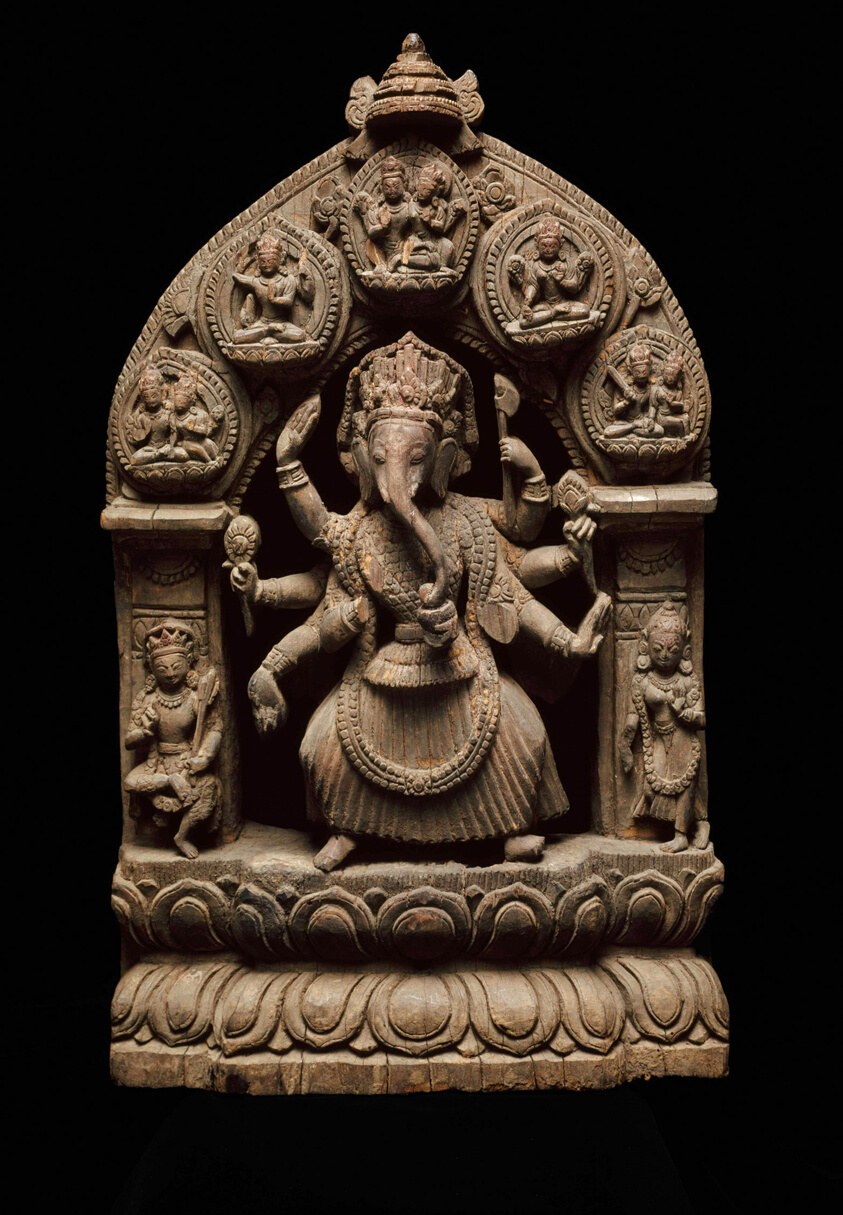
Eight-Armed Dancing God Ganesha
Unknown artist
- Source:
- Art Institute of Chicago
- Rights:
- Public domain — free to use, share and adapt.
- Recorded as:
- CC0 (Public Domain)
This relief provides rare visual documentation of how a multi-armed celestial dancer was imagined and choreographed in actual performance contexts. The sculptor's detailed attention to gesture, costume, and the physics of the body in motion demonstrates that Hindu temple dance was not improvised or spiritual pantomime but a precise, learned practice deserving of the same artistic investment as devotional statuary. For dance historians, it is evidence that South Indian classical dance forms with traceable lineages to medieval temple tradition (like Bharatanatyam) have roots in actual cultic performance, not 19th-century invention.
What you are looking at
A stone relief sculpture depicting Ganesha in dynamic dancing pose within an ornate architectural frame. The central figure is carved in high relief, showing the elephant-headed deity in active movement with multiple arms raised and bent in expressive gestures. Ganesha wears an elaborate costume including a decorated breastplate, a wide pleated skirt or dhoti at the waist, and extensive jewelry including necklaces and bracelets on all four visible arms. The figure stands barefoot on a plinth above a decorated base with a lotus-petal border. Surrounding the central figure are five smaller seated or crouching attendant figures in subsidiary arched niches—two on each side of Ganesha and one above the head. The entire composition is framed by an ornamental arch topped with a finial or pinnacle, and the sides of the frame contain carved pilasters with additional small sculptural figures. The stone appears to be limestone or similar material, carved with precise detail throughout, and shows the warm patina of age.
The dancing
Ganesha is depicted with at least four visible arms, each raised and bent at the elbows in dynamic, asymmetrical gestures that suggest fluid movement. The deity's body faces front while the posture conveys active rotation and lift through the torso. The legs appear to be in a standing position with weight engaged, not static or locked. The flanking attendant figures are much smaller and seated or in submissive poses, creating a clear hierarchical composition. The proportions of Ganesha—particularly the elongated arms, upright spine, and engaged core—suggest the sculptor understood the physical demands of active dance movement.
The dance depicted
This relief depicts Ganesha performing a sacred dance, most likely within a temple or devotional context in Hindu tradition. The eight-armed configuration (though four are visible here, the title specifies eight) is characteristic of Ganesha iconography and appears in multiple dance traditions of South India, particularly Bharatanatyam and related classical temple dance forms. The formal architectural framing and liturgical setting indicate this represents sacred temple dance (possibly connected to ritual worship or celebration) rather than secular performance. The precise mudra-like hand positions and the formal compositional structure suggest the artist was depicting a specific, codified dance form aligned with Hindu religious practice, though the exact choreography cannot be determined from the relief alone.
How it was made
This is a carved limestone or sandstone relief sculpture, executed with sophisticated modeling that creates clear spatial recession from the back plane. The artist used subtractive carving to define individual forms while maintaining the coherence of the architectural frame. High relief technique—where the figures project significantly from the background—allows the dancer's limbs and gestures to be read clearly and permits the play of light and shadow that emphasizes the sense of movement. The precision of detail work, visible in the costume elements, jewelry, and attendant figures, indicates this was a professional workshop production, likely created as a permanent architectural element within a temple complex rather than a portable object. The technique was well-suited to creating the spiritual presence of the deity in monumental, public-facing form.
About this work
This stone relief is a temple sculpture depicting Ganesha in active dance pose, a subject that bridges Hindu religious practice and South Indian classical dance traditions. The work combines rigorous iconographic detail (the multi-armed form, the specific costume elements, the hierarchical framing) with sophisticated understanding of the human body in motion. The carved relief format and architectural setting indicate it functioned as a devotional image in a temple context, yet it documents actual dance practice: the hand positions, the weight shift through the body, and the spatial composition all reflect knowledge of how the body moves in sacred performance. The sculpture dates to an unknown period but displays stylistic characteristics consistent with medieval Hindu temple production (possibly 10th–14th centuries, though this cannot be confirmed from the image alone). For dancers and historians, the work is valuable evidence that codified, physically demanding dance forms were integral to Hindu religious life and worthy of monumental artistic representation.
How to look at it
Observe how the sculptor has frozen Ganesha mid-gesture: not in a balanced, symmetrical pose but in a moment of active rotation and lift, with arms at varying heights and angles. Notice the play of light across the high relief—the shadows cast by the raised arms and the elephant trunk create a sense of volume and energy even though the stone is static. Look at the scale relationship between Ganesha and the attendant figures: the hierarchy of size announces the theological importance of the central dancer. Compare the detail of the costume (the pleated skirt, the jewelry, the breastplate) to the simplified forms of the attendants—the artist invested technical precision in the main figure's dance costume, suggesting it was important to render the actual garments and adornment of a temple dancer.
The period
This work belongs to a long tradition of Hindu temple sculpture in which religious narrative and devotional practice were expressed through carved stone. In medieval South India (and across Hindu regions), the dancing deity—whether Shiva as Nataraja or, as here, Ganesha—was a central theological concept: god as dynamic creative force rather than static icon. The temple sculpture tradition that produced this work was concurrent with the development of the classical South Indian dance forms documented in texts like the Abhinaya Darpana, which codified mudra (hand positions) and movement vocabularies that are still taught today. The architectural integration of the figure—within a shrine-like frame, attended by subordinate figures—indicates this was part of the visual theology of a temple, meant to be witnessed in ritual contexts and to inspire devotion through the representation of the deity's movement and power.
Where it lives
The work is held in the Art Institute of Chicago. It is catalogued as a stone relief sculpture and identified as a temple or devotional work, likely originally part of a larger architectural context (a temple exterior or interior shrine). The work's presence in a Western art museum reflects 19th and 20th-century collecting practices that removed significant examples of South Asian temple sculpture from their original contexts.
Dance in this work
Questions about this work
Why does Ganesha have eight arms?
Eight arms is a standard iconographic feature in Hindu representation of Ganesha and other celestial beings, allowing the deity to perform multiple gestures (mudras) simultaneously and thus demonstrating divine omnipotence and multiplicity of action. In a dance context, the multiple arms expand the visual complexity and expressiveness of the movement, permitting the sculptor and the tradition of dance practice itself to explore intricate, layered choreography.
Did temple dancers actually perform with these exact movements?
The relief is almost certainly based on actual dance practice—the hand positions appear to follow codified mudra systems documented in Sanskrit texts on dance and theater. However, we cannot know whether this specific pose appeared in an actual sequence or whether the sculptor combined multiple recognized positions into a composite image emphasizing the deity's power and grace.
What is this sculpture's connection to modern Bharatanatyam?
Bharatanatyam is a South Indian classical dance form that claims historical continuity with devadasi (temple dancer) traditions. Sculptures like this one are evidence that codified, technique-based dance with characteristic mudra systems did exist in medieval temples, supporting the claim that modern classical forms have real historical roots rather than being recent inventions.
More dance artwork