49 works in this view — arrow keys or swipe to move between them.
Dance in Art
Ercole in Tebe
Unknown artist
- Collection:
- Prints depicting dance
- Source:
- New York Public Library
- Rights:
- Public domain — free to use, share and adapt.
- Recorded as:
- Public Domain
This work provides visual evidence of how Renaissance and Baroque courts conceptualized the relationship between landscape, narrative, and human movement in theatrical performance. It shows that dance in this period was not isolated in ballrooms but integrated into ambitious multimedia spectacles that combined architecture, music, poetry, and movement to create unified artistic experiences.
What you are looking at
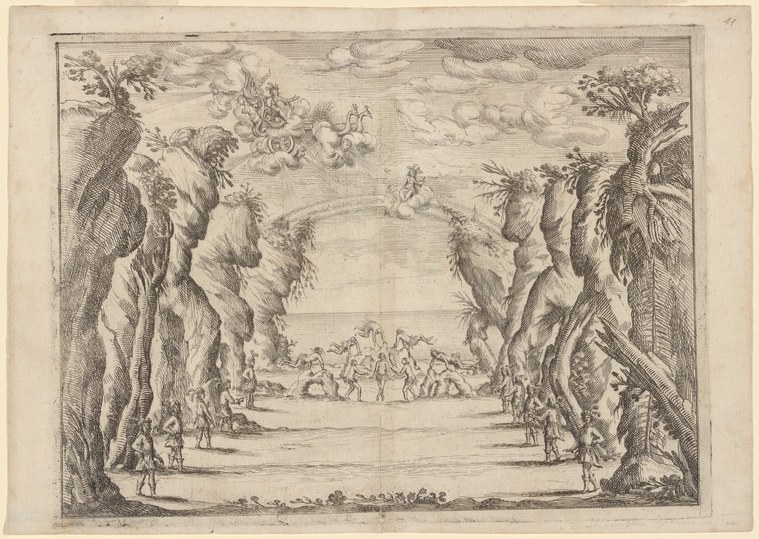
This engraving depicts a theatrical scene set within a narrow gorge or ravine, framed by massive rocky cliffs on either side. Tall trees crown the clifftops, and the sky above is filled with clouds and celestial figures—angels or putti floating in the heavens. The valley floor is occupied by a large gathering of figures in classical dress, arranged in loose groups across the middle distance. In the foreground, at ground level on both sides of the composition, smaller figures gesture and observe the scene. The lighting is even and controlled, typical of engraved prints, with hatching used to model the rocky forms and create depth. The scale and setting suggest a heroic or mythological subject, with the human figures dwarfed by the monumental landscape.
The dancing
The gathered figures in the valley appear to be arranged in informal clusters rather than strict formation. Several are visible in contrapposto poses, with weight shifted to one leg, suggesting classical training. Arms are raised and extended in gestures of expression or emotion—some figures appear to be reaching upward or outward. The foreground observers on either side use emphatic hand gestures, pointing or gesturing toward the central action. The dress suggests classical or Roman costume, with draped garments. The composition suggests movement and animation across the group, though the static nature of the engraving preserves a single frozen moment.
The dance depicted
The subject title references Hercules in Thebes, suggesting a mythological or heroic narrative rather than a courtly or social dance. The gathering appears to be a ceremonial or theatrical assembly rather than a structured dance in the ballroom sense. However, the deliberate arrangement of figures, their animated gestures, and the theatrical framing indicate choreographed movement or ritual performance. This is consistent with Renaissance and Baroque theatrical spectacle—intermezzi, pageants, or allegorical performances that incorporated dance as part of elaborate court or civic entertainments. The engraving likely documents or imagines a scene from such a performance, where dance and drama were inseparable.
How it was made
This is an engraving, a printmaking technique executed by incising lines into a metal (likely copper) plate and inking the incised lines for printing. The fine parallel hatching visible throughout—particularly in the rock formations and shadowed areas—is characteristic of engraving technique. The tonal gradations and precision possible with engraving made it ideal for architectural and landscape scenes with dramatic light effects. The subject matter and style suggest Northern European or Italian Renaissance/Baroque printmaking. As a multiple, engravings reached broad audiences among educated patrons, collectors, and practitioners of the arts.
About this work
This engraving presents a moment from Hercules in Thebes, likely depicting a scene of mythological or allegorical significance rendered as a theatrical spectacle. The composition combines landscape drama with human action, framing a gathering of classically dressed figures within a monumental natural setting. The arrangement and gestures of the figures suggest choreographed movement or ceremonial performance rather than casual assembly, consistent with Renaissance and Baroque theatrical entertainment where dance, music, and spectacle were combined to create complex allegorical or heroic narratives for aristocratic audiences. The engraving's technical precision and circulation as a print makes it a document of how such performances were imagined and disseminated among patrons and artists.
How to look at it
Observe the composition's careful use of spatial recession: the massive rock formations frame and contain the human action, emphasizing the grandeur of the moment. Notice how the artist distributes figures across the valley floor without rigid geometric order—they respond to the landscape rather than organizing it. The raised arms and active gestures of the figures, combined with the gathered assembly, suggest a climactic moment of revelation or celebration. The floating celestial figures above connect earthly action to divine or allegorical significance, a visual convention that emphasizes the performance's serious and elevated nature.
The period
Renaissance and Baroque theatrical culture, particularly in Italy and Northern Europe, made extensive use of elaborate entertainments known as intermezzi, pageants, and court spectacles. These performances combined dance, music, dramatic recitation, and spectacular scenery to celebrate dynastic power or present allegorical narratives. The classical subject matter—Hercules and Thebes—reflects the period's engagement with Greco-Roman antiquity as a source of heroic and moral narratives. Engravings such as this served to document and circulate designs for such performances among courts and artistic centers, functioning as both record and inspiration for future productions. The involvement of figures from the cloud heavens suggests the use of elaborate stage machinery and the blending of supernatural and earthly realms typical of court spectacle.
Where it lives
This engraving is held in the New York Public Library's collection of prints depicting dance. It appears in the library's cataloguing system but lacks detailed attribution, dating, or medium documentation, common for prints of uncertain origin or widely circulated works.
Dance in this work
Questions about this work
What is Hercules in Thebes?
The subject refers to episodes from classical mythology involving Hercules and the city of Thebes. In Renaissance and Baroque art, such classical subjects provided material for allegorical or heroic narratives performed as court spectacles. The specific episode depicted here cannot be determined from the engraving alone, but the gathering, gesture, and celestial intervention suggest a moment of heroic significance or divine approval.
Is this a record of an actual performance?
Possibly, or it may be a design for a proposed performance, an imaginative reconstruction, or an allegorical representation. Engravings of this kind circulated both as records and as inspiration for future productions. The level of detail and compositional sophistication suggests it was created by an artist familiar with theatrical practice, whether as documentation or invention.
What kind of dance is shown here?
The arrangement and gesture suggest choreographed movement integrated into a larger theatrical spectacle rather than a specific dance genre. In this period, such performances combined rhythmic movement, gesture, music, and dramatic action—all of which would be considered part of the performance's dance vocabulary, even if not organized into recognizable ballroom or folk forms.
More dance artwork





