49 works in this view — arrow keys or swipe to move between them.
Dance in Art · 2022
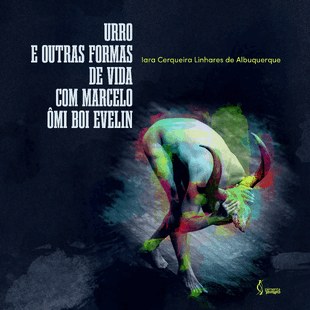
Urro e outras formas de vida com Marcelo Ômi Boi Evelin
Unknown artist
- Source:
- Library of Congress
- Rights:
- Public domain — free to use, share and adapt.
- Recorded as:
- Public Domain
The work reveals how contemporary dance in 2022 engages with visual art and digital technology to explore the body as both physical instrument and abstract image. The extreme flexibility on display connects to growing crossover between contemporary dance, circus arts, and somatic practices. The colour treatment signals a deliberate rejection of documentary realism in favour of a visionary or ecstatic representation of movement—a key shift in how dance is being archived and theorized in the digital era.
What you are looking at
A single dancer is captured mid-movement against a dark, starlit background. The figure's body is twisted into a deep forward fold, the torso parallel to the ground, legs extended upward and back in a near-vertical line. The dancer wears minimal costume—dark briefs or shorts—exposing the full musculature of the body. The composition is painted or rendered with vivid, almost psychedelic colour: the skin glows in shades of green, yellow, pink, and purple, with particular intensity along the spine, limbs, and flexed joints. The lighting is otherworldly, as if the body itself is luminous or painted with fluorescent pigment. The dark background recedes into space, studded with small points of light like stars or particles, creating a sense of weightlessness or cosmic suspension. The image has the visual language of contemporary dance photography or digital art, with heavy colour saturation and painterly enhancement.
The dancing
One dancer, alone in the frame. The body is in extreme flexion: the head and shoulders are dropped toward or past the knees in a forward fold, while the legs are nearly vertical, creating a sharp V-shape between torso and lower body. The weight appears to be supported primarily on the hands or upper back, suggesting either a deep backbend transition or an inverted position. The musculature is defined and visible throughout, indicating strength and control. The pose is symmetrical and balletic in its formal precision, despite the extreme nature of the extension.
The dance depicted
This appears to be contemporary dance, possibly incorporating acrobatic or contortion elements. The extreme spinal flexibility and inversion suggest training in contemporary ballet or acro-dance. The pose is reminiscent of advanced flexibility work seen in contemporary circus arts, yoga-derived movement, or experimental theatre dance. Without additional context, the specific technique cannot be firmly identified, but the image suggests a dancer trained in multiple movement vocabularies—classical ballet discipline combined with extreme mobility and possibly partner or acrobatic work. The title references "Marcelo Ômi Boi Evelin," suggesting this may be documentation of work by or featuring that artist.
How it was made
This appears to be a digital artwork or heavily post-processed photograph, created in 2022. The colour treatment is clearly digital: the fluorescent, almost neon hues of the body do not occur naturally in photography or painting and suggest either body projection mapping, heavy digital colour grading, or a composite image. The starfield background and the uniform luminescence of the skin indicate digital manipulation. The technique allows the artist to visualise the dancer's body as energy or as existing in an abstract, non-naturalistic space—fitting for contemporary dance documentation that prioritizes emotional or conceptual content over photorealistic representation.
About this work
This is a contemporary dance artwork from 2022 featuring a single dancer in a striking position of extreme spinal flexibility and inversion. The figure is rendered in vibrant, almost hallucinogenic colour against a cosmic backdrop, transforming a documentation of physical movement into a visually surreal meditation on the body. The work belongs to a broader contemporary practice of re-presenting dance through digital art and enhanced photography, treating the dancer's body as both subject and abstract visual material. The image demonstrates how contemporary dance artists and visual artists collaborate to create new modes of seeing movement—not merely capturing what happened, but reimagining it.
How to look at it
Attend to the dancer's spine: the extreme forward fold creates a dramatic line that dominates the composition. Notice how the colour intensifies along the vertebral column and the extended legs, suggesting that the artist is visualising the spine and joints as sites of energy or tension. The starfield background is not merely decorative—it situates the body in a weightless, abstract space, suggesting that this movement exists outside normal gravity or time. The image freezes a moment of maximum vulnerability and maximum control simultaneously.
The artist
The catalogue does not record the artist responsible for this work. The title suggests involvement of or dedication to someone named Marcelo Ômi Boi Evelin. The subtitle "Joro Carquejera Linhares de Albuquerque" may refer to another collaborator or the source. Without additional information, the creative team and their practice cannot be established.
The period
By 2022, contemporary dance had increasingly merged with digital media, visual art, and technology. This period saw growing experimentation with body-projection mapping, digital enhancement of dance photography, and the use of vivid colour and abstraction in dance documentation. The work sits within a broader aesthetic in which dance is no longer confined to the stage or the naturalistic frame—the body becomes material for visual transformation. The fluorescent colour treatment reflects influences from club culture, digital art, and post-human aesthetics circulating in performance art of the 2020s.
Where it lives
The work is recorded in the Library of Congress catalogue. It is listed as a 2022 work with Brazilian or Portuguese-language associations based on the title and subtitle, but the holding collection, current location, and physical format are not recorded.
Dance in this work
Questions about this work
Is this a photograph?
It appears to be a digitally created or heavily post-processed image. The fluorescent colours of the body, the starfield background, and the uniform luminescence indicate digital manipulation or composite creation rather than straight photography. The vivid, otherworldly colour palette is not photorealistic.
What dance technique is this?
The extreme spinal flexibility and the inverted position suggest training in contemporary dance combined with acrobatic or contortion work. The pose could be contemporary ballet, circus arts, or a fusion practice. Without more context, the specific technique name cannot be confirmed.
Who is the dancer?
The catalogue does not identify the dancer. The title references Marcelo Ômi Boi Evelin, who may be the dancer, choreographer, or subject, but this cannot be confirmed from the available record.
More dance artwork





