48 works in this view — arrow keys or swipe to move between them.
Dance in Art · 2019
Waltzing
Unknown artist
- Medium:
- Lithograph
- Dance:
- Waltz
- Era:
- Early 1800s (Waltz Revolution)
- Source:
- New York Public Library
- Rights:
- Public domain — free to use, share and adapt.
- Recorded as:
- public_domain
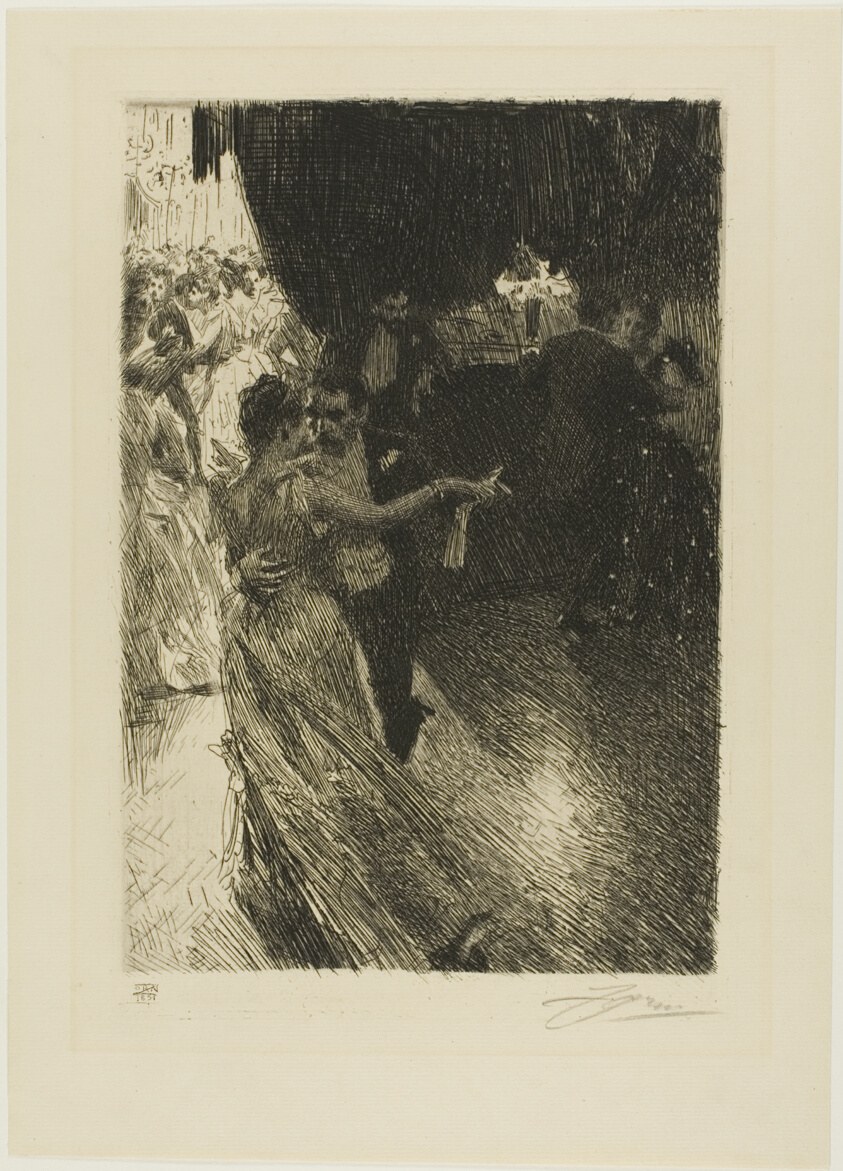
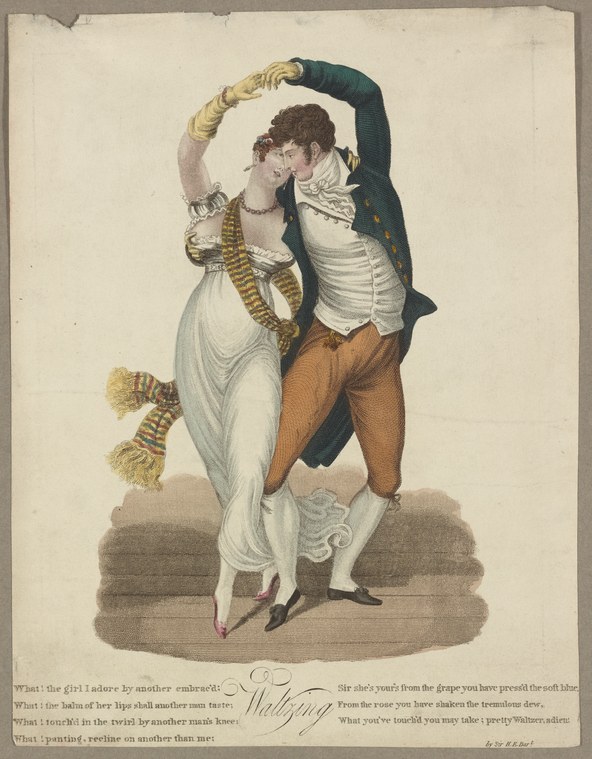
This work is essential evidence of the waltz revolution and the cultural storm it created. No painting or description captures the scandal and fascination of the waltz's physical closeness as vividly as contemporary prints like this. For dancers and historians, it shows how the waltz was not merely danced but *imagined*—exaggerated, satirized, and debated through popular visual culture.
What you are looking at
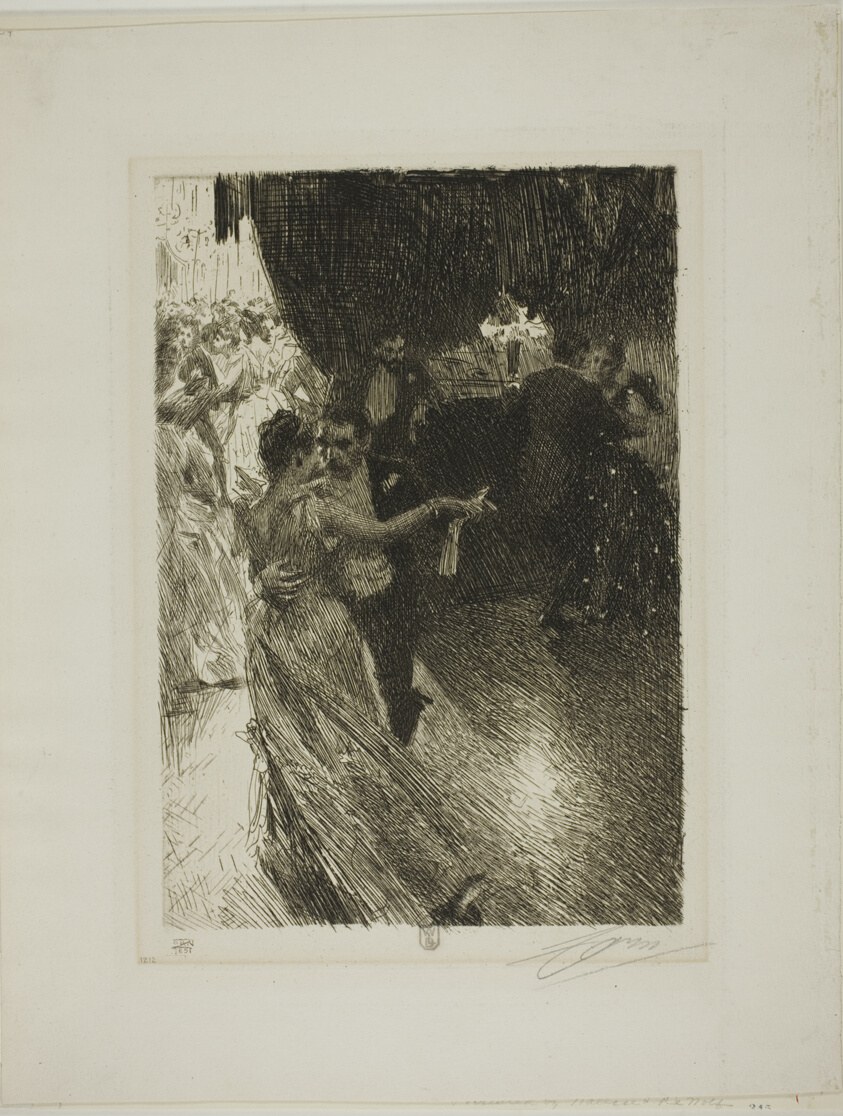
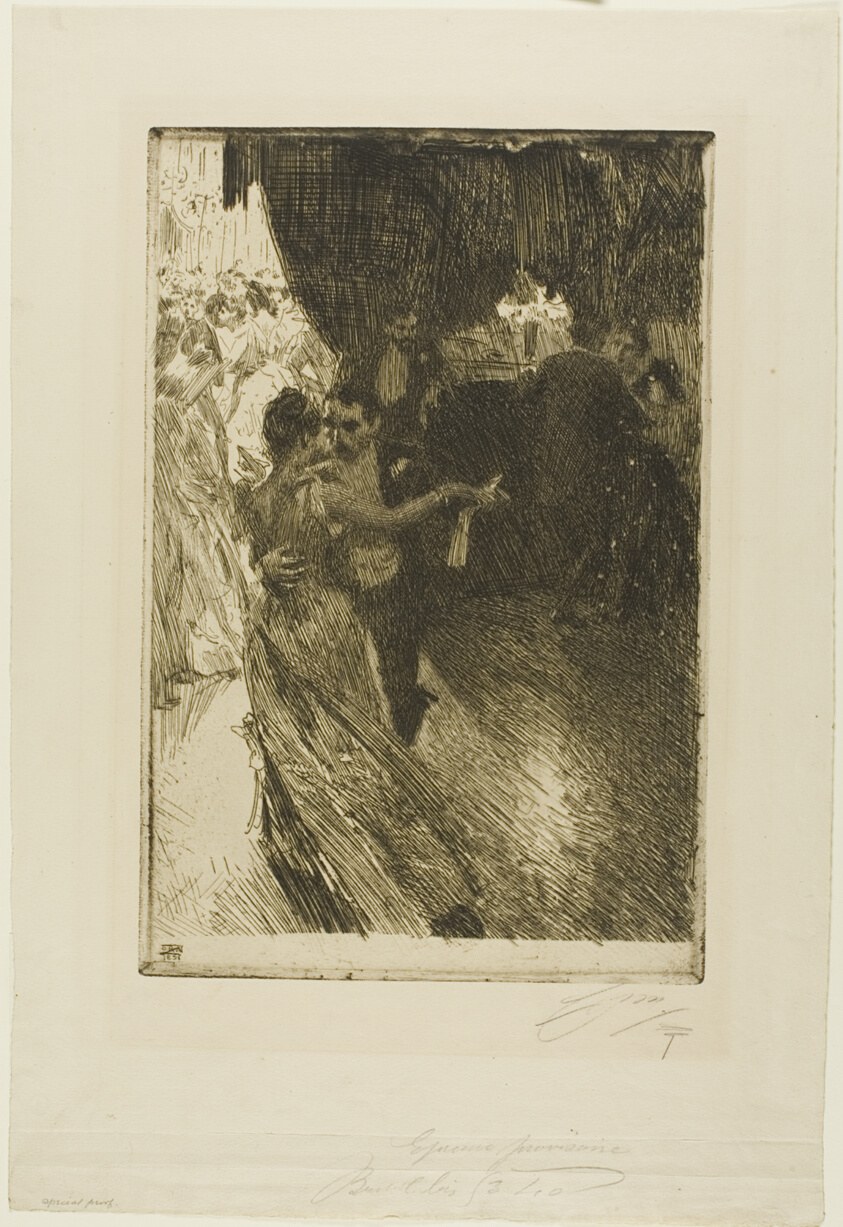
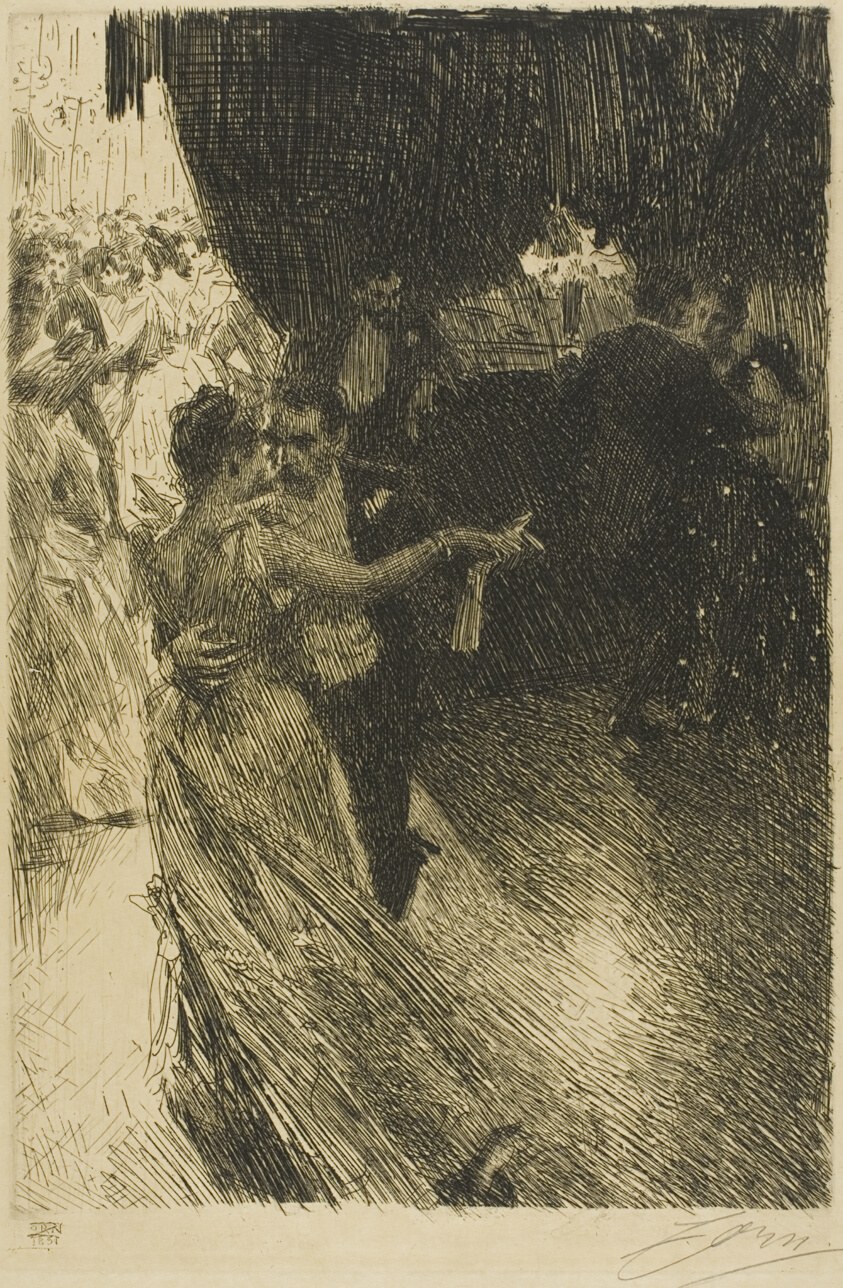
A couple performs an intimate waltz in a shallow stage space defined by gray shadow below. The woman, in a high-waisted white empire-line gown with puffed sleeves and a trailing skirt, is lifted slightly off the floor, her body arched backward in an exaggerated lean. Her male partner, dressed in a dark coat with brown breeches and black shoes, supports her with his right arm around her waist while his left arm extends upward, creating a dramatic arc above her head. Both figures wear formal early 19th-century dress; the woman has dark curled hair and wears a pearl necklace, while the man sports slicked dark hair. The composition is theatrical and sensational, emphasizing the physical closeness and the woman's apparent weightlessness. Text beneath the image includes dialogue in quotation marks, suggesting this is a commentary on or caption to the dancing scene.
The dancing
The two dancers are in a closed ballroom hold, but the frame is exaggerated far beyond ballroom convention: the woman's body is thrown back almost horizontally, fully dependent on her partner's support, while his raised left arm and her extended right arm create an open upper line. The woman's weight appears to be carried entirely by the man, creating a moment of high drama and instability. This asymmetry and lift are not typical of waltz technique but suggest artistic license for visual effect.
The dance depicted
The work depicts the waltz, the revolution in social dance that swept European ballrooms in the early 1800s. The waltz introduced the closed embrace and rotation for the first time in fashionable European dance, shocking conservative society with its physical intimacy. This image captures the sensational aspect of that moment—the scandal of the hold, the dizzying spin implied by the arched bodies, the woman's apparent surrender to the man's lead. The exaggerated backbend is theatrical rather than technically accurate, but it communicates the intoxication and physical daring the waltz represented to contemporary observers.
How it was made
This is a hand-colored lithograph, a reproductive print technology that allowed mass circulation and relatively affordable distribution compared to engravings or paintings. The lithographic process enabled the delicate modeling of flesh tones and fabrics visible here—the subtle shading of skin, the translucence of the white gown, the depth of the man's dark coat. The colored version suggests an educated middle-class audience; black-and-white proofs would have reached a broader market. The technique allowed the artist to distribute commentary on contemporary dance culture rapidly and widely.
About this work
This is a satirical or sensational commentary on the waltz craze of the early 1800s, captured in a hand-colored lithograph from the New York Public Library collection. The image shows a couple in a dramatic, exaggerated embrace that communicates both the transgressive intimacy and the dizzying physical sensation of this revolutionary dance. The print belongs to a substantial tradition of popular criticism and celebration of the waltz, made visible through prints, broadsides, and caricature in the years when the dance first challenged European ballroom etiquette. The theatrical pose—the woman's extreme arch and lift—goes beyond documentary accuracy to make a visual argument about what the waltz meant to its contemporaries: dangerous, intimate, intoxicating, and morally suspect to some.
How to look at it
Observe the moment the artist has chosen: not a stable, poised moment in the waltz's rotation, but a climactic backbend, the woman almost horizontal and fully dependent on her partner. This is not accurate waltz technique—the actual dance involves upright posture and rapid turning—but it communicates the sensation and the scandal: the loss of control, the physical surrender, the dizzying speed implied. The text at the bottom, though partially legible in the image, situates this as commentary; the print is arguing about what the waltz *means*, not simply showing what it looks like.
The period
The waltz emerged in Vienna in the 1780s and began its invasion of Paris and London around 1810–1815. By the 1820s–1830s, when this print was likely made, it had become the dominant social dance of the ballroom, but remained controversial among conservative observers who saw it as immoral, too fast, and dangerously intimate. Contemporary medical and moral criticism focused on the closed hold, the dizzying rotations, and the physical contact between male and female dancers. Prints and caricatures of the waltz proliferated, ranging from celebratory to satirical, often exaggerating the physical extremes the dance allowed. This print sits squarely in that tradition of popular commentary on ballroom fashion and scandal.
Where it lives
This lithograph is held in the New York Public Library collection, which has preserved it as a record of early 19th-century popular visual culture and dance history. The work exemplifies the role of prints in disseminating commentary on fashionable society.
Dance in this work
Questions about this work
Is this a realistic depiction of how the waltz was danced?
No. While the waltz did involve a closed hold and rotations that could induce dizziness, this extreme backbend is exaggerated for dramatic effect. The artist has chosen a theatrical moment to communicate the intensity and scandal of the dance rather than to document its actual technique. This was typical of satirical and sensational prints of the period.
Why was the waltz so controversial?
The waltz introduced the closed embrace to fashionable dance at a time when men and women typically danced at a distance or with only hand contact. The physical closeness, the rapid rotation, and the apparent loss of control alarmed conservative critics who saw it as a threat to morality. Prints like this both mocked and celebrated that transgression.
What does the text at the bottom say?
The text is partially legible in this image but appears to include dialogue or a caption relating to the dance and the couple's intimacy. Without a higher-resolution view or transcription, the full commentary cannot be confirmed, but such captions were standard in popular prints to frame or satirize the scene.
More Waltz artwork