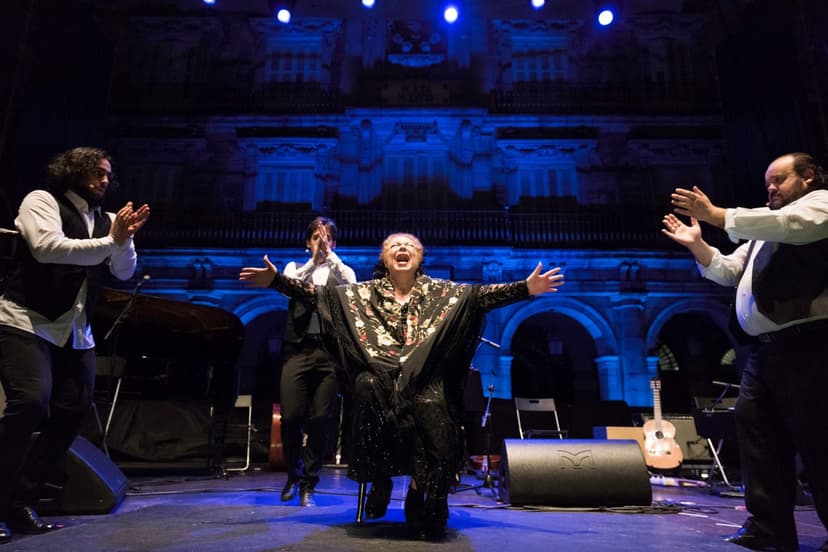
La Chana
Legend of Dance
Why They Matter
La Chana's importance lies in her rhythmic imagination. She showed that flamenco footwork could be simultaneously grounded in compás, dramatically legible and startlingly inventive. Her later seated practice also challenges narrow definitions of virtuosity: power does not depend solely on traveling…
Watch
IDFA 2016 | Trailer | La Chana
International Documentary Film Festival Amsterdam (IDFA)
Official world-premiere festival trailer connects archival dancing to her 2013 return.
Videomatón, con LA CHANA
EL PAÍS
A reputable news organization's direct interview provides first-person context without relying on recycled biography.
La Chana at Amsterdam Spanish Film Festival
Amsterdam Spanish Film Festival
Festival documentation shows how La Chana sustains rhythmic authority in seated performance.
Biography
Antonia Santiago Amador, known as La Chana, was born in Barcelona in 1946 and grew up in L'Hospitalet de Llobregat in a Catalan Romani family where flamenco was woven into everyday life and celebration. She learned by watching and listening within her family and flamenco community rather than through formal training. Her stage name came from her uncle El Chano, a guitarist and singer with whom she began performing as a teenager at La Bota in Tossa de Mar.
By eighteen, La Chana was dancing at Los Tarantos in Barcelona, where her concentrated rhythmic talent—especially her ability to improvise complex footwork within compás—quickly set her apart. She appeared in Peter Sellers' 1967 film *The Bobo*, a surviving record of her early professional period. Work in Madrid at Las Canasteros and engagements abroad established her as an international performer. A 1977 appearance on José María Íñigo's television program *Esta noche… fiesta* broadened her Spanish audience, and accounts from that era emphasize not only her velocity but her capacity to reorganize rhythmic accents in the moment, making footwork function like percussion.
La Chana withdrew from the stage at the height of her success during the late 1970s. She has publicly discussed that this withdrawal followed domestic abuse by her first husband—a history that explains what older accounts sometimes treat as mysterious, and one she later chose to address in interviews and in Lucija Stojević's documentary.
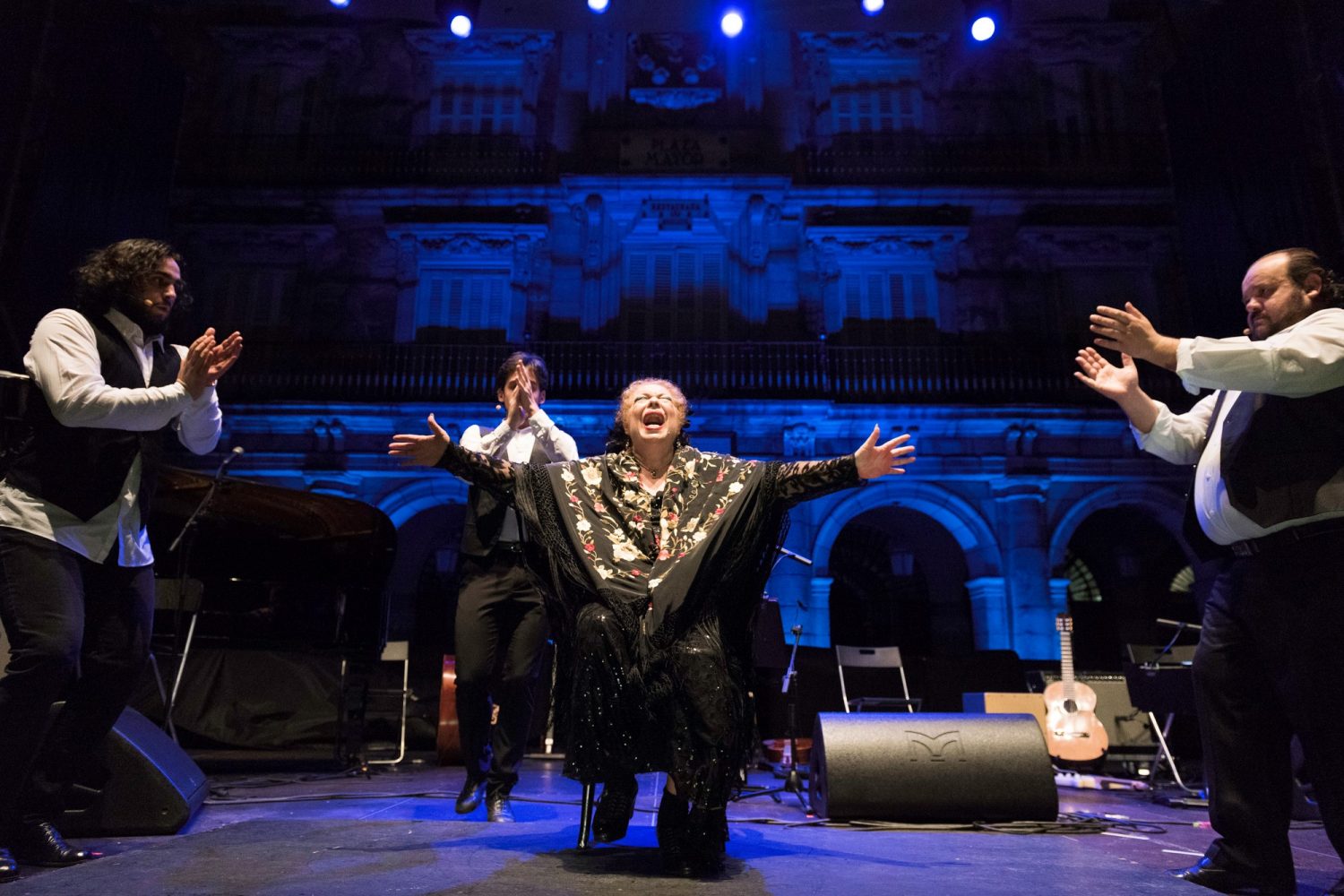
In 1985 she returned with La Cumbre Flamenca and toured internationally before retiring again after marrying Félix Comas. Physical changes in later years altered rather than ended her artistic practice. In 2013, preparing a final performance, she demonstrated that seated flamenco could retain formidable compás, gesture, attack and improvisational presence—proving that rhythmic authority need not depend on traveling steps or amplitude alone.
Lucija Stojević's documentary *La Chana* premiered at IDFA in 2016 and won the festival's audience award. Subsequent festival recognition brought a new international audience to La Chana's work and testimony. The film's archival passages, rehearsal scenes and seated performance recast her not as a vanished curiosity but as an artist whose rhythmic thinking remained alive and transmissible.
Career Highlights
At eighteen, performed at Los Tarantos in Barcelona. El País El País
Appeared in the Peter Sellers film The Bobo. East Village Entertainment East Village Entertainment
Won acclaim at Las Canasteros in Madrid and expanded international engagements. El País El País
Reached a wider Spanish television audience through Esta noche… fiesta. El País El País
Withdrew from the stage during the first major phase of her career. Gran Festival Flamenco de Barcelona Gran Festival Flamenco de Barcelona
Returned with La Cumbre Flamenca and resumed international touring. El País El País
Ended the second sustained phase of her professional stage career. Gran Festival Flamenco de Barcelona Gran Festival Flamenco de Barcelona
Gave a culminating seated performance documented by Lucija Stojević. Instituto Cervantes Instituto Cervantes
La Chana premiered at IDFA and won the VPRO Audience Award. Official documentary site Official documentary site
The documentary won both the Gaudí and Feroz awards for best documentary, extending public access to her story and archival dancing. Official documentary site Official documentary site
Legacy & Impact
La Chana expanded what flamenco footwork could express. She showed that compás, dramatic legibility and rhythmic invention were not competing but complementary—that speed and precision could serve improvisational freedom rather than constraint. Her later seated practice challenged narrow definitions of virtuosity: power resides not only in traveling steps but in timing, accent, gaze, hands and the authority with which a dancer organizes sound. For dancers now, she remains a model of rhythmic imagination working within and reinventing tradition.


Explore More Legends
Discover the dancers, teachers, choreographers, and cultural icons who shaped how the world moves.
Keep the thread going
Dance history, technique, and the occasional rabbit hole — in your inbox. Thoughtful, infrequent, unsubscribe anytime.
Free. No spam. One click to leave.