Teacher · Cultural Preserver · Choreographer
Pepsi Bethel
Keeper of the Hoofer Flame
Why They Matter
He maintained the connection between jazz-era hoofers and modern tap artists during decades when the art form risked being forgotten.
Styles Pepsi Bethel shaped
Each one links to the style’s own page — its origins, music, tempo and video.
Biography
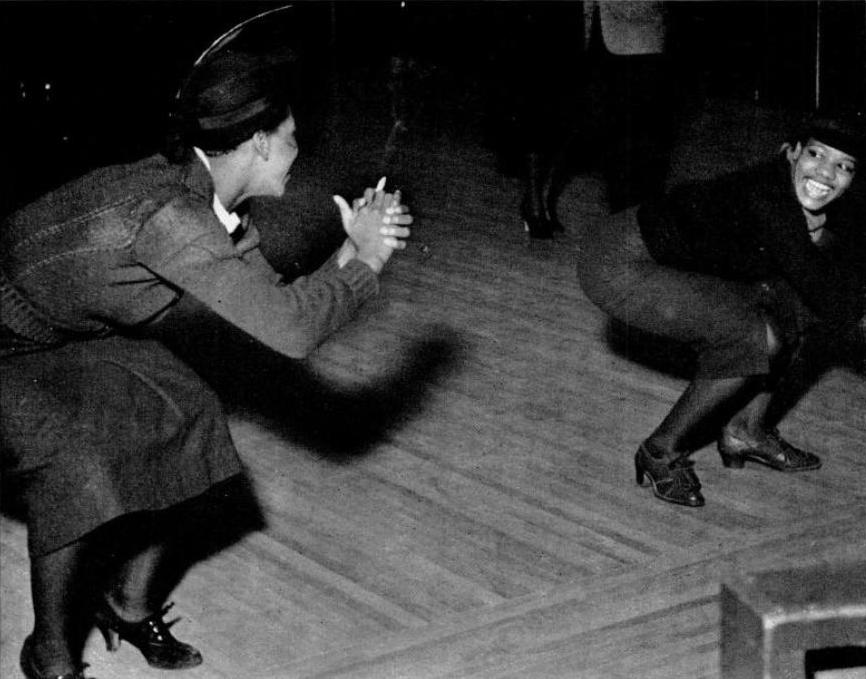
Alfred "Pepsi" Bethel was born in Greensboro, North Carolina, and became a major performer-teacher of mid-century Black vernacular jazz who carried the social-dance vocabulary of the Savoy Ballroom era into concert dance, education, and Broadway. As a child, Bethel visited Harlem and encountered the Savoy during the swing era—a community classroom where social dancers developed movement in direct conversation with live jazz music. He brought that experience back to Greensboro, organizing the Southland-400, a three-couple performance group modeled on the standards he had observed in Harlem. In 1942, Bethel and Jerry De Moska placed third in the Lindy Hop division of the Harvest Moon Ball; in 1946 he returned and placed second with Leona Jones. Between contests he worked in New York entertainment associated with Whitey's Lindy Hoppers, including performances in *Basin Street Revue* at the Roxy and the touring *Born Happy*.
Mura Dehn's film project became central to Bethel's historical visibility. Dehn began filming Savoy dancers to preserve Black social-dance practices, work eventually assembled as *The Spirit Moves*. Around 1950, Bethel appears in that footage demonstrating vernacular jazz material alongside dancers including Al Minns and Leon James. Bethel also sought formal study beyond the ballroom: in 1954 he received a scholarship to Adelphi College's dance school, where he studied ballet and modern dance for two years. After settling in New York in 1961, he appeared as an original dancer in the Broadway musical *Kwamina*, which opened on October 23 and ran through November 18 of that year.
During the 1960s and 1970s, Bethel taught at the Alvin Ailey school and at the Clark Center, placing his vernacular-jazz knowledge in conversation with the developing New York concert-dance world. In 1968–69 he performed on an African tour organized by Dehn; the State Department tour visited nine countries in 1969. With encouragement from Thelma Hill, he launched the American Authentic Jazz Dance Company in 1972, a ensemble that framed Black vernacular forms—Lindy Hop, Charleston, cakewalk and related jazz-era vocabulary—as serious theatrical material for the concert stage.
Bethel's best-documented Broadway choreography is *One Mo' Time*, Vernel Bagneris's revue set in the world of Black vaudeville. The production opened on Broadway on June 28, 1980, and ran through May 30, 1982, with Bethel credited as choreographer. He also collaborated with Bagneris on *Staggerlee* (1987) and *Jelly Roll!* (1994). For the 2002 Broadway revival of *One Mo' Time*, Bethel served as creative consultant.
Bethel died in the Bronx on August 30, 2002. A 1997 apartment fire had destroyed much of his archive, explaining why some company dates and credits survive unevenly. What remains—film, institutional archives, Broadway records, students' testimony and his choreography—shows a career that connected Black social dance to lecture-demonstrations, international touring, concert presentation, pedagogy and commercial theatre without severing the movement from its rhythmic and communal sources.
Career Highlights
Bethel and Jerry De Moska placed third in the Harvest Moon Ball’s Lindy Hop competition, according to the Guardian obituary.
He returned to the Harvest Moon Ball and placed second with Leona Jones, according to the Guardian obituary.
Mura Dehn filmed Bethel and other Savoy artists for material later assembled in The Spirit Moves.
He received a scholarship to study at Adelphi College’s dance school, where the Guardian reports two years of ballet and modern-dance study.
He appeared as an original dancer in the Broadway musical Kwamina, documented by IBDB.
He performed on Dehn’s American jazz-dance tour in Africa; the Los Angeles Times specifies a 1969 State Department tour through nine countries.
With encouragement from Thelma Hill, he launched the American Authentic Jazz Dance Company, according to the Guardian.
One Mo’ Time opened on Broadway with choreography credited to Bethel; the production ran until 1982.
He collaborated with Vernel Bagneris on Staggerlee, as reported by the Guardian and Los Angeles Times.
The Los Angeles Times credits him as a consultant or choreographer on Bagneris’s Jelly Roll!; verify the exact role against the production program before publication.
IBDB credited him as creative consultant for the Broadway revival of One Mo’ Time.
Bethel died in the Bronx on 30 August, aged 83.
Gallery
Legacy & Impact
Bethel's career matters because it makes visible a route from Black social dance to concert and Broadway stages that did not require stripping the movement of its vernacular identity. He preserved and taught a broad repertoire while framing its rhythms and expressive values as serious theatrical material. His work with Mura Dehn left a film record; his teaching at Ailey and the Clark Center carried knowledge into later generations; his company argued for vernacular jazz within concert dance; and *One Mo' Time* placed his choreographic understanding into a long-running Broadway production. His legacy is strongest when presented as stewardship, performance, pedagogy and theatrical translation.


Explore More Legends
Discover the dancers, teachers, choreographers, and cultural icons who shaped how the world moves.
Keep the thread going
Dance history, technique, and the occasional rabbit hole — in your inbox. Thoughtful, infrequent, unsubscribe anytime.
Free. No spam. One click to leave.