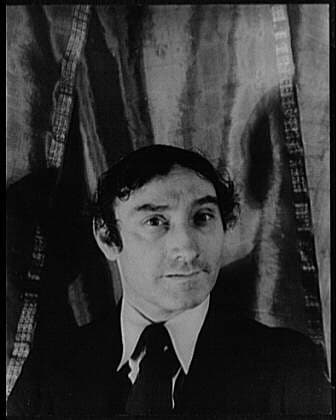
Vicente Escudero
Legend of Dance
Why They Matter
Escudero's lasting importance lies in making male flamenco dance an explicit subject of modern choreography, criticism and self-theory. He insisted that tradition could be rigorous without being static and demonstrated that the dancer's line, footwork, costume, stage space and visual image could for
Biography
Vicente Escudero Urive was a Spanish flamenco dancer, choreographer, painter and dance theorist whose work fundamentally reshaped how male flamenco performance could be conceived and presented. Born in Valladolid on 27 October 1888, Escudero developed as a largely self-directed dancer, cultivating an early fascination with percussive surfaces and rhythmic invention that would define his later approach to footwork and sound architecture.
Paris proved decisive in his artistic maturation. After performing at the Olympia in 1920, Escudero absorbed Cubist and Surrealist ideas while working among European modernists. His concert career consolidated through the late 1920s, with the farruca becoming a signature vehicle and dancer Carmita García an important long-term stage partner. In 1925, he performed the role of Carmelo in a Paris staging of Manuel de Falla's *El amor brujo*, a production that helped establish him as one of the most visible male Spanish dancers of the interwar period.
Escudero's innovation lay not simply in placing flamenco on the concert stage but in treating spacing, silhouette, stillness and rhythmic contrast as compositional materials. Photographs by Man Ray (1928) and Carl Van Vechten (1933) reveal how deliberately his dancing image conversed with modernist photography. He understood flamenco tradition not as fixed but as capable of engaging contemporary art without losing its roots—a conviction articulated in his 1947 publication *Mi baile* and the essay "Influencias del cubismo y del surrealismo en mis bailes."
In 1951, Escudero presented the *Decálogo del buen bailarín*, ten prescriptions for male flamenco dancing emphasizing sobriety, coordination, clear sound and traditional dress. This document remains historically important as evidence of one influential twentieth-century aesthetic position. Escudero continued performing, lecturing, exhibiting and appearing on film into later life. In 2021, his family placed a major collection of costumes, awards and documentary materials with Spain's Centro de Documentación de las Artes Escénicas y de la Música, ensuring that his legacy could be studied through primary objects and archives. He died in Barcelona on 4 December 1980.
Career Highlights
Gave an official Paris performance at the Olympia, an early milestone in his international career. Routledge Encyclopedia of Modernism Routledge Encyclopedia of Modernism
Performed the role of Carmelo in a Paris staging of Manuel de Falla's El amor brujo. Andalucía cultural biography Andalucía cultural biography
Emerged as a mature concert dancer after years in cafés cantantes and theatrical venues. Routledge Encyclopedia of Modernism Routledge Encyclopedia of Modernism
Sat for Man Ray's portrait Vicente Escudero, bailaor de flamenco, now in Museo Reina Sofía. Museo Reina Sofía Museo Reina Sofía
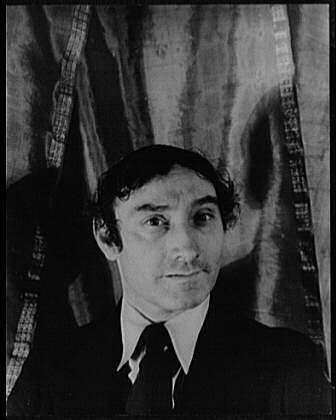
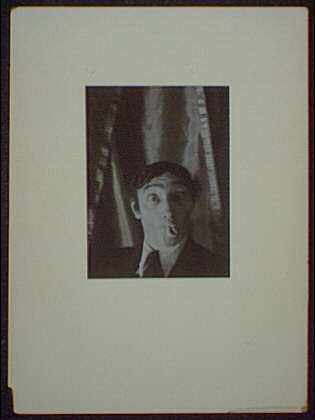
Was photographed in New York by Carl Van Vechten during his international touring period. Library of Congress Library of Congress
Published Mi baile and wrote on Cubist and Surrealist influence in his dances. Museo Reina Sofía Museo Reina Sofía
Publicly presented the Decálogo del buen bailarín, his ten-point aesthetic statement for male flamenco dance. Andalucía cultural biography Andalucía cultural biography
Richard Avedon photographed him; the negative is preserved by the Smithsonian's National Museum of American History. Smithsonian Smithsonian
His family deposited a major documentary and object collection with CDAEM under a long-term loan agreement. CDAEM CDAEM
Gallery
Legacy & Impact
Escudero's lasting importance lies in making male flamenco dance an explicit subject of modern choreography, criticism and self-theory. He demonstrated that tradition could be rigorous without being static, and that the dancer's line, footwork, costume, stage space and visual image could form a unified modern artwork. His writings remain valuable evidence of one influential twentieth-century viewpoint on flamenco aesthetics, even where contemporary flamenco practice may diverge from his gendered prescriptions.


Explore More Legends
Discover the dancers, teachers, choreographers, and cultural icons who shaped how the world moves.
Keep the thread going
Dance history, technique, and the occasional rabbit hole — in your inbox. Thoughtful, infrequent, unsubscribe anytime.
Free. No spam. One click to leave.