Dybbuk is a narrative ballet made by Jerome Robbins for New York City Ballet to a score Leonard Bernstein composed for the occasion, drawing on S. Ansky's Yiddish play The Dybbuk as its literary source. It premiered on 16 May 1974 at the New York State Theater, Lincoln Center, with designs by Rouben Ter-Arutunian, costumes by Patricia Zipprodt and lighting by Jennifer Tipton.
What is danced
The article does not describe steps, holds or choreographic vocabulary — it covers the plot of Ansky's source play, the numerological/serial construction of Bernstein's score, the original cast, and later recordings, but gives no synopsis of what Robbins actually staged scene by scene. As a result nothing here can responsibly be coded as danced vocabulary: the piece is known to be a Jerome Robbins work for a classical company, but the source material offers no citable evidence of technique, partnering, or set pieces.
Context
Robbins made Dybbuk in 1974 during his years as ballet master at New York City Ballet, working again with Bernstein after West Side Story; the collaboration turned to a mystical Jewish folk source rather than a contemporary urban one. The article notes that the score's use of Kabbalistic numerology (dividing on 36 and 18, the numerical values tied to the name Leah and the word chai) produced Bernstein's 'most austerely contemporary-sounding score to date,' and that critics found the mix of serial and tonal writing unusual for him — tonal passages marking the 'good' characters against dissonant, sometimes twelve-tone writing for the malevolent ones.
Staging history
The ballet was substantially reworked later in the same year: both the choreography and the score were revised, and the piece was retitled Dybbuk Variations for a separate premiere in November 1974. The article gives no further stage history beyond this revision and two cited recordings (New York City Ballet Orchestra with Bernstein, David Johnson and John Ostendorf, 1974; New York Philharmonic with Bernstein and Jennie Tourel, 1961, presumably of related material).
How to watch it
Listen for the split between tonal and atonal writing described in the sources — Bernstein reportedly reserved tonal material for the sympathetic characters and hard-edged, sometimes twelve-tone dissonance for the forces associated with possession and death. Beyond that musical-dramatic contrast, the article gives no guidance on staging or movement to watch for, so approach any viewing with that gap in mind rather than expecting a fixed set of set-piece dances.
Credits
- composer: Leonard Bernstein
More from Jerome Robbins
Other staged works in the register connected to this one by author or lineage.
 West Side StoryMusical theatre · 1957Robbins · video
 Fancy FreeBallet · 1944Robbins · video
 The ConcertBallet · 1956Robbins · video
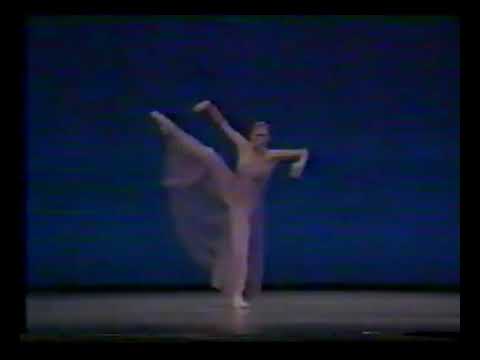 Antique EpigraphsBallet · 1984Robbins · video
 A Suite of DancesBallet · 1994Robbins · video
- AndantinoAndantinoBallet · 1981Robbins
- In Memory Of ...In Memory Of ...Ballet · 1985Robbins
 BrandenburgBallet · 1997Robbins · video