In Memory of ... is a one-act plotless ballet made by Jerome Robbins to Alban Berg's Violin Concerto (subtitled 'To the Memory of an Angel'), a score written after the death of the young Manon Gropius, daughter of Alma Mahler and Walter Gropius. It belongs to the line of Robbins works for New York City Ballet built directly on a single concert score rather than a story libretto, using the concerto's own memorial character — themes from Mahler, a Carpathian folk tune, and Bach's chorale O Ewigkeit, du Donnerwort woven into Berg's music — as the ballet's implicit subject.
What is danced
The source article gives no synopsis, scene breakdown, or description of steps, so nothing about the actual choreography — holds, partnering, use of pointe, ensemble versus solo writing — can be stated on its authority. What can be said from the record is structural: it is a single continuous act for a cast headed by two men and one woman (Suzanne Farrell, Joseph Duell, Adam Lüders), which points to a central female role attended by two male partners, consistent with the concerto's own two-movement, threnody-like shape, but this is an inference from the cast list rather than a documented account of movement.
Context
The ballet had its premiere in the mid-1980s at New York City Ballet, where Robbins was serving as ballet master, working (as he often did in this period) directly from a pre-existing concert score rather than commissioning one. Berg's Violin Concerto was already established in the concert repertory as a memorial piece before Robbins set it, and the choreography sits alongside his other NYCB scores-first works of the era as an example of the company's continuing commitment to plotless, music-driven ballet-making in the generation after Balanchine.
Staging history
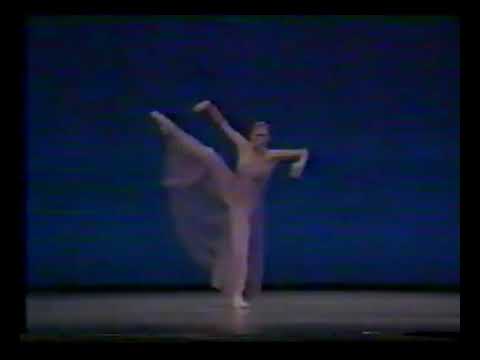
The premiere is recorded as 13 June 1985 at the New York State Theater, Lincoln Center, with designs by David Mitchell (scenery), Dain Marcus (costumes) and Jennifer Tipton (lighting). A performance was recorded for television and broadcast on PBS's Great Performances: Dance in America series in 1987, which is the only afterlife of the work documented in this source; the article gives no information on later revivals, restagings by other companies, or changes to cast or production since the original run.
How to watch it
Because the ballet answers directly to Berg's Violin Concerto, attention should go to how the choreography tracks the concerto's own arc from lyric opening to the incorporation of the Bach chorale near its close, since the score itself is structured as a memorial. Beyond that musical scaffolding, the source gives no guidance on step vocabulary or staging convention, so viewers should treat any claims about specific movement style as external to this record.
Credits
- composer: Alban Berg
More from Jerome Robbins
Other staged works in the register connected to this one by author or lineage.
 West Side StoryMusical theatre · 1957Robbins · video
 Fancy FreeBallet · 1944Robbins · video
- DybbukDybbukBallet · 1974Robbins
 The ConcertBallet · 1956Robbins · video
 Antique EpigraphsBallet · 1984Robbins · video
 A Suite of DancesBallet · 1994Robbins · video
 Brahms/HandelBallet · 1984Robbins · video
 The Goldberg VariationsBallet · 1971Robbins · video