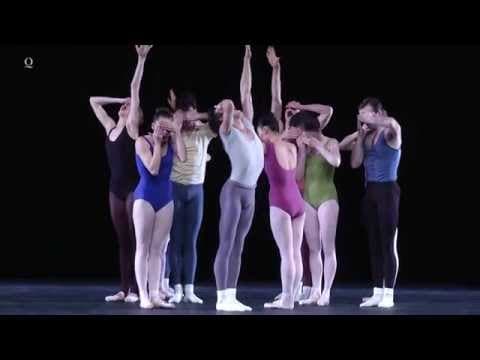
Moves (1959)
Moves is a plotless ensemble ballet made in 1959 by Jerome Robbins for his short-lived touring company Ballet: USA, and it is defined by a single radical decision: it is danced in complete silence, with no score, no set, and no costumes beyond practice clothes. It began as a commission for Aaron Copland, who struggled to complete the music in time for rehearsals; when Robbins found he preferred working from the counts alone, he abandoned the score entirely and built the whole piece around the absence of music, later giving it the title Moves.
What it contains
- Classical Ballet · The whole ballet, an ensemble piece with no divided scenes or acts — Robbins specified the underlying vocabulary directly: classical ballet technique as danced by an American company, built into a plotless, decorative ensemble showcase rather than a narrative ballet. Source: "The technique is essentially classic ballet (in the way that Americans employ it)"
What is danced
The article gives limited detail on specific steps, but is explicit about the underlying technique: Robbins described the vocabulary for the company's dancers as 'essentially classic ballet (in the way that Americans employ it),' intended as 'a decorative statement – open, positive, inventive, joyous ... a parade; a presentation; perhaps elegant, witty, tender and with a sure technique.' Robbins had also drafted 'a list of twenty-two potential movements' as a starting point for the choreography, though the article does not enumerate them or describe the finished steps scene by scene.
Context
Moves was made under real institutional pressure: Ballet: USA was about to embark on a sixteen-country State Department tour, and the piece's absence of music was seen by the tour's sponsors, ANTA, and the State Department panel as a scandal rather than an innovation, with attempts made to substitute Robbins's earlier Interplay instead. Its existence as an accident of production history — a commissioned Copland score that never arrived in usable form, reworked by Robbins into a decision to strip the ballet to movement alone — makes it an unusually well-documented case of a choreographic experiment in stripped-down, unaccompanied classical dancing, staged at the height of Cold War cultural diplomacy through touring ballet.
Staging history
After its premiere on the 1959 tour, Moves entered other repertories over the following decades: Robbins staged it for Batsheva Dance Company in Israel in 1966, it joined Joffrey Ballet's repertory in 1967, his own New York City Ballet mounted it in 1984, and he remounted it again for Paris Opera Ballet in 1993.
How to watch it
There is no music to orient the ear, so watch for how the dancers hold ensemble timing among themselves: the article notes the choreography contains 'sight cues and small audible cues' built in so performers can stay together without a conductor or count track. Because the piece is danced in practice clothes with no scenery, the focus falls entirely on line, relationship between bodies, and the classical technique Robbins described as danced 'in the way that Americans employ it.'
In the same lineage
Other staged works in the register connected to this one by author or lineage.
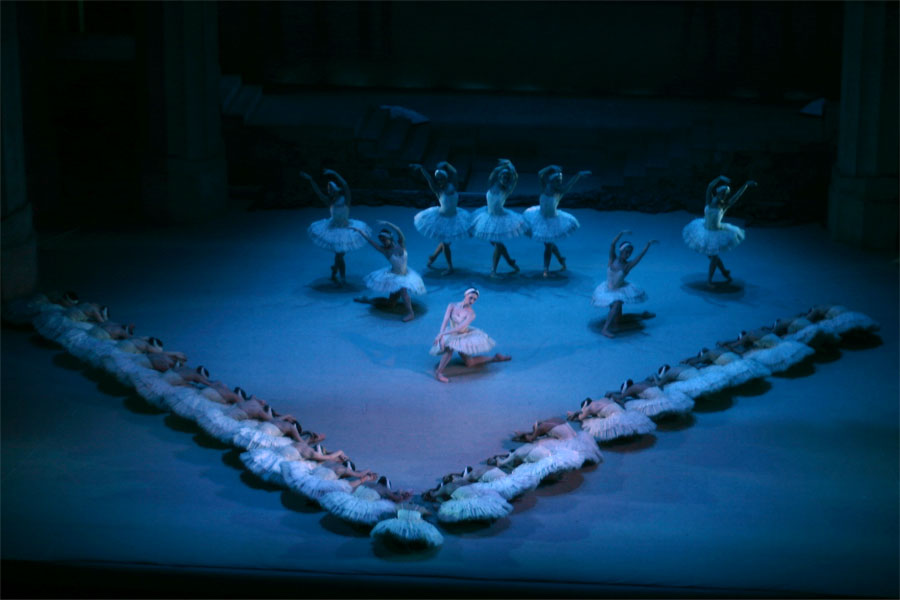 Swan LakeBallet · 1877Same lineage · video
 The NutcrackerBallet · 1892Same lineage · video
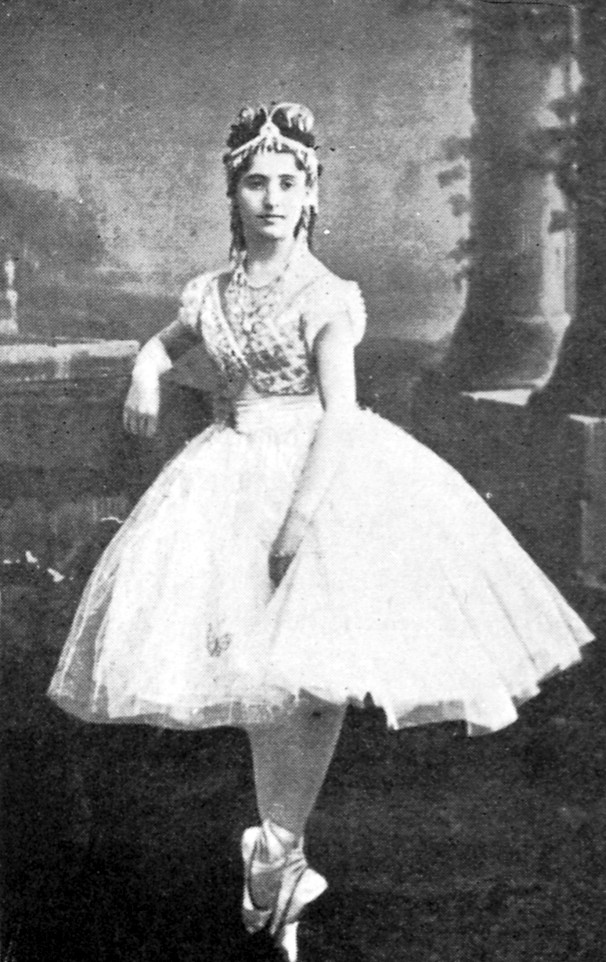 CoppéliaBallet · 1870Same lineage · video
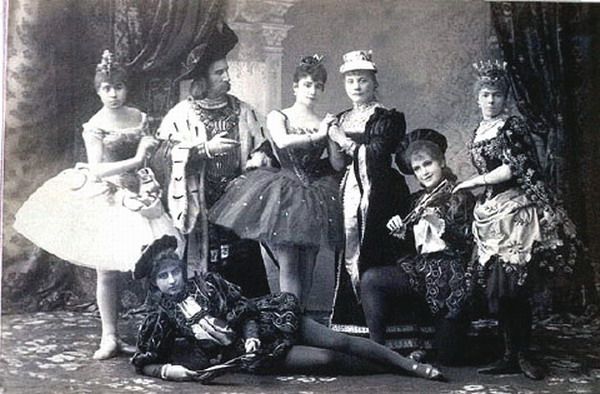 The Sleeping BeautyBallet · 1890Same lineage · video
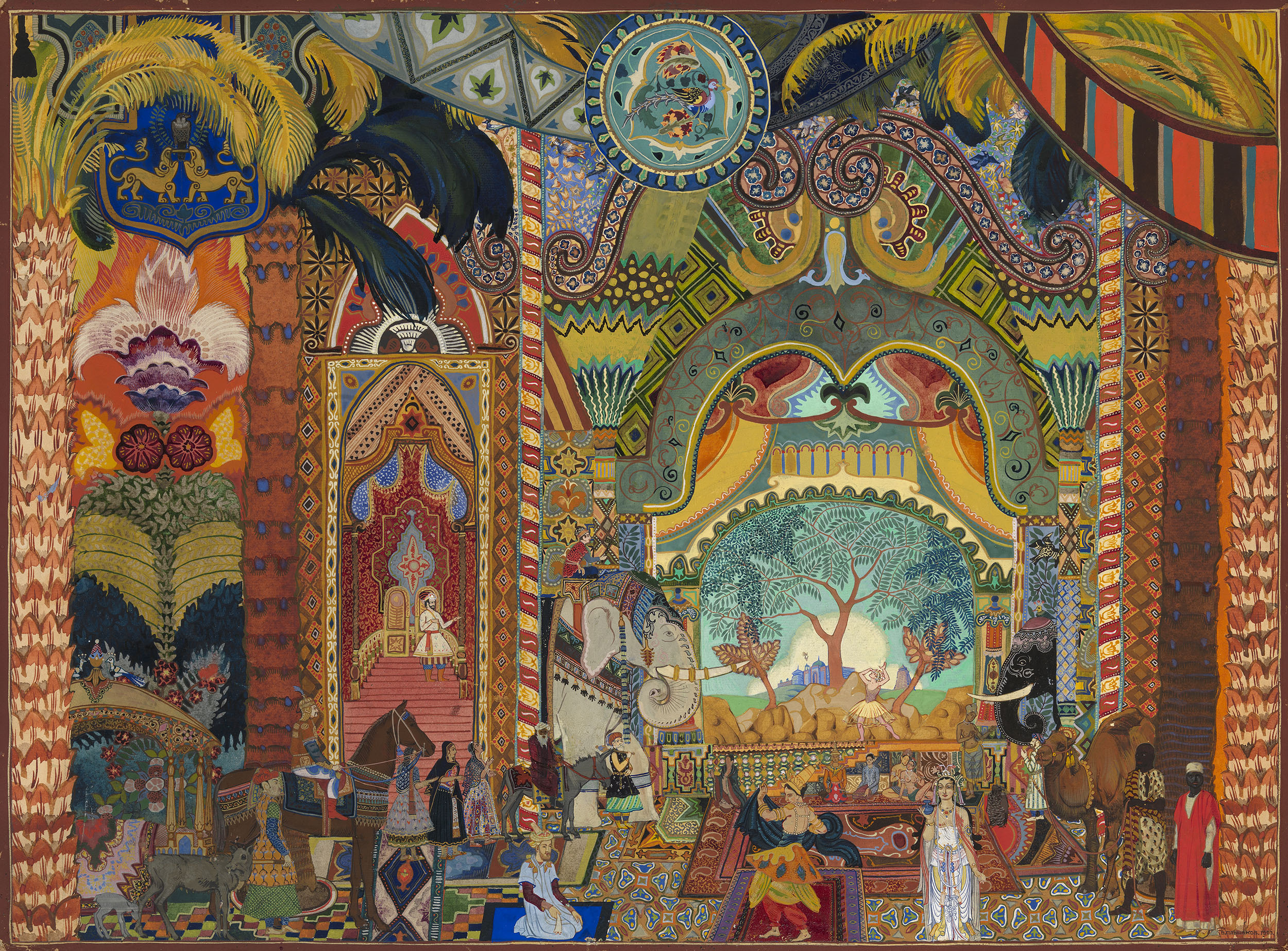 The FirebirdBallet · 1910Same lineage · video
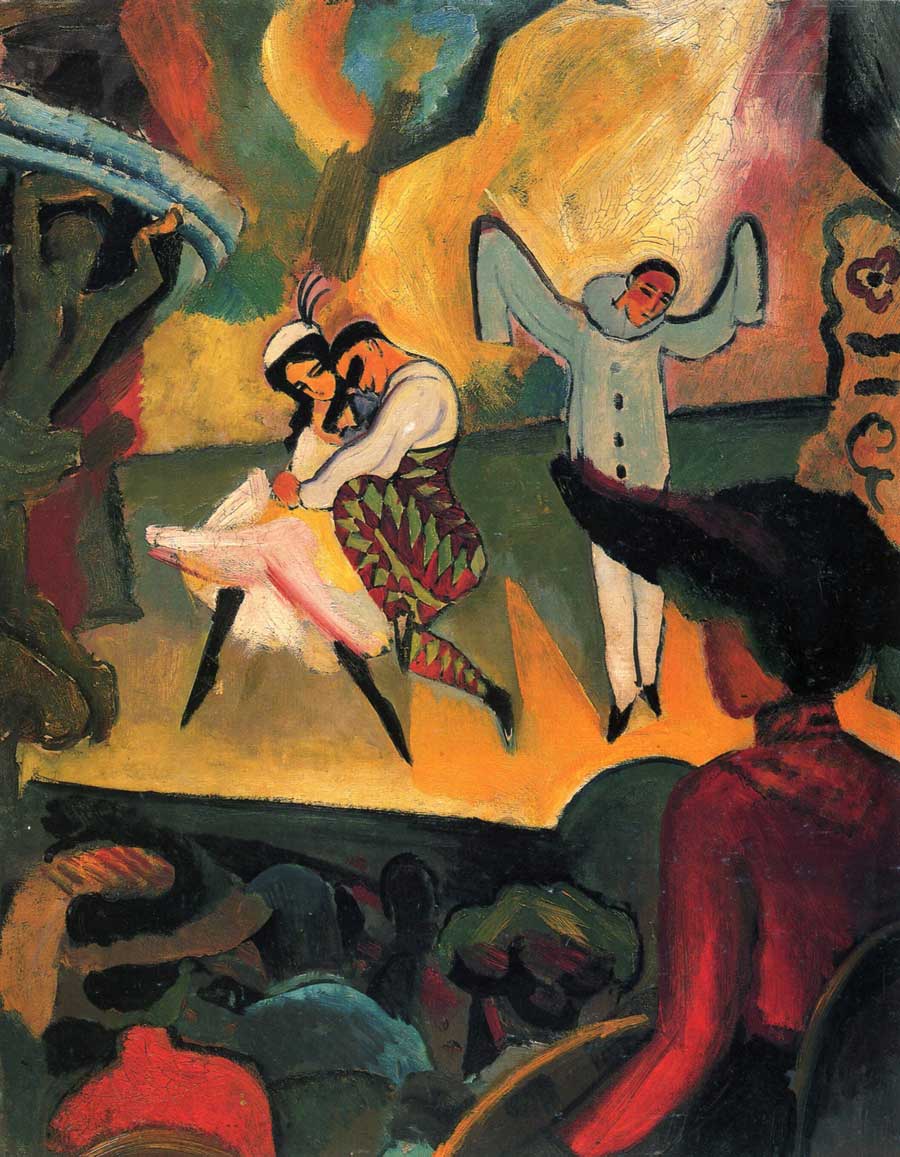 PetrushkaBallet · 1911Same lineage · video
 The Whims of the ButterflyBallet · 1889Same lineage
 Arabian NightsBallet · 1979Same lineage · video