Carl Van Vechten · Public domain
Gaîté Parisienne is a plotless, one-act comic ballet made by Léonide Massine in 1938 for the Ballet Russe de Monte-Carlo, set to a pastiche score of Offenbach excerpts arranged decades after the composer's death by Manuel Rosenthal. It stages an evening in a fashionable Second Empire Paris café-cum-dance-hall, moving a cast of stock character types — waiters, a flower girl, cocodettes, a glove seller, a wealthy Peruvian, a baron, an officer and soldiers, a courtesan (La Lionne) and a can-can troupe — through a sequence of entrances, flirtations, a brawl and a bittersweet parting.
What it contains
- Classical Ballet · The pas de cinq around La Lionne, and the closing group ballabile — Named classical-ballet structures — an explicit pas de cinq with overhead lifts, and a full-company ballabile — frame the social dances as formal balletic ensemble and partnering work. Source: "he joins the Officer, the Baron, and the Peruvian in wooing her in a vivacious pas de cinq, lifting her high above their heads and exposing her pretty legs"
- Classical Ballet · The Baron and Glove Seller's duet after the brawl — A romantic pas de deux built on classical partnering technique — overhead and turning lifts danced by the two principals alone on stage. Source: "the Baron and the Glove Seller return and dance an exuberant, romantic waltz, with aerial lifts and swooping turns"
- Viennese Waltz · The Glove Seller's entrance — The Glove Seller's arrival is a sustained waltz entrance danced through the room to charm the assembled guests, framed as a solo showcase. Source: "a glamorous Glove Seller appears in the doorway and waltzes into the room, charming everyone there"
- Mazurka · The cocodettes' and billiards-players' entrance — The group of six cocodettes and three billiards-player escorts is described dancing this specific stylised period couple/group form as an entrance number. Source: "The group dances about the room in a rousing mazurka."
What is danced
The ballet is built as a string of period ballroom and popular dance forms restaged as classical ballet numbers rather than as social dancing proper: the cocodettes and their escorts perform 'a rousing mazurka'; the Glove Seller makes her entrance dancing a waltz into the room; the Baron's entrance is set to 'a swelling waltz'; and a can-can troupe led by a Dancing Master performs 'high kicks, dizzying spins, whirling turns' with the traditional ruffled-skirt display. These character-dance set pieces sit inside an overall classical-ballet frame: the four men wooing La Lionne dance an explicit 'pas de cinq,' lifting her overhead, and the whole company later joins in a formal ensemble 'ballabile.' The Baron and Glove Seller's late pas de deux is described as 'an exuberant, romantic waltz, with aerial lifts and swooping turns' — a classical partnering sequence layered onto waltz rhythm rather than social ballroom footwork.
The comic centrepiece is Massine's own role as the Peruvian, built as pantomimic character comedy (arriving with carpetbags still in hand, competing clumsily for the Glove Seller's attention) rather than virtuosic step-work, while the Baron and Officer roles carry the more conventionally danced male technique. The article gives no counts of fouettés, entrechats or specific pointe-work terminology beyond the general implication of lifted, turned partnering, so a dancer preparing the piece should look to its reconstructions and notated stagings for exact vocabulary rather than to this record alone.
Context
Made for Massine and the Ballet Russe de Monte-Carlo in 1938, the ballet belongs to the late Ballets Russes lineage of one-act, plotless 'symphonic' or genre ballets built on rearranged popular scores — here a specially commissioned pasticcio of Offenbach drawn from operettas including La vie parisienne, Orpheus in the Underworld and La belle Hélène, put together only after Massine rejected an earlier commission from Roger Désormière and had Igor Stravinsky arbitrate whether to accept Rosenthal's arrangement. Jean-Claude Yon frames the score as part of a between-the-wars pattern of Offenbach pasticcios 'written in a spirit foreign to Offenbach.' The ballet's success helped make it a signature closing or opening-night vehicle for the Ballet Russe de Monte-Carlo through the 1940s, particularly through Alexandra Danilova's performances as the Glove Seller.
Staging history
Massine's original production premiered with the Ballet Russe de Monte-Carlo (Théâtre de Monte Carlo, 5 April 1938) and reached the United States that October at the Metropolitan Opera House, where Danilova took over the Glove Seller and became identified with the role; Eugenia Delarova (the Flower Girl), Frederic Franklin (the Baron) and Jeannette Lauret (La Lionne) were similarly long associated with their parts, and Leon Danielian later inherited and reshaped the Peruvian after Massine left the company in 1943. Later productions were mounted by the Royal Swedish Ballet (1956), American Ballet Theatre (1970), London Festival Ballet (1973) and Les Ballets de Monte Carlo (1989); a 1988 ABT revival staged by Lorca Massine with Christian Lacroix costumes and Zack Brown sets was received poorly and dropped from repertory by 1999, returning briefly and unsuccessfully in 2014. A heavily altered Technicolor film version, The Gay Parisian (1941/1942, directed by Jean Negulesco), cut and restaged the choreography around Massine's own Peruvian role.
How to watch it
Watch for the way each character type gets a distinct entrance dance keyed to a change of music — mazurka for the cocodettes, waltz for the Glove Seller and Baron, march for the soldiers, can-can for the troupe — since the ballet's comedy and structure depend on these juxtaposed genre dances rather than on a spoken or mimed plot. The pas de cinq lifting La Lionne and the final Baron/Glove Seller waltz duet are the moments of sustained classical partnering; the Peruvian is played for comic pantomime rather than technical display.
Structure
- Act ISix cocodettes and their three billiards-player escorts dance a mazurka before the Glove Seller's entrance.
- Act IThe Glove Seller waltzes into the café and charms the assembled crowd.
- Act IThe Officer, Baron, Duke and Peruvian court La Lionne in a pas de cinq with overhead lifts, which turns into a brawl.
- Act IAfter the fight the Baron and the Glove Seller return alone to dance a romantic waltz duet with lifts and turns.
- Act IA troupe of can-can dancers led by a Dancing Master performs the can-can, and the full company joins in a closing ballabile.
Structure read from an encyclopaedia article, not from a libretto or score we hold. Confirm against a programme before treating the numbering as authoritative.
Credits
- composer: Jacques Offenbach
Related works
Other staged works in the register connected to this one by author or lineage.
 PulcinellaBallet · 1920Massine · video
 The Three-Cornered HatBallet · 1919Massine · video
 ParadeBallet · 1917Massine · video
- La Boutique fantasqueBallet · 1926Massine · video
 MercureBallet · 1924Massine · video
 Le papillonBallet · 1860Music by Offenbach · video
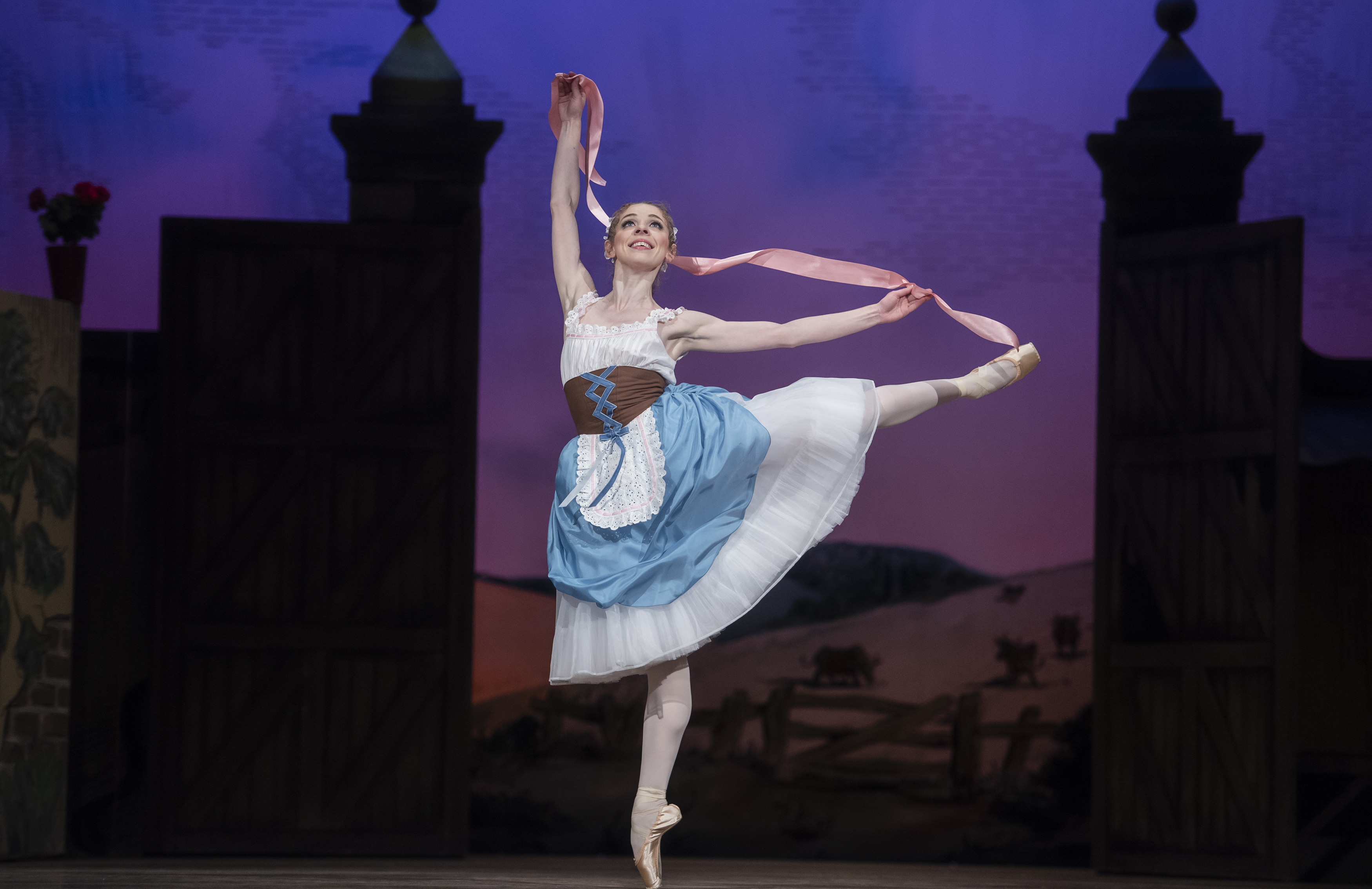 La fille mal gardéeBallet · 1960Same lineage · video
 La PériBallet · 1912Same lineage · video
