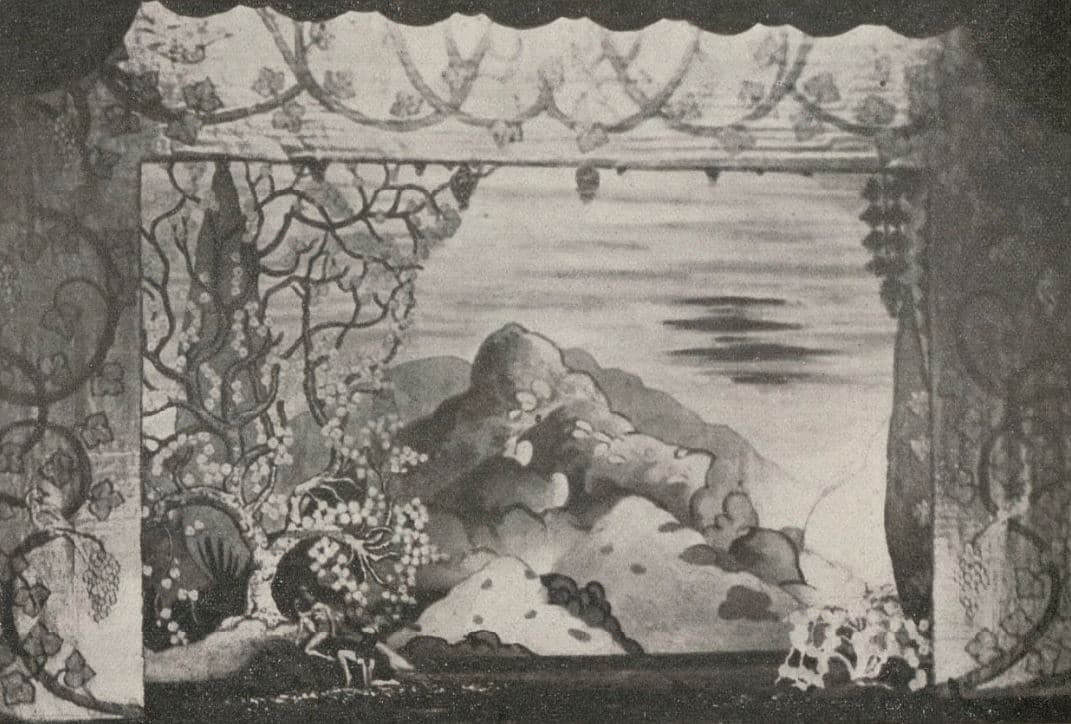
Photo Rudomine — https://gallica.bnf.fr/ark:/12148/bpt6k97586399/f12.item · Public domain
La Péri is a one-act, one-scene ballet ('poème dansé en un tableau') with music by Paul Dukas, his last published score, choreographed by Ivan Clustine and premiered at the Théâtre du Châtelet in Paris on 22 April 1912. It tells of Iskender — the Persian name for Alexander the Great — who searches for the Flower of Immortality and steals it from a sleeping Peri, a supernatural guardian spirit, only to have it taken back from him by her dancing before she vanishes into the light of Ormuzd, leaving him to die.
What it contains
- Classical Ballet · Single tableau, the closing scene in which the Peri reclaims the Flower from Iskender — The Peri's recapture of the Flower is staged as a dance that closes physical distance on Iskender step by step until she is able to take the object from his hand, functioning as the ballet's choreographic climax rather than mime. Source: "she performs a dance, gradually coming closer and closer until she is able to wrest the Flower from him"
What is danced
The synopsis the article gives is thin on step-by-step choreographic detail, as is typical for a 1912 programme note, but it does isolate one deliberate dance action: after Iskender steals the Flower of Immortality, the Peri 'performs a dance, gradually coming closer and closer until she is able to wrest the Flower from him.' This is the ballet's dramatic and choreographic climax — a seduction-and-recapture dance built around closing physical distance on the male lead, ending in the literal removal of an object from his hand. Everything else described (Iskender's wandering search, his discovery of the temple, the Peri's disappearance into light) is mimed narrative rather than danced set-piece, at least as the article presents it.
Context
The ballet was written for Diaghilev's Ballets Russes, with Léon Bakst designs and Vaslav Nijinsky intended as Iskender, but Diaghilev judged the originally intended Peri, Natalia Trouhanova, not a strong enough partner for Nijinsky and cancelled the production. Trouhanova then commissioned Clustine independently, so the work that reached the stage in 1912 was a rerouted Ballets Russes commission staged outside that company, on a shared programme of new French orchestral ballets (Vincent d'Indy's Istar, Florent Schmitt's La Tragédie de Salomé, Ravel's Adélaïde) each conducted by its own composer.
Staging history
The ballet entered the Paris Opera repertoire in 1921 with Anna Pavlova as the Peri and Hubert Stowitts as Iskender, using the original René Piot designs. It reached Britain through Ballet Rambert: Frederick Ashton choreographed and danced Iskender opposite Alicia Markova in 1931 (a short-lived production, dropped by 1932), Frank Staff made a new version for the same company in 1938, and Ashton returned to the score in 1956 with a version for the Royal Ballet danced by Margot Fonteyn and Michael Somes, designed by Ivon Hitchens and André Lavasseur. In 2012 Ivan Putrov used Dukas's score for a new work, Ithaca, at Sadler's Wells; excerpts also circulate in student ballet competitions.
How to watch it
Watch for the shift from mimed pursuit to danced confrontation: the ballet spends most of its length on Iskender's search and discovery, then compresses its real choreographic argument into the Peri's single dance of retrieval near the end. Because stagings by Clustine, Ashton and Staff are independent choreographic inventions on the same score, comparing productions tells you more about each choreographer's house style than about a fixed 'traditional' version of the ballet.
Structure
- Act one act · Scene one tableauIskender, his youth fading, wanders Iran seeking the Flower of Immortality, finds a temple to Ormuzd and a Peri holding the Flower; he steals it while she sleeps, she wakes and cries out, and he gloats, but the Flower turns to reflect only his earthly desires, so the Peri dances toward him until she wrests it back and vanishes into the light, leaving him to die.
Structure read from an encyclopaedia article, not from a libretto or score we hold. Confirm against a programme before treating the numbering as authoritative.
Credits
- composer: Paul Dukas
In the same lineage
Other staged works in the register connected to this one by author or lineage.
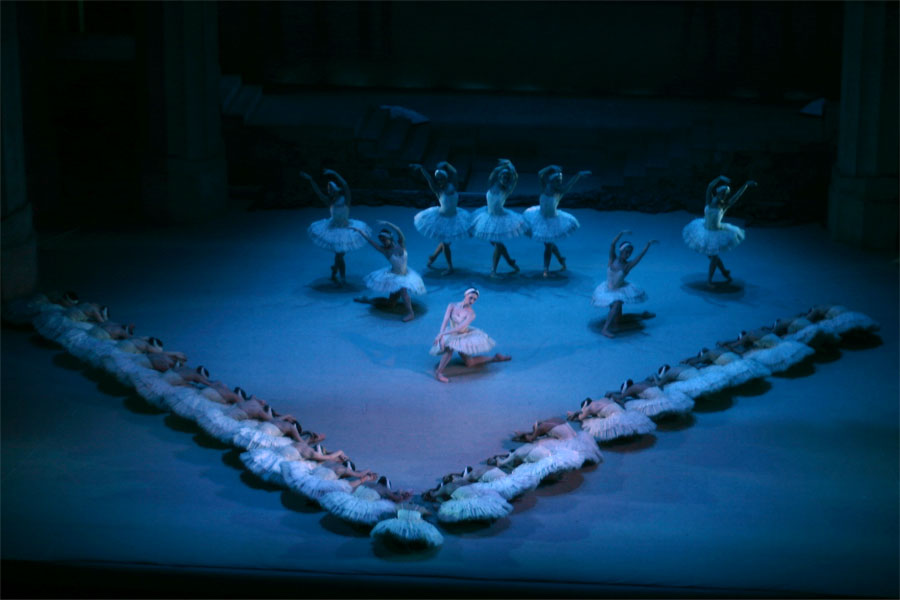 Swan LakeBallet · 1877Same lineage · video
 The NutcrackerBallet · 1892Same lineage · video
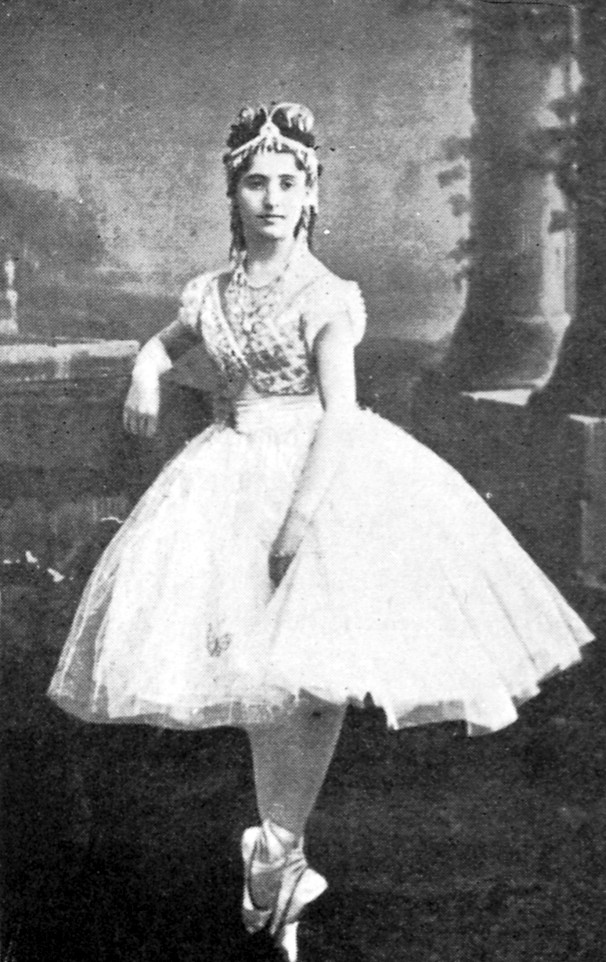 CoppéliaBallet · 1870Same lineage · video
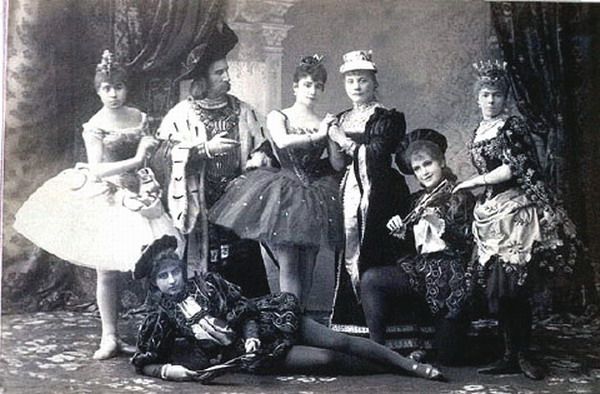 The Sleeping BeautyBallet · 1890Same lineage · video
 The FirebirdBallet · 1910Same lineage · video
 PetrushkaBallet · 1911Same lineage · video
 Western SymphonyBallet · 1954Same lineage · video
 Danses concertantesBallet · 1944Same lineage · video