Homage to the Queen (1953)
Homage to the Queen is a full-length allegorical ballet composed by Malcolm Arnold to mark the coronation of Elizabeth II, structured as a set of divertissements built around the four elements — Earth, Water, Fire and Air — framed by a Prelude and a Finale. It was made as a state occasion piece for the Sadler's Wells Ballet, the company that shortly afterwards became the Royal Ballet, and its interest for the catalogue lies as much in its ceremonial function as in its choreography: a piece designed to represent the nation's leading classical company on a night of national spectacle.
What it contains
- Classical Ballet — Air · The 'Air' section, the pas de deux for Margot Fonteyn and Michael Somes — A classical pas de deux for a principal ballerina and danseur, singled out by a critic as top-rank academic choreography; the surviving passage that has been revived on its own independent of the rest of the ballet. Source: "described by the critic Clive Barnes as “one of the finest pieces of classical choreography yet produced”"
What is danced
The ballet is built as four successive 'Queen' divertissements — Earth, Water, Fire, Air — each headed by a soloist representing that element (Nadia Nerina, Violetta Elvin, Beryl Grey and Margot Fonteyn respectively at the premiere), framed by an opening Prelude/Scene and a closing Finale, giving the structure of a classical grand ballet with a sequence of contrasting demi-caractère and classical variations rather than a narrative through-line. The best-documented passage is the pas de deux in the 'Air' section for Margot Fonteyn and Michael Somes, singled out by a critic as top-rank academic choreography; this is the section that has been most consistently preserved and revived independent of the rest of the ballet.
Context
The work belongs to the wave of state-occasion ballets commissioned around the 1953 coronation, at a moment when the Sadler's Wells Ballet, under Ninette de Valois with Frederick Ashton as principal choreographer, was consolidating itself as Britain's flagship classical company (it received its royal charter as The Royal Ballet later that same year). Malcolm Arnold, a symphonic and film composer rather than a ballet specialist, was brought onto the commission on the recommendation of the company's musical adviser, Humphrey Searle, making the score itself something of a crossover commission rather than a product of the house's usual composer relationships.
Staging history
The ballet entered the Sadler's Wells repertoire and was performed regularly through the mid-1950s, but most of Ashton's choreography for Earth, Water and Fire was subsequently lost; only the Entree and the Air section (with its Fonteyn/Somes pas de deux) survived in dancers' and stagers' memory and was revived on its own in the 1990s. For the Queen's 80th birthday in 2006 the work was reconstructed with new choreography commissioned from three different choreographers for the three lost sections — David Bintley (Earth), Michael Corder (Water) and Christopher Wheeldon (Fire) — while the surviving Entree and Air were restaged from the original, making the current performing version a composite of one historic and three newly authored sections.
How to watch it
Watch for the contrast in vocabulary between the surviving Ashton material and the three 2006 replacement sections, each carrying its own choreographer's signature grafted onto a shared occasional structure. In the 'Air' pas de deux, attend to the purity and difficulty of the partnering and academic line that earned it its reputation as top-tier classical choreography, since it is the one passage the article specifically flags as a standout rather than an ensemble set piece.
Structure
- Prelude and Opening SceneOpening section framing the ballet's ceremonial premise.
- EarthDivertissement led by the Queen of the Earth, originally danced by Nadia Nerina.
- WaterDivertissement led by the Queen of the Waters, originally danced by Violetta Elvin.
- FireDivertissement led by the Queen of Fire, originally danced by Beryl Grey.
- AirDivertissement led by the Queen of the Air, featuring the pas de deux for Margot Fonteyn and Michael Somes described as one of the finest pieces of classical choreography produced.
- FinaleClosing section of the ballet.
Structure read from an encyclopaedia article, not from a libretto or score we hold. Confirm against a programme before treating the numbering as authoritative.
Credits
- composer: Malcolm Arnold
In the same lineage
Other staged works in the register connected to this one by author or lineage.
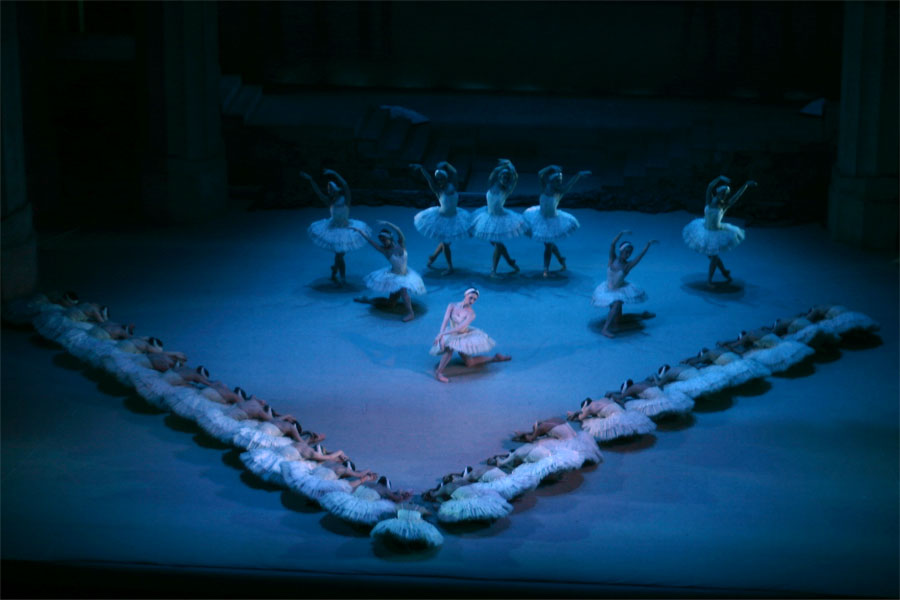 Swan LakeBallet · 1877Same lineage · video
 The NutcrackerBallet · 1892Same lineage · video
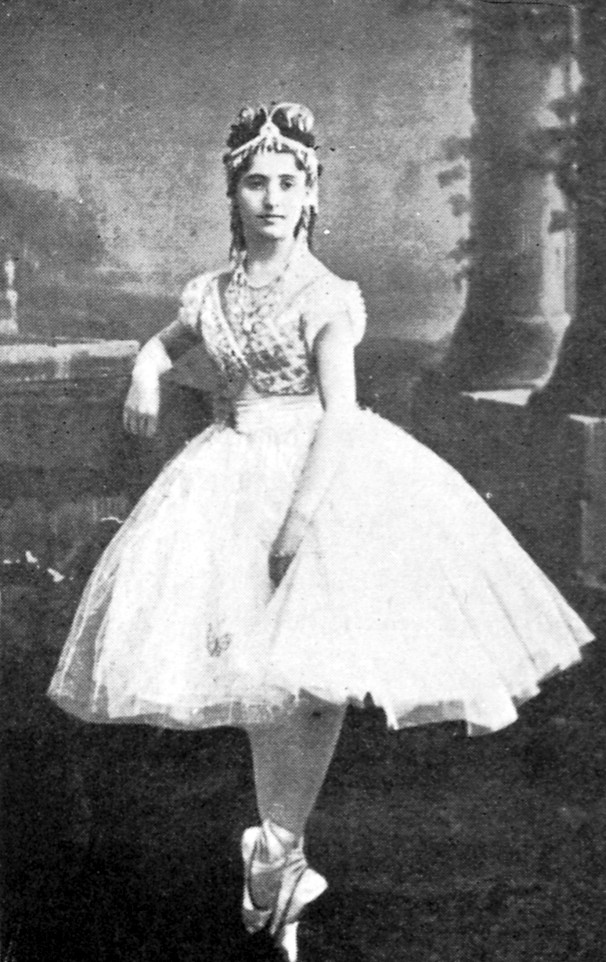 CoppéliaBallet · 1870Same lineage · video
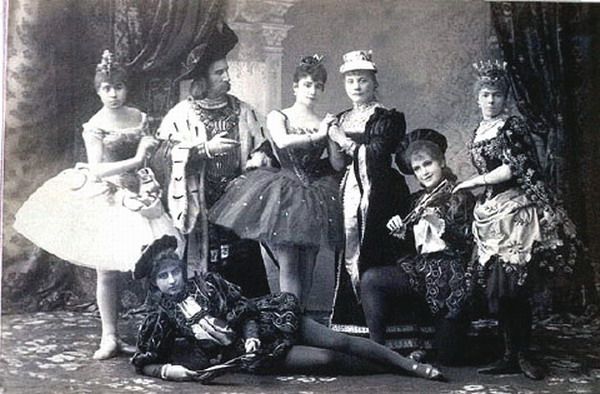 The Sleeping BeautyBallet · 1890Same lineage · video
 The FirebirdBallet · 1910Same lineage · video
 PetrushkaBallet · 1911Same lineage · video
 Liebeslieder WalzerBallet · 1960Same lineage · video
 Arabian NightsBallet · 1979Same lineage · video