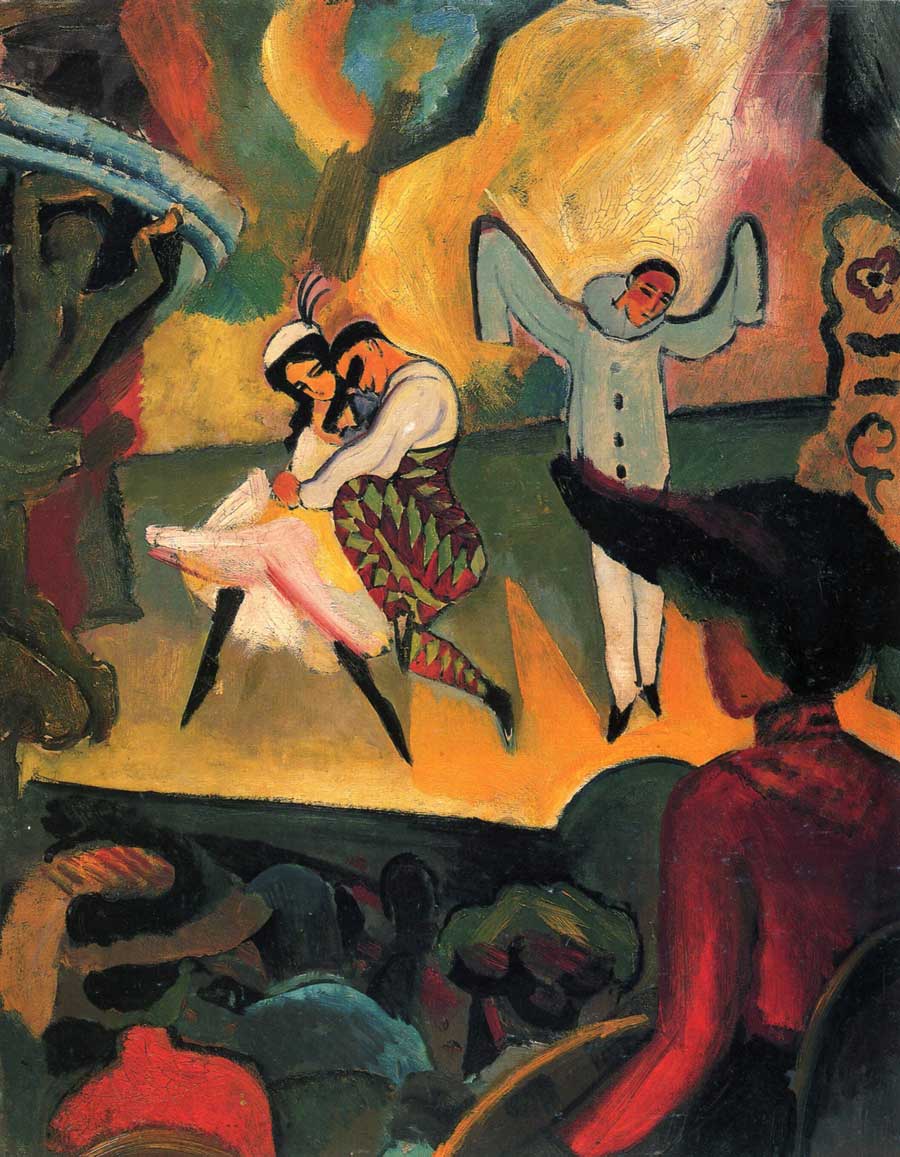
August Macke — 1. World Wide Web2. pinterest · Public domain
Petrushka is the second of the three Stravinsky scores made for Diaghilev's Ballets Russes, following The Firebird and preceding The Rite of Spring. It premiered at the Théâtre du Châtelet in Paris on 13 June 1911, with choreography by Michel Fokine, designs by Alexandre Benois (who also shaped the libretto with Stravinsky), and Vaslav Nijinsky in the title role opposite Tamara Karsavina's Ballerina.
It belongs in a dance catalogue as one of the founding works of the Ballets Russes repertory and a touchstone for how a puppet-figure can be made to dance: the piece stages a love triangle among three animated puppets against a Russian carnival setting, and its choreographic identity — a stiff, wooden Petrushka contrasted against a Ballerina 'perpetually en pointe' and a swaggering Moor — has kept it in active repertory, still usually performed with Fokine's original steps and Benois's original designs.
What it contains
- Classical Ballet · The Ballerina's role throughout all four tableaux — The Ballerina's characterization is built on sustained pointe technique, held constant across her appearances as the classical counterpoint to Petrushka's deliberately un-classical, wooden movement. Source: "The Ballerina dances perpetually en pointe."
- Viennese Waltz — The Moor's Room · Third tableau, the Moor's Room — A partnered waltz for the Ballerina and the Moor, danced to Lanner waltz themes as part of her seduction of him. Source: "then dances a waltz with him (the themes taken from Joseph Lanner's Op. 165 No. 1 and Op. 200 No. 1)"
What is danced
The article's clearest technical detail is the contrast built into the three puppets' vocabulary: the Ballerina is danced 'perpetually en pointe', the Moor is 'swashbuckling', and Petrushka himself is 'wooden and awkward' — the choreography deliberately withholding classical line from its central figure to make his one moment of 'manic, athletic display of leaps and frantic gestures' in the second tableau read as a rupture rather than a display. Fokine's stage directions have the three puppets first move only their feet while still hanging on the wall of the little theatre before bursting out among the crowd, a literal staging of puppets becoming dancers.
Around this central trio the ballet is built from a sequence of named ensemble and character numbers rather than continuous classical dancing: the first tableau's Russian Dance for the three puppets (set to two Russian folk tunes), and the fourth tableau's chain of carnival numbers — the Wet-Nurses' Dance, a peasant with a dancing bear, a dance of gypsy women, the Dance of the Coachmen and the Grooms, and the Mummers — are all folk- and character-inflected set pieces rather than pure ballet vocabulary. The third tableau adds a Moor's solo built around business with a coconut and scimitar, and a Waltz for the Ballerina and Moor built on themes by Joseph Lanner.
The article does not give step-by-step technical detail beyond these character notes (pointe work, mime, the specific 'curses' gesture aimed at the Magician's portrait), so a dancer approaching the role should expect the demands to be dramatic and physical-characterization work — Petrushka's whole-body 'wooden' articulation, his collapse and the ghost's final gesture of contempt — as much as pure classical technique.
Context
The article situates Petrushka squarely inside Diaghilev's early Ballets Russes seasons, composed in the winter of 1910–11 immediately after the triumph of The Firebird and while Stravinsky was already gestating The Rite of Spring. It was created for the same generation of dancers — Nijinsky, Karsavina, and ballet master Enrico Cecchetti (who danced the Charlatan) — who defined the company's Paris seasons, and its four-tableau structure of fairground crowd scenes, folk-tune quotation, and stylized puppet-mime made it, in the article's words, an example of 'the complete integration of libretto, music, choreography, and scenic design.'
Staging history
The article notes that Petrushka 'is usually performed today with the original designs and choreography,' i.e. Fokine's staging and Benois's sets have remained the standard rather than being routinely replaced by new choreographic versions, which is unusual longevity for a 1911 work. It also records non-balletic afterlives that a stager should be aware of: Stravinsky's own 1946 re-orchestration for smaller forces (used in many recordings), a 1956 animated television version conducted by Stravinsky himself, a 1968 BBC stop-motion version, and Basil Twist's puppetry staging, which premiered at Lincoln Center in 2001 and was revived at New York City Center's Fall for Dance Festival in 2009.
How to watch it
Watch for the deliberate technical asymmetry among the three puppets: the Ballerina's sustained pointe work and the Moor's bravura contrasted against Petrushka's stiff, broken-doll articulation, which is the ballet's central choreographic argument rather than a limitation of the dancer. The fourth tableau's parade of carnival characters (wet-nurses, a dancing bear, gypsies, coachmen, mummers) functions as a divertissement chain rather than plot-driven dance, so it rewards attention to how each vignette is folded into the crowd rather than to any sustained narrative through-line.
Structure
- Scene First tableau · The Shrovetide FairA carnival crowd gathers; the Magician animates three hanging puppets, who perform a vigorous Russian Dance and reveal Petrushka's unrequited love for the Ballerina, who favours the Moor.
- Scene Second tableau · Petrushka's RoomPetrushka curses the Magician's portrait, then dances a frantic, athletic display when the Ballerina enters, frightening her into fleeing.
- Scene Third tableau · The Moor's RoomThe Moor dances with a coconut he takes for a god; the Ballerina dances for him with a toy trumpet and then a waltz; Petrushka bursts in, fights the Moor, and is beaten and thrown out.
- Scene Fourth tableau · The Shrovetide Fair (Toward Evening)A chain of carnival dances (wet-nurses, a peasant's dancing bear, gypsies, coachmen and grooms, mummers) is interrupted when the Moor kills Petrushka; his ghost then appears to menace the fleeing Charlatan.
Structure read from an encyclopaedia article, not from a libretto or score we hold. Confirm against a programme before treating the numbering as authoritative.
Credits
- composer: Igor Stravinsky
Related works
Other staged works in the register connected to this one by author or lineage.
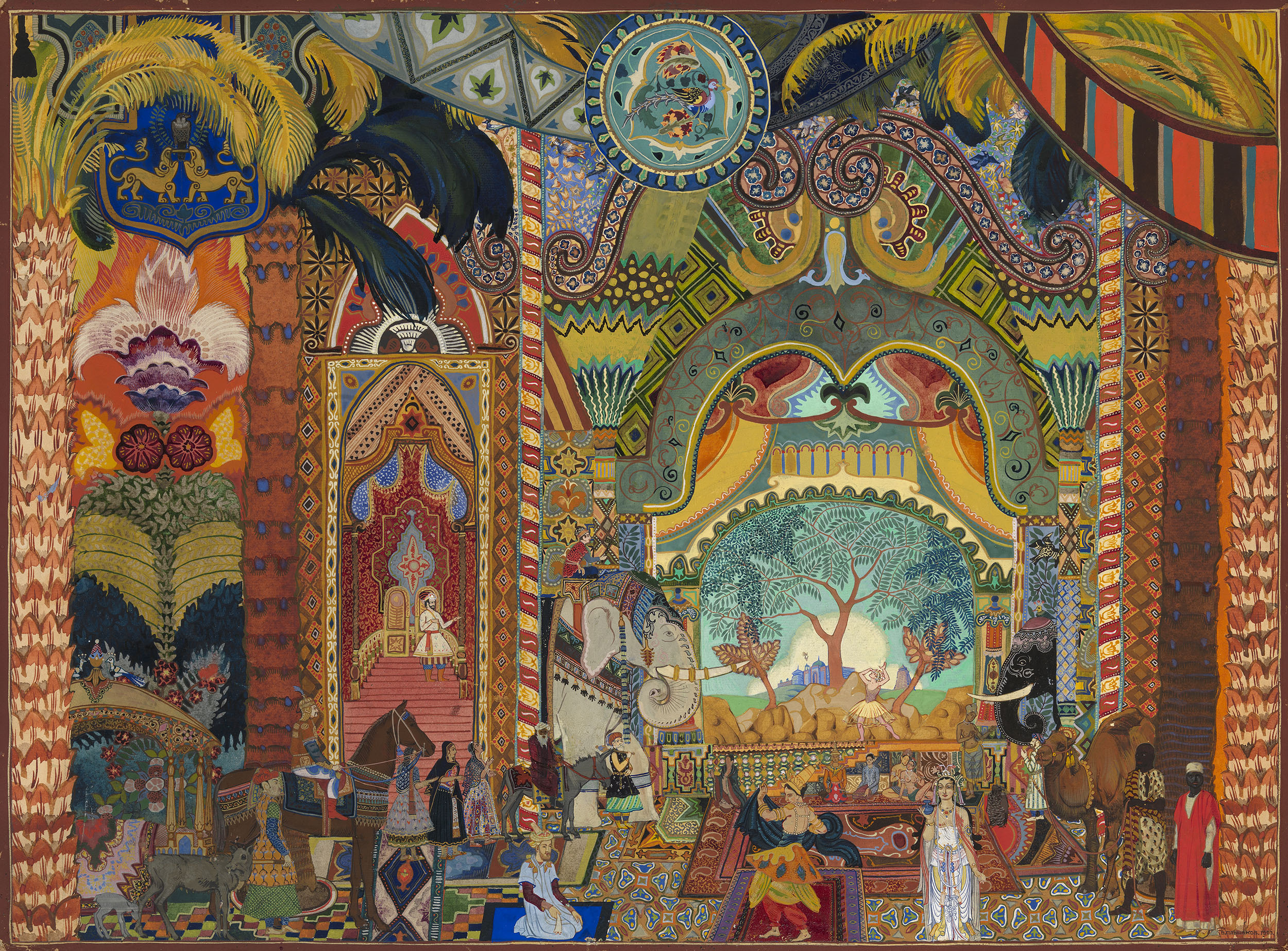 The FirebirdBallet · 1910Fokine · video
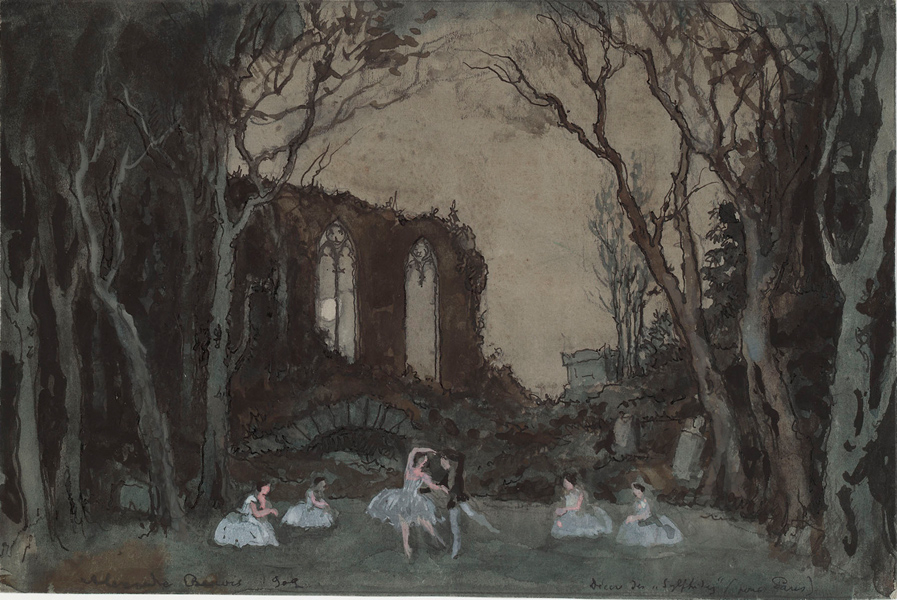 Les SylphidesBallet · 1908Fokine · video
 Le Spectre de la RoseBalletFokine · video
 The Dying SwanBallet · 1905Fokine · video
 JosephslegendeBallet · 1914Fokine
 Le Dieu bleuBallet · 1912Fokine
- TangoTangoBallet · 1982Music by Stravinsky
 Stravinsky Violin ConcertoBallet · 1972Music by Stravinsky · video