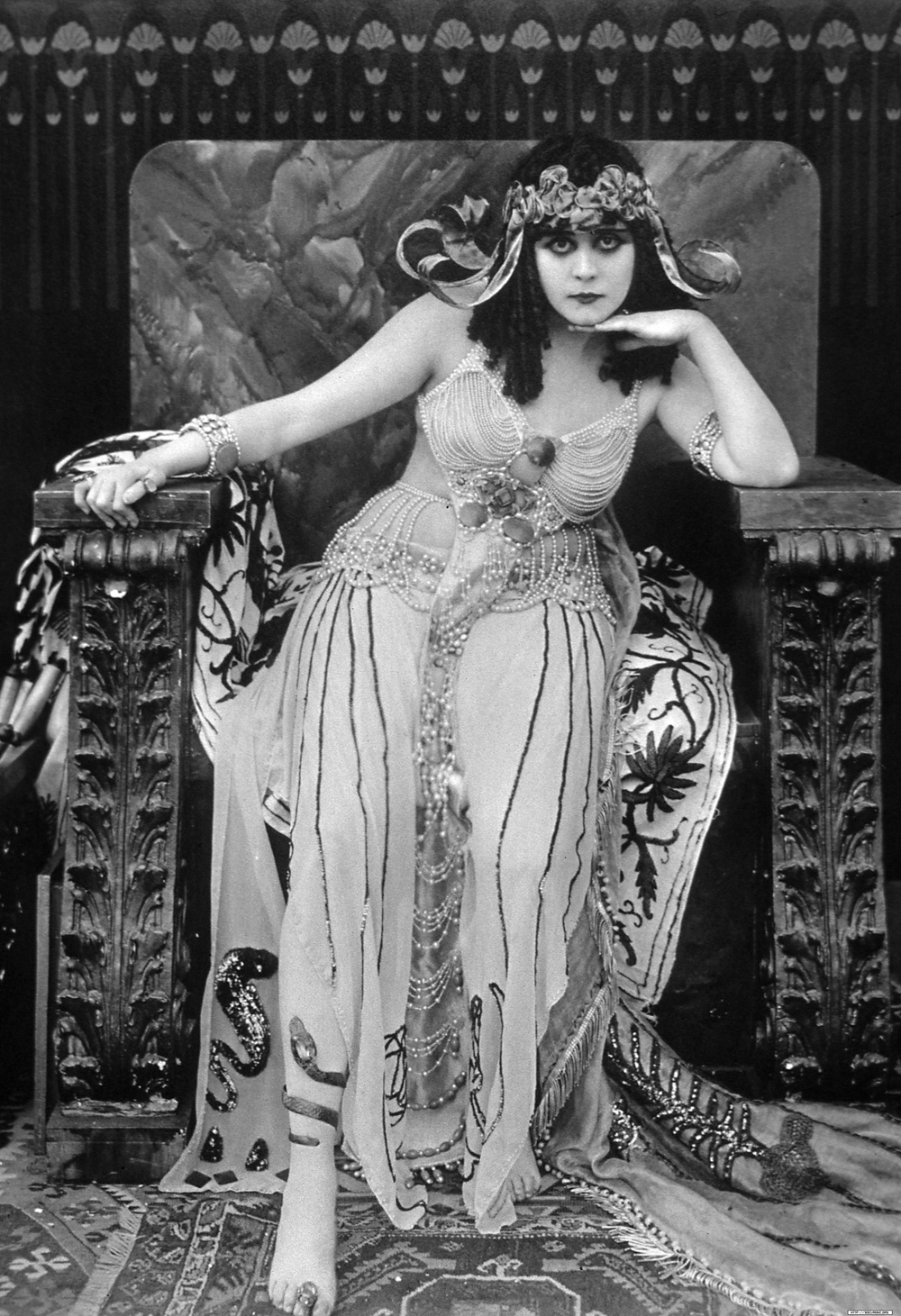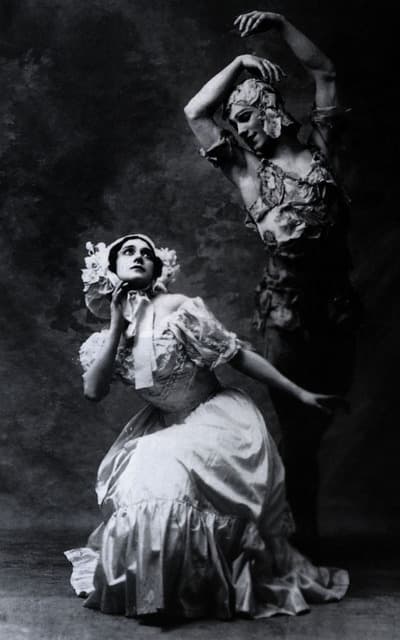
Unknown; early 20th century photog. — http://online-vintage-network.blogspot.com/2012/02/le-spectre-de-la-rose-vaslav-nijinski_20.html · Public domain
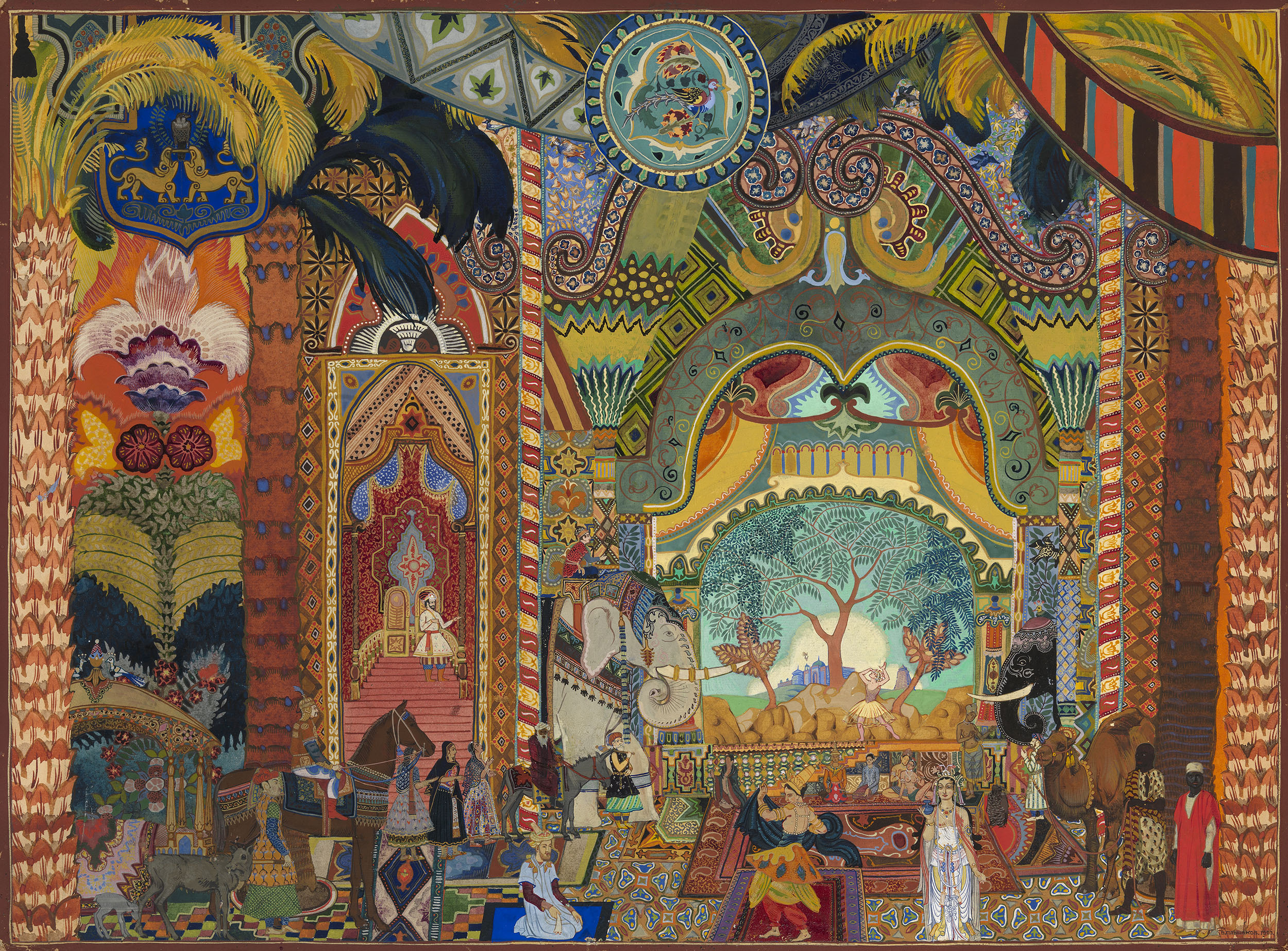
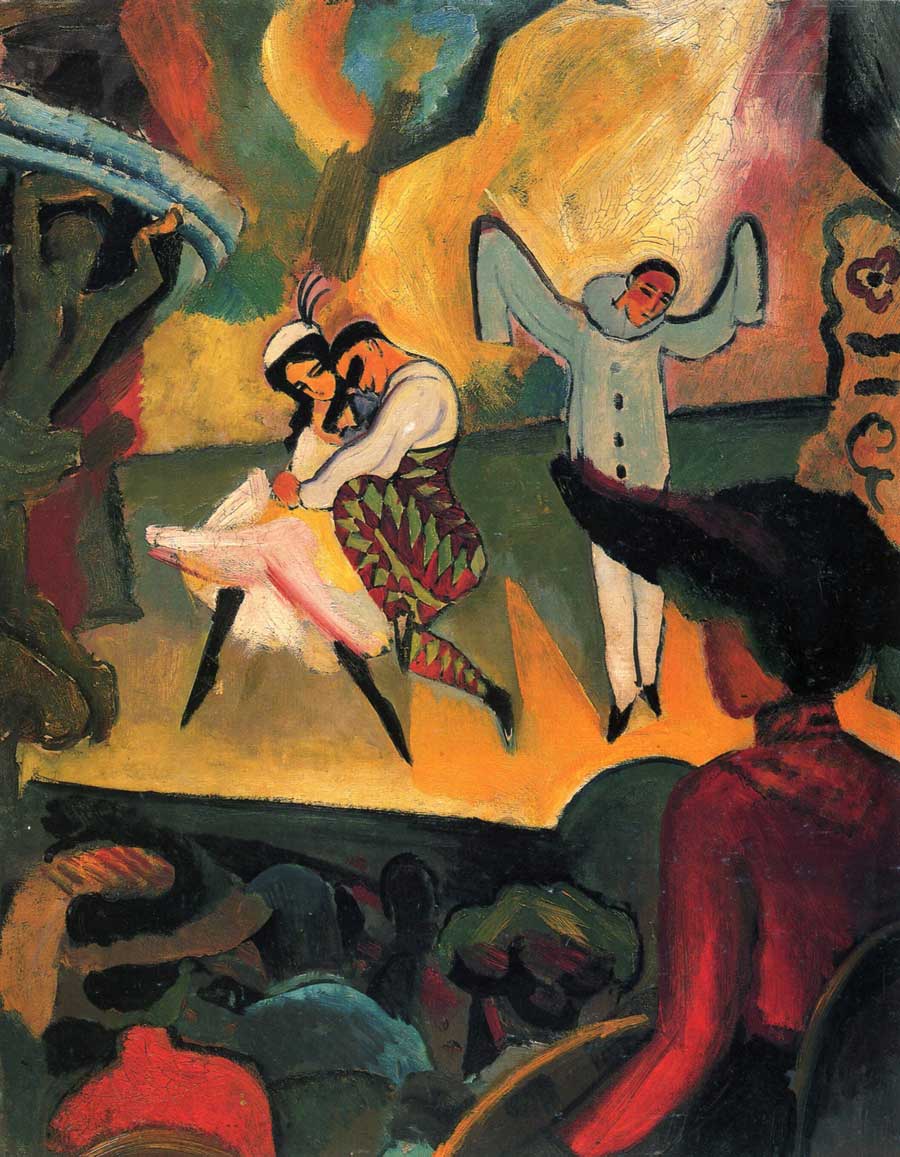
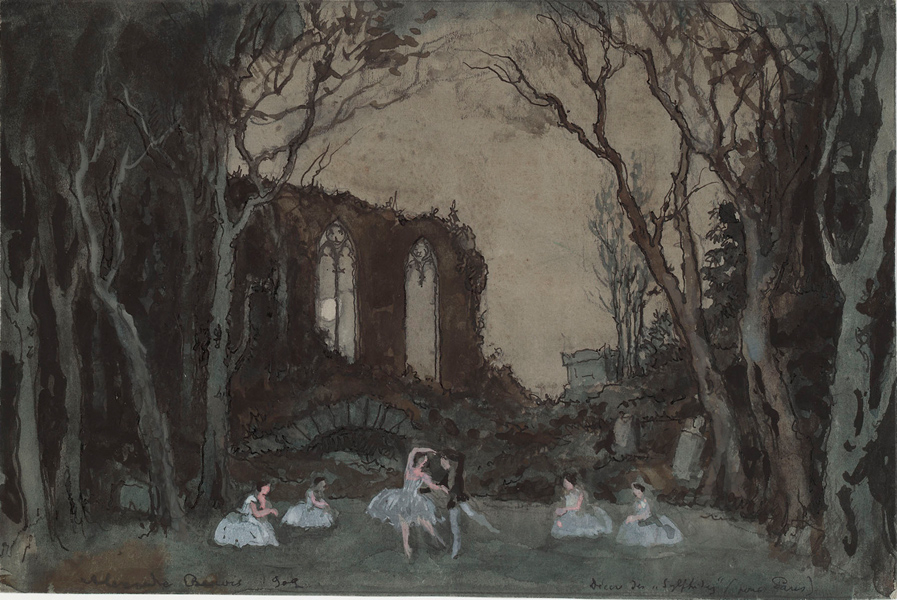
Le Spectre de la rose is a one-scene ballet made for Diaghilev's Ballets Russes, with choreography by Michel Fokine to Carl Maria von Weber's piano piece Aufforderung zum Tanz in Hector Berlioz's 1841 orchestration. Jean-Louis Vaudoyer built the scenario from Théophile Gautier's verse of the same name and brought it to designer Léon Bakst; Diaghilev adopted it hastily in 1911 as a replacement when Nijinsky's L'Après-midi d'un faune was not ready for the stage.
What is danced
The article describes the work as, in Grace Robert's phrase, 'a pas de deux but not the sort of pas de deux that looks back to complex 19th-century technique and virtuosity. Instead, it is a forward-looking, modern dance of continuous movement and expressiveness.' Fokine is said to have made it in three or four rehearsals, calling it almost an improvisation, and he deliberately dropped the classical port de bras for Nijinsky's role, replacing it with 'curving, tendril-like movements of the arms and fingers' while keeping conventional masculine strength and elevation in the legs — a deliberate split between upper-body and lower-body vocabulary that the article says gave Nijinsky an androgynous stage presence.
Context
The ballet belongs to the first, most experimental seasons of the Ballets Russes, made under pressure as a stopgap for the delayed Faune and tied by Diaghilev to the Gautier centenary. Its interest for dance history sits less in narrative innovation than in Fokine's explicit rejection of academic 19th-century port de bras in favour of a continuous, expressive line for the male dancer, a small but pointed break from the display-virtuosity model of the pas de deux that the company was working to move past.
Staging history
The article traces a long performance life beyond the 1911 Monte Carlo premiere: the ballet reached Australia in 1936 with the Monte Carlo Russian Ballet, and Margot Fonteyn danced the Young Girl there on her 1962 tour. Rudolf Nureyev took up the Rose for German television in 1961, first performed it on stage with the Joffrey Ballet in New York in 1979 (24 times), danced it with Fonteyn in June 1979 in what became their last performance together, and last performed the role in 1987 in London with the Nancy Ballet. The article also notes that by the mid-20th century the piece had become, in the eyes of some, 'nothing but a stunt ballet' kept alive mainly for the closing leap, and that the Young Girl's role has been called 'the forgotten woman of ballet.'
How to watch it
Watch the arms rather than the legs: the article's account of Fokine's choreography turns on curving, finger-led upper-body movement replacing academic port de bras, set against conventional elevation and strength in the legs. The closing leap is a staged illusion — five running steps and a jump on the sixth, timed with a held orchestral chord and an unseen landing behind the set — so the effect depends on stagecraft (a low skirting board, offstage catchers) as much as on the performer's actual jump height.
Credits
- composer: Carl Maria von Weber
More from Michel Fokine
Other staged works in the register connected to this one by author or lineage.