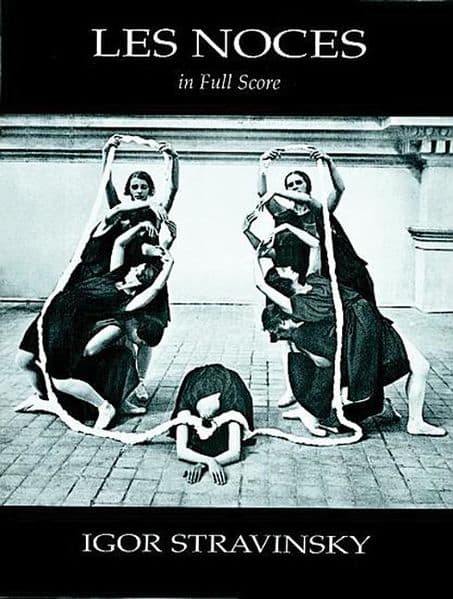
Unknown authorUnknown author — Стравинский. Свадебка. Обложка партитуры · Public domain
Les noces (1923)
Les noces (Svadebka) is Igor Stravinsky's ballet-cantata on a Russian peasant wedding, scored for four vocal soloists, mixed chorus, and an ensemble of unpitched percussion and four pianos. Stravinsky wrote his own libretto from Russian wedding songs collected by Pyotr Kireevsky, worked on the piece from 1913, completed it in short score in 1917, and only settled on its final stark instrumentation in 1923 — the version danced at the premiere.
What it contains
- Classical Ballet · The whole ballet, across the four scenes performed without a break — Massed corps work on pointe used as a percussive, unison device — dancers 'huddled together' strike the floor with pointe shoes with rigid intensity rather than performing individual lyrical extension or classical variation. Source: "huddled together, the women repeatedly strike the floor with their pointe shoes with rigid intensity"
What is danced
The article's account of the choreography, by Bronislava Nijinska for the Ballets Russes, describes a deliberately depersonalised, mass-ensemble style rather than a display of individual virtuosity: dancers move on a 'predetermined path' with 'the individuality of the dancer... stripped away,' against a dark, sombre set and simple costuming. The signature image given is percussive rather than lyrical — women 'huddled together... repeatedly strike the floor with their pointe shoes with rigid intensity,' using pointe work as a hammering, unison device rather than for extension or line. The article frames this as a protofeminist reading of a bride's coerced passage into marriage, danced in service of the community rather than the self.
Context
The work reached the stage in 1923, in the decade after The Rite of Spring, at a moment when Stravinsky was moving toward 'stripped down, clear and mechanistic sound-groups' — a musical austerity the article links directly to Nijinska's choreographic treatment of the same material. Reception split sharply along national and ideological lines: the Paris premiere was greeted with enthusiasm, the 1926 London staging was attacked so fiercely that H. G. Wells wrote a public letter defending it, and Soviet critics such as Tikhon Khrennikov denounced it as a mockery of Russian folk custom, while others (Asafyev, later Stephen Walsh) came to regard it as one of Stravinsky's most radical and original theatre works.
Staging history
The premiere was given by the Ballets Russes on 13 June 1923 at the Théâtre de la Gaîté, Paris, conducted by Ernest Ansermet with choreography by Nijinska. The London premiere followed on 14 June 1926, and a 1962 Covent Garden revival and the original both used the unusual practice of seating named composers (Poulenc, Auric, Rieti, Duke in 1926; Gardner, Williamson, Bennett, Rubbra in 1962) at the four onstage pianos. The article records two later staged productions: a new choreographic version by Andrea Miller for English National Ballet at Sadler's Wells in September 2023, and a performance at Woolwich Works in January 2024 as part of 'One Hundred Years of Nijinska.' Separately, the score itself has circulated in variant instrumentations — an unfinished 1919 pianola/cimbalom/harmonium version premiered in concert in Paris in 1981 (Boulez) and completed by Theo Verbey in 2009, and a 2008 orchestral arrangement by Steven Stucky for the Los Angeles Philharmonic — but the article does not indicate these were choreographed or danced.
How to watch it
Watch the corps rather than any soloist: the piece is built on massed, uniform pointe work and repeated floor-strikes rather than individual variation, and the flat, monochrome staging is meant to erase rather than showcase personality. The tension to watch for is between the bride's status as an individual and her absorption into a collective, ritual 'predetermined path' toward marriage — the choreography's central symbolic device according to the article.
Credits
- composer: Igor Stravinsky
More from Igor Stravinsky
Other staged works in the register connected to this one by author or lineage.
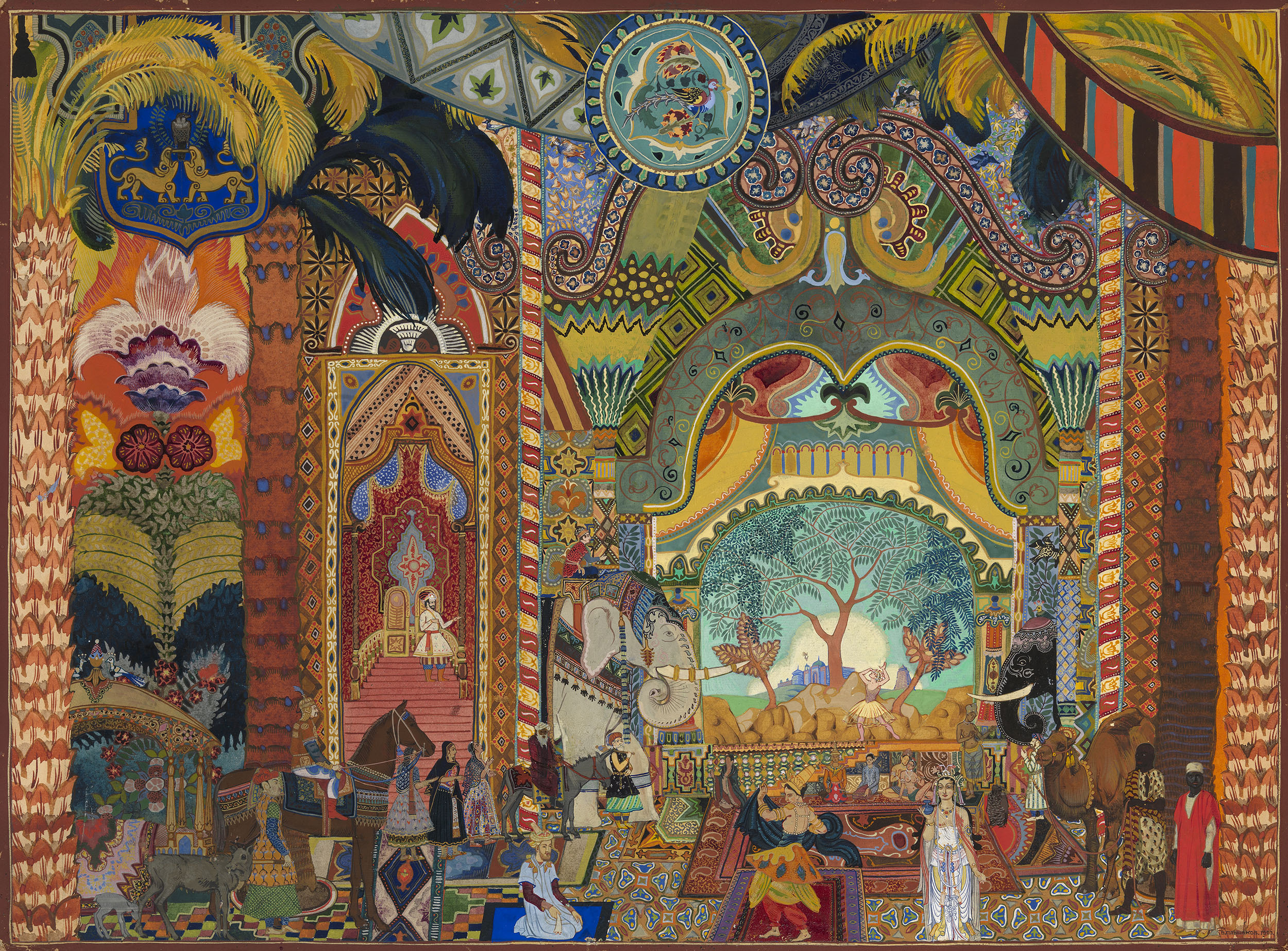 The FirebirdBallet · 1910Music by Stravinsky · video
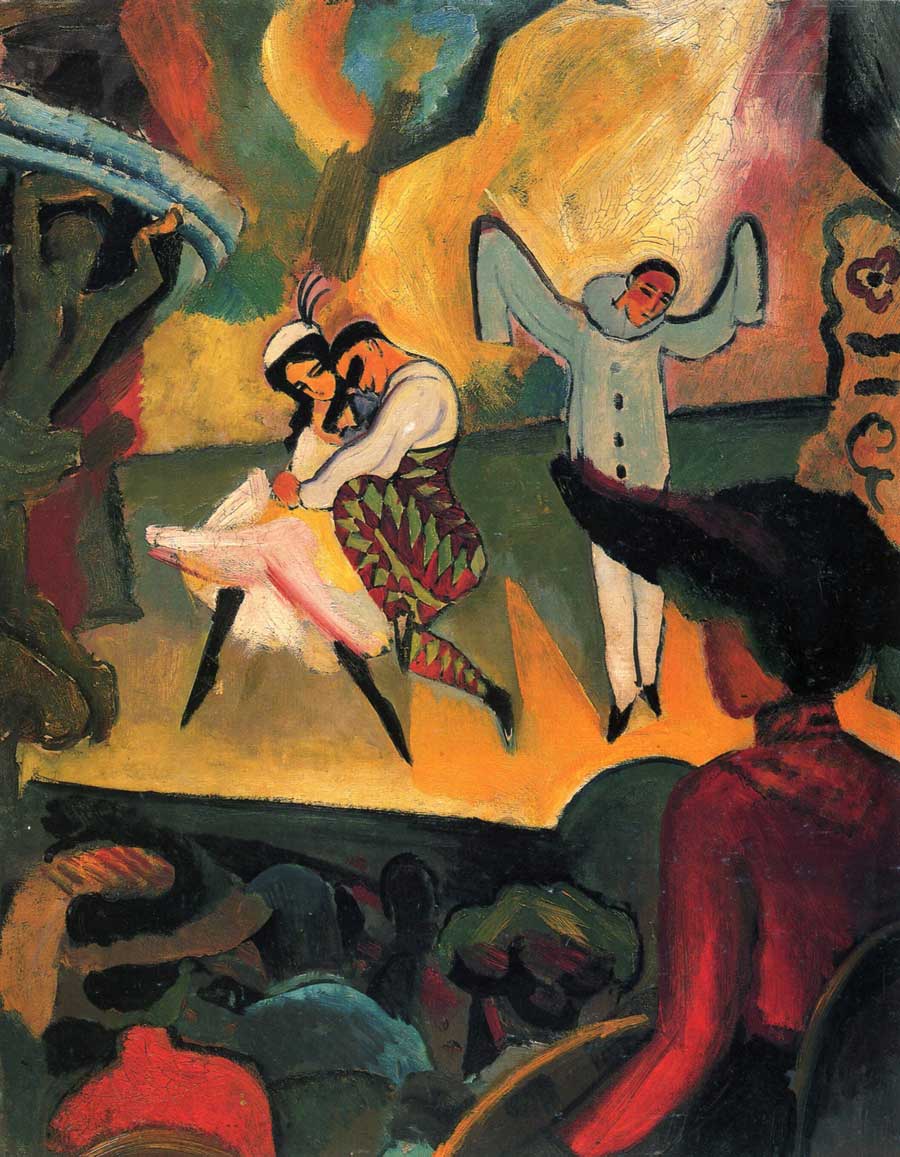 PetrushkaBallet · 1911Music by Stravinsky · video
 PulcinellaBallet · 1920Music by Stravinsky · video
 Histoire du soldatBallet · 1918Music by Stravinsky · video
 ApolloBallet · 1928Music by Stravinsky · video
 RenardBallet · 1922Music by Stravinsky · video
 Ballo della ReginaBallet · 1978Same lineage · video
 The CageBallet · 1951Music by Stravinsky · video