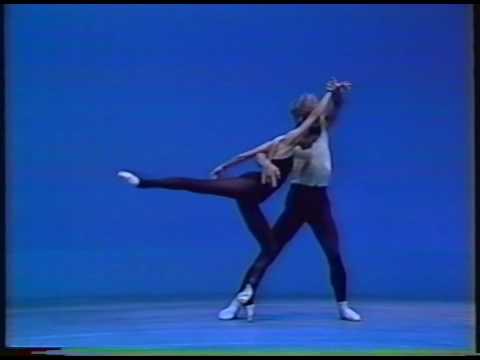
Stravinsky Violin Concerto is a plotless neoclassical ballet George Balanchine set to Stravinsky's Violin Concerto for the New York City Ballet's 1972 Stravinsky Festival, a week-long tribute mounted after the composer's death. It was Balanchine's second treatment of the score, following the short-lived 1941 Balustrade for the Original Ballet Russe, and its eventual title reflects Balanchine's late-career preference for naming ballets after the music itself rather than inventing a fictional frame for them.
What it contains
- Balanchine Method · The whole ballet, danced by NYCB principals and corps — Dancers describe the choreography as a defining test of the Balanchine idiom itself, requiring the speed, attack and musicality specific to his method rather than a generic classical vocabulary. Source: "Violin Concerto was my chance to show that I could dance 'Balanchine'."
- Neoclassical Ballet · The whole ballet, across Toccata, Aria I, Aria II and Capriccio — Plotless, abstract choreography made as a direct response to the concerto's structure, danced in practice clothes rather than period or narrative costuming, with steps generated from the music rather than from story or design. Source: "Stravinsky Violin Concerto, originally titled Violin Concerto, is a neoclassical ballet choreographed by George Balanchine to Stravinsky's Violin Concerto."
What is danced
The ballet is built in four sections that track the concerto's own movements. The opening Toccata introduces four lead dancers one at a time, each paired with a four-person corps, in what is described as bright, exuberant ensemble dancing that establishes the cast before the two central duets. Aria I, made on Karin von Aroldingen and Jean-Pierre Bonnefoux, is a strange, unsettled pas de deux: Balanchine reportedly asked von Aroldingen to move like a snake, 'a bit sneaky,' and critic Richard Buckle described the duet's 'strange confrontations, tangles, stalking, catching, trapping,' ending with the woman somersaulting away from her partner's embrace while he collapses flat.
Context
The ballet emerged from the 1972 NYCB Stravinsky Festival, a week of twenty premieres (seven by Balanchine) staged as a memorial to the composer, and Stravinsky Violin Concerto was singled out afterward as one of the festival's 'masterworks.' It also marks a deliberate break from Balanchine's earlier practice: where his prior Stravinsky ballets, including the 1941 Balustrade to the same score, had leaned on narrative or scenic frameworks (Balustrade had costumes and sets by Pavel Tchelitchew), here Balanchine stripped the ballet to practice clothes and let the choreography answer the music directly, a move he explained as wanting audiences who came 'to hear the composition' to get exactly that.
Staging history
The ballet premiered June 18, 1972, at the New York State Theater on the festival's first program, danced by Karin von Aroldingen, Jean-Pierre Bonnefoux, Kay Mazzo and Peter Martins. It has since entered repertory at The Royal Ballet, American Ballet Theatre, San Francisco Ballet, Dutch National Ballet, National Ballet of Canada, Birmingham Royal Ballet, Pacific Northwest Ballet and Boston Ballet. Rights to the work passed to von Aroldingen, an original cast member, after Balanchine's death, along with five other ballets; it was filmed for PBS's Dance in America in 1977 with much of the original cast (Bart Cook replacing Bonnefous), and NYCB released a 2018 recording of the finale, and later the full ballet, online during the 2020 pandemic closures.
How to watch it
Watch for the shift in tone across the two central pas de deux: Aria I is knotted and confrontational, built on off-balance holds and sudden withdrawals, while Aria II is closer and more sheltering, ending with the ballerina leaning into her partner as his arm curves over her 'like a blindfold.' The stripped-down costuming, women in leotards and footless tights, men in T-shirts and tights, is itself the convention to notice: it signals that the piece asks to be read as a direct visualization of the score, not a period or narrative ballet, and the closing Capriccio's folk-flavored group patterns are worth watching for how they resolve the soloists back into the full cast of twenty.
Structure
- ToccataThe four lead dancers, each grouped with a four-person corps de ballet, are introduced one by one in an exuberant ensemble opening.
- Aria IA tense pas de deux made on Karin von Aroldingen and Jean-Pierre Bonnefoux, built on snake-like, confrontational partnering.
- Aria IIA close, sheltering pas de deux made on Kay Mazzo and Peter Martins.
- CapriccioThe full cast of twenty enters in groups of ten dancing folk-flavored steps before bursting into the finale.
Structure read from an encyclopaedia article, not from a libretto or score we hold. Confirm against a programme before treating the numbering as authoritative.
Credits
- composer: Igor Stravinsky
More from George Balanchine
Other staged works in the register connected to this one by author or lineage.
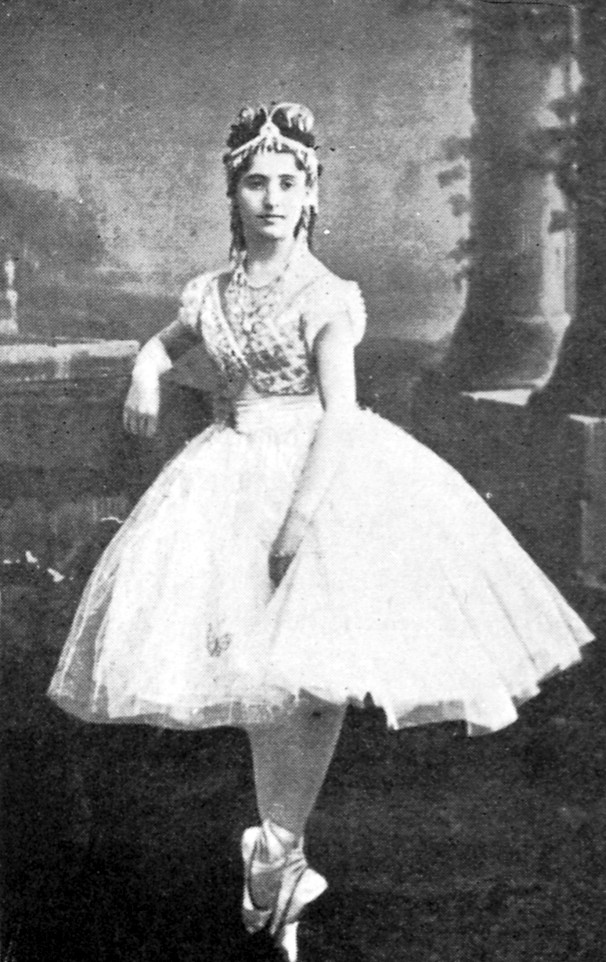 CoppéliaBallet · 1870Balanchine · video
 ApolloBallet · 1928Balanchine · video
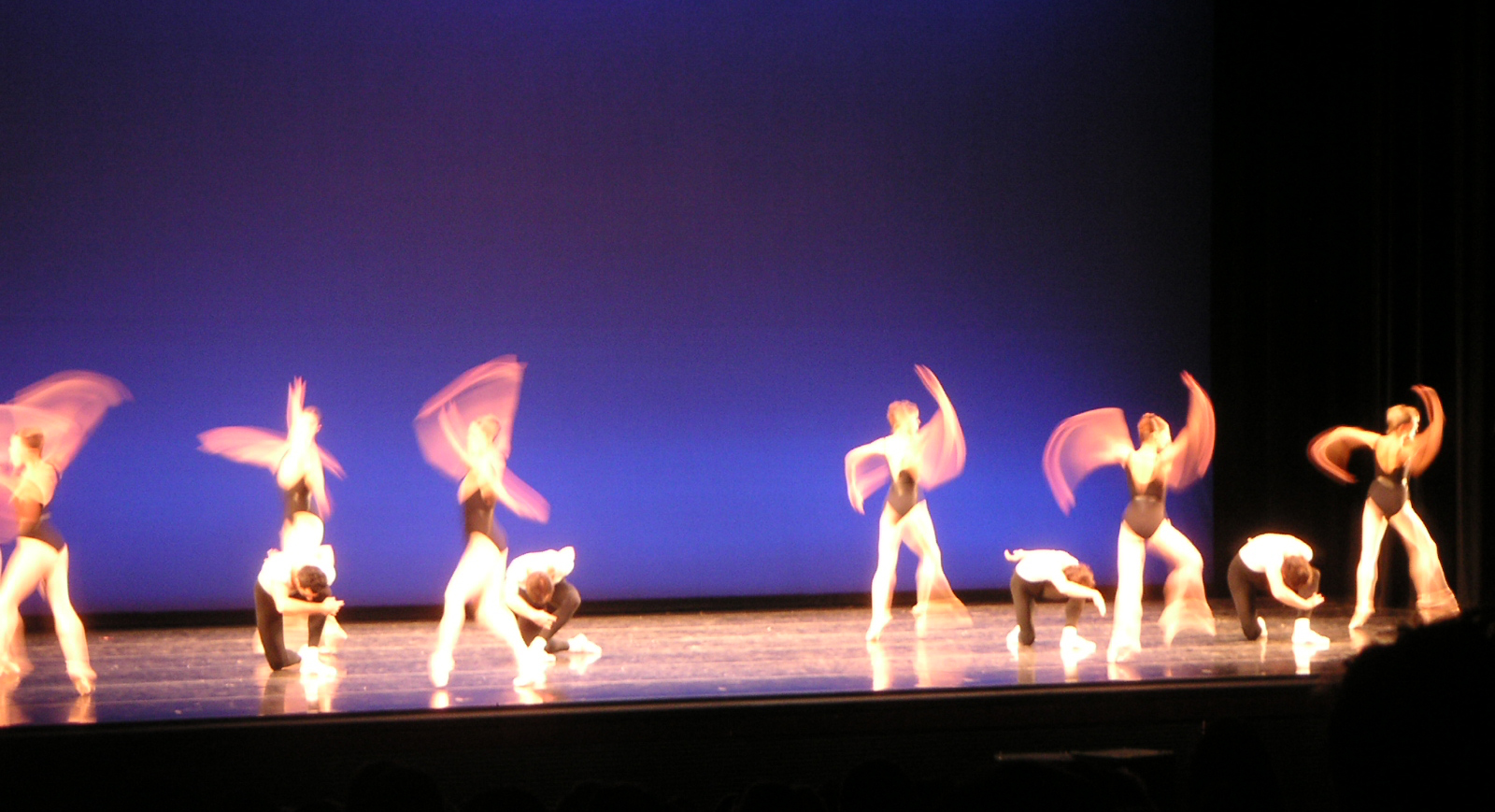 AgonBallet · 1957Balanchine · video
 Le chant du rossignolBallet · 1920Balanchine · video
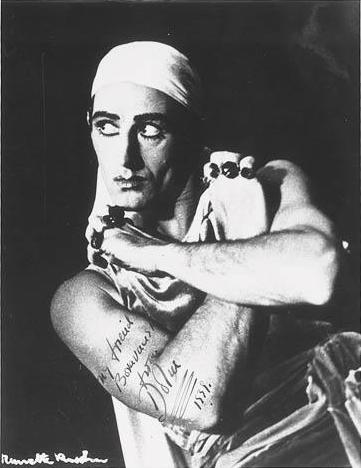 The Prodigal SonBallet · 1929Balanchine · video
 The Seven Deadly SinsBallet · 1933Balanchine · video
 The NutcrackerBallet · 1954Balanchine · video
 Western SymphonyBallet · 1954Balanchine · video