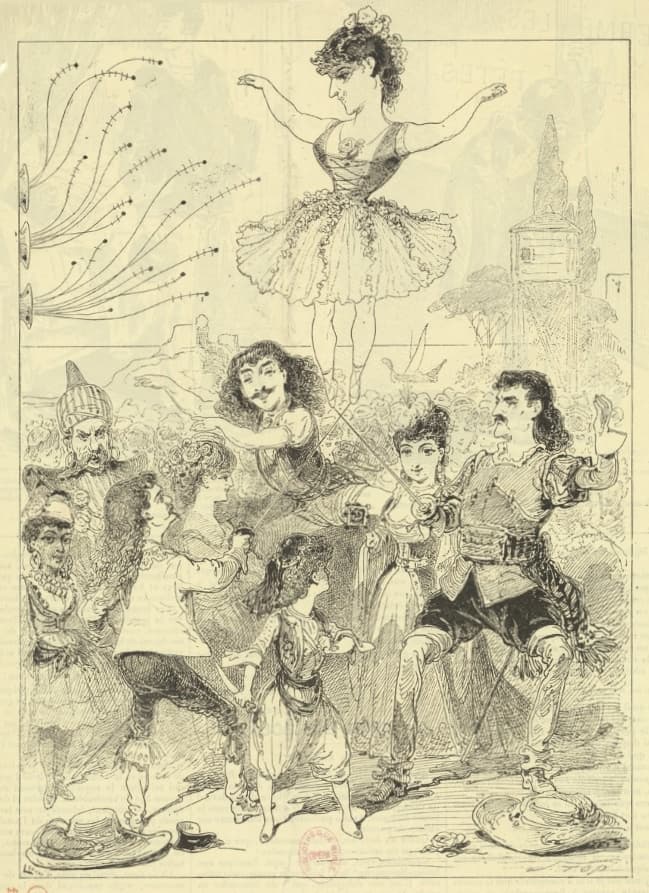
gallica.bnf.fr / Bibliothèque nationale de France — https://gallica.bnf.fr/ark:/12148/btv1b53116941c/f1 · CC0
Namouna is a two-act, three-scene ballet made for the Paris Opéra in 1882, with a score by Edouard Lalo and choreography by Lucien Petipa (brother of Marius Petipa), on a scenario by Charles Nuitter and Petipa drawn from Casanova's Mémoires. It sits at the tail end of the grand Opéra ballet tradition: an exotic, orientalist adventure-romance (gambling, slavery, disguise, piracy) staged with the full apparatus of scenery, corps de ballet divertissements and a solo vehicle for its title dancer.
What it contains
- Romantic Ballet · Act II, the slave-dealer's island — A slave-market divertignement in which the newly freed women remove their veils and perform a group dance, the orientalist 'unveiling' set piece characteristic of exotic-set Opéra ballets of the era. Source: "her former companions remove their veils and dance then, at her request, leave."
- Romantic Ballet · Act I, Scene 2, the square in Corfu — A masked/veiled solo dancer performs before the male lead, who joins her in dance, amid a wider corps of festive dancers — the demi-caractère solo plus ensemble structure typical of Opéra divertissements of this period. Source: "Festive dances take place, and Hélène returns to her balcony, but when a veiled woman (Namouna) dances before Ottavio who is attracted and joins here in dance, to the fury of Hélène."
- Mazurka · Somewhere within the score's numbers (act/scene not specified in the article) — The score includes a slow mazurka among its listed highlights, implying a stately triple-metre mazurka-form dance number, though the article does not say where onstage it falls or who dances it. Source: "exotic Danses marocaines, and a slow mazurka."
- Romantic Ballet — Danse de Namouna · Act II, the named number 'Danse de Namouna' — A discrete solo variation built for the title dancer around a flute obligato, the kind of featured demi-caractère solo built into Opéra ballet scores to showcase a leading ballerina. Source: "The Danse de Namouna in act 2, through its flute solo, was dedicated to Paul Taffanel."
What is danced
The synopsis is built around set-piece divertissements rather than danced narrative: a veiled solo dancer (Namouna) intervenes between duelling men and is joined in dance by the leading man; 'festive dances' and 'general dances' close both scenes of Act I; and Act II opens on a slave-dealer's island where captive women dance, then unveil and dance again once Namouna buys their freedom. This unveiling dance is the ballet's signature orientalist convention, the same 'harem'/slave-market device found in other exotic ballets of the period, built for a female corps rather than for virtuoso solo work.
The score names a discrete solo, the 'Danse de Namouna', built around a flute obligato dedicated to flautist Paul Taffanel — evidence of a featured variation for the title dancer, though the article does not describe its steps or say where exactly it falls in the stage action. The music also runs through a 'markedly Spanish' Sérénade with guitar-like colour, 'exotic' Danses marocaines, and a slow mazurka, all consistent with the exoticist divertissement structure typical of Opéra ballets of this era, but the article gives no technical detail (pointe work, partnering, mime vocabulary) beyond naming these numbers and describing plot action as 'dance'.
Context
By 1882 the Paris Opéra ballet was past its Romantic-era peak (Giselle, La Sylphide) but still working in an exoticist, scenically lavish mode, pairing narrative pantomime with self-contained divertissements — the structure this ballet follows. Lalo, known chiefly as a symphonist and chamber musician, was an unusual choice of composer for the house, and his illness during composition (a hemiplegic attack in December 1881) meant the score was partly finished with help from Gounod and others, a production crisis that the article treats as significant to the work's making.
Staging history
The premiere took place at the Théâtre de l'Opéra, Paris, on 6 March 1882, on a double bill after Le Comte Ory, with scenery by Rube, Chaperon and J. B. Lavastre and costumes by Eugène Lacoste; a Degas pastel is believed to record an Act II ensemble scene. The original production's designs were reused for the 1886 premiere of Messager's Les Deux Pigeons. Lucien Petipa's choreography was replaced by a new version by Léo Staats at the Opéra in 1908, itself revised by Albert Aveline in 1935; independently of any staging of the ballet itself, Serge Lifar reused much of Lalo's score, retaining its movement titles, for his own ballet Suite en blanc (1943), which is how most of this music is now best known.
How to watch it
Because Lucien Petipa's choreography is not preserved in detail, a viewer today is really watching the surviving convention: an unveiling/liberation dance for a female corps in the slave-market scene, and a veiled solo intervention earlier in Act I, both standard orientalist divertissement devices of 1880s Opéra ballet. Listen for the named musical numbers — Sérénade, Danses marocaines, the mazurka, and the flute-led Danse de Namouna — since these mark where a discrete dance number falls even where the article gives no choreographic detail.
Structure
- Act I · Scene 1In a Corfu casino, Count Ottavio wins the slave Namouna in a wager from Lord Adriani and frees her by giving her the winnings.
- Act I · Scene 2In a Corfu square, a veiled Namouna dances between duelling rivals and later dances with Ottavio amid festive ensemble dances closing the scene.
- Act IIOn a slave-dealer's island, Namouna buys and frees a group of slaves, who unveil and dance; disguised women later disarm Adriani's bandits during a dance.
- Act II · Danse de NamounaA named solo number for the title character, built on a flute obligato dedicated to Paul Taffanel; its exact narrative placement is not specified.
Structure read from an encyclopaedia article, not from a libretto or score we hold. Confirm against a programme before treating the numbering as authoritative.
Credits
- composer: Edouard Lalo
In the same lineage
Other staged works in the register connected to this one by author or lineage.
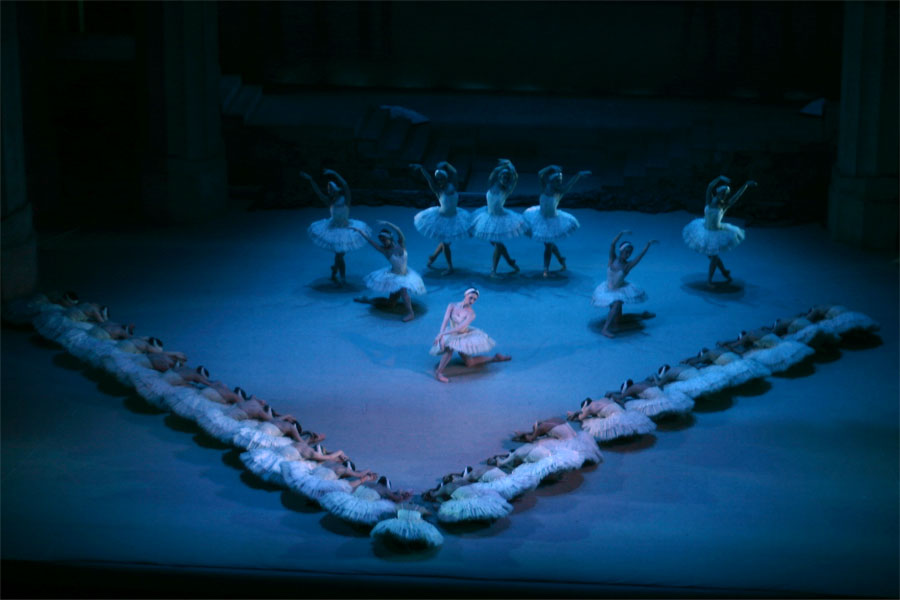 Swan LakeBallet · 1877Same lineage · video
 GiselleBallet · 1841Same lineage · video
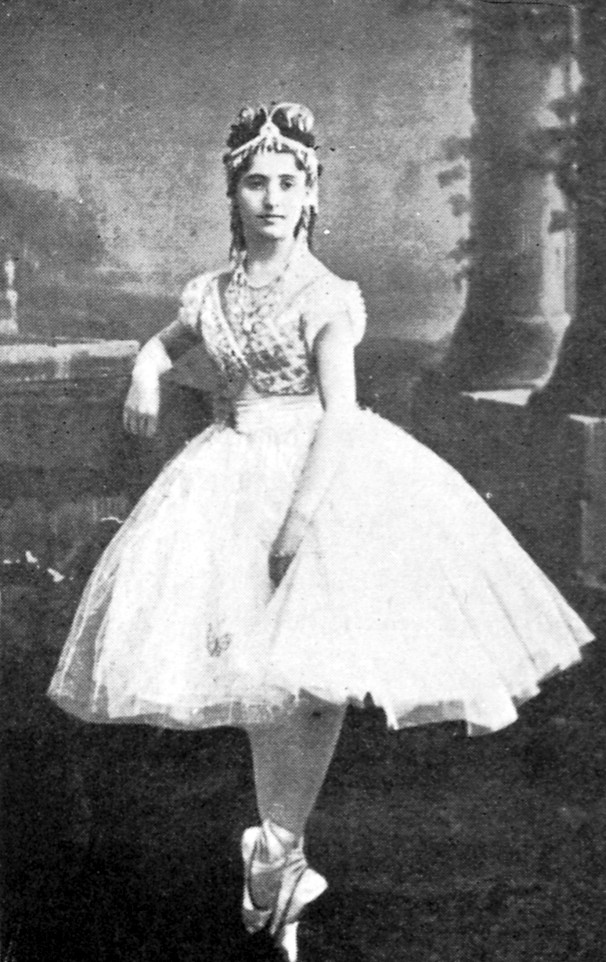 CoppéliaBallet · 1870Same lineage · video
 La SylphideBallet · 1832Same lineage · video
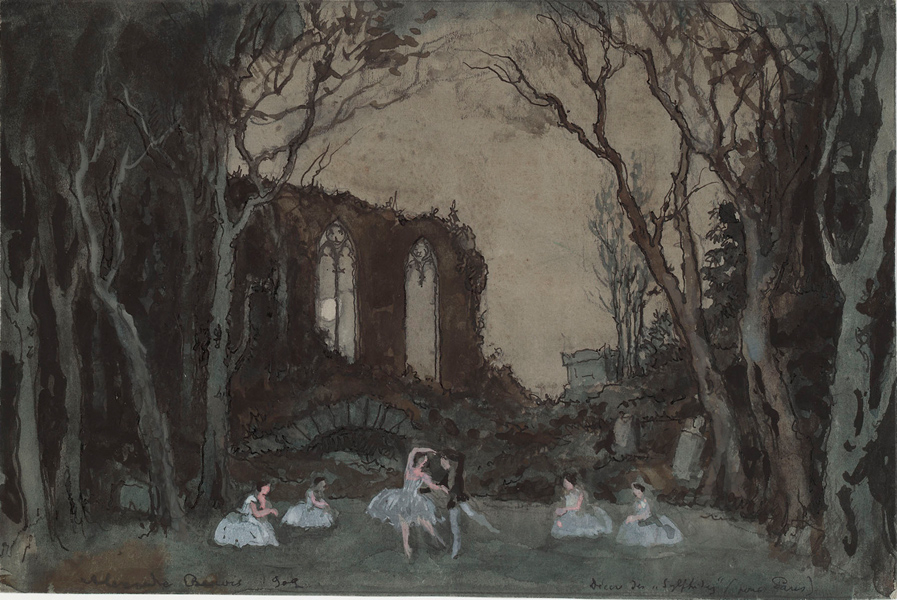 Les SylphidesBallet · 1908Same lineage · video
 La fille mal gardéeBallet · 1789Same lineage · video
 L'Île EnchantéeBallet · 1864Same lineage
 The DreamBallet · 1964Same lineage · video