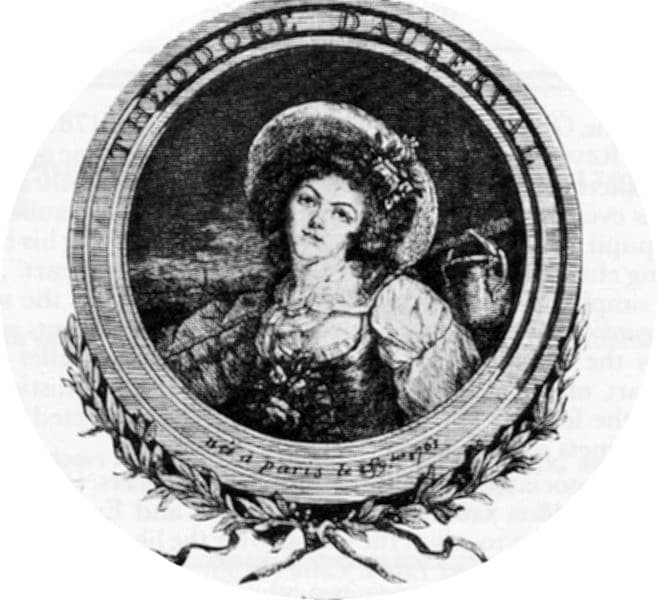
Inconnu (1789) — Commons · Public domain
La fille mal gardée is a comic ballet originally choreographed by Jean Dauberval and first given on 1 July 1789 at the Grand Théâtre de Bordeaux under the title Le ballet de la paille, ou Il n'est qu'un pas du mal au bien. It is one of the oldest works to have survived continuously in the ballet repertory, transmitted not through a single fixed choreographic text but through more than two centuries of restagings, rescorings and retitlings — La précaution inutile in Russia, Das schlecht bewachte Mädchen in Berlin, The Wayward Daughter and Naughty Lisette in the United States.
What it contains
- Classical Ballet · Across its successive stagings from Dauberval through Petipa/Ivanov, Gorsky and Ashton — The ballet's identity is carried by ballerina showpieces added at each revival — grand pas de deux and variations for star dancers such as Fanny Elssler and Virginia Zucchi — the standard vehicle-ballet convention of 19th-century classical ballet. Source: "It was the custom of the time that when a ballerina appeared in an already-existing role, she would request a new Grand pas with variations from the Ballet Master as a novelty for her own performances."
- Clog — Clog Dance · The Clog Dance, created for Ashton's 1960 production — A humorous number for the Widow Simone and four women in wooden clogs, inspired by Lancashire clog dancers, in which the dancers move from clog footwork into pointe work. Source: "which also features the dancers using the clogs to perform sur la pointe (on their toes)"
- Romantic Ballet — The Fanny Elssler pas de deux · Aumer's 1828 Paris Opéra production, as danced by Fanny Elssler from 1837 — A virtuoso Grand pas with variations created for the Romantic-era ballerina Fanny Elssler, drawing on operatic airs, in the manner of the star showpieces of Romantic ballet. Source: "In 1837, the great Austrian Ballerina Fanny Elssler made her debut at the Paris Opéra as Lise in Aumer's production of La fille mal gardée."
What is danced
The ballet has no single settled choreography; what survives is a genre and a chain of set pieces that successive choreographers kept reinventing around the same rustic love-triangle plot. The article's clearest movement detail concerns named numbers rather than a fixed step vocabulary: a 'Pas de ruban' in which Lise and Colas dance with ribbons while Colas mimes being a horse; a mimed passage known as 'When I'm Married', transmitted dancer-to-dancer from Pavel Gerdt through Tamara Karsavina to Frederick Ashton; and a Clog Dance for the Widow Simone and four women, danced in wooden clogs but finishing 'sur la pointe (on their toes)', fusing folk footwear with classical pointe technique.
Context
Dauberval trained under Jean-Georges Noverre and was himself teacher to Charles Didelot, 'the Father of Russian Ballet', placing this work at a hinge point between Enlightenment ballet d'action and the technique that would spread through the Imperial Russian schools. Its pastiche scores — the 1789 original drawn from fifty-five popular airs, later replaced by Hérold, Hertel, Cavos, Pugni, Minkus, Feldt and others — reflect the period practice of assembling ballet music from borrowed tunes rather than a single commissioned score, a practice the ballet outlived almost every other survivor from its era to demonstrate.
Staging history
The work passed through Aumer's 1828 Paris Opéra version (with Hérold's score, later carrying Fanny Elssler's celebrated 1837 Grand pas), Taglioni's 1864 Berlin staging to Hertel's music, and Petipa and Ivanov's 1885 St Petersburg production for Virginia Zucchi, which Gorsky adapted for the Bolshoi in 1903 and which became the template used across Russia, Europe and the Americas for decades. Frederick Ashton's 1960 Royal Ballet version, built on the rediscovered Hérold score orchestrated by John Lanchbery, has since displaced the Hertel-based tradition in most major companies (including, eventually, the Bolshoi and American Ballet Theatre), while the Petipa/Ivanov/Gorsky grand pas de deux survives independently as a competition and gala excerpt, and Ivo Cramér's 1989 Ballet du Rhin production attempted a reconstruction of Dauberval's lost 1789 original.
How to watch it
Watch for the layering of vocabularies rather than a single style: the Clog Dance is danced in wooden clogs but ends en pointe, and the mimed 'When I'm Married' sequence is pure 19th-century ballet pantomime rather than steps. Note also that Widow Simone is traditionally a travesty (danced by a man), and that most companies today perform either the Ashton/Hérold-Lanchbery version or an older Hertel-based Petipa/Ivanov/Gorsky descendant — the two differ substantially in score and choreography though they share the same plot.
Structure
- The Fanny Elssler pas de deuxA Grand pas with variations arranged for Fanny Elssler in 1837, rediscovered by Ivor Guest and incorporated into later productions, including Ashton's 1960 version.
- Clog DanceThe Widow Simone puts on a pair of clogs and dances with four other women, the number ending with the dancers performing sur la pointe in their clogs.
- Pas de rubanLise and Colas dance a pas built around ribbons, with Colas mimicking a horse while Lise runs alongside him.
- When I'm MarriedA mimed sequence for Lise imagining her married life, transmitted through generations of dancers from Pavel Gerdt to Karsavina to Ashton.
Structure read from an encyclopaedia article, not from a libretto or score we hold. Confirm against a programme before treating the numbering as authoritative.
In the same lineage
Other staged works in the register connected to this one by author or lineage.
 Swan LakeBallet · 1877Same lineage · video
 The NutcrackerBallet · 1892Same lineage · video
 GiselleBallet · 1841Same lineage · video
 CoppéliaBallet · 1870Same lineage · video
 The Sleeping BeautyBallet · 1890Same lineage · video
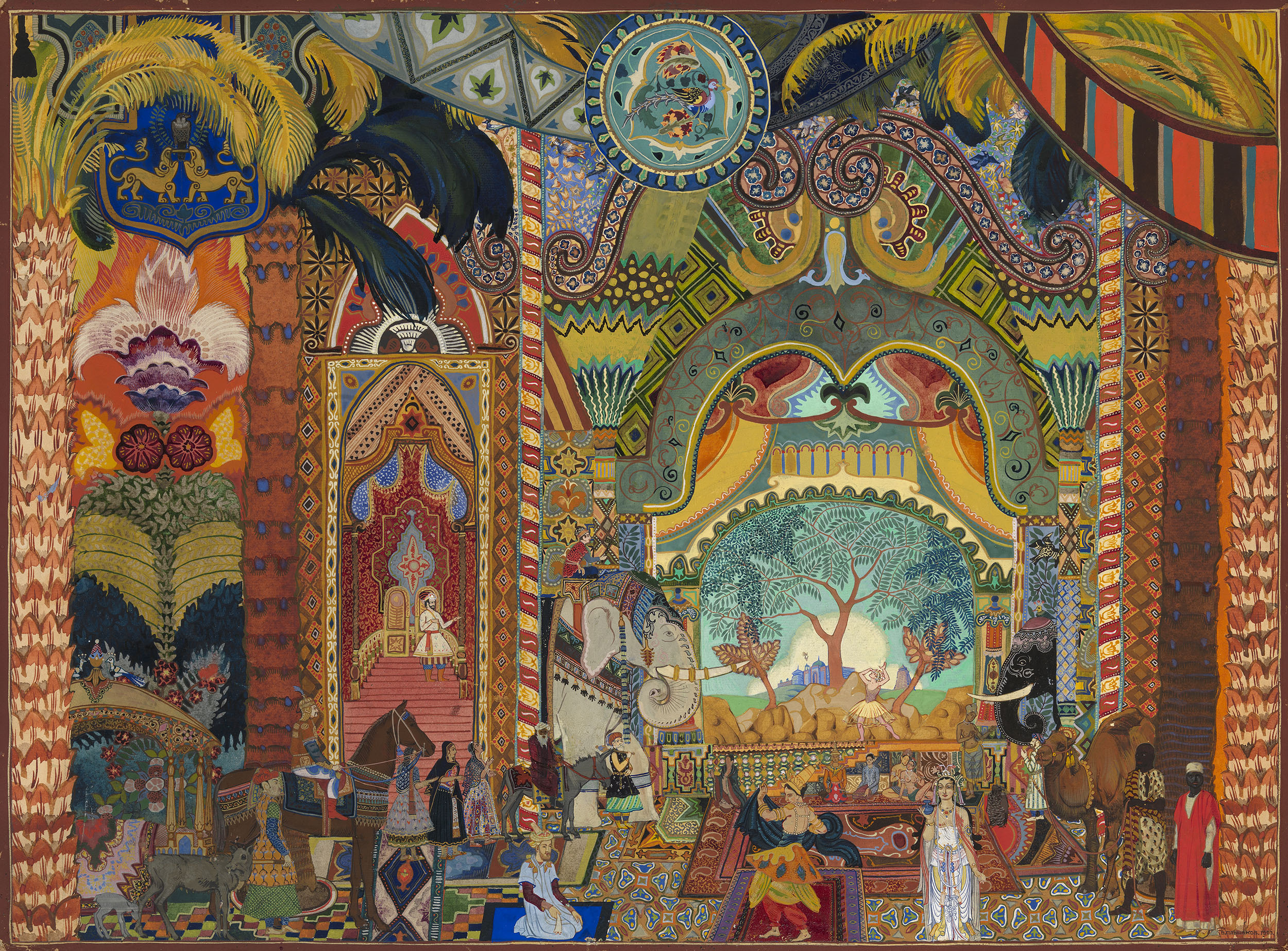 The FirebirdBallet · 1910Same lineage · video
 Square DanceBallet · 1957Same lineage · video
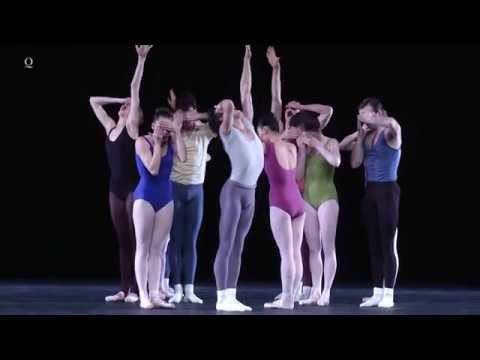 MovesBallet · 1959Same lineage · video