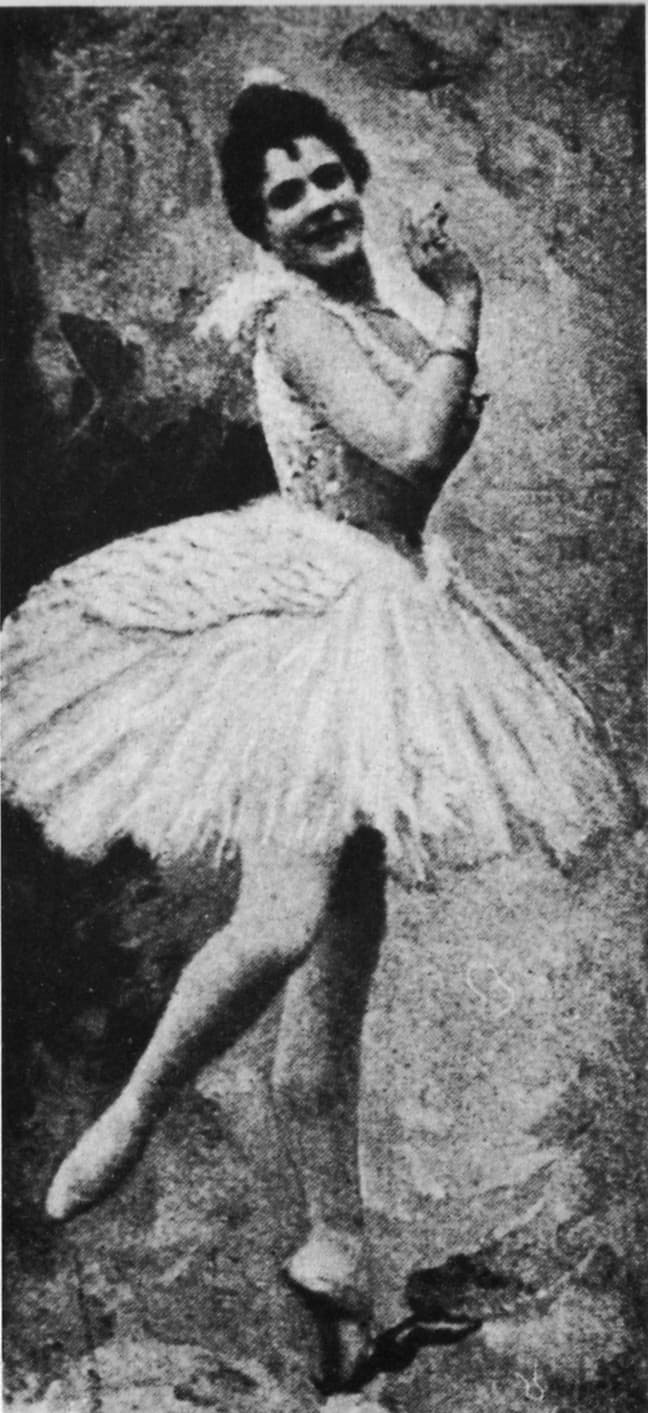
Unknown authorUnknown author · Public domain
This entry is for the 1895 St Petersburg staging by Marius Petipa and Lev Ivanov, with the score revised and expanded by Riccardo Drigo, of Tchaikovsky's Swan Lake — not the original 1877 Bolshoi production by Julius Reisinger, which the article treats as a distinct, earlier version of the same ballet. Petipa staged the first and third scenes (the court and ballroom acts), Ivanov staged the two lakeside 'white' scenes, and Drigo reworked Tchaikovsky's 1877 score, cutting numbers, reordering the swan dances, and interpolating three orchestrations of piano pieces from Tchaikovsky's Op. 72.
What it contains
- Classical Ballet · The whole 1895 production — A full classical vocabulary of pointe work, pas de deux/pas de trois structures with entrée-adagio-variations-coda, and large corps de ballet formations runs through the entire staging. Source: "most ballet companies today base their stagings both choreographically and musically on this revival by Marius Petipa and Lev Ivanov"
- Classical Ballet · Act I (Act I-Scene 1), the Pas de trois — Classical pas de trois vocabulary, danced largely en pointe with multiple turns for two women and a man; considered technically difficult even in press accounts of the premiere. Source: "a captivating Pas de Trois, which is technically difficult, is performed en pointe for the most part with multiple turns"
- Classical Ballet · Act II (Act I-Scene 2), the Grand Adagio / Love Duet — A classical grand adagio, unusually structured as a pas de deux à trois with the ballerina partnered by two men simultaneously rather than the standard pas de deux. Source: "was choreographed by Ivanov as a Pas de deux à Trois"
- Classical Ballet — Grand Pas d'action (Black Swan Pas de Deux) · Act III (Act II), the Grand Pas de deux (Black Swan Pas de Deux) — Virtuoso classical grand pas de deux for Odile and Siegfried, with a bravura female variation and coda demanding sustained multiple pirouette turns en pointe. Source: "she completed no less than thirty-two fouettés en tournant, the first ballerina ever to perform such a feat"
- Mazurka — Grand Pas d'action (Black Swan Pas de Deux) · Act III (Act II), the Grand Divertissement — A staged Mazurka performed by an ensemble with a lead soloist, singled out at the premiere as a sensation and encored. Source: "Perhaps the biggest sensation was the Mazurka, danced by a group of dancers with Felix Kschessinsky as soloist."
What is danced
The ballet alternates a classical court/ballroom idiom (pas de trois, national divertissement, grand pas de deux with variations and coda) with Ivanov's 'white act' vocabulary for the corps de ballet of swans. Act I's Pas de trois for two women and a man is, per the article, still performed by most companies almost as Petipa set it, danced largely en pointe with multiple turns; the Valse Champêtre that follows was a large-scale corps set-piece for forty dancers using painted footstools to build floor patterns, culminating in a maypole figure with coloured ribbons. In the lakeside scene, Ivanov built an extensive mime exchange between Siegfried and Odette before any dancing begins, a Grand Adagio originally structured as a pas de deux à trois (Odette partnered simultaneously by Siegfried and by Benno, rather than the modern pas de deux), the unison 'Dance of the Little Swans', and a Waltz of the Swans that in 1895 included eight child students as swan maidens alongside the adult corps. The ballroom act carries the Grand Divertissement of national/character dances — Spanish, Neapolitan, Hungarian and Mazurka — followed by what is now known as the Black Swan Pas de Deux, originally a pas de deux à quatre demi d'action for Odile, Siegfried and an extra partnering cavalier, capped by Pierina Legnani's variation and the coda in which she introduced thirty-two fouettés en tournant to the Imperial stage. The final act adds a Waltz for White and Black Swans and a Pas d'action of reconciliation between the lovers before the drowning and apotheosis.
Context
The 1895 revival came at the peak of Petipa's tenure as chief balletmaster of the Imperial Theatres, in the same institutional world that had just produced The Sleeping Beauty (1890) and The Nutcracker (1892) to Tchaikovsky scores, and it followed Tchaikovsky's death in 1893, which left the question of revising his own orchestration unresolved and forced Drigo to do the work himself with the family's approval. It effectively replaced Reisinger's original 1877 Moscow production in the international repertory: nearly every staging performed today, in any city, descends musically and choreographically from this 1895 version rather than from 1877.
Staging history
Nicholas Sergeyev notated the production in Stepanov notation around 1901–1907 (documenting Vera Trefilova as Odette/Odile); that notation, now in the Harvard Theatre Collection's Sergeyev Collection, is the basis for later reconstructions. Sergeyev himself staged the first production of the full Petipa/Ivanov version outside Russia, for the Vic-Wells Ballet (later the Royal Ballet) in 1934. Alexander Gorsky mounted his own version at the Bolshoi in 1901, expanding the male variation he had danced at the 1895 premiere. The Royal Ballet's 1987 revival (Anthony Dowell/Roland John Wiley) is described as the only modern production to restore Ivanov's original lakeside scheme, including the children in the corps. Alexei Ratmansky reconstructed the Petipa/Ivanov staging from the Sergeyev notation for Zurich Ballet in 2016, later restaged at La Scala (2016) and Miami City Ballet (2022).
How to watch it
Watch for how much of the lakeside choreography survives against the Soviet-era revisions most companies actually use: the Dance of the Little Swans is claimed as the one number danced exactly as Ivanov set it, while the original pas de deux à trois adagio and the child swans are almost never restored outside the Royal Ballet's 1987 production and the Ratmansky reconstructions. In the ballroom act, note that Odile was not costumed or conceived as a 'Black Swan' in 1895 — that convention only began in 1941 — so a production's Odile costuming tells you which historical layer it is drawing on.
Structure
- Act I · Scene 1Petipa's Pas de trois for two women and a man, and the large-scale corps de ballet Valse Champêtre with a maypole finale.
- Act I · Scene 2The lakeside 'white' scene: an extended mime exchange between Siegfried and Odette, Ivanov's Grand Adagio (originally a pas de deux à trois), the Dance of the Little Swans, and the Waltz of the Swans with child swan students.
- Act II · Grand Pas d'action (Black Swan Pas de Deux)The ballroom Grand Divertissement of national dances (Spanish, Neapolitan, Hungarian, Mazurka) followed by Odile and Siegfried's grand pas de deux, ending in Legnani's thirty-two fouettés en tournant.
- Act IIIReturn to the lake: a Waltz for White and Black Swans, Odette's mime lament, and a Pas d'action of reconciliation between the lovers before the drowning and apotheosis.
Structure read from an encyclopaedia article, not from a libretto or score we hold. Confirm against a programme before treating the numbering as authoritative.
Credits
- composer: Pyotr Ilyich Tchaikovsky
- composer: Riccardo Drigo
Related works
Other staged works in the register connected to this one by author or lineage.
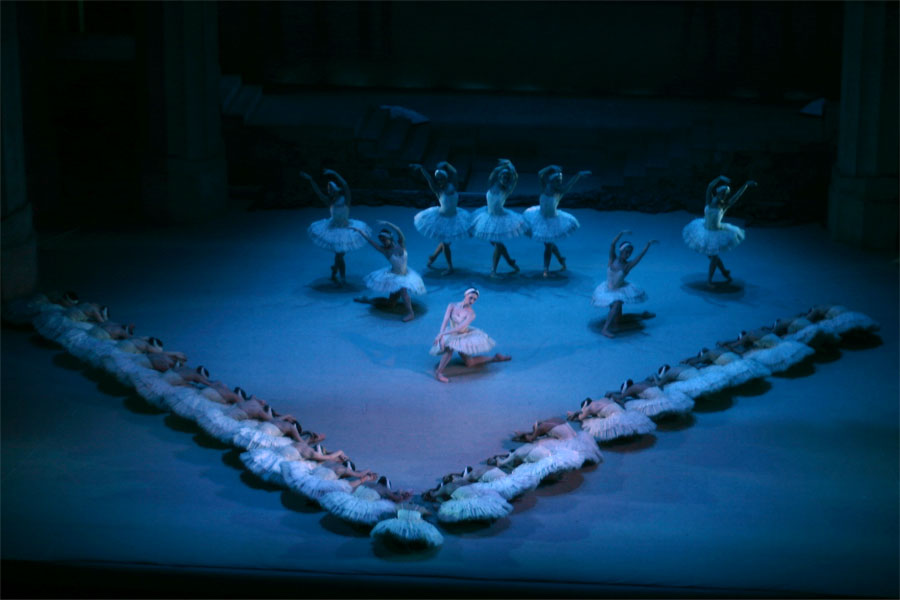 Swan LakeBallet · 1877Ivanov · video
 The NutcrackerBallet · 1892Ivanov · video
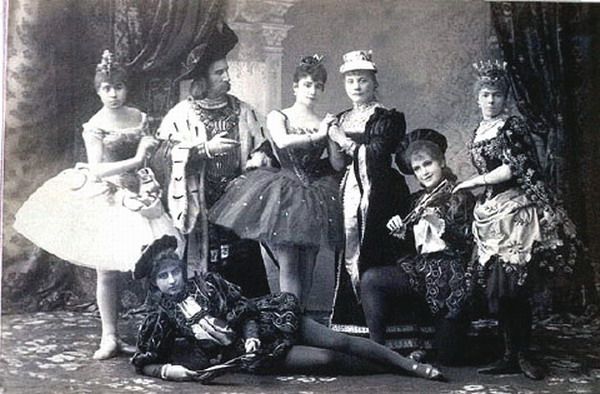 The Sleeping BeautyBallet · 1890Petipa · video
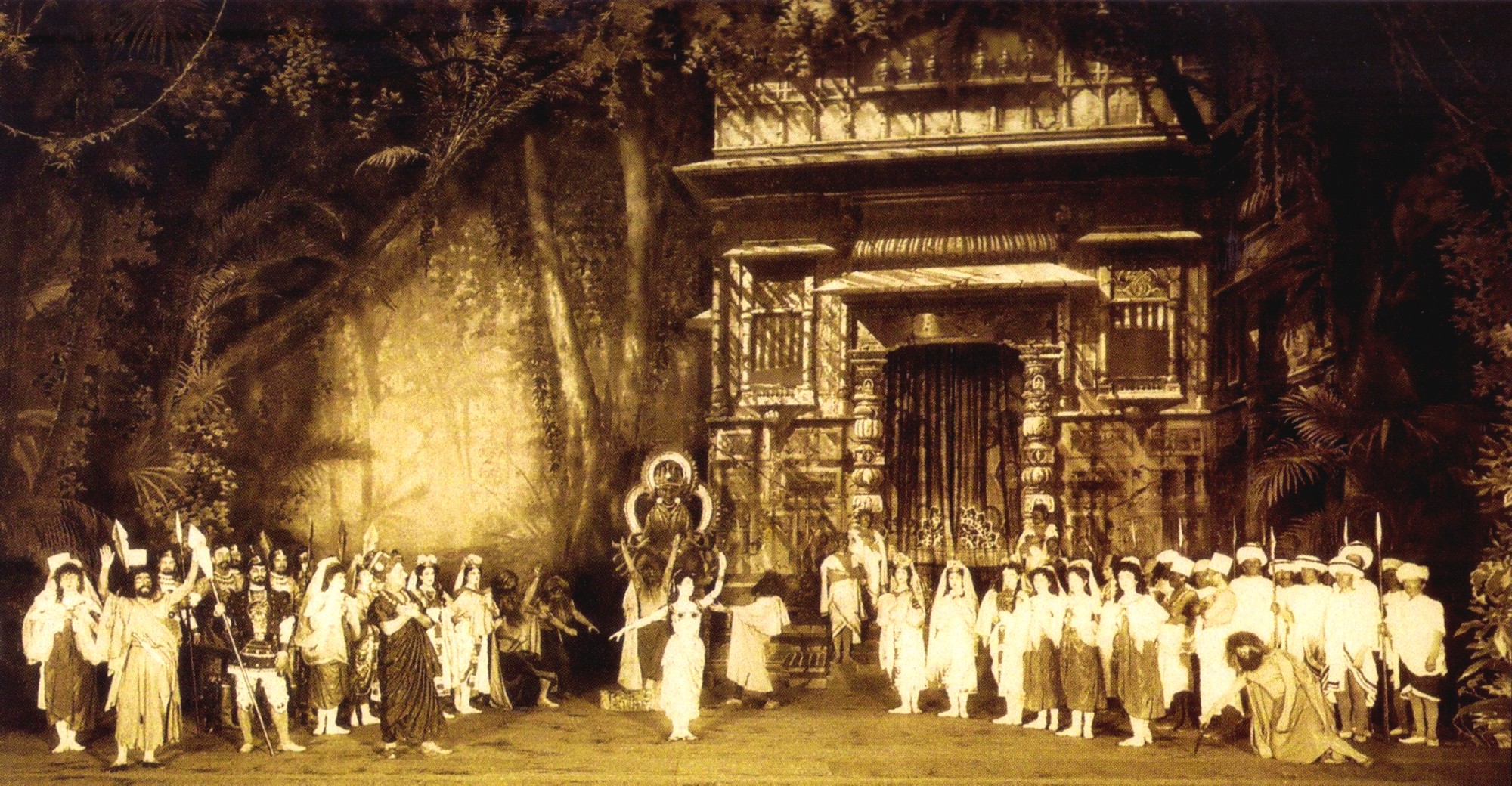 La BayadèreBallet · 1877Petipa · video
 Don QuixoteBallet · 1869Petipa · video
 RaymondaBallet · 1898Petipa · video
 The SeasonsBallet · 1899Same lineage
 ZenobiaBallet · 1936Same lineage · video