39 works in this view — arrow keys or swipe to move between them.
Dance in Art · 1930
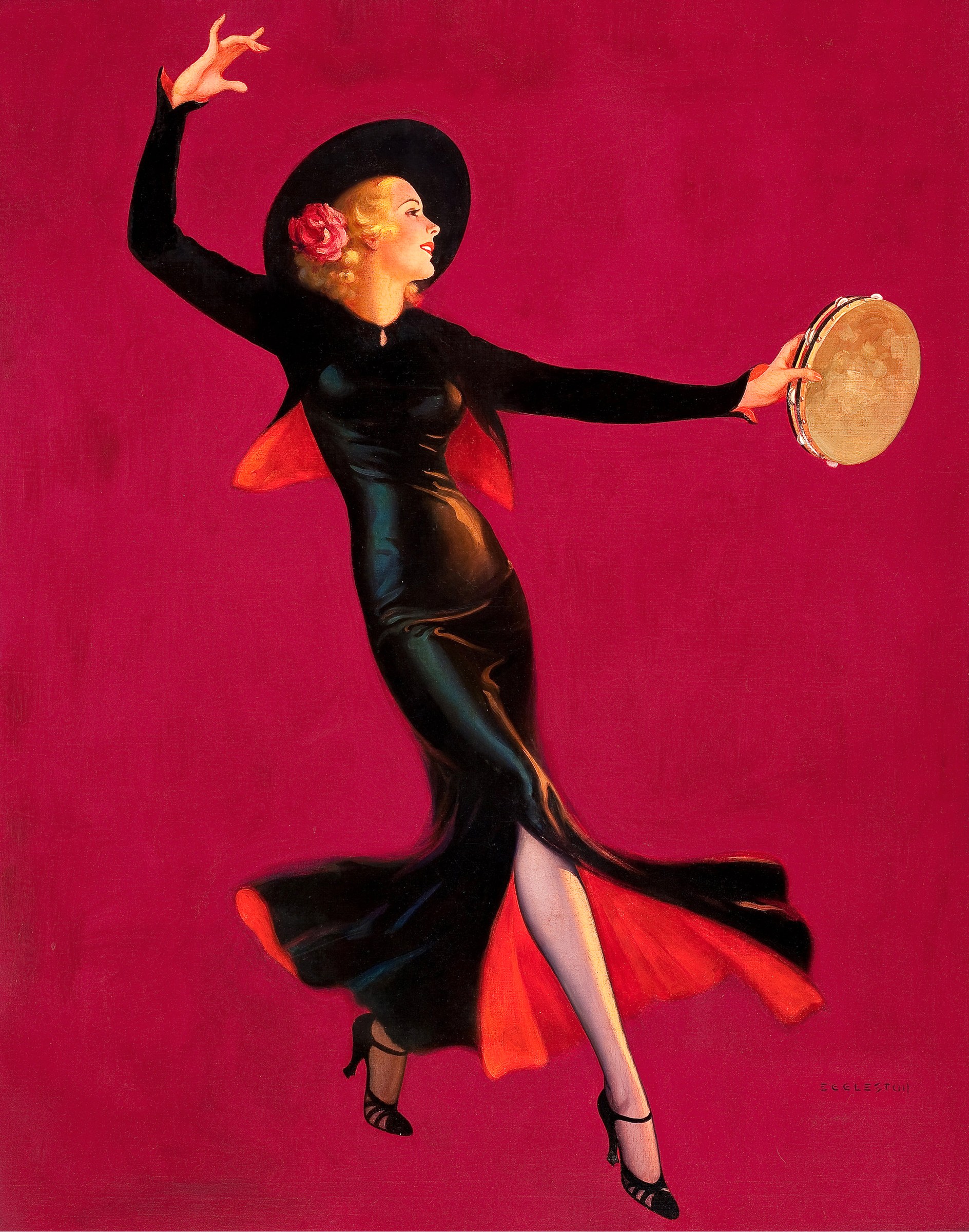
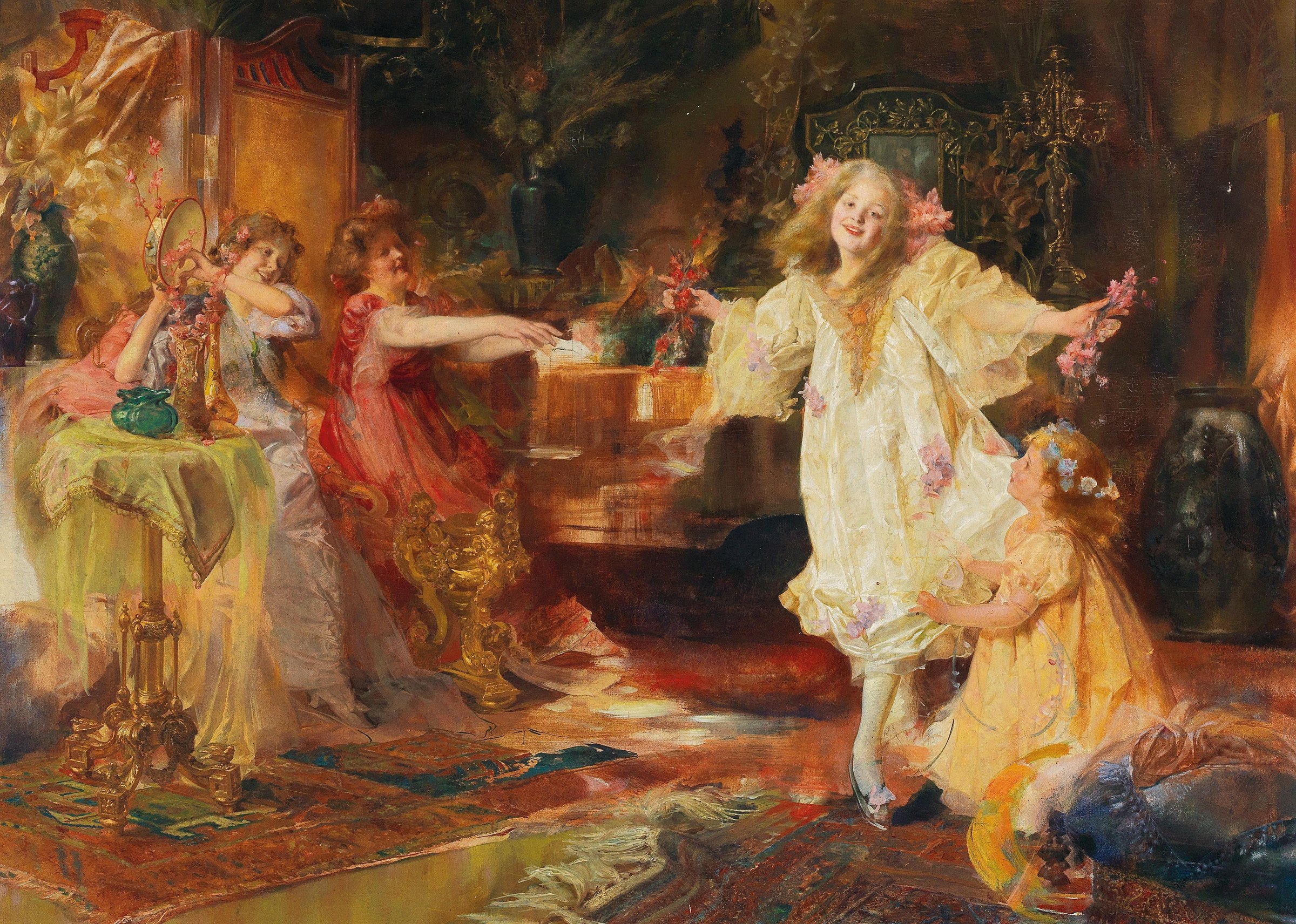
Max Lewis - Girls dancing
Max Levis
- Medium:
- Oil Painting
- Era:
- 1920-1950 (Swing Era)
- Source:
- Wikimedia Commons
- Rights:
- Public domain — free to use, share and adapt.
- Recorded as:
- Public Domain
This work documents the aesthetics and conventions of early-twentieth-century theatrical performance painting, showing how artists of the period visualized solo performance, audience attention, and the relationship between performer and spectator. For dance historians, it provides evidence of how non-specialist painters imagined courtly or balletic movement in the era immediately preceding modernism.
What you are looking at
A luxurious interior bathed in warm, golden light depicts an elaborate social gathering centered on dance. In the foreground, a woman in a flowing pale yellow gown with pink floral garlands stands with arms outstretched in an animated, welcoming gesture, her body animated mid-movement. To her right, a small cherub-like child in golden-orange drapery gazes upward adoringly. Behind her, seated figures in rich jewel-toned silks—reds, golds, deep greens—observe from elevated positions around the room. The setting is opulently decorated with classical architectural elements: a gilt-framed mirror, ornamental urns, draped fabrics, and what appears to be a marble or stone floor scattered with rose petals. The composition suggests a moment of performance or display, with the standing woman as the focal point and the seated figures as an audience. The painting's warm palette and soft, diffused light create an atmosphere of intimate theater and aristocratic leisure.
The dancing
The central figure displays an open, expansive posture with both arms extended outward at roughly shoulder height, palms facing forward or upward—a gesture of presentation or invitation rather than a closed ballroom hold. Her body is upright but animated, with weight seemingly distributed evenly, suggesting a pause in movement or a moment of flourish rather than a structured dance position. The small attendant child looks up with devoted attention. The seated women in the background maintain upright, dignified postures appropriate to their audience role, their bodies framed by richly patterned textiles. There is no evidence of partnered or couple work; instead, this is a solo performer with spectators.
The dance depicted
This appears to depict a theatrical or courtly solo performance rather than social ballroom dance, though the specific dance form is ambiguous. The open, gestural quality of the pose—the extended arms, the turned-out stance, the elaborate costume—suggests either a pantomime or a balletic display within a court or aristocratic entertainment context. The presence of seated, richly dressed observers, the theatrical lighting, and the ornamental setting point to a performance for an audience rather than participatory social dancing. The floral garlands adorning the performer suggest either a bacchanal or Dionysian theme, or simply the decorative conventions of late-nineteenth-century romantic or theatrical painting. Without clearer footwork or hold, and given only the gestural and postural evidence, a confident identification of a specific dance tradition is not possible.
How it was made
This is an oil painting, as stated in the record. The work demonstrates the academic salon painting technique of the late nineteenth century, with soft, blended brushwork that creates atmospheric perspective and a luminous, idealized quality characteristic of the period. The artist has used warm glazes and a golden tonality to unify the composition and create an impression of candlelit or firelit interior space. This technique was labor-intensive and typically produced for a wealthy, educated audience; the scale and finish suggest a work intended for exhibition or a private collection of means. The soft focus and romantic treatment of light are typical of both genre painting and theatrical subject matter of the 1920s–1930s era.
About this work
This oil painting depicts an elegant solo dancer or performer in a pale yellow gown, adorned with pink flowers, gesturing expansively before a seated audience of richly dressed observers in a luxurious interior. The work is characteristic of early-twentieth-century academic salon painting, which frequently took theatrical or aristocratic leisure as its subject. The scene captures a moment of performance or display within what appears to be a private entertainment or court setting, emphasizing spectacle, costume, and the pleasure of looking.
How to look at it
Attend to the artist's choice to freeze the performer at a moment of expansive, open gesture—arms extended, body animated—rather than a closed ballroom position or a formal arabesque. This suggests the artist was interested in capturing a moment of display or invitation, possibly pantomime or courtly entertainment, rather than ballroom technique. Notice how the painting's composition emphasizes the performer's isolation as the single standing, active figure among seated observers; the architecture, light, and arrangement of figures all draw the eye to her gesture. The rendering of costume and fabric is meticulous, suggesting that the visual spectacle of dress and adornment was as important as the movement itself.
The artist
The record attributes this work to Max Levis (or Lewis—the spelling varies). Little is known with certainty about this artist from available sources. The work's style, technique, and subject matter are consistent with the academic salon painting tradition of the early twentieth century, suggesting training in a formal atelier or academy. The artist's interest in theatrical and aristocratic leisure subjects places him within a broader tradition of genre and narrative painting that dominated European academic circles in the 1920s–1930s.
The period
This painting emerges during the 1920s–1930s, a period of significant transition in dance and visual culture. Theatrical ballet and pantomime remained prestigious forms of aristocratic entertainment, even as modernist movements challenged academic conventions in both dance and painting. The era saw the enduring influence of the Ballets Russes and the continued prestige of court-derived entertainment. In academic painting, salon works depicting leisure, performance, and aristocratic interiors remained commercially viable and critically respected, even as avant-garde movements questioned such traditions. The painting's warm, romantic treatment of theatrical light and costume reflects the period's nostalgia for eighteenth- and nineteenth-century court culture.
Where it lives
The work is sourced from Wikimedia Commons, with no holding institution recorded in the catalogue. It remains unclear whether this is a work in a private collection, a museum, or a historical archive.
Dance in this work
Questions about this work
Is this a ballet?
Possibly, but not certainly. The elaborate costume, theatrical setting, and solo performance suggest a balletic or courtly entertainment context. However, the open, gestural arm positions and lack of visible pointe work or clear balletic framing make a definitive identification difficult. It may instead depict pantomime or a courtly dance form.
Who is the dancer?
The painting does not identify the performer by name. She is presented as a generic figure of aristocratic leisure and theatrical performance, idealized rather than portraiture-like. The floral garlands suggest she may represent a mythological or allegorical figure, though this is not explicit.
What are the objects around the room?
The interior is decorated with the furnishings typical of aristocratic or wealthy bourgeois interiors of the period: gilt-framed mirrors, marble or ornamental urns, richly dyed textiles, and draped fabrics. These serve to establish the scene as one of luxury and refinement, appropriate to the performance of an elite cultural form.
More dance artwork