45 works in this view — arrow keys or swipe to move between them.
Dance in Art · 1921
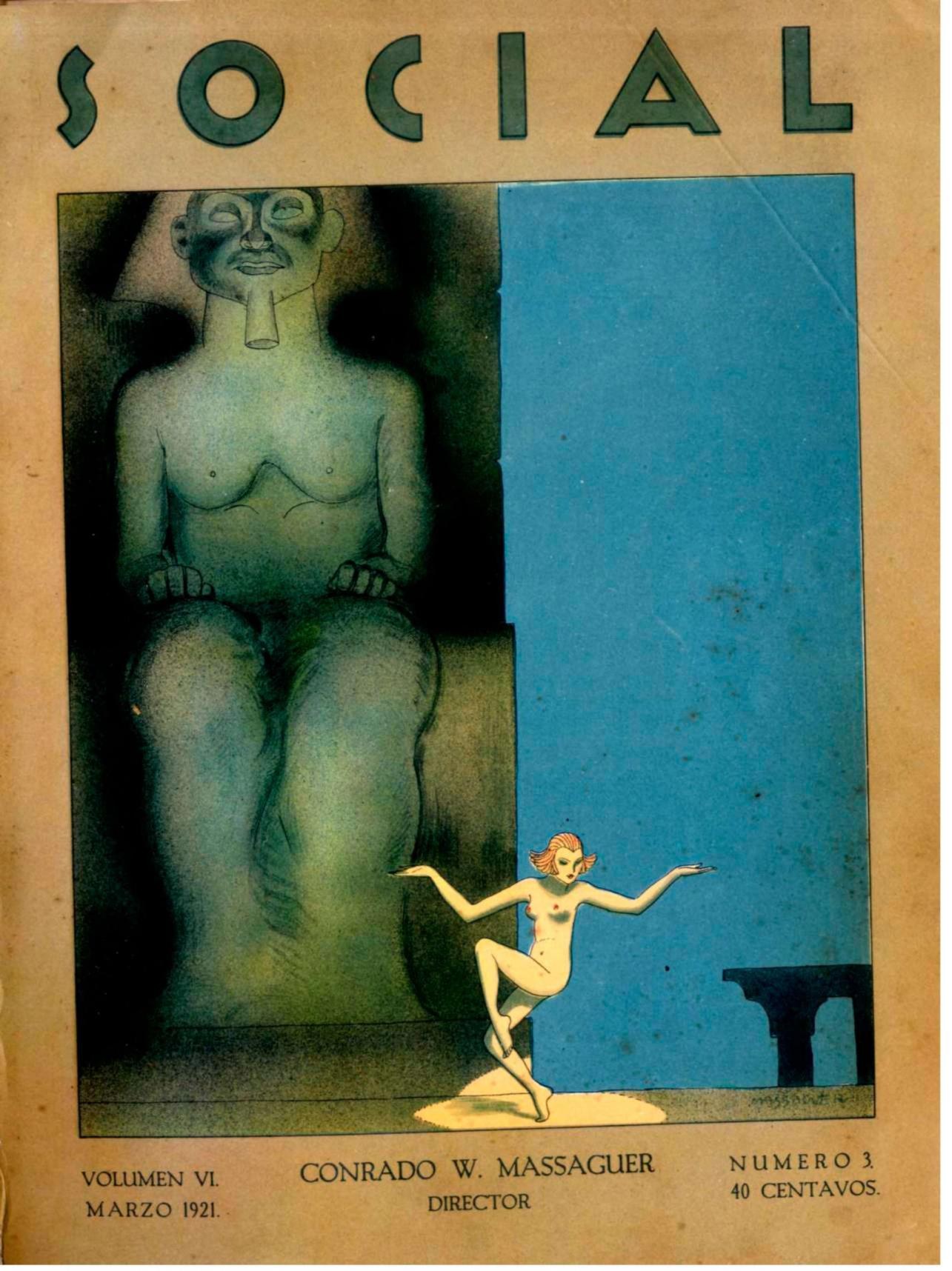
Social vol VI No 3 marzo 1921 0000
Conrado Walter Massaguer
- Medium:
- Oil Painting
- Era:
- 1920-1950 (Swing Era)
- Source:
- Wikimedia Commons
- Rights:
- Public domain — free to use, share and adapt.
- Recorded as:
- Public Domain
This image documents how early 20th-century Cuban audiences understood and visualized modern dance—not as folk or social practice but as theatrical spectacle and artistic expression. The artist's choice to pair a monumental classical or symbolic figure with a small figure in dynamic motion suggests the aesthetic anxiety and excitement of the 1920s moment, when new forms of movement were seen as expressive of modernity itself. For historians of Latin American dance and visual culture, this cover is evidence of how dance was circulated, consumed, and conceptualized in the interwar period.
What you are looking at
This is the cover of Social, a Cuban magazine from March 1921. The composition is divided into two zones of visual and tonal contrast. On the left, a monumental female figure sits frontally against a dark, shadowed background. Her body is rendered in pale greenish-gray tones with heavy shading; she wears theatrical face paint or a mask with geometric designs, and her gaze is direct and impassive. Her massive thighs dominate the lower half of the image, and her posture is upright and statuesque. On the right, a much smaller, cream-colored figure in a contrasting pose appears to dance or leap across a bright blue ground. This smaller figure—rendered in warm peachy tones with reddish hair—is dynamic and curved where the larger figure is static and geometric. The scale difference is extreme and deliberate, creating a visual relationship between monumental stillness and diminutive motion.
The dancing
The large seated figure is motionless, with arms resting on her thighs and an expression of stoic composure. The smaller dancing figure is in a lunging or dynamic pose with one leg extended and both arms raised in an open, spreading gesture suggesting exuberance or freedom. The contrast in body language is stark: containment versus expression, weight versus weightlessness. The smaller figure appears to be in a moment of lift or elevation, with the torso arched and limbs extended in multiple directions.
The dance depicted
The smaller figure's pose suggests social or theatrical dance of the early 20th century—the open arm position, the dynamic line of the body, and the apparent lightness of the movement are consistent with interpretive or modern theatrical dance of the 1920s rather than ballroom or vernacular forms. The figure's isolation and the theatrical lighting suggest a staged performance rather than social dancing. The image may reference the aesthetic of modern dance or vaudeville performance that was entering Cuban culture through theatrical and cabaret circuits in this period, though the specific style cannot be definitively identified from the pose alone.
How it was made
This is a color lithograph, a printing medium well suited to magazine covers and allowing for bold areas of color and strong tonal contrast. The technique enabled the reproduction of this image across multiple copies of the magazine, making it a commercial artwork designed for mass circulation among Cuban readers. The bold color separation—the muted palette of the left figure against the bright blue ground on the right—is characteristic of Art Deco and modernist design of the 1920s, and the lithographic process allowed for the crisp geometric quality visible in the larger figure's face paint or mask.
About this work
This is a magazine cover that uses the visual language of early 20th-century modernism to frame a dance image. The cover stages a dialogue between two kinds of bodies and two kinds of movement: monumental, masklike stillness and light, theatrical motion. As the cover of Social, a significant Cuban cultural publication, it would have been seen by urban, educated readers interested in contemporary art and culture. The work belongs in this collection because it captures a moment when modern dance was entering Latin American visual culture and when magazines were using dance and movement to signal sophistication and cosmopolitan taste.
How to look at it
Pay attention to the scale relationship and what it implies: the dancing figure is not simply smaller because of perspective, but deliberately miniaturized, suggesting either the insignificance of individual human motion against monumental forces, or conversely, the intensity and particularity of a single moment of movement. Notice the mask or face paint on the larger figure—a modernist device that suggests either primitivist influence or the transformation of the body into an abstract form. The bright blue ground on which the smaller figure dances is a modernist choice that flattens space and emphasizes the graphic quality of the composition rather than creating illusionistic depth. The artist has chosen a moment of maximum extension and energy for the dancing figure, capturing not stillness but the peak of a gesture.
The artist
Conrado W. Massaguer (1889–1965) was a Cuban painter, illustrator, and graphic designer who founded and directed Social magazine from 1916 until the 1930s. He was instrumental in introducing European modernism and Art Deco aesthetics to Cuban visual culture and used the magazine as a platform for experimental design and cultural commentary. His work bridged fine art and commercial design, and he was known for his elegant, stylized figures and his ability to capture the mood of contemporary urban life.
The period
In 1921, modern dance was consolidating its identity as a serious theatrical art form in Europe and beginning to circulate in the Americas. Isadora Duncan's influence had established the idea of expressive bodily movement as distinct from classical ballet, and dancers like Ruth St. Denis were creating theatrical spectacles that drew on non-Western visual traditions. In Cuba specifically, the 1920s were a period of cultural ferment and cosmopolitan aspiration, with growing interest in European and North American artistic movements. Social magazine was at the center of this cultural conversation, publishing not only visual art but also fashion, theater, and design. The magazine served an elite, Spanish-speaking readership interested in positioning Cuba as a modern, cultured nation engaged with international artistic developments.
Where it lives
This is a color lithographic magazine cover from Social, volume VI, number 3, March 1921, directed by Conrado W. Massaguer. The image is documented in Wikimedia Commons. Social was a monthly Cuban cultural magazine of significant circulation and influence in its period.
Dance in this work
Questions about this work
Why is one figure so much larger than the other?
The scale difference is deliberate and symbolic rather than spatial. The monumental seated figure dominates the composition, while the dancing figure—though more dynamic—is physically subordinate. This may suggest a relationship between past and present, tradition and modernity, or mass and individual. The composition is organized vertically and hierarchically rather than through realistic perspective.
What kind of dance is depicted?
The pose and context suggest theatrical modern dance or cabaret performance of the early 1920s rather than ballet, ballroom, or vernacular social dance. The open arms, the dynamic torso, and the apparent lightness are consistent with interpretive dance of the period, though the image is stylized and does not document a specific technique.
What does the face paint or mask on the large figure mean?
The geometric face design is likely a modernist device referencing primitivism or non-Western art traditions, which were influential in European visual culture of the 1920s. It may also suggest theatrical transformation or the abstraction of the human face into a formal pattern. The mask emphasizes the figure's stillness and monumentality.
Who was Massaguer and why was this magazine important?
Conrado W. Massaguer was a Cuban modernist artist and the director of Social, one of the most influential cultural magazines in Latin America during the 1920s-1930s. Social introduced European modernism, Art Deco design, and contemporary visual art to Cuban audiences. The magazine was a platform for cultural sophistication and cosmopolitan taste.
More dance artwork