49 works in this view — arrow keys or swipe to move between them.
Dance in Art · 1905
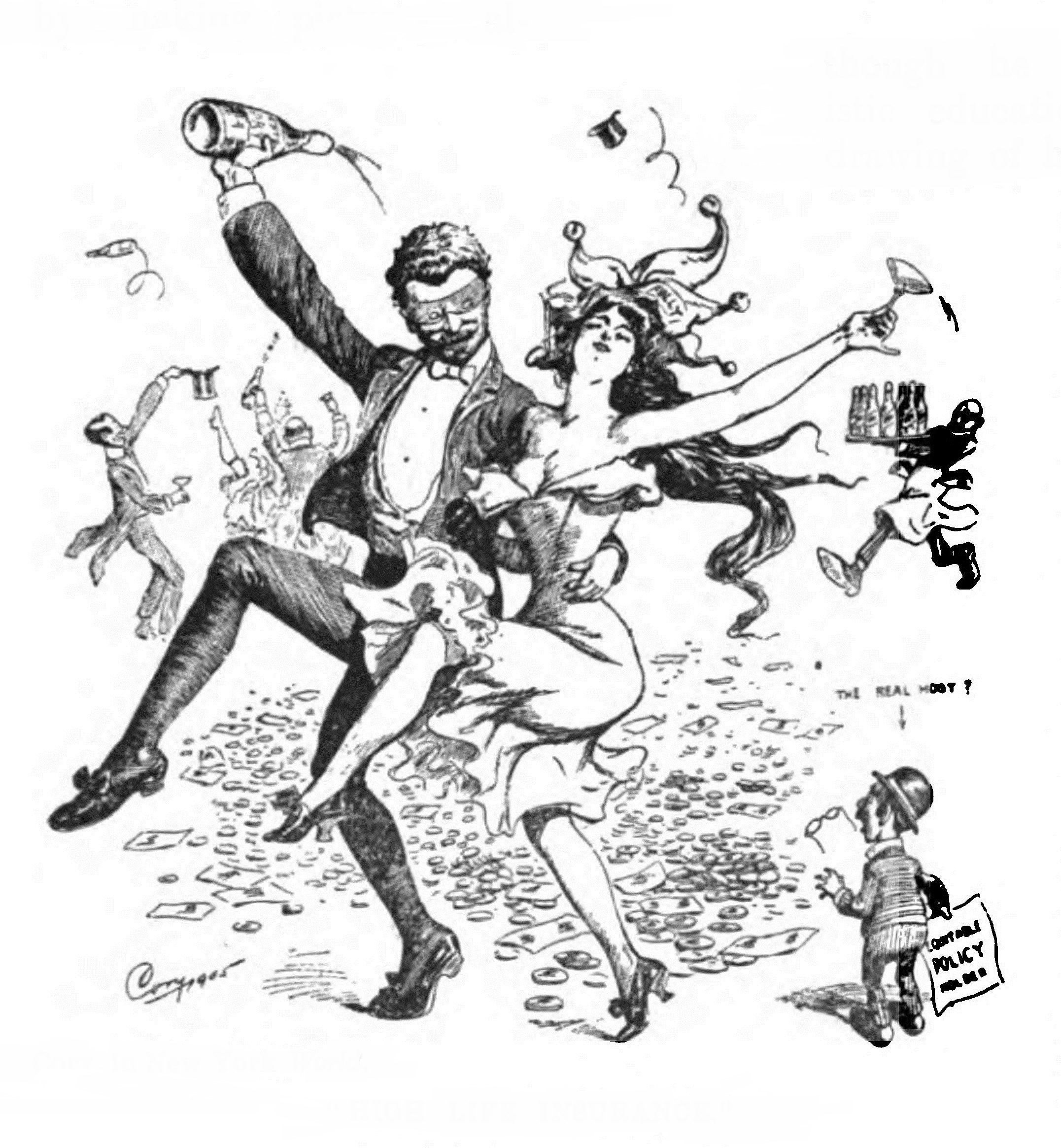
High Life Insurance by Cory
J. Campbell Cory
- Medium:
- Oil Painting
- Era:
- 1900-1920 (Ragtime/Early Jazz)
- Source:
- Wikimedia Commons
- Rights:
- Public domain — free to use, share and adapt.
- Recorded as:
- Public Domain
For dance historians, this image documents the cultural anxiety surrounding early jazz-influenced social dancing and provides evidence of how the mainstream press and public perceived these innovations. For art historians, it exemplifies the tradition of social satire through exaggerated figuration in American editorial illustration of the period.
What you are looking at
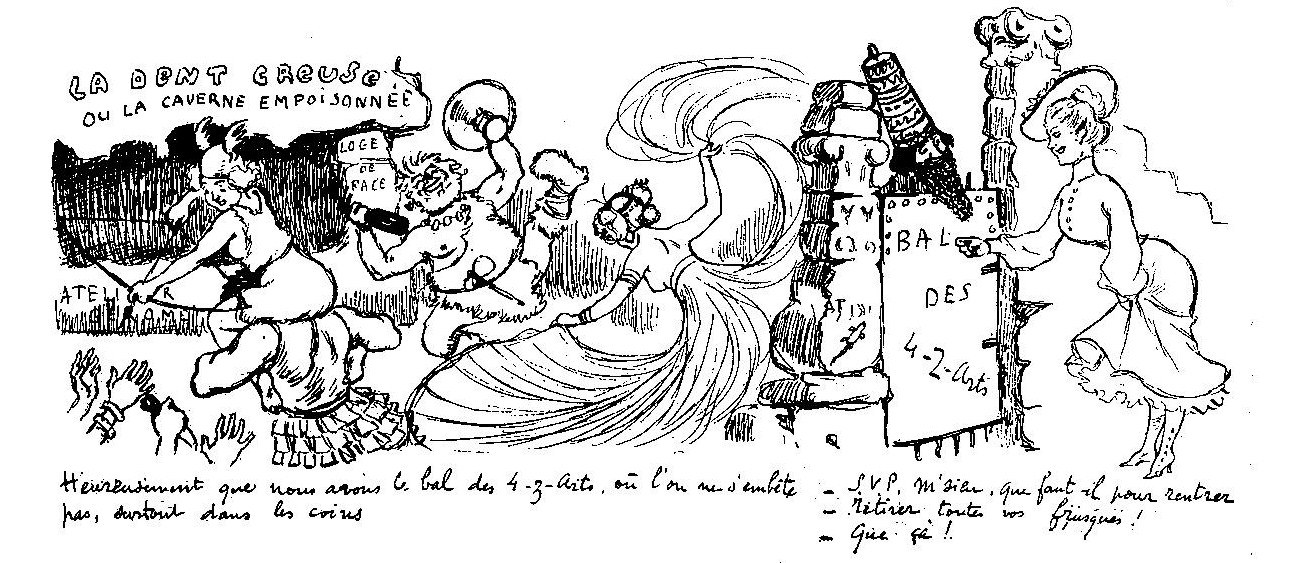
A raucous satire of high society in the Ragtime era, rendered as a chaotic explosion of revelry. At center, a well-dressed man in white tie and tails, eyes masked or shadowed, raises a bottle aloft in triumph while a woman in fashionable dress with elaborate hair clings to his arm, her multiple limbs and snake-like hair suggesting Medusa or frenzy. Money and coins scatter across the ground like confetti. Around them swirls a cast of wild figures—musicians with instruments, other dancers in various states of exuberant motion, some nearly cartoonish in their energy. The composition is deliberately unstable and crowded, with figures tumbling and gesturing at odd angles. A small figure at lower right holds what appears to be a "Control Policy" sign or restriction notice, suggesting commentary on social regulation. The line work is energetic and expressionistic, emphasizing movement and chaos over anatomical precision.
The dancing
The central male figure stands in an exaggerated contrapposto, one leg extended in a high kick, arms splayed—a posture more theatrical exaggeration than actual dance technique. The female figure's multiplicity of limbs and serpentine quality suggest artistic license for comic effect rather than representation of real movement. Surrounding dancers are caught in gestural abandon—arms raised, bodies twisted, some figures appearing to leap or spin. The overall impression is of social dancing and performance in a state of deliberate excess and loss of control.
The dance depicted
This is not a depiction of a specific dance form but rather a satirical commentary on high-society dancing and nightlife during the Ragtime era, when jazz and syncopated music were transforming American social dancing. The work suggests the energetic, uninhibited social dancing that accompanied this musical revolution—waltzes, two-steps, and early jazz dances performed in cabarets and dance halls. The title 'High Life Insurance' implies criticism of wealth and excess masquerading as respectability; the dancers are rendered as grotesque and out of control, suggesting the artist's moral view of such revelry as dangerous or degenerate.
How it was made
The catalogue records this as an oil painting, but the image shows characteristics of a pen-and-ink drawing or possibly a published illustration (the artist is identified as J. Campbell Cory 'in the New York World'). The line-based execution, the bold blacks and whites, and the compositional style are consistent with newspaper or magazine illustration or political cartoon rather than oil painting. This appears to be a work of commercial illustration reproduced in print, which would have reached a broad urban audience. The notation in the corner suggests this was published editorial content.
About this work
This is a satirical illustration of high-society nightlife during the early Jazz Age, made when social dancing was undergoing radical transformation under the influence of African American vernacular music and forms. The artist's grotesque, deliberately chaotic treatment critiques both the dancers and the culture of wealth and excess they represent. As editorial illustration, it documents not only what Ragtime-era dancing looked like but also contemporary attitudes toward it—particularly anxiety about loss of control and moral danger associated with syncopated music and the mixing of social classes in urban dance venues.
The work is significant as a visual record of how mainstream American culture regarded the new social dances of the era. Rather than depicting dancers with any technical precision, Cory captures the perceived wildness and impropriety of the scene, rendering it as carnival or chaos. This reveals as much about the conservative establishment's fears of modernization as it does about the dances themselves.
How to look at it
Attend to the deliberate distortion and chaos: the multiplied limbs, the exaggerated postures, the scattered money, the control-policy notice at the margin. These are not accidents of composition but artistic choices meant to suggest excess and loss of restraint. Notice too the contrast between the formal dress (top hats, tails, fashionable gowns) and the wildness of the movement—the satire lies in this collision between propriety and abandon. The artist has captured a social moment of anxiety about modernity, not a moment of actual dance.
The artist
J. Campbell Cory was a cartoonist and illustrator whose work appeared in the New York World, one of the major American newspapers of the early 20th century. He specialized in satirical editorial illustration addressing contemporary social issues, using exaggeration and grotesque figuration to convey moral commentary. His style is consistent with the tradition of American newspaper cartooning and social satire of the Ragtime and early Jazz Age.
The period
In 1905, American social dancing was in the throes of transformation. The arrival of syncopated 'Ragtime' music, rooted in African American musical traditions, was revolutionizing the ballroom and dance hall. Traditional waltzes and formal dances were giving way to more energetic, improvisational forms. Urban elites were simultaneously fascinated and horrified by these changes; the speeding up of tempo, the informality, the racial origins of the music, and the mixing of classes in public dance venues triggered moral panic in conservative quarters. Cory's illustration captures this cultural moment of anxiety—high society attempting to participate in modern pleasures while being portrayed as chaotic and morally compromised by doing so.
Where it lives
The work is credited to publication in the New York World, indicating it was editorial illustration for a major American newspaper. No current holding collection is recorded. The image survives through reproduction, likely from newspaper archives or the World's published collections.
Dance in this work
Questions about this work
What kind of dancing is shown here?
The image is a satirical cartoon rather than a documentary depiction, so it exaggerates and distorts actual movement for comic and moral effect. It references social dancing of the Ragtime era—waltzes, two-steps, and early jazz-influenced forms—but renders them grotesquely to critique high-society participation in these 'modern' and morally suspect pleasures.
Why are the figures so distorted and strange-looking?
This is satire. The grotesque exaggeration—the multiplied limbs, the serpentine hair, the contorted postures—serves the artist's moral commentary. By rendering the dancers as chaotic and out of control, Cory suggests that high-society nightlife represents a loss of restraint and respectability, a descent into moral danger.
What does 'High Life Insurance' mean?
The title is ironic. 'High life' refers to the lifestyle of the wealthy and fashionable; 'insurance' suggests protection or security. Cory implies that this insurance is false—that participation in modern dancing and nightlife, despite the glamour of formal dress, actually offers no protection against chaos, excess, and moral compromise. It's a conservative critique of modern urban pleasures.
When and where was this made?
It was published in the New York World, a major American newspaper, in 1905, during the height of the Ragtime era. This was a moment of cultural anxiety about social change, racial mixing, and the modernization of American dance and music.
More dance artwork