49 works in this view — arrow keys or swipe to move between them.
Dance in Art
Okina UMEWAKA Rokuro 54th
松本栄一(スキャン:Sat666 (talk))
- Medium:
- Oil Painting
- Source:
- Wikimedia Commons
- Rights:
- Public domain — free to use, share and adapt.
- Recorded as:
- Public Domain
Okina is the foundation of Noh theatre and one of the world's oldest continuously performed theatrical works. This image documents how the role was performed and staged within the Umewaka school during a specific historical moment, preserving visual evidence of a living tradition. For dancers and theatre historians, it demonstrates that the deepest form of movement in Japanese classical performance lies not in velocity or range but in stillness, presence, and the ceremonial bearing of the body.
What you are looking at
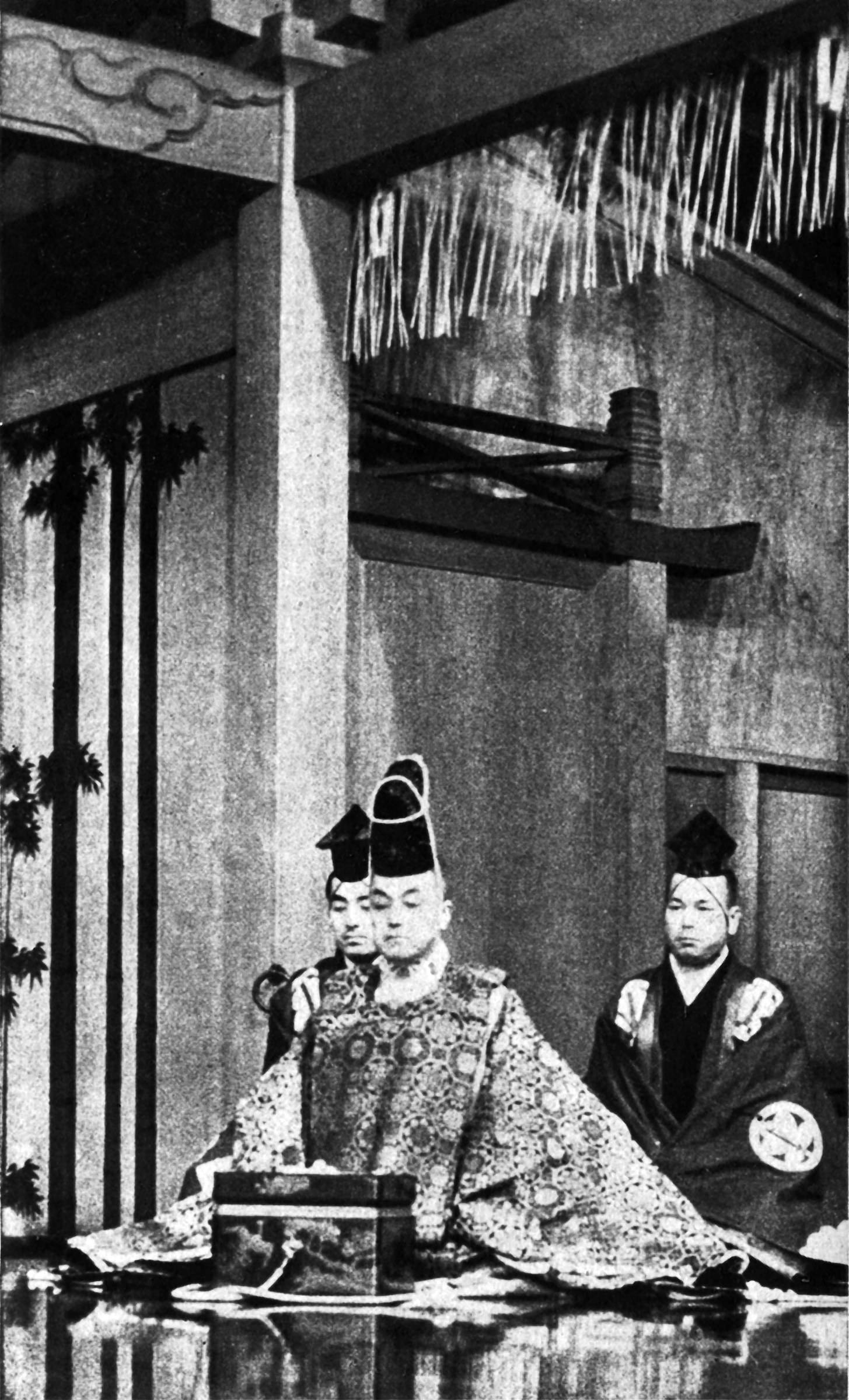
A formal interior stage set depicts a moment from the Noh play Okina. A richly patterned brocade robe in deep tones dominates the foreground, worn by the central figure seated in seiza position at a low table. The figure wears the ornate headpiece characteristic of the Okina role—a tall, structured crown. To the left, a second figure in similar formal dress stands or sits nearby. On the right, a third attendant figure in dark clothing with a white collar completes the triangular composition. The setting is spare and architecturally defined: geometric wooden beams frame the space overhead, and hanging white silk panels or rope fringe descend from above, creating vertical linear patterns that emphasize the stage's formal depth. The black-and-white photographic medium renders the rich surface textures of the brocade and the crisp geometry of the set with high contrast. The overall mood is ceremonial and static—this is a moment of presence rather than action.
The dancing
All three figures are in controlled, upright postures characteristic of formal Noh performance. The central figure sits in the formal seiza position with the body centered and the hands positioned with ceremonial dignity. The standing or seated figures flanking this central presence maintain vertical alignment and stillness. There is no dynamic interaction between the bodies; instead, the composition emphasizes hierarchy and symmetry. The weight of the performers is settled and grounded, consistent with the meditative, processional quality of Okina. The formal headpiece and elaborate costume restrict and define the movement vocabulary—this is a dance of presence, bearing, and ceremonial restraint rather than athletic or gestural virtuosity.
The dance depicted
This is Okina (翁), the oldest and most sacred Noh play, which opens with a ritualized dance performed by the shite (protagonist). Okina is not a narrative drama but a celebratory performance piece bringing blessings and renewal. The image captures a moment of formal presentation rather than active dancing; Okina's movement vocabulary emphasizes slow, deliberate gestures, symbolic hand and arm positions, and processional or stationary poses that convey spiritual authority and age. The costume and headpiece identify this as the Okina role specifically. Umewaka Rokuro (54th generation) or Umewaka Minoru (2nd generation of the Umewaka lineage) would have been a trained Noh actor performing this repertory piece within the strict conventions of the Umewaka school. The photograph documents not the climactic movement but the formal, presentational aspect of the performance—the actor as a repository of tradition and ritual presence.
How it was made
This is a black-and-white photograph, not an oil painting as the catalogue record states. The image has the grainy, high-contrast quality of mid-to-late 20th-century theatrical photography, likely taken during a live performance or formal rehearsal documentation. Theatrical photography of this period served to document performances for record-keeping and circulation within the Noh community and broader audiences interested in traditional Japanese performance. The photographic medium captures the play of light and shadow across the brocade texture and the architectural elements of the stage set with specificity that would be difficult to achieve in other media. The record's attribution to an oil painting appears to be an error.
About this work
This photograph documents a formal moment from the Noh play Okina, performed by a member of the Umewaka school lineage. It records not narrative action but ceremonial presence—the stillness and formal bearing that constitute the deepest form of movement in classical Japanese theatre. The image preserves both the visual splendor of the costume and makeup and the architectural precision of the Noh stage, showing how the performer's body becomes part of a larger formal composition. For viewers unfamiliar with Noh, it offers a window into a performance tradition where dance and theatre are inseparable from ritual, spirituality, and the transmission of cultural authority across generations.
Okina holds a unique place in Noh: it is performed at auspicious occasions and at the beginning of Noh seasons, and it encodes centuries of spiritual and aesthetic practice. The Umewaka lineage has been a primary guardian of this tradition in modern Japan. This photograph is valuable not as a document of movement innovation but as evidence of how Okina was staged and embodied in the mid-20th century, and of the continuity of a lineage committed to preserving and transmitting one of world theatre's oldest living traditions.
How to look at it
Attend first to the costume: the brocade's geometric patterning and the architecture of the tall headpiece are not decorative but carry symbolic weight and restrict the performer's range of motion intentionally. Notice the photograph's composition—the geometric alignment of beams, the hanging textile elements, and the triangular placement of the three figures create a formal stage architecture as important as the performers themselves. The moment captured is one of stillness and presence; there is no 'peak' of movement to observe. Instead, observe how the body's verticality, the weight settled into seiza, and the formal bearing of the head create meaning through restraint and ceremony. This is consistent with Noh aesthetics, where the most powerful moments are often the quietest ones.
The artist
The photograph is credited to Matsumoto Eiichi (松本栄一), with scanning attribution to Sat666. No further information about the photographer is recorded. Theatrical photography of Noh performances in 20th-century Japan served documentary and archival purposes within the theatre world and for broader public education about classical performance traditions.
The period
By the mid-to-late 20th century, Noh had been designated a Living National Treasure tradition in Japan (officially from 1950 onwards), and documentation of major performers and roles became part of efforts to preserve and transmit the form. Photography of Noh performances reflected both a modernizing impulse to archive and circulate images of traditional theatre and the traditions' own commitment to precise transmission of form across generations. The Umewaka school, founded in the Edo period, maintained strict lineage-based training and performance standards. This photograph sits within a broader mid-century effort to visually record and validate classical Japanese performance as cultural patrimony.
Where it lives
The source is listed as Wikimedia Commons. No holding collection or accession information is recorded. The photograph appears to be part of a broader documentary archive of Noh performance, possibly created for archival or educational circulation.
Dance in this work
Questions about this work
Is this a dance or a play?
In Noh, the distinction between dance and theatre does not exist as it does in Western traditions. Okina is a dance-theatre, combining formalized movement, gesture, music, costume, and spiritual ritual. The figure in the photograph is performing a role that unfolds through controlled, meaningful movement—but the photograph captures a moment of formal presence rather than dynamic action. In Noh aesthetics, such stillness is a form of movement.
Why is the figure sitting still?
Okina's movement vocabulary emphasizes symbolic gestures, processional pacing, and moments of formal presentation over continuous or rapid motion. The photograph captures one such moment of ceremonial bearing. The Noh actor's training emphasizes how to convey narrative, emotion, and spiritual presence through subtle shifts of weight, hand positions, and the quality of stillness—not through gestural virtuosity or narrative pantomime.
What is that tall headdress?
The headdress is the crown worn by the shite performing the Okina role. It is part of the visual and symbolic apparatus of the role—identifying the character, restricting and formalizing the head's movement, and carrying spiritual and ceremonial significance. The elaborate costume and headpiece signal that this is one of Noh's most sacred and formally constrained roles.
Why does the catalogue say 'oil painting' when this is a photograph?
This appears to be a cataloguing error. The image is plainly a black-and-white photograph with the grainy, high-contrast qualities of mid-20th-century theatrical documentation. It may have been misidentified when records were created or transferred.
More dance artwork