29 works in this view — arrow keys or swipe to move between them.
Dance in Art
Caroso — Dance Plate (plate 3)
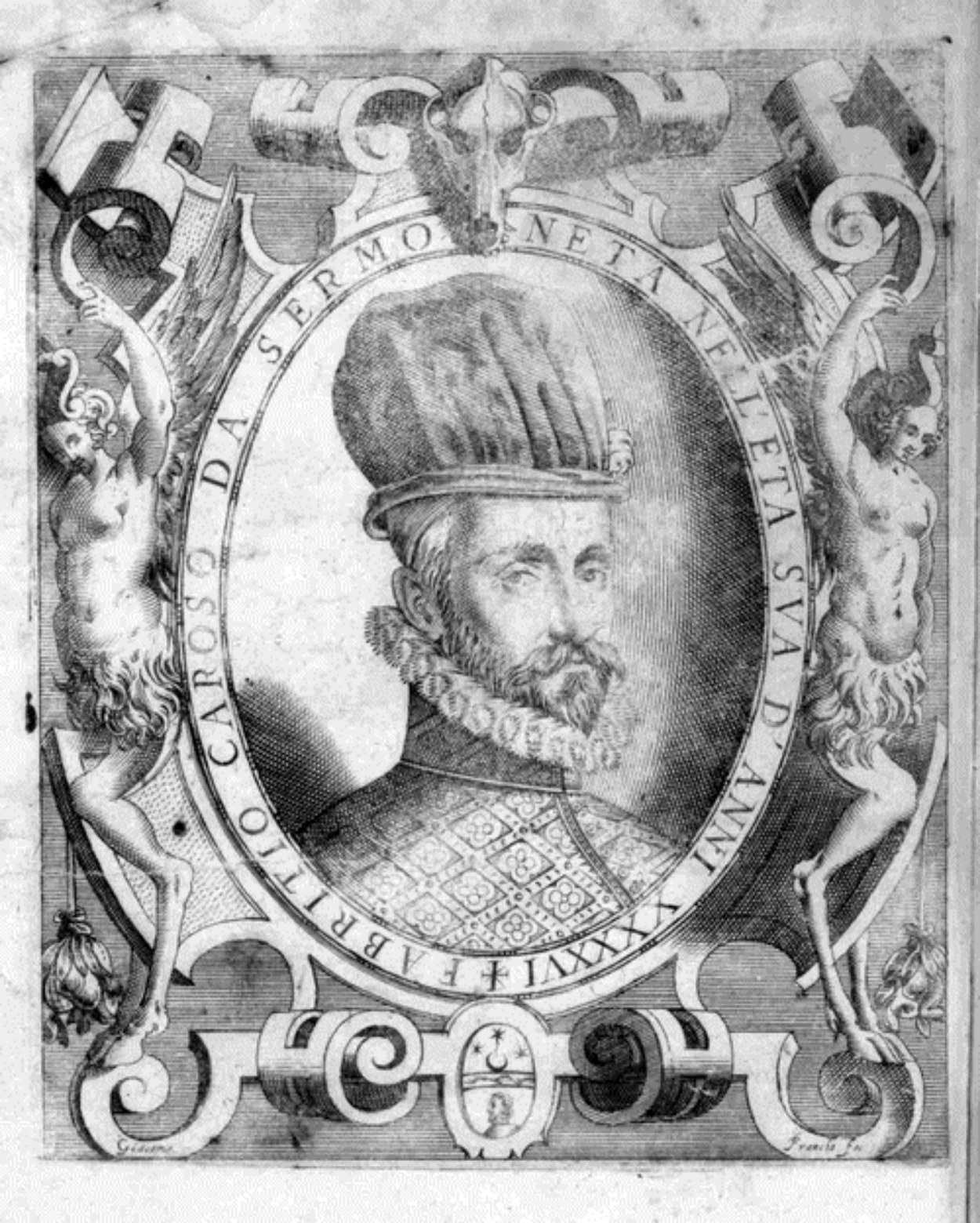
Fabritio Caroso da Sermoneta
- Medium:
- Woodcut
- Dance:
- Notation/Choreography
- Era:
- Pre-1700 (Renaissance/Baroque)
- Collection:
- Il Ballarino (1581)
- Source:
- Library of Congress
- Rights:
- Public domain — free to use, share and adapt.
- Recorded as:
- Public Domain
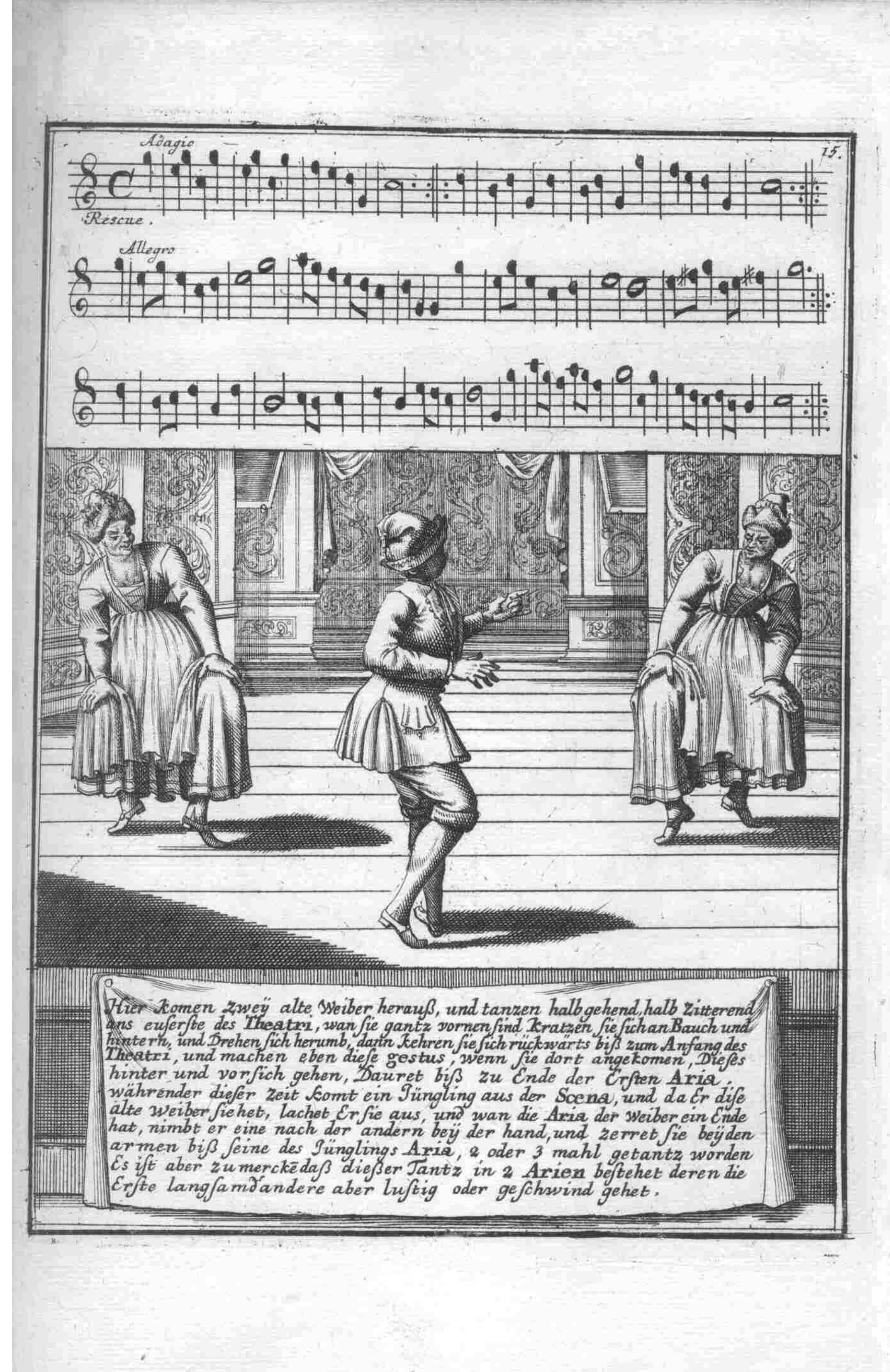
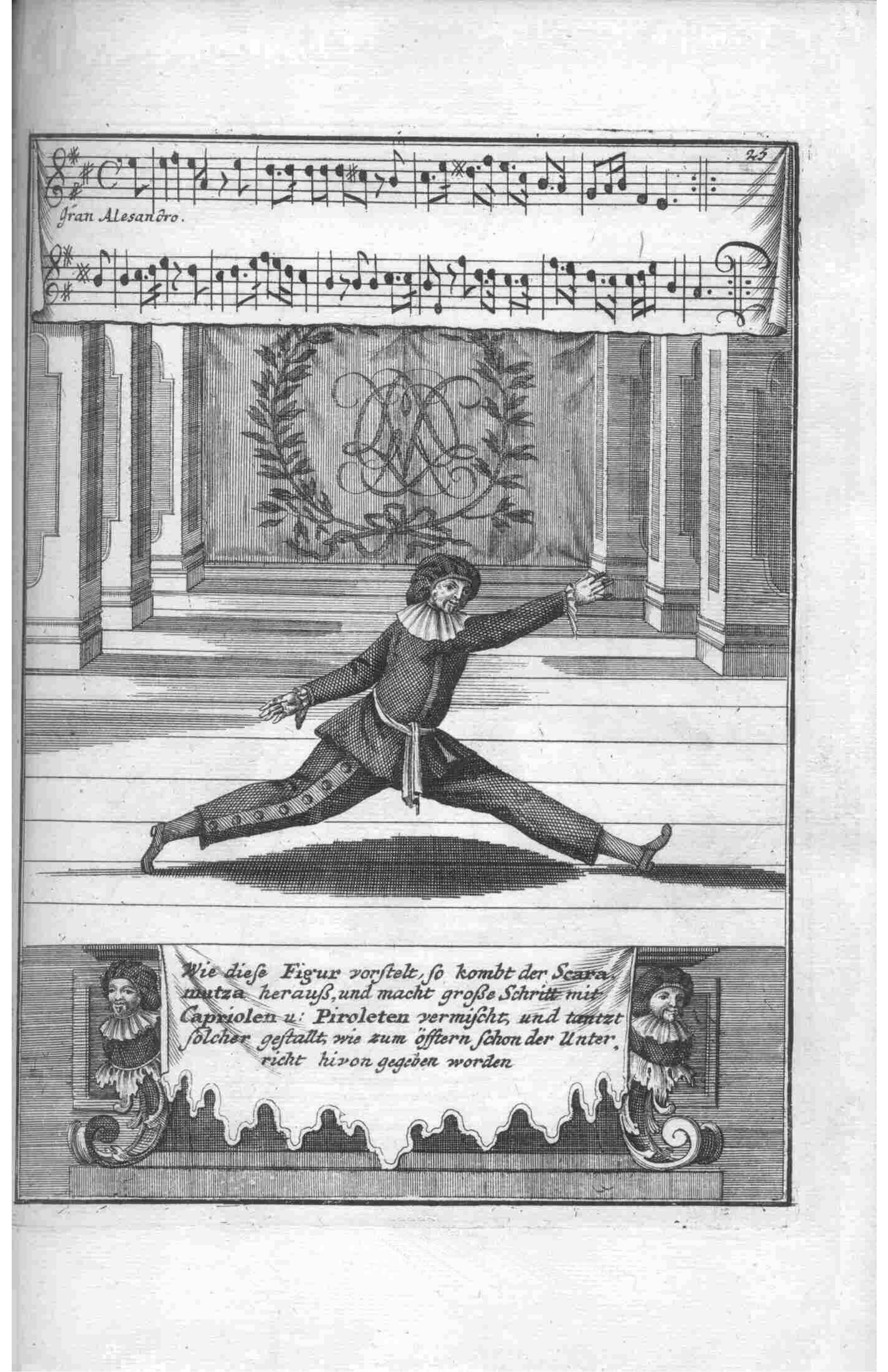
Caroso's *Il Ballarino* is one of the only comprehensive surviving records of how Renaissance court dances were actually performed, and these instructional plates are the closest we have to photographs of the period's movement vocabulary. This particular image shows the formal courtesy and mutual acknowledgment that structured the social meaning of court dance—information that text alone cannot fully convey. For anyone studying the history of partnered dance, the relationship between dance and courtship ritual, or the role of print in standardizing movement, this plate is foundational evidence.
What you are looking at
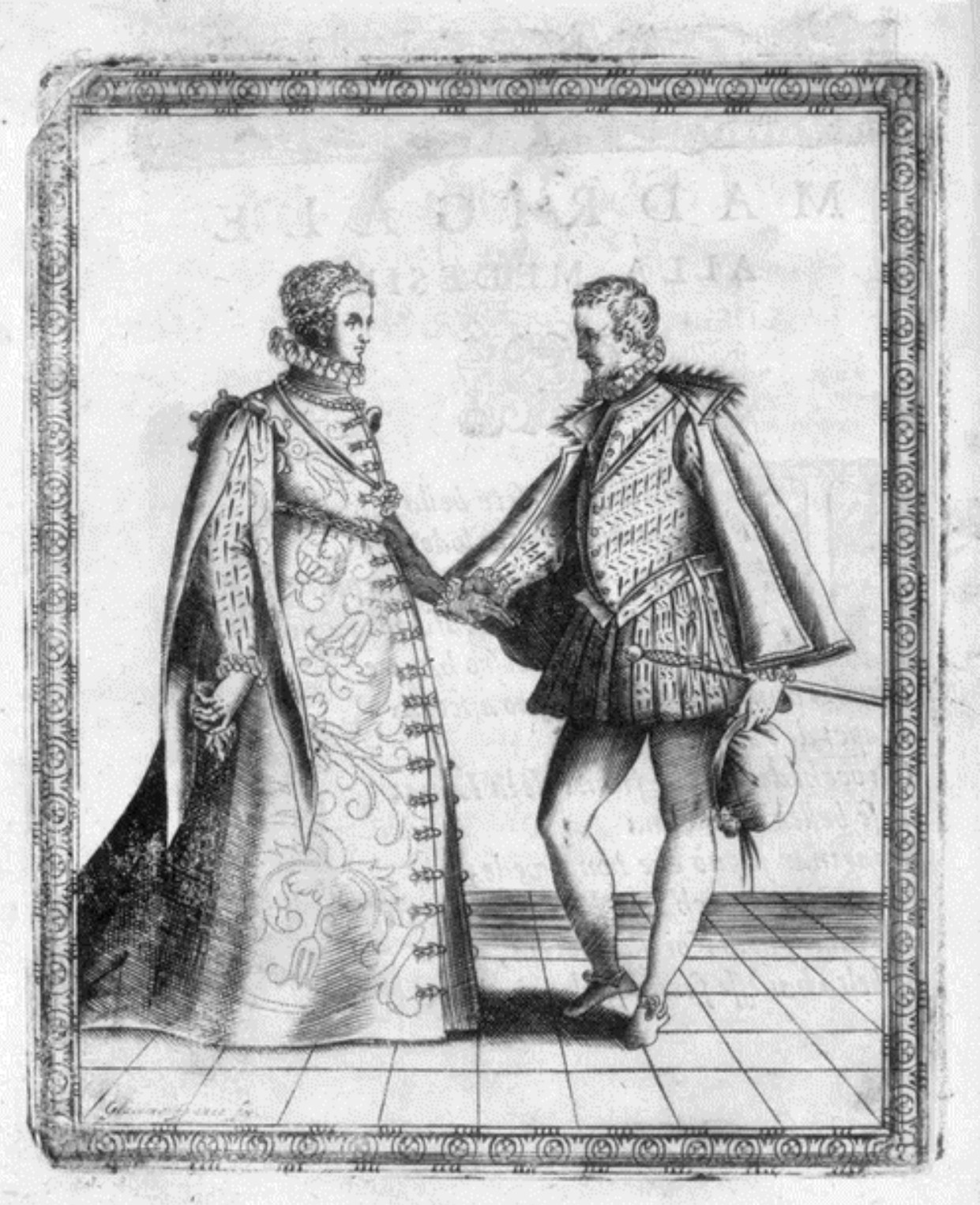
A man and woman in elaborate Renaissance court dress face each other in what appears to be an instructional demonstration rather than a performance. The woman, on the left, wears a richly patterned gown with long sleeves, a high collar, and an ornate cloak or mantle draped across her shoulders. The man, positioned to her right, wears a doublet with decorative patterning, hose, and a short cape. Both figures wear the formal, structured clothing typical of late-16th-century Italian nobility. They stand on a tiled floor rendered in perspective, suggesting an interior court setting. Their bodies are angled toward each other in a moment of formal greeting or opening of a dance sequence: the man's arm extends toward the woman in a gesture of courtship or invitation, while her posture is upright and composed. The woodcut's fine cross-hatching creates volume and fabric texture, particularly in the rendered folds of the heavy garments. The ornamental border framing the scene emphasizes that this is a documented instruction rather than a snapshot of spontaneous performance.
The dancing
The two dancers stand at a conversational distance rather than in a closed hold, their bodies aligned in a formal, face-to-face arrangement. The man's right arm extends toward the woman with an open, welcoming gesture; his weight appears balanced and his posture is upright but relaxed into the hip. The woman maintains an erect carriage with her weight centered, her arms held low and forward. Neither figure displays the strained, active motion of vigorous footwork; instead, the moment captured is one of formal presentation and mutual acknowledgment. The proportions and positioning suggest this is a step-by-step guide to initiation of the dance rather than the peak of movement.
The dance depicted
This plate documents one of the court dances catalogued in Caroso's *Il Ballarino*, the foundational choreographic manual of late Renaissance Italy. The formal greeting posture and the balanced stance of both dancers are consistent with the opening configurations of Renaissance bassedanse or galliard variations. The face-to-face orientation and the ceremonial quality of the gesture suggest either the opening salutation of a suite dance or the structured beginning of a branle or similar partnered form. Caroso's dances were performed by Italian nobility as part of the social and political ritual of the court; they combined walking patterns, turns, and small hops in a choreography that emphasized grace, symmetry, and courtship performance.
How it was made
This is a woodcut, a relief printing technique in which an image is carved into the surface of a wooden block, with the raised areas inked and pressed onto paper. Woodcut allowed for bold contrasts between black and white and fine linear detail, as seen here in the careful parallel hatching that renders fabric folds and the ornamental border. As a printing technology, woodcuts could be reproduced in multiple copies and circulated widely, making Caroso's choreographic instruction available to courts beyond Venice. The technique's capacity for fine detail in the decorative patterning of dress and the regular perspectival grid of the floor demonstrates the manual's ambition to document both movement and the visual splendor of the court context in which these dances were performed.
About this work
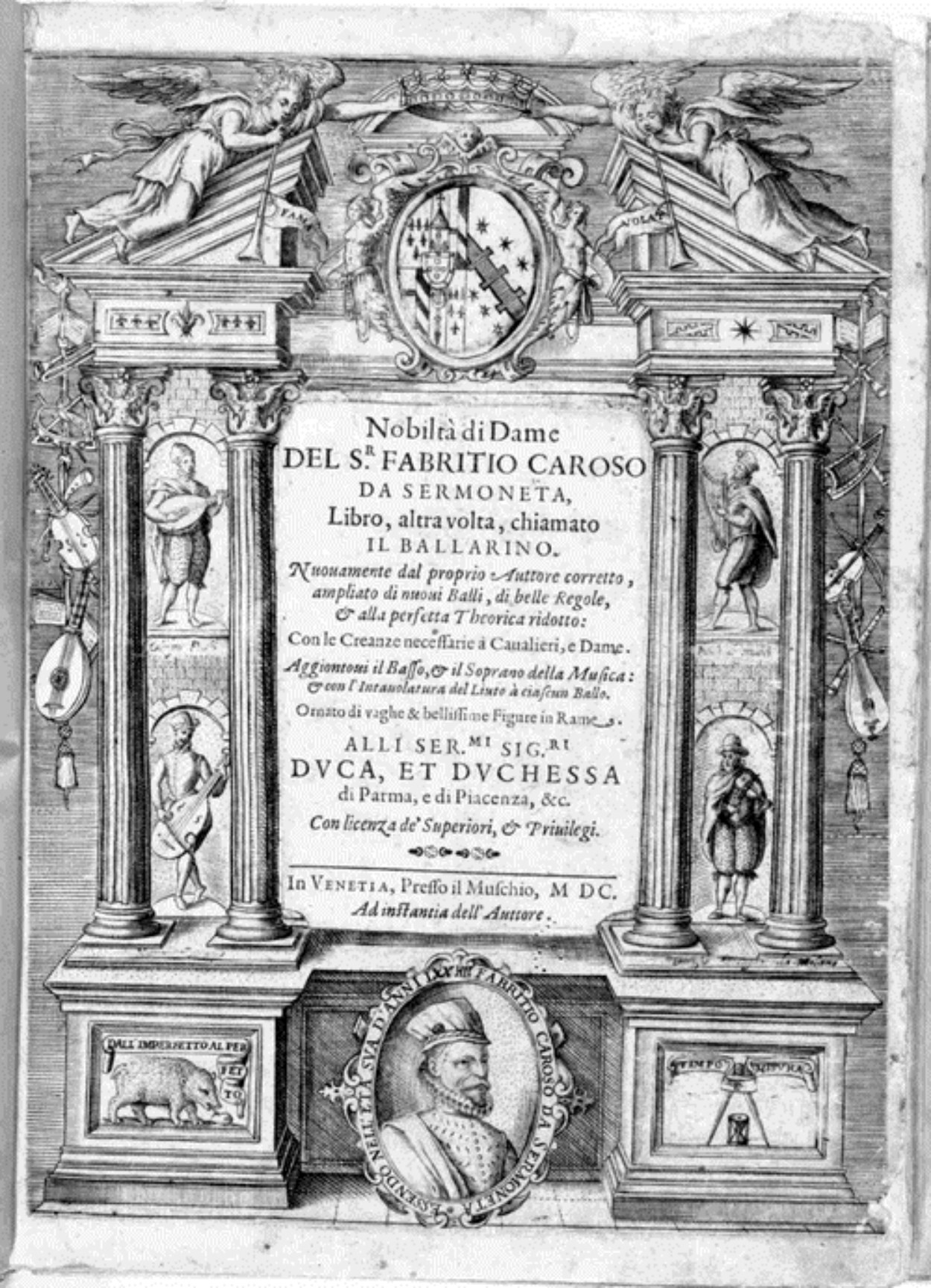
This is an instructional plate from *Il Ballarino* (Venice, 1581), Fabritio Caroso's seminal printed guide to the court dances of Renaissance Italy. The work documents the opening posture and greeting gesture of one of the dances—likely a bassedanse, galliard, or branle variant—through the precisely rendered figures of a noble man and woman in formal court dress. The image serves both as a choreographic record and as evidence of how dance instruction was communicated and standardized in the late 16th century: through the marriage of text, printed notation, and didactic illustration.
Caroso's *Il Ballarino* is among the most important surviving sources for understanding how dance functioned as a social, political, and artistic practice in Renaissance courts. These woodcut plates transform abstract choreographic notation into visual form, allowing readers to see the postures, spatial relationships, and formal presentations that the written descriptions alone could not convey. For dancers and historians, the work bridges the gap between the notation of Renaissance dance and its embodied reality.
How to look at it
Notice how the artist has frozen the moment just before the dance begins—the greeting and mutual acknowledgment between partners. The careful rendering of the fabric and the perspective grid of the floor serve not as decoration but as documentation: they establish that this is a specific, reproducible moment of courtly behavior. The formality of the pose, the precise positioning of the arms and torso, and the symmetry of the composition reflect the Renaissance belief that nobility and grace could be achieved through disciplined, measured movement. Observe how the woman's upright carriage and the man's extended arm create a visual and spatial relationship of mutual respect rather than dominance—a central principle of Caroso's philosophy of courtship and dance.
The artist
Fabritio Caroso da Sermoneta (c. 1526–after 1605) was a renowned dancing master and choreographer in the courts of Renaissance Italy, most notably in Rome. He was celebrated for his technical innovation, his formalization of dance technique through notation and instruction, and his status as one of the most authoritative voices on courtly behavior and movement. His *Il Ballarino* (1581) and its expanded revision *Nobiltà di Dame* (1600) represent the first systematic, printed codification of Renaissance dance technique and were circulated across Europe, establishing Caroso as the definitive authority on Italian court dance. His work reflects the humanist conviction that dance could be perfected through study and precise documentation.
The period
In the late 16th century, dance was a central accomplishment for European nobility and a key marker of courtly sophistication and social status. The Renaissance ideal of the *courtier* as articulated in texts like Baldassare Castiglione's *The Book of the Courtier* (1528) emphasized grace, measured movement, and the ability to entertain through refined physical performance. Italy, and particularly the courts of Rome and Venice, were recognized as the centers of choreographic innovation. The invention of the printing press made it possible—for the first time—to systematize and distribute knowledge of dance steps and patterns across courts and generations. Caroso's publications emerged at the moment when dance instruction was transitioning from oral transmission and hand-copied manuscripts to printed, standardized manuals. The woodcut medium itself was at the height of its artistic and technical sophistication in 16th-century Venice.
Where it lives
This plate is held in the Library of Congress and comes from *Il Ballarino* (Venice: Giolito, 1581), a printed manual of 49 dances with instructional text, choreographic notation, and 49 woodcut illustrations. The work was one of the first major printed treatises on dance and circulated widely among European courts and educated nobility. The plate is numbered as plate 3 in the original sequence.
Dance in this work
Questions about this work
What dance is being shown here?
Caroso's text identifies each plate, but the image alone shows the opening posture of one of his documented court dances—most likely a bassedanse, galliard, or branle variant. The formal greeting and balanced stance are consistent with the opening salutations of these forms. Without reference to the accompanying text and notation, the specific dance cannot be determined from the visual alone.
How were Renaissance dancers instructed?
Before printing, dance was learned by watching skilled dancers and through direct instruction from a dancing master. Caroso's printed manual revolutionized this by combining written descriptions, choreographic notation (using letter symbols to indicate steps), and these woodcut illustrations showing the postures and spatial relationships. A dancer could study the book to learn the steps, see the correct positioning of the body, and understand how partners should relate to each other.
Why are the dancers' clothes so elaborate?
Court dress was essential to the meaning of Renaissance dance. The heavy fabrics, rich patterns, and formal structure required controlled, measured movement—you could not dance wildly or carelessly in these garments. The expense and splendor of the clothing also demonstrated status and nobility. Caroso's illustrations carefully render the dress to show readers that learning to move gracefully *in* this costume was part of becoming a true courtier.
Who would have used this book?
Primarily the nobility and wealthy merchants of Italian courts, and educated readers across Europe with access to printed materials. Dancing masters would have used it as a reference text. The book's circulation shows that by 1581, standardized dance instruction through print was both possible and desirable for the European elite.
More Notation/Choreography artwork