30 works in this view — arrow keys or swipe to move between them.
Dance in Art
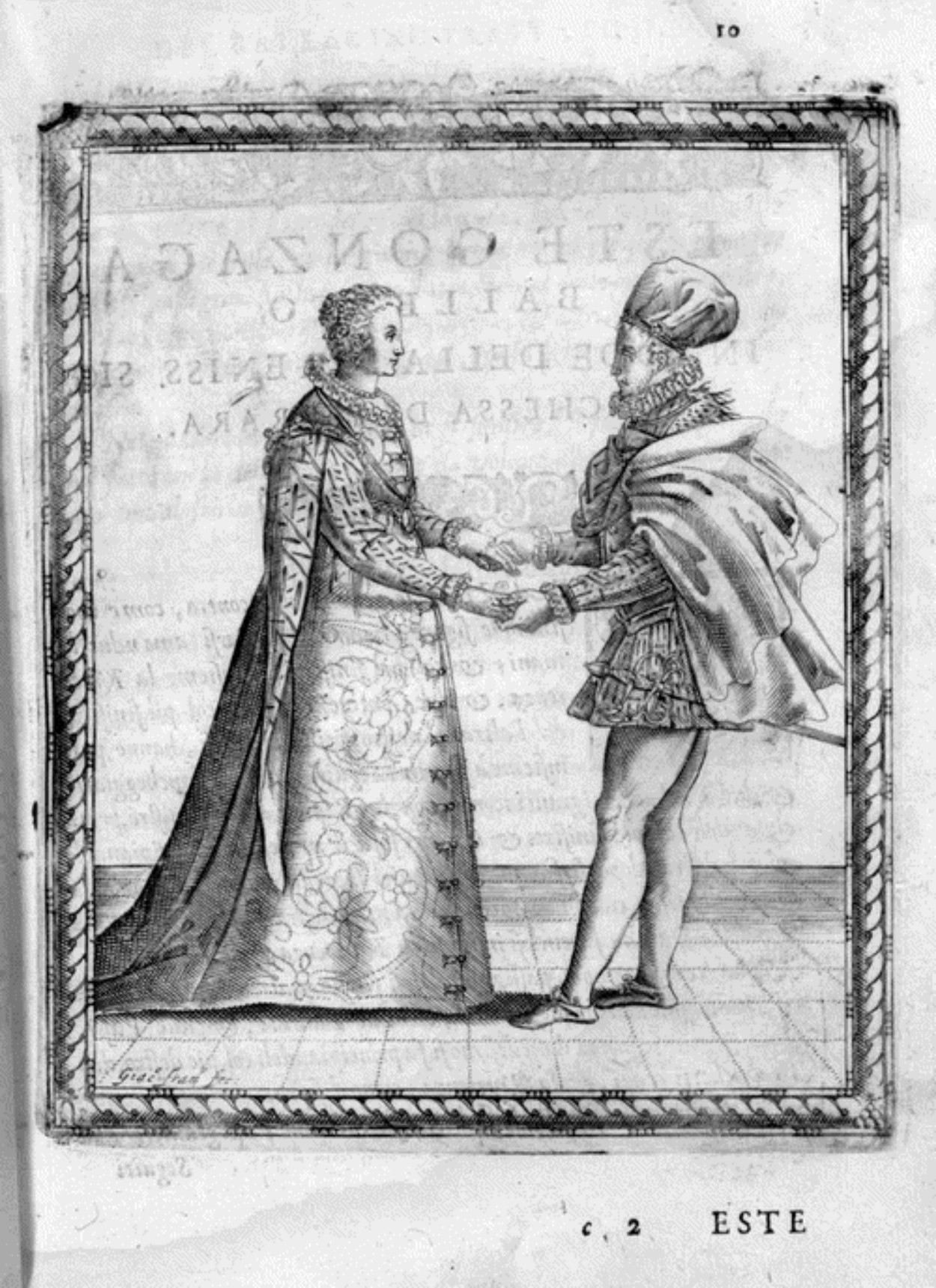
Caroso — Dance Plate (plate 4)
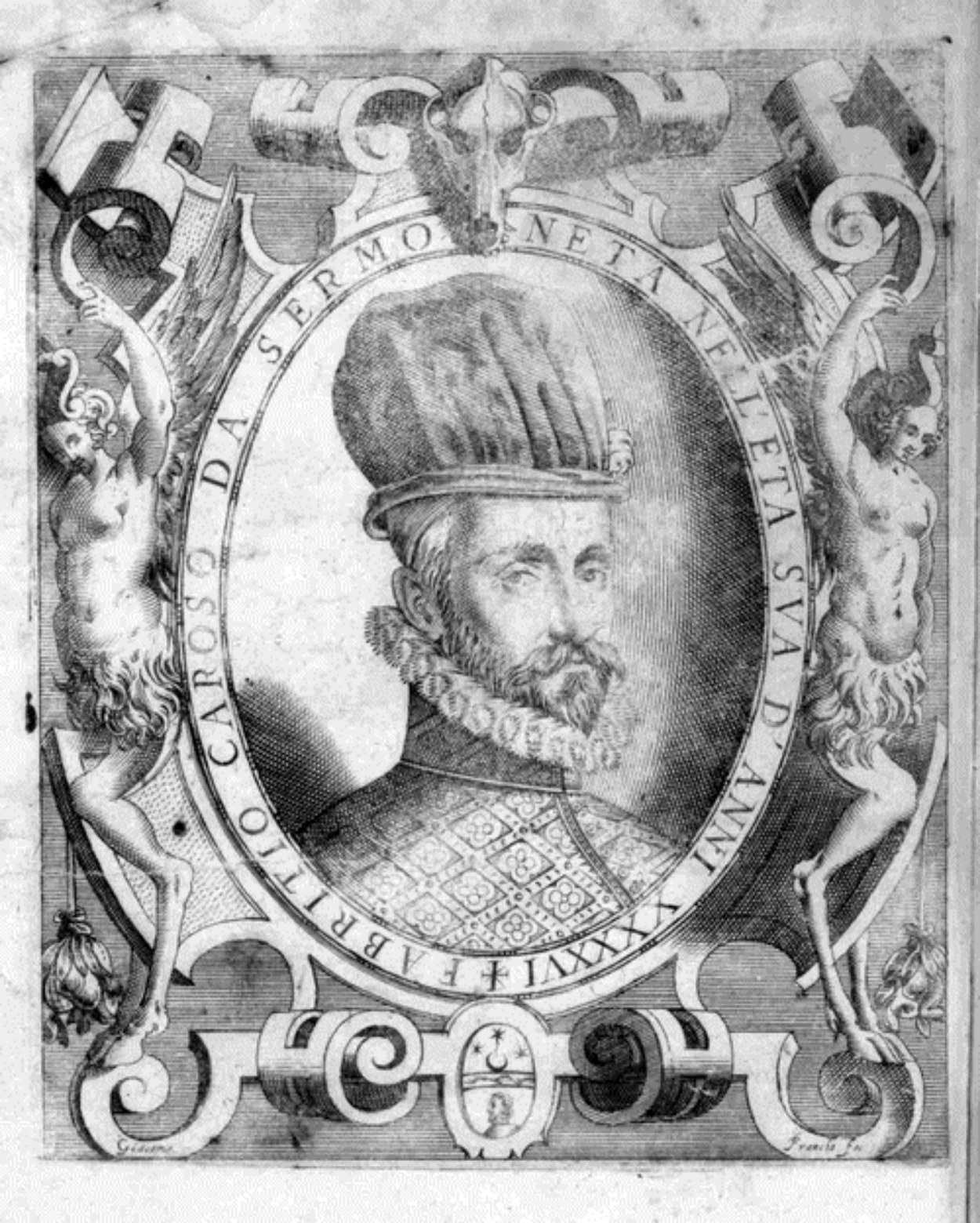
Fabritio Caroso da Sermoneta
- Medium:
- Woodcut
- Dance:
- Notation/Choreography
- Era:
- Pre-1700 (Renaissance/Baroque)
- Collection:
- Il Ballarino (1581)
- Source:
- Library of Congress
- Rights:
- Public domain — free to use, share and adapt.
- Recorded as:
- Public Domain
This is the oldest printed dance manual in Western history and the first systematic attempt to document choreography in words and images for circulation and preservation. For dancers and dance historians, it is the primary source for understanding how Renaissance dances were actually performed, how bodies were trained and positioned, and what the connection between dance and social status meant in the period. The plate shows that Renaissance dance was not improvised entertainment but a codified art taught through careful instruction and learned through repeated practice.
What you are looking at
Two figures in elaborate Renaissance court dress face each other in three-quarter profile against a plain background, their hands clasped or nearly touching in the space between them. The figure on the left wears a richly patterned long gown with a voluminous train that trails behind, topped with a fitted jacket or bodice adorned with ornate embroidery; their hair is styled up in the fashion of the period. The figure on the right wears a short doublet with decorative patterning, hose, and a broad-brimmed hat; their stance is more open and athletic than their partner's. Both figures stand upright with erect posture and aligned shoulders, in the formal bearing of aristocratic courtship. The composition is symmetrical and face-on, as if presenting the two dancers to the viewer for inspection of their deportment and dress. The page number "10" appears at the top of the woodcut, and faint text is visible in the background, suggesting this is one plate among many in a printed instructional sequence.
The dancing
The two dancers hold a courtly frame at a modest distance, with hands meeting or nearly meeting at the center. The woman's body is poised and upright, her weight apparently evenly distributed, her arm extended in a refined gesture. The man adopts a slightly lower stance with weight forward, his frame open and his arm reaching toward his partner. Both maintain the formal alignment and restraint characteristic of Renaissance court dance—no exuberant leap or turn, but rather the controlled elegance of processional movement. The asymmetry between their costumes (woman in long gown, man in hose) is significant and typical of the period, yet their mutual gaze and hand connection establish them as partners in equivalent social roles.
The dance depicted
This is a plate from Fabritio Caroso's *Il Ballarino*, the foundational printed manual of Italian Renaissance court dances. The work documents the specific choreographies, step vocabularies, and partner configurations of dances performed in the courts of late-sixteenth-century Italy. The couple shown here appears to be engaged in one of the standard couple dances catalogued in the manual—likely a pavane, galliard, or similar suite dance—though without the accompanying text and notation on the same plate, the precise dance cannot be determined from this image alone. The emphasis on refined posture, formal dress, and the delicate precision of hand placement reflects the humanist ideals of courtly behavior that underlay Renaissance dance pedagogy. This is not recreational or folk dance, but rather the trained, documented practice of the aristocratic elite.
How it was made
This is a woodcut, a relief printing technique in which an image is carved into the surface of a wooden block; areas meant to print are left raised, while areas meant to remain blank are cut away. Woodcut allowed for rapid and relatively inexpensive reproduction of images across multiple copies of the printed book, making Caroso's choreographic knowledge widely available to dancing masters and nobles across Europe. The medium produces bold contrasts between black line and white ground, and the fine parallel lines used here to render texture and shading (visible in the patterning of the costumes and the cross-hatching of the background) show skilled craftsmanship in the service of legibility. The precision of the printed line, repeated identically in every copy, made woodcut ideal for instructional material where consistency and clarity mattered.
About this work
This woodcut is one of approximately 150 instructional plates illustrating the court dances of Renaissance Italy, published in Venice in 1581. *Il Ballarino* is the first printed dance manual in the Western tradition and the most influential treatise on Renaissance dance ever made. Each plate shows a couple or a group, dressed in the exact fashions of the Venetian and Roman courts, in the opening position or a key moment of a specific dance. The plates serve not as illustrations of already-published text, but as the primary record: the accompanying text describes the dance and the plate shows the deportment and initial frame. Together, text and image constitute a system for transmitting choreography across time and distance. This particular image documents a moment of aristocratic courtship—the formal greeting or opening of a couple dance, captured in the precise language of Renaissance court ceremony.
How to look at it
The viewer should attend to the precision and formality of the pose: this is not a moment of abandonment or virtuosity, but rather a carefully maintained position that communicates nobility and training. Notice the alignment of the spine, the extension of the arm, the orientation of the face—all elements that would have been corrected and refined in a dancing master's studio. The distinction between the two figures' costumes and postures is instructive: the woman's long train and fitted bodice required a different bearing than the man's shorter doublet, yet Caroso shows them as equal partners meeting at the center. The blank background, the frontal presentation, and the isolated couple all mark this as a teaching image, meant to be studied and copied rather than simply viewed for narrative interest.
The artist
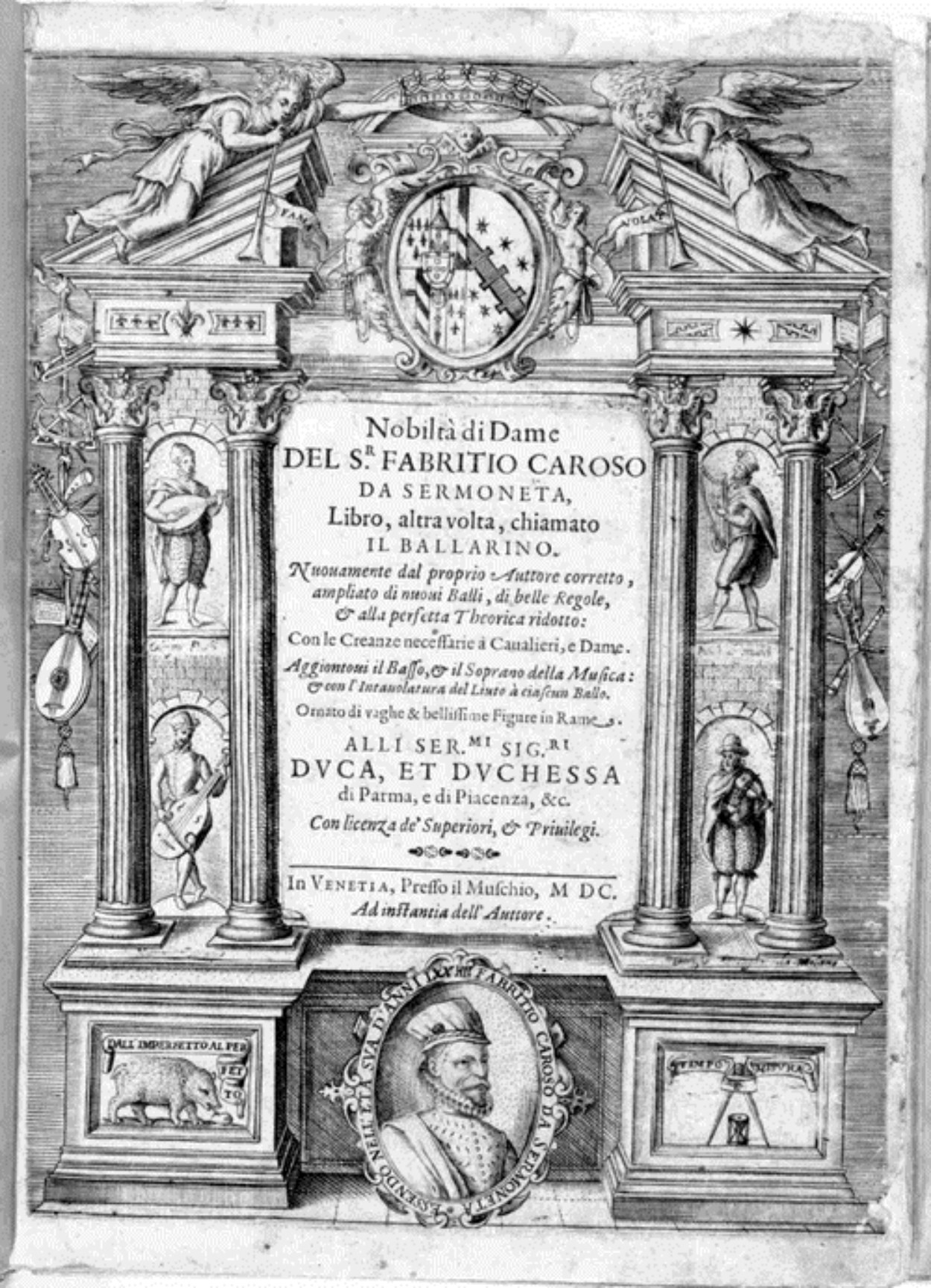
Fabritio Caroso da Sermoneta (c. 1526–after 1605) was the most celebrated dancing master of the late Renaissance. He taught in Rome and Venice, served noble families, and trained the dancers of the papal court. *Il Ballarino*, published in 1581 and revised and reissued in 1600 as *Nobiltà di dame*, was his attempt to preserve and standardize the dances of his era for future practitioners. Caroso's work established the template for all subsequent dance notation and instruction: pairing image with text, naming specific steps, and organizing dances into a logical taxonomy. His authority was recognized across Europe; his manual was reprinted, translated, and excerpted for more than two centuries.
The period
The Renaissance saw dance emerge as a learned art and a mark of noble birth. In the courts of Italy, France, and England, dancing was inseparable from courtship, diplomacy, and the display of refined taste. The late sixteenth century was the moment when dance masters began to publish their knowledge in print—a radical shift from the oral and embodied transmission that had characterized training until then. Caroso's *Il Ballarino* appeared in a period of intense interest in the codification and preservation of courtly knowledge; it coincided with similar efforts to document courtly behavior in books on courtesy and etiquette. The specific dances shown—pavanes, galliards, and their suite combinations—were the lingua franca of European courts in the 1580s and 1590s. The woodcut plates themselves represent the cutting edge of reproductive technology at the time, making visual information portable and repeatable.
Where it lives
This woodcut is held by the Library of Congress as part of its collection of printed books and rare materials. *Il Ballarino* survives in multiple copies across European libraries, attesting to its wide circulation and enduring value as a reference work.
Dance in this work
Questions about this work
Is this an actual photograph of a Renaissance dance?
No. This is a woodcut—a printed image made from a carved wooden block—created in 1581, long before photography existed. It is an illustration in a printed instruction manual, designed to show the correct posture and positioning for a particular dance. It depicts what Caroso believed dancers should look like performing this dance, not a document of an actual performance.
What dance are they doing?
Without seeing the accompanying text on the full plate, the specific dance cannot be determined with certainty from this image alone. However, the formal frame, the couple configuration, and the refinement of posture suggest one of the suite dances (pavane, galliard, or similar) that were standard in Italian courts of the 1580s. Caroso's manual catalogs dozens of distinct choreographies, each with its own name, step vocabulary, and partner configuration.
Why is the woman's dress so different from the man's?
The difference reflects both fashion and dance function. Women wore long, heavy gowns with trains that required a different carriage and footwork than men's shorter hose and doublets. The woman's upright, formal bearing was suited to the gliding, processional steps of many Renaissance dances; the man's slightly lower stance allowed for the jumps and quick footwork of his part. Caroso's manual acknowledges these differences and gives men and women different step vocabularies.
How do we know this is from Caroso's manual and not a separate artwork?
The catalogue record identifies it as a plate from *Il Ballarino*, and the page number at the top of the print, the printing style, and the formal presentation are all consistent with Caroso's 1581 Venice edition. The page numbers, the pairing of image with text, and the systematic arrangement of couples and groupings are all distinctive features of Caroso's work that distinguish it from other Renaissance dance imagery.
More Notation/Choreography artwork