32 works in this view — arrow keys or swipe to move between them.
Dance in Art
Caroso — Dance Plate (plate 6)
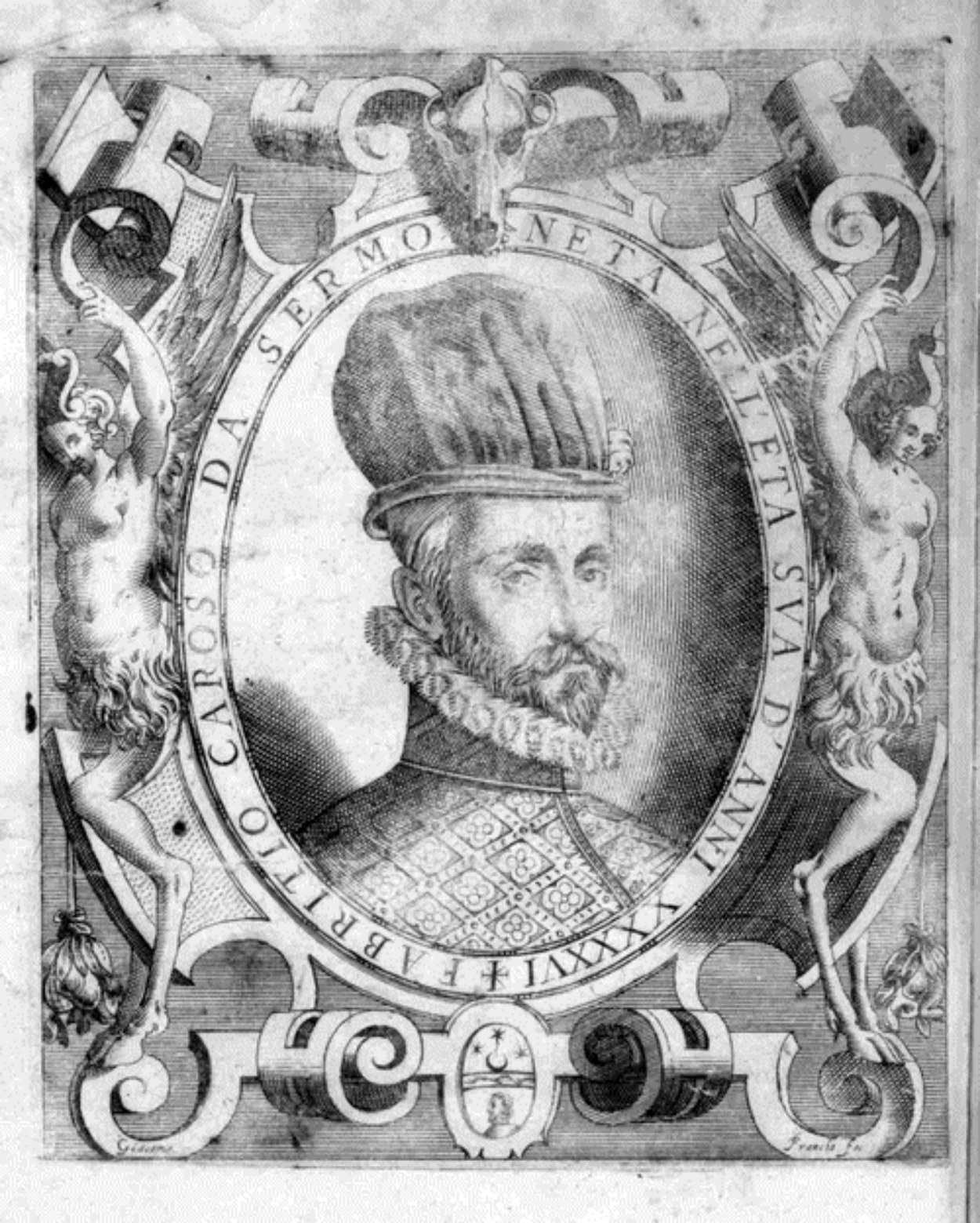
Fabritio Caroso da Sermoneta
- Medium:
- Woodcut
- Dance:
- Notation/Choreography
- Era:
- Pre-1700 (Renaissance/Baroque)
- Collection:
- Il Ballarino (1581)
- Source:
- Library of Congress
- Rights:
- Public domain — free to use, share and adapt.
- Recorded as:
- Public Domain
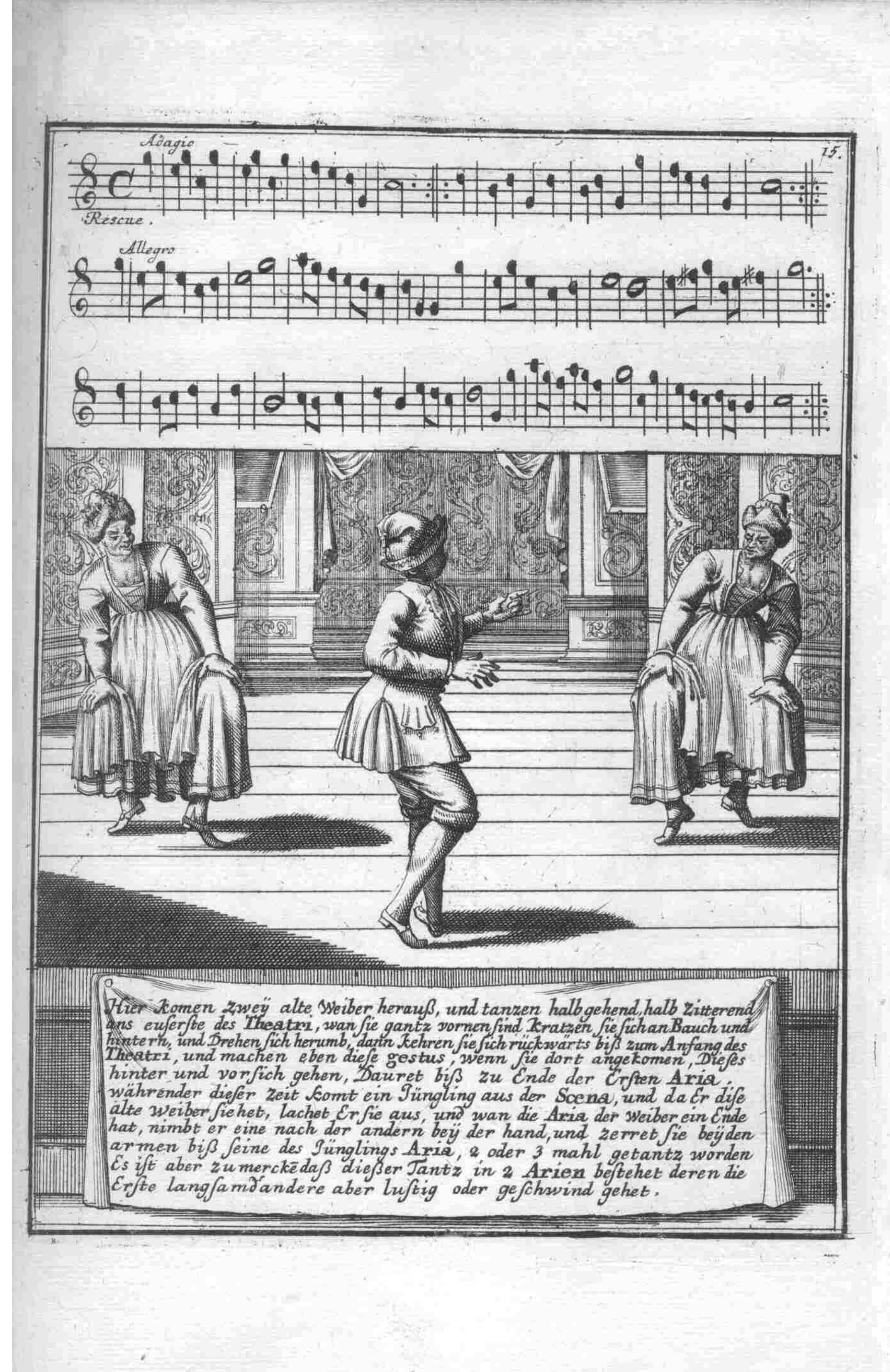
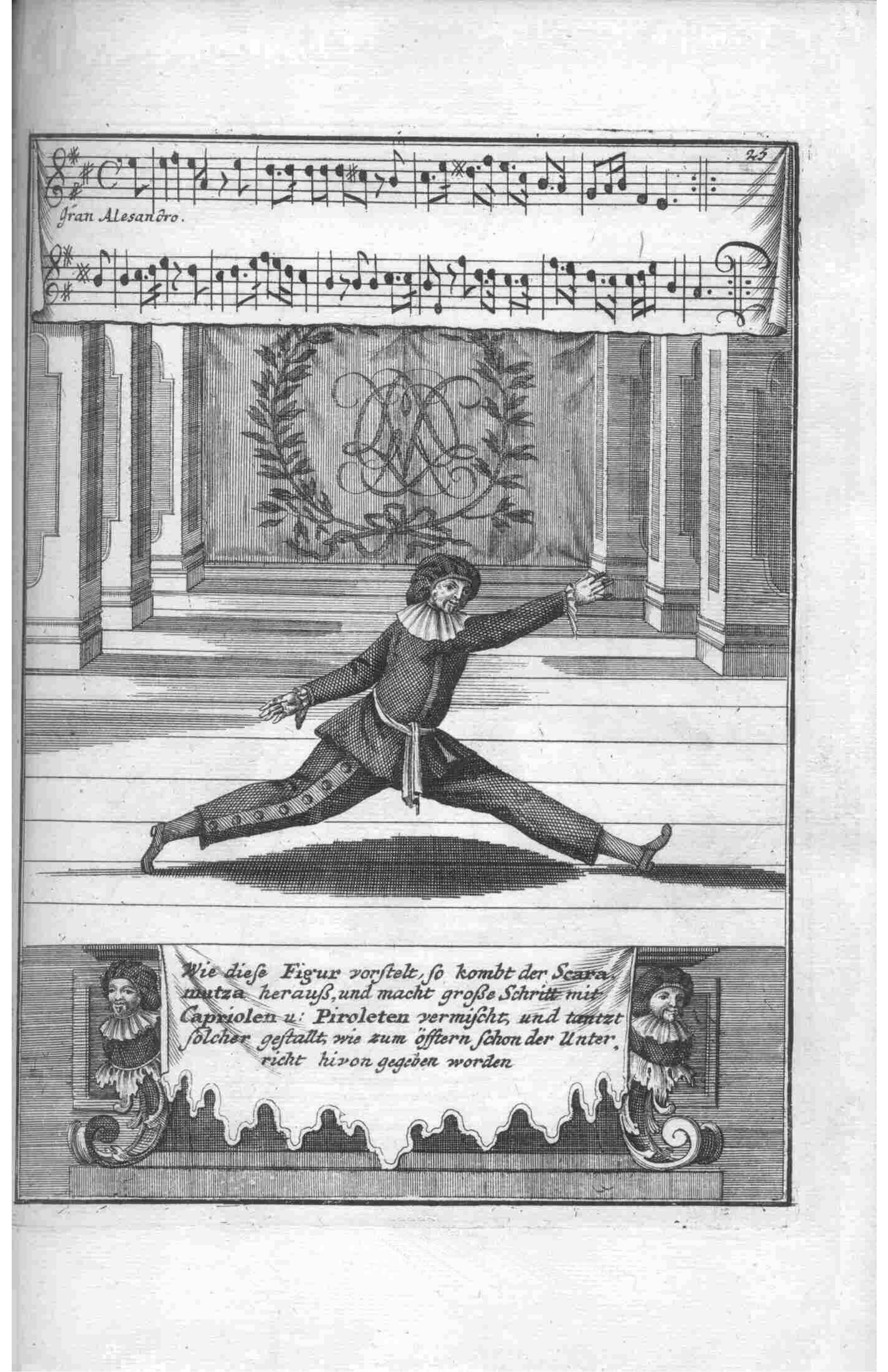
For historians of dance, this image is nearly irreplaceable evidence of how Renaissance court dances were actually performed—what posture was correct, what distance was maintained between partners, and how the male and female roles differed in bearing and costume. For historians of fashion and social custom, it documents the exact appearance of Venetian aristocratic dress in the 1580s, down to the pattern of embroidered crosses on the sleeves. For anyone studying the notation and transmission of dance knowledge before video, Caroso's combination of verbal description and woodcut image represents a crucial early attempt to make movement legible and reproducible across time and space.
What you are looking at
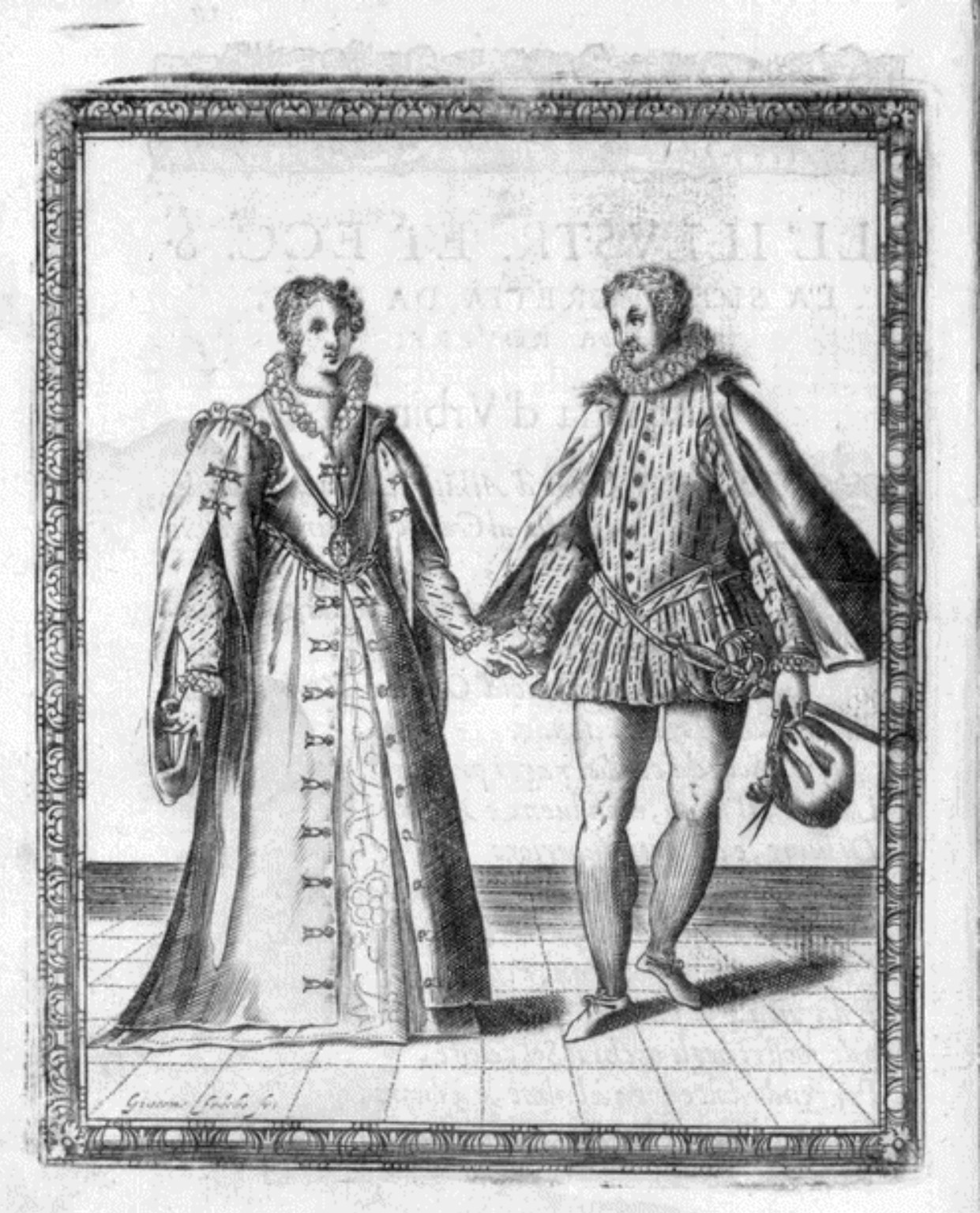
A woodcut showing two figures in elaborate Renaissance court dress, standing hand in hand on a checkered floor against a plain background. The figure on the left wears a long gown with a high collar, puffed sleeves decorated with small crosses or jewels, and a full skirt that extends to the floor; the garment is open at the front to reveal an ornate underdress. The figure on the right wears a shorter doublet with vertical pleating, slashed sleeves, and hose, with a short cape draped over the shoulders. Both have curled hair styled in the fashion of late 16th-century Venice. Their faces are turned toward each other; their joined hands are positioned between them at waist height, suggesting the formal greeting or opening position of a dance. The engraved frame surrounding the scene is ornamental and substantial, typical of book illustration from this period.
The dancing
The two figures stand at a composed distance, connected only by their clasped hands at center. The man's posture is upright and slightly forward-leaning, his weight distributed evenly. The woman stands with a more formal vertical alignment, her long skirts occupying most of the lower half of the composition. Both are shown in profile or three-quarter view, allowing the viewer to see the full silhouette of their garments. The hand-clasp is the sole point of contact—a formal gesture of engagement rather than embrace, consistent with court dance protocol of the period.
The dance depicted
This plate demonstrates a court dance from the late Italian Renaissance, most likely a pavane or galliard as catalogued in Caroso's *Il Ballarino*. The hand-in-hand position, the ceremonial spacing, and the careful placement of the figures suggest the opening posture of a couple dance performed at the ducal and aristocratic courts of Venice and surrounding regions. Caroso's manual was the primary choreographic text for Italian court dance in this era, and his woodcuts functioned as both notation and fashion documentation, showing dancers exactly how positions should be held and how garments would move.
How it was made
This is a woodcut, a relief printing technique in which an image is carved into the surface of a wooden block. The medium was ideal for book illustration and allowed for multiple impressions, making Caroso's choreographic manual widely distributed among dancing masters and noble households. The bold lines and strong contrasts characteristic of woodcut are particularly effective here for rendering the intricate patterning of Renaissance textiles and the decisive silhouettes of the figures. The technique's limitations—fine gradations of tone are difficult—pushed the artist toward clarity of outline and composition, which served the instructional purpose of the book.
About this work
This is one of the instructional plates from Fabritio Caroso's *Il Ballarino* (Venice, 1581), the most comprehensive surviving manual of Italian Renaissance court dance. The image serves simultaneously as fashion documentation and movement notation, showing how a well-dressed couple of the Venetian nobility should position themselves at the opening of a formal dance. Caroso's plates are among the only visual records we have of how these dances were actually performed; the manual lists the steps in written form, while the woodcuts show the posture, the hold, and the splendid dress that defined courtly performance. This is not a scene of exuberant movement, but rather the composed, ceremonial beginning of a social ritual that was as much about displaying wealth and status as about dancing itself.
How to look at it
Look first at the hands: the clasp is the entire dance. Notice that the figures are not side by side, but front-facing to each other—this is a social moment, a greeting enacted through movement, not a display of athleticism. Observe the costume detail: the woman's underdress is visible through the open front of her gown, and the man's hose and doublet show the fitted silhouette that was fashionable for male dancers who needed freedom of leg movement. The checkered floor is a convention of Renaissance perspective drawing and helps establish the spatial stage. The artist has chosen to freeze the moment of stillness before the dance begins, when the couple has taken their position—the moment of maximum clarity for instructional purposes.
The artist
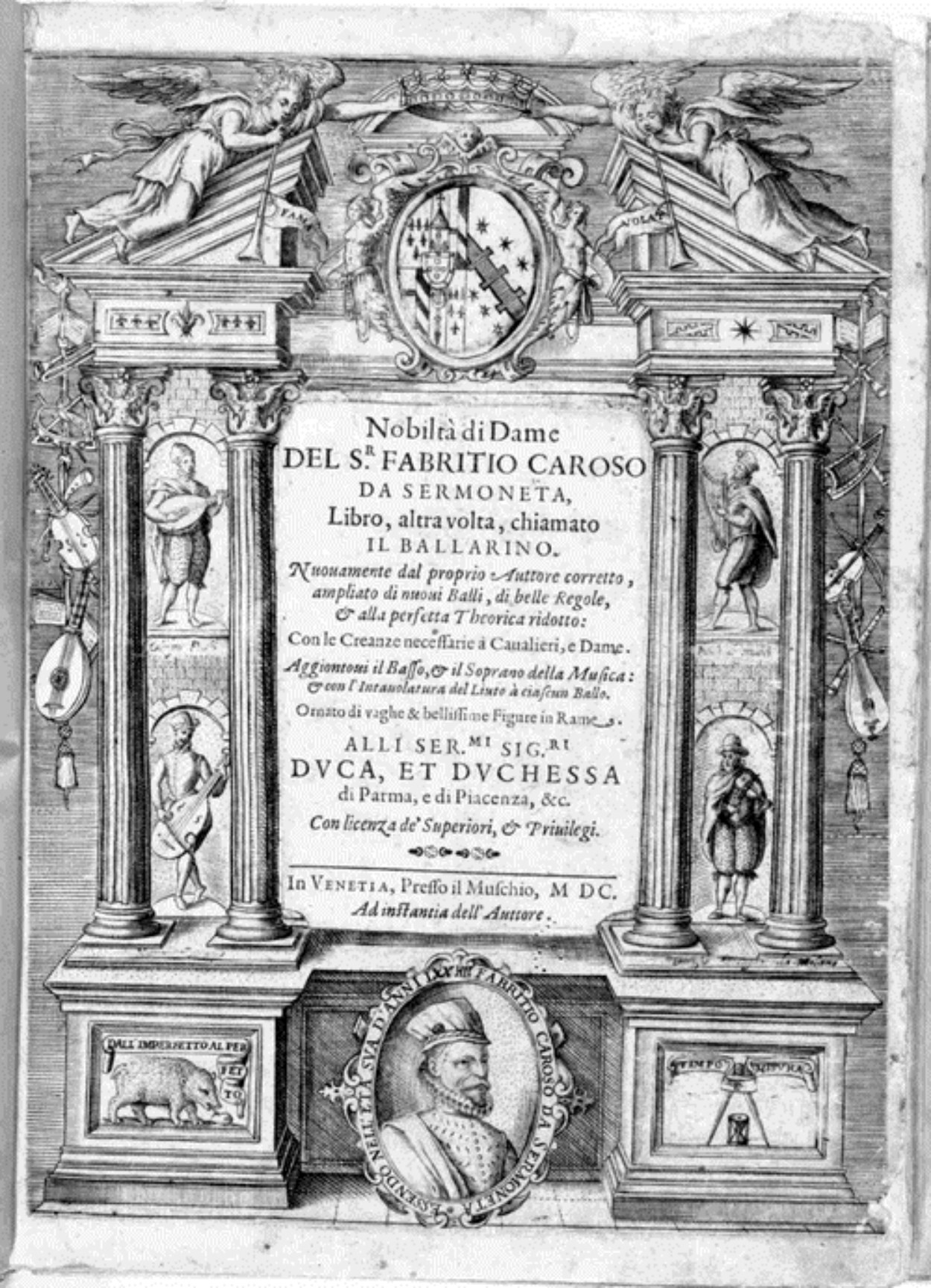
Fabritio Caroso da Sermoneta (c. 1535–c. 1605) was a prominent dancing master based in Rome and Venice during the late Renaissance. He is known almost entirely through *Il Ballarino* (1581) and its expanded later edition *Nobiltà di Dame* (1600), both of which were influential across Europe. Little is recorded of Caroso's life beyond his professional reputation. His manuals are the most detailed surviving choreographies of Italian Renaissance court dance and were likely compiled from his teaching practice with noble students. The woodcuts were executed by professional block-cutters working from his descriptions; the identity of the specific engraver(s) of this plate is not recorded.
The period
The late 16th century was the height of the Italian Renaissance court as a site of cultural production. Dance was central to courtly self-presentation: it demonstrated noble birth, physical grace, education, and command of intricate social protocols. The decades around 1580 saw several comprehensive dance manuals published in Italy and France (including the work of Thoinot Arbeau and Orchésographie), all responding to a growing demand from the nobility for systematic instruction in fashionable dance. Venice, where Caroso taught, was one of Europe's wealthiest and most cosmopolitan cities, and its aristocracy set standards of taste in dress and movement that were imitated elsewhere. The woodcut medium itself was at the height of its use for book illustration; within a generation, engraving would become dominant for luxury publications, but Caroso's *Il Ballarino* was printed with woodcuts that proved effective and economical.
Where it lives
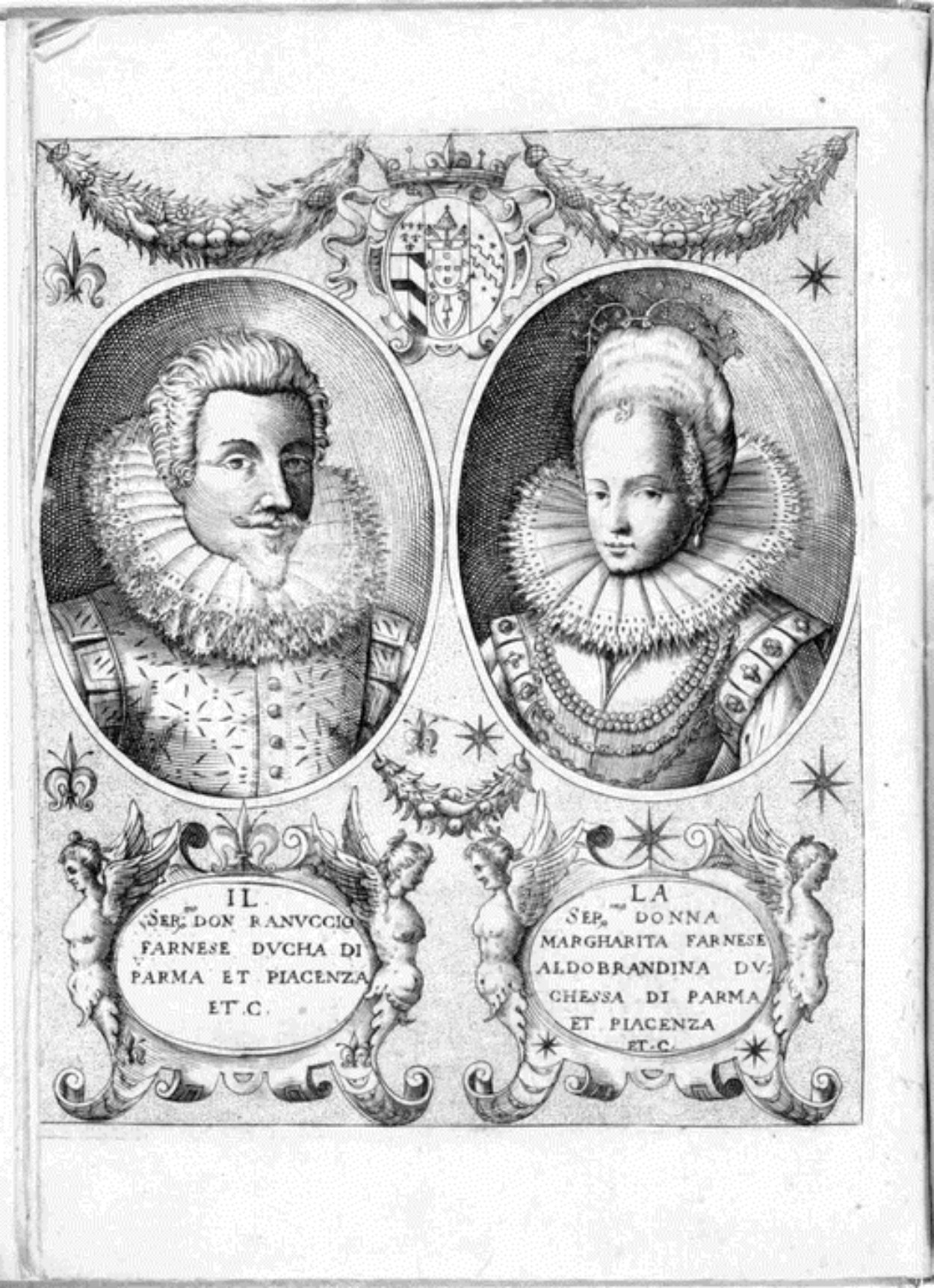
This plate is part of *Il Ballarino*, a printed book published in Venice in 1581 by the printer Ziletti. The Library of Congress holds a copy, from which this image is drawn. The work survives in numerous copies across major research libraries in Europe and North America, making it one of the most accessible primary sources for Renaissance dance.
Dance in this work
Questions about this work
How do we know what dance is being shown here?
The plate is numbered and keyed to Caroso's written text, which describes specific dances step by step. The hand position, the formal spacing, and the upright posture are consistent with the pavane or a similar processional couple dance. Without seeing the corresponding page of Caroso's text, we cannot identify the exact choreography, but the formal opening position is legible from the image alone.
Did Renaissance dancers really dress like this?
Yes—at least the nobility who participated in court dance did. These garments are precisely documented in other sources from the 1580s. However, this is formal court dress; everyday clothing was less elaborate. The costumes here serve both documentary and instructional purposes, showing the student how movements should work within the constraints of heavy skirts and fitted doublets.
Why are there only two dancers shown?
Caroso's manual covers both solo dances and couple dances. This plate is illustrating a couple dance, which was the dominant form of social dance in the Italian court. Some pages show single dancers, and some show formations of multiple couples. The couple was the basic unit of courtly dancing.
What would happen next?
According to Caroso's written instructions for the specific dance, the couple would move through a series of steps—walking, turning, and sometimes parting and rejoining—all performed to music (usually a pavan, galliard, or similar court air). The movements were codified but not rigid; skilled dancers could add grace notes and variations within the structure.
More Notation/Choreography artwork