33 works in this view — arrow keys or swipe to move between them.
Dance in Art
Caroso — Dance Plate (plate 7)
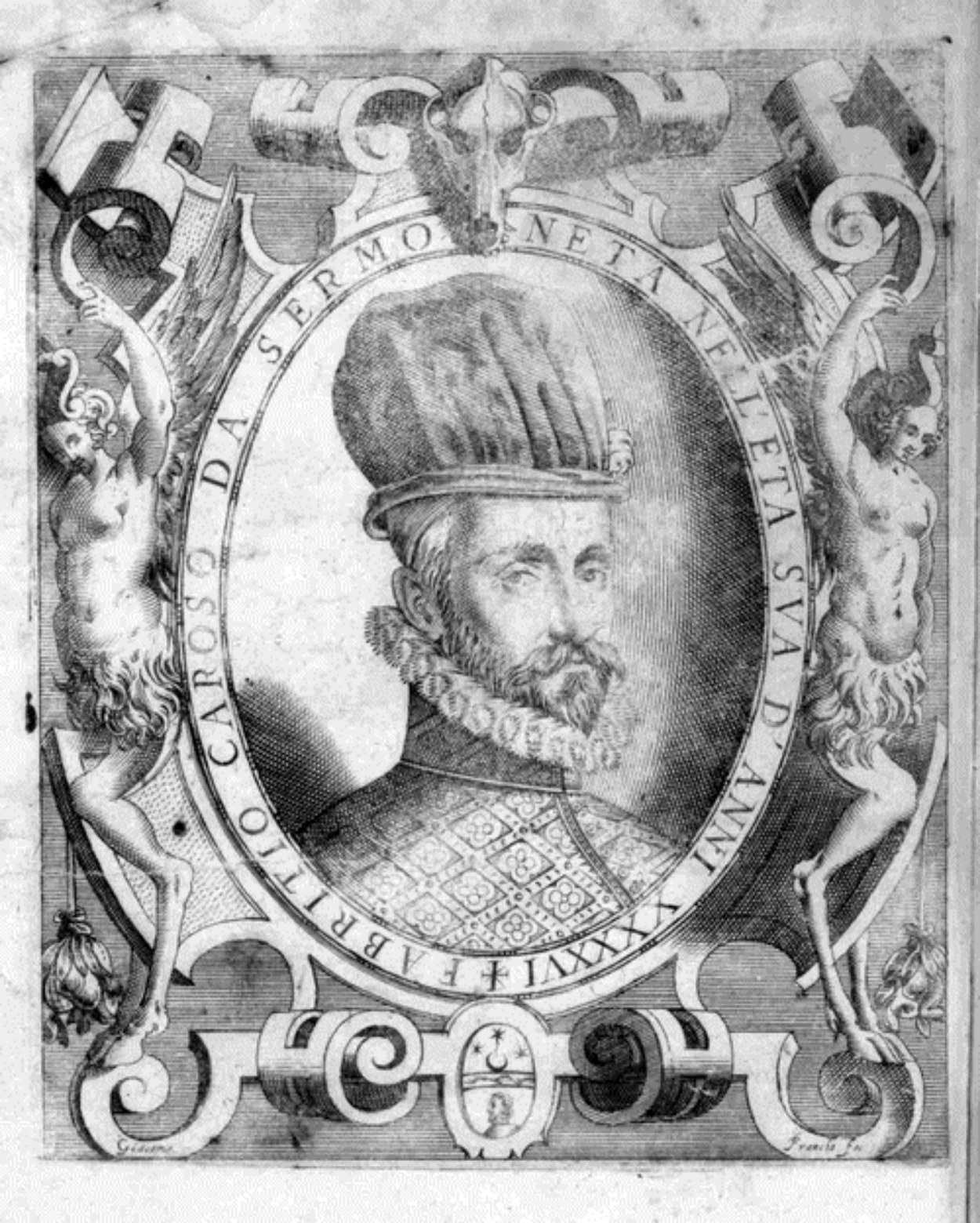
Fabritio Caroso da Sermoneta
- Medium:
- Woodcut
- Dance:
- Notation/Choreography
- Era:
- Pre-1700 (Renaissance/Baroque)
- Collection:
- Il Ballarino (1581)
- Source:
- Library of Congress
- Rights:
- Public domain — free to use, share and adapt.
- Recorded as:
- Public Domain
For dancers and choreographers, *Il Ballarino* is the closest we come to a complete record of how Renaissance court dances were danced—not reconstructed from paintings or written description alone, but notated and illustrated by a master teacher who trained the dancers of his time. For art historians and historians of print, Caroso's illustrated manual is a landmark in the development of the instructional manual as a printed genre, demonstrating how woodcut and typography could be combined to convey embodied knowledge to a dispersed audience.
What you are looking at
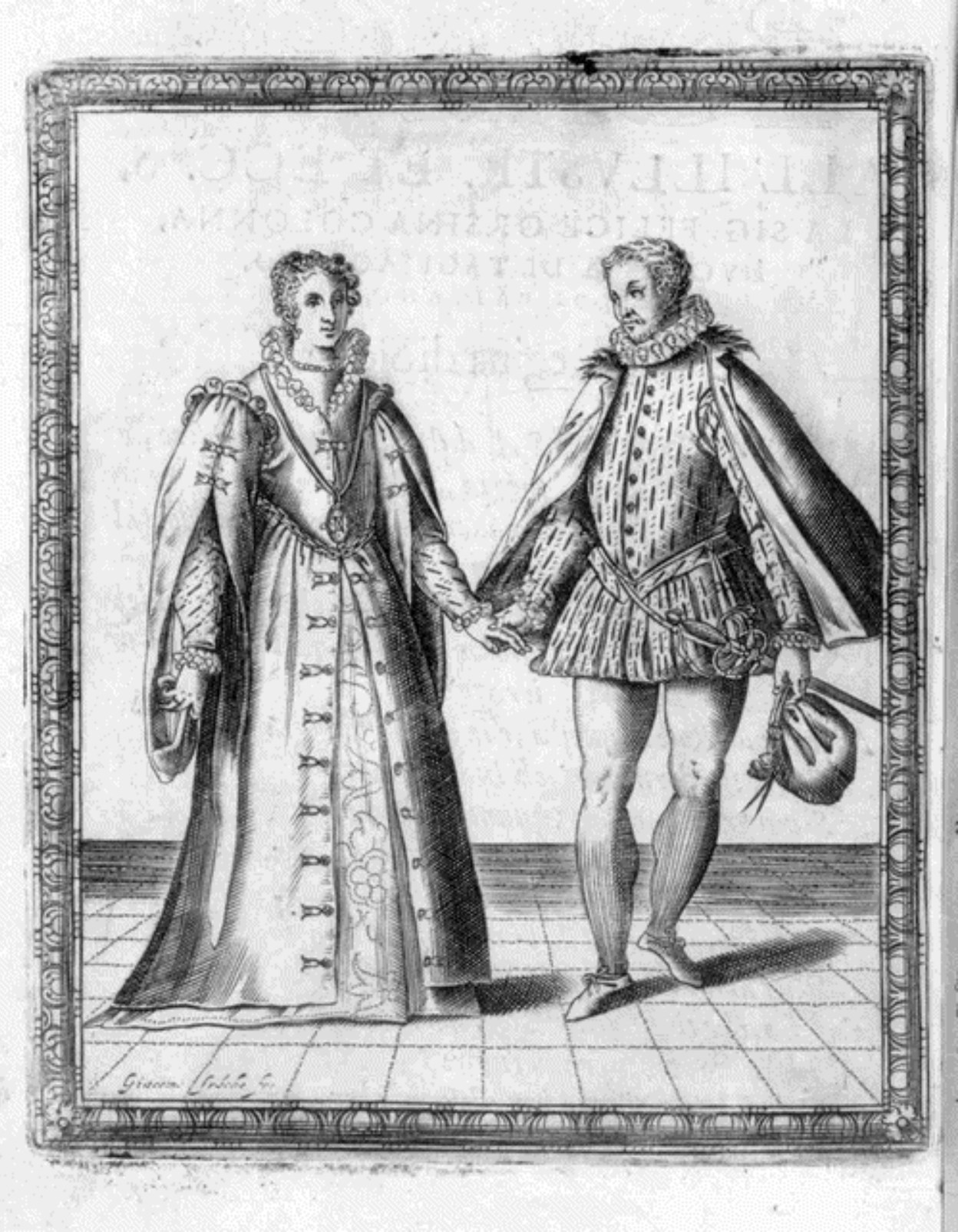
A woodcut depicting two Renaissance-era dancers in an ornate interior setting, shown against a plain background with a tiled floor rendered in perspective. The figures stand close together, holding hands in a formal pose characteristic of courtly dance. On the left, a woman wears an elaborate gown with a full skirt decorated with ornamental embroidery or jeweled patterns running down the front, a low neckline, and a high ornamental collar. Her long sleeves are fitted and puffed at the shoulders, and she wears a small decorative headdress. On the right, a man is dressed in the fashion of the Italian court, wearing a doublet with vertical pleating across the torso, a short skirt or skirt-like lower garment (typical of male court fashion of the 1580s), and fitted hose. He wears a high ruffled collar and holds what appears to be a feathered hat or plume in one hand. Both figures are rendered with careful attention to the texture and volume of their fabrics, which was essential to demonstrating the material status and aesthetic refinement expected of court dancers.
The dancing
The two dancers are positioned in a symmetrical arrangement, standing upright with formal posture. Their hands are clasped or linked at roughly waist height in what appears to be a closed or semi-closed hold typical of Renaissance court dances. Both bodies are aligned vertically without weight shifts or tilts; there is no suggestion of active stepping or turning. The spatial relationship between them—close but not pressed together, with arms extended between them—is consistent with processional or measured dances where grace and decorum in bearing took precedence over dynamic footwork.
The dance depicted
This is a plate from Fabritio Caroso's *Il Ballarino* (Venice, 1581), one of the first and most comprehensive notated manuals of late-Renaissance Italian court dance. Caroso's work documented dances performed in the courts of Italy, particularly at Naples and Rome, during the final decades of the sixteenth century. The formal dress, the frontal presentation, and the closed-hand position suggest one of the balli (balletti) or choreographed dances for couples—likely a pavane, almain, or similar processional or measured dance. The image serves not to teach footwork through visual example alone, but as a portrait of how a courtly dancer should carry themselves: upright, composed, richly dressed, and formally engaged with their partner.
How it was made
This is a woodcut, a relief printing technique in which an image is carved into the surface of a wooden block, with the raised portions inked and printed. Woodcut allowed for the mass production of dance instruction manuals in the sixteenth century—far cheaper than manuscript or hand-colored copies. The technique's limitations (finer details are difficult to sustain) are visible here in the somewhat simplified rendering of fabric texture and facial features, yet the artist has managed considerable subtlety in suggesting the weight and fall of the dancers' garments through line weight and cross-hatching. The framing border with decorative flourishes is typical of printed books of the period and signals this work's status as a published, widely circulated document rather than a unique artwork.
About this work
This woodcut is one of approximately seventy illustrations in Caroso's *Il Ballarino*, the most influential dance manual of the Renaissance and a foundational text for the history of European court dance. Caroso documented not only specific choreographies but the entire culture of Italian courtly dancing, including the dress codes, social etiquette, and physical deportment required of dancers of rank. His manual circulated widely in manuscript form before its first printed edition in Venice in 1581, making it a primary source for understanding how the dances of the late Renaissance were actually performed and how they were understood by their contemporary audience. This particular plate exemplifies Caroso's pedagogical method: rather than attempting to render the exact moment of a complex step (which was difficult with woodcut), he presents the dancer's ideal form and mutual positioning, leaving the reader to combine the visual information with the written instructions and the notational system that accompany each dance in the text.
How to look at it
Observe the formal frontality of the composition and the balanced symmetry of the figures: this is not a snapshot of movement but an idealized presentation of proper form and mutual relationship. The detail lavished on the dancers' garments—the ornamental embroidery on the woman's gown, the pleating of the man's doublet, the texture of the fabrics—is not incidental but central to the message: a noble dancer was expected to move in a way that honored the material beauty of the costume and did not disturb or crease the carefully arranged drapery. The absence of dynamic tilt or asymmetry in the bodies reinforces that decorum and composure, not virtuosity or athletic display, were the values the dance embodied. Notice too the scale of the figures relative to the room: they are presented as large, prominent, and fully occupying the pictorial space, suggesting the social prominence and attention commanded by courtly dancers.
The artist
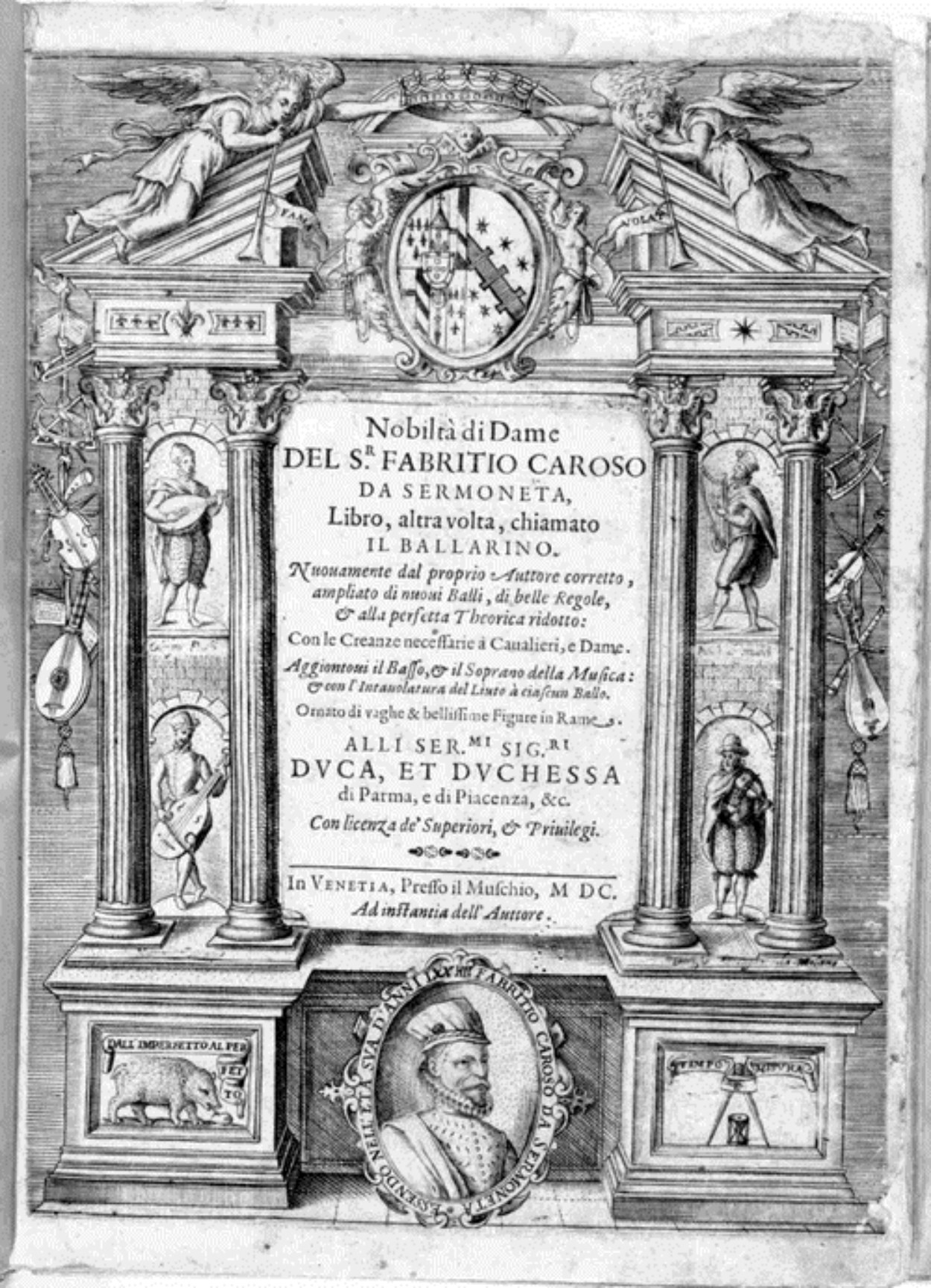
Fabritio Caroso da Sermoneta (c. 1535–c. 1605) was a renowned Italian dance master active in Rome and Naples during the latter sixteenth century. He is recorded as one of the most celebrated teachers of the Italian nobility and was known for innovations in dance composition and notation. *Il Ballarino* was his first major publication; a revised and expanded edition, *Nobiltà di Dame*, followed in 1600. His work is characterized by meticulous attention to both choreographic detail and courtly decorum—he understood dance not as isolated steps but as an expression of grace, nobility, and social refinement. Very little is known about Caroso's own biography, but his publications represent the most comprehensive surviving record of Renaissance Italian dance practice.
The period
The late sixteenth century saw a flourishing of dance in Italian courts as an essential marker of nobility and courtly education. Dance was considered one of the necessary accomplishments of any person of rank, alongside music, languages, and arms. The publication of illustrated dance manuals in print—rather than in manuscript alone—reflected both the increased interest in dancing among an expanding urban courtly class and the printing industry's capacity to reproduce and distribute such works. The 1580s, when *Il Ballarino* was published, were also a period of increasing formalization of court etiquette across Europe, with dance becoming more codified and socially regulated. Caroso's manual thus captures dance at a moment of transition: the highly choreographed, processional dances he documents would, within a generation, begin to yield to the faster, more athletic dances that would characterize the early Baroque.
Where it lives
This plate comes from the first printed edition of *Il Ballarino*, published in Venice in 1581. The work is held at the Library of Congress. *Il Ballarino* was published as a bound book of printed text, notations, and woodcut illustrations, making each surviving copy an artifact of Renaissance print culture and dance pedagogy.
Dance in this work
Questions about this work
What dance are they doing?
We cannot identify the specific dance from the image alone. The formal hand-clasp and upright posture are consistent with several Renaissance court dances—a pavane, almain, or similar processional dance. Caroso's text, which accompanies each image with written instructions and notation, would specify which dance is illustrated. The plate demonstrates the ideal form and partnership position rather than a specific moment in the choreography.
Why is so much detail given to their clothes?
In Renaissance courtly culture, the beauty and richness of dress were inseparable from the dancer's art. A courtly dancer was expected to move in a way that displayed the fabric and ornament to advantage without wrinkles or disorder. Caroso's illustration emphasizes that dance instruction included the proper wearing and carrying of courtly garments—it was part of nobility itself.
Is this a historical record of what they actually danced?
Yes, within limits. Caroso was a master teacher writing for dancers of his own time, and his dances and notations were in current use. However, the woodcut shows ideal form and position, not the full dynamic sequence of steps. The text and notation in the book provide the choreographic information; the images complement rather than replace them.
Who was Caroso?
Fabritio Caroso was the most celebrated dance master of late-sixteenth-century Italy, active in Rome and Naples. He trained the nobility and composed dances for court festivities. *Il Ballarino* (1581) and its revised edition *Nobiltà di Dame* (1600) are the most complete surviving records of Renaissance Italian dance practice and remain primary sources for dance historians and choreographers.
More Notation/Choreography artwork