36 works in this view — arrow keys or swipe to move between them.
Dance in Art
Caroso — Dance Plate (plate 10)
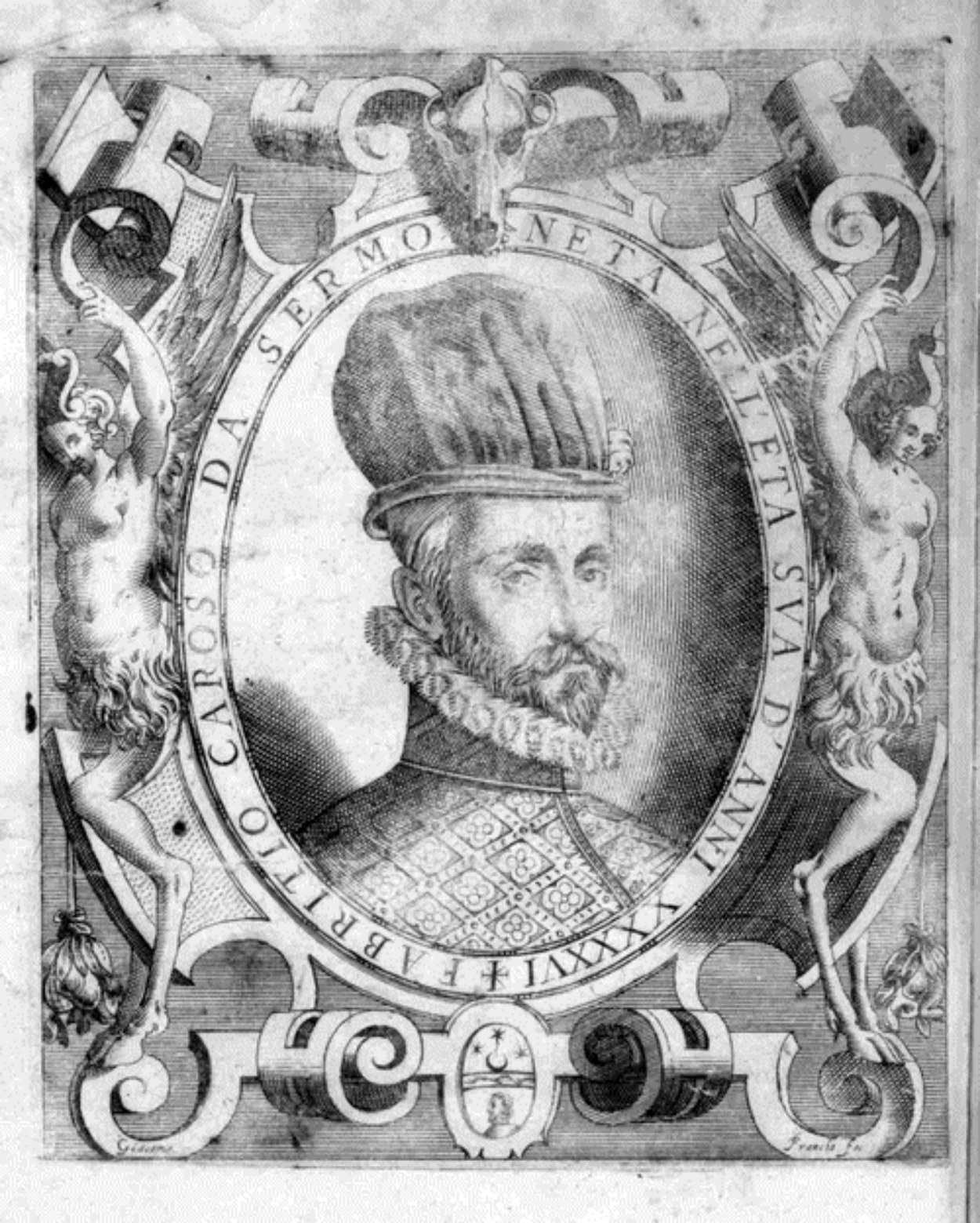
Fabritio Caroso da Sermoneta
- Medium:
- Woodcut
- Dance:
- Notation/Choreography
- Era:
- Pre-1700 (Renaissance/Baroque)
- Collection:
- Il Ballarino (1581)
- Source:
- Library of Congress
- Rights:
- Public domain — free to use, share and adapt.
- Recorded as:
- Public Domain
Caroso's *Il Ballarino* is the most detailed surviving record of Renaissance Italian dance technique, and his woodcuts are among the earliest attempts to document choreography through figured human bodies rather than notation alone. For dancers and historians, the plate offers evidence of how the body was trained, presented, and valued in sixteenth-century court culture—information that cannot be derived from written descriptions alone.
What you are looking at
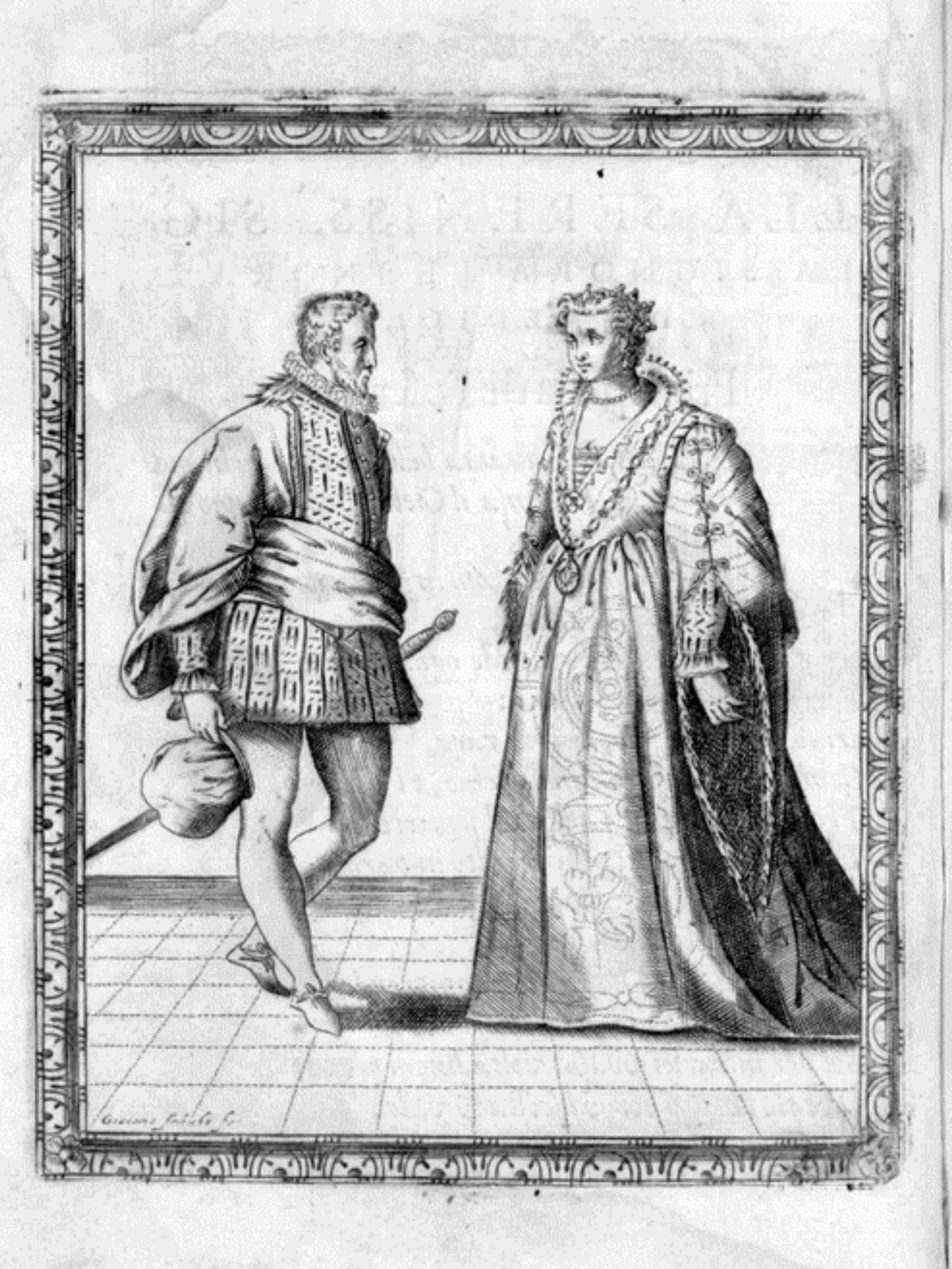
A woodcut plate presenting two figures in elaborate Renaissance Italian court dress, standing face-to-face in a formal interior space defined by a checkered floor. The male figure on the left wears a richly decorated short doublet with vertical pleating, a decorative belt, and bare legs; he holds a feathered hat in one hand and a baton or wand in the other, his body angled toward the woman. The female figure on the right wears a full-length gown with ornate embroidered or patterned sleeves, a high neckline decorated with jeweled ornament, and an elaborate headdress; she wears multiple strands of pearls or beads draped across her chest. Both figures are rendered with careful attention to the texture and patterning of their garments. The frame is a decorative Renaissance border with scrollwork, and the composition presents the figures as demonstrative models rather than in an active moment of movement.
The dancing
The two figures occupy mirror positions in space, facing each other across a small distance that suggests an approaching or salutation moment. The man's weight appears evenly distributed, with one leg extended slightly forward; his upper body turns toward the woman with a gesture of presentation or address. The woman stands with upright posture, her body square to the viewer, her hands positioned at her sides or before her. Neither figure is caught in mid-movement; instead, they occupy discrete, held positions that read as formal demonstration of courtly bearing and presentation rather than active choreography.
The dance depicted
This is a notation plate from Caroso's *Il Ballarino*, which catalogued the court dances of late-sixteenth-century Italy. The specific dance depicted cannot be identified with certainty from the static poses alone, but the facing position, formal dress, and the deliberate separation of the figures suggests one of the pavan variants or basse danse descendants that dominated Italian Renaissance ballrooms. Caroso's book presented dances through a series of such plates showing the dancers in key positions or figures from each choreography. The image documents not just the steps but the ideal courtly presentation—the posture, the ornament, the measured distance between partners—that constituted Renaissance dance technique.
How it was made
This is a woodcut, a relief-printing technique that requires carving away material from a wooden block to create the printed image. Woodcut allowed for relatively rapid reproduction and wide distribution, making Caroso's manual accessible to dancing masters and courtiers across Italy and Europe who wished to learn these fashionable dances. The technique's characteristic bold lines and clear contrasts suit the documentary purpose of the plate, rendering costume detail and body position with clarity and precision. The decorative border is integral to the woodcut block and signals the work's status as a formal, published object rather than a sketch or study.
About this work
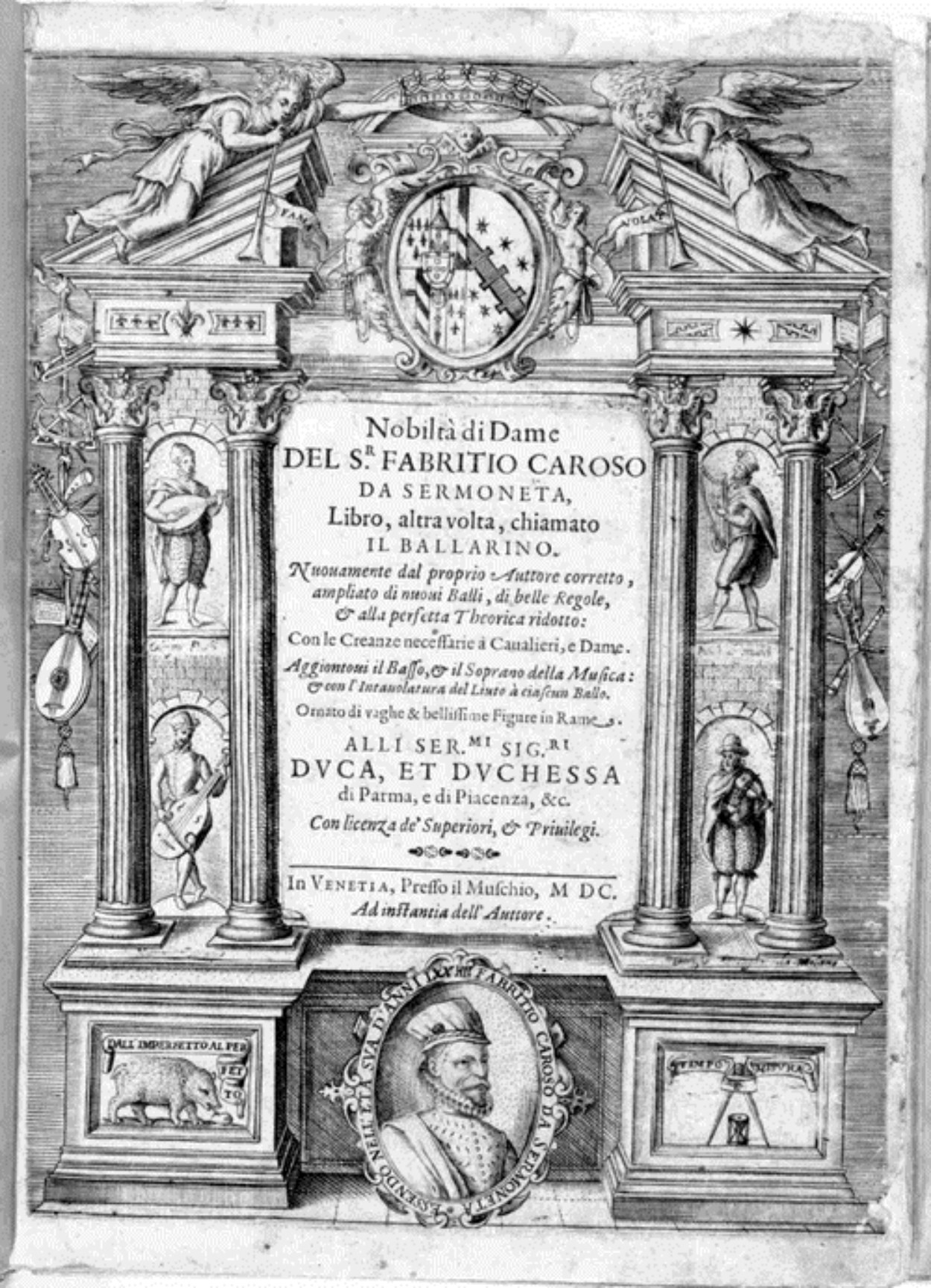
This is a plate from Fabritio Caroso's *Il Ballarino* (Venice, 1581), one of the most important and sumptuous dance manuals of the Renaissance. Caroso's book preserved in image and textual description the court dances of late-sixteenth-century Italy at a moment of their greatest refinement and international influence. The plate shows two idealized dancers in the costume, posture, and formal presentation that defined the danza and balletti of the period. As a published woodcut, it served a practical function—teaching dancing masters and courtiers how to execute these dances—while also documenting an elite social practice and the aesthetic values embedded in Renaissance movement culture.
The image belongs to a crucial moment in the history of dance notation and representation. Caroso and his contemporary Thoinot Arbeau (author of *Orchésographie*) created the first systematic, illustrated accounts of how court dances were actually performed. Unlike abstract systems of notation, Caroso's woodcut figures remain legible to modern viewers: we can read the formality of the approach, the precision of the dress, and the composed dignity that Renaissance dance prized. The work established a model for dance documentation that influenced practice and teaching for centuries.
How to look at it
The plate is not capturing a moment of dynamic movement but rather presenting the dancers as they would be positioned during a key figure or transition in the choreography. Pay attention to the careful rendering of dress—the pleating, embroidery, and jeweled ornament convey the wealth and status that court dance expressed—and to the formal distance and facing between the two figures, which suggests the etiquette governing male-female interaction in the ballroom. The woodcut technique itself is worth observing: the bold, clear lines create a legible image suitable for instruction, while the decorative border frames the dancers as exemplars rather than casual performers. The figures' composed, upright posture and the deliberate way they present themselves to each other is itself the dance—Renaissance technique prized such courtly bearing above technical virtuosity.
The artist
Fabritio Caroso da Sermoneta (c. 1535–1605) was a renowned dancing master and choreographer active in Rome and other Italian courts. He authored two major treatises on dance: *Il Ballarino* (1581) and the expanded *Nobiltà di Dame* (1600). Caroso's works were among the first systematic codifications of court dance, written for an educated elite audience and illustrated with woodcut figures that demonstrated the dancers' positioning, posture, and costume. His reputation was substantial in his lifetime; dancers throughout Europe sought to learn his choreographies, and his books were translated and adapted. Caroso represented the dancing master as a figure of intellectual and artistic authority, not merely a technician, and his treatises were addressed to patrons and pupils of high social standing.
The period
The late sixteenth century was the golden age of Italian court dance. The dances Caroso documented—pavan, galliard, passacaille, and the more elaborate balli—were the dominant courtly entertainment across European courts. Italy, particularly Venice and Rome, was the center of dance innovation, and Italian dancing masters were sought throughout Europe. This was also a period when dance began to be documented systematically: Caroso's *Il Ballarino* (1581) and Arbeau's *Orchésographie* (1588) appeared within a few years of each other, establishing dance as a subject worthy of sustained written and visual analysis. The Renaissance valuing of human beauty, proportion, and the cultivation of grace in the body found expression in dance as much as in visual art. Caroso's woodcuts are part of a broader Renaissance project to measure, describe, and preserve refined human accomplishment.
Where it lives
This plate is from *Il Ballarino*, a printed book published in Venice in 1581. The work survives in multiple copies in libraries and collections; this plate is identified as plate 10 in the sequence of dance illustrations. The Library of Congress holding is one of the major surviving copies of this foundational Renaissance dance manual.
Dance in this work
Questions about this work
How do we know what these dancers are doing if they're just standing still?
Caroso's plates show key positions or moments from each dance rather than continuous action. A reader with knowledge of the dances would recognize the positions and understand the choreography from the text and the images together. The formal facing position, the man's extended leg, and the woman's upright posture are legible signals of Renaissance dance decorum. Modern readers can infer from the positions and the costume how the dance was structured and what values it embodied, even if we cannot fully reconstruct the steps.
Why is the costume so elaborate?
Court dance in the Renaissance was inseparable from the display of wealth and status. The ornament, embroidery, jewels, and fine fabrics were essential to the social function of the dance—they marked the dancers as members of the elite. Caroso's careful rendering of costume details was thus also a documentation of courtly identity and the visual language through which rank and refinement were communicated.
Is this plate teaching people how to dance?
Yes, in part. *Il Ballarino* was a practical manual for dancing masters and courtiers, and the plates, combined with textual instruction, conveyed the steps, positions, and patterns of each dance. But the book was also a prestige object—sumptuous, expensive, illustrated—designed to celebrate the dances themselves and the culture that valued them. It served both as a how-to manual and as a record of an elite social practice.
Who is Caroso and why does he matter?
Fabritio Caroso (c. 1535–1605) was the most celebrated dancing master of the late Renaissance and the author of the two most important dance treatises of his era. His *Il Ballarino* and *Nobiltà di Dame* were the first comprehensive, illustrated codifications of court dance, and they established him as an authority whose methods were sought across Europe. Caroso elevated the dancing master to the status of an intellectual and artist, and his treatises are still studied today as evidence of Renaissance culture and technique.
More Notation/Choreography artwork