47 works in this view — arrow keys or swipe to move between them.
Dance in Art
Caroso — Dance Plate (plate 11)
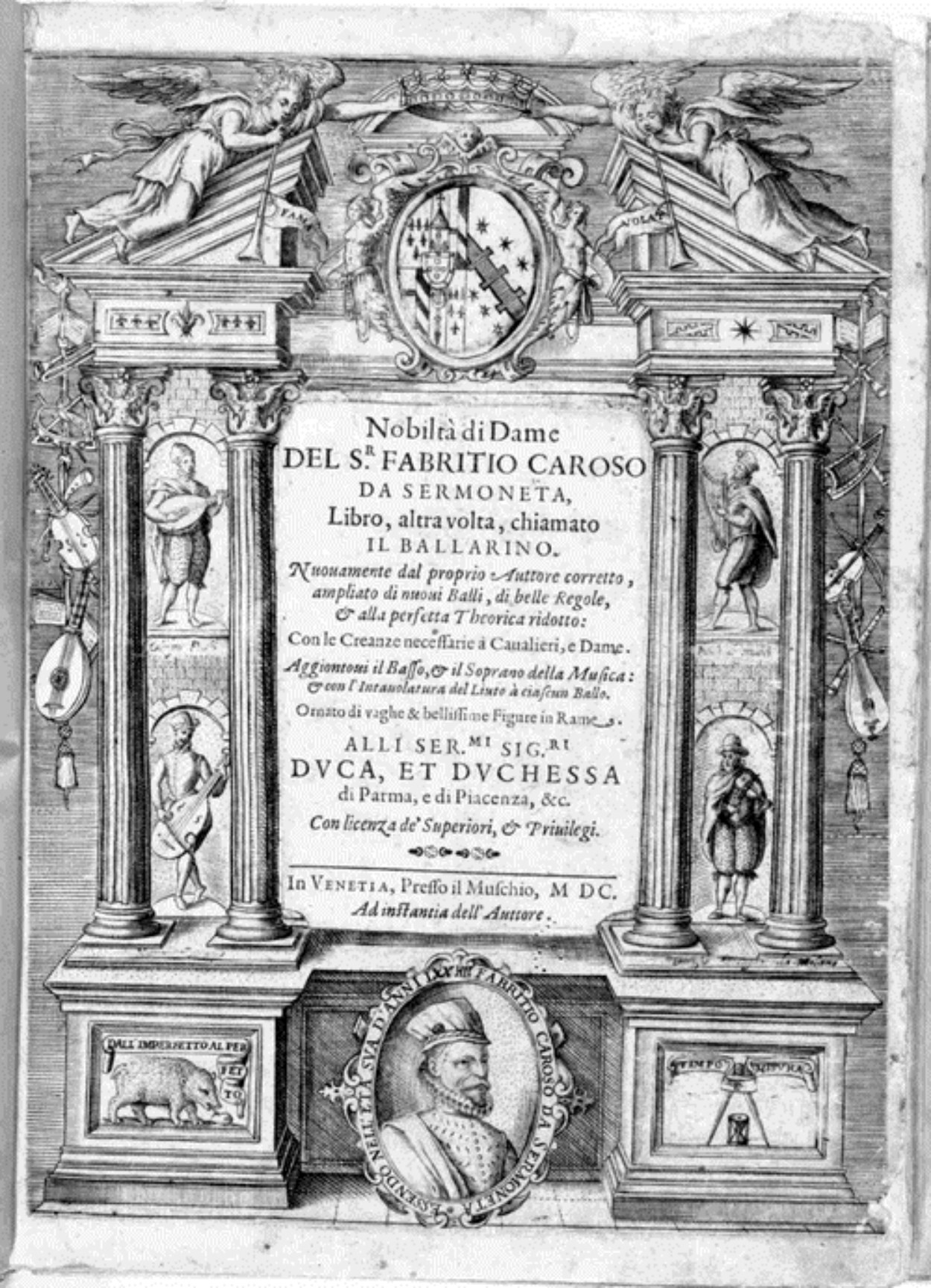
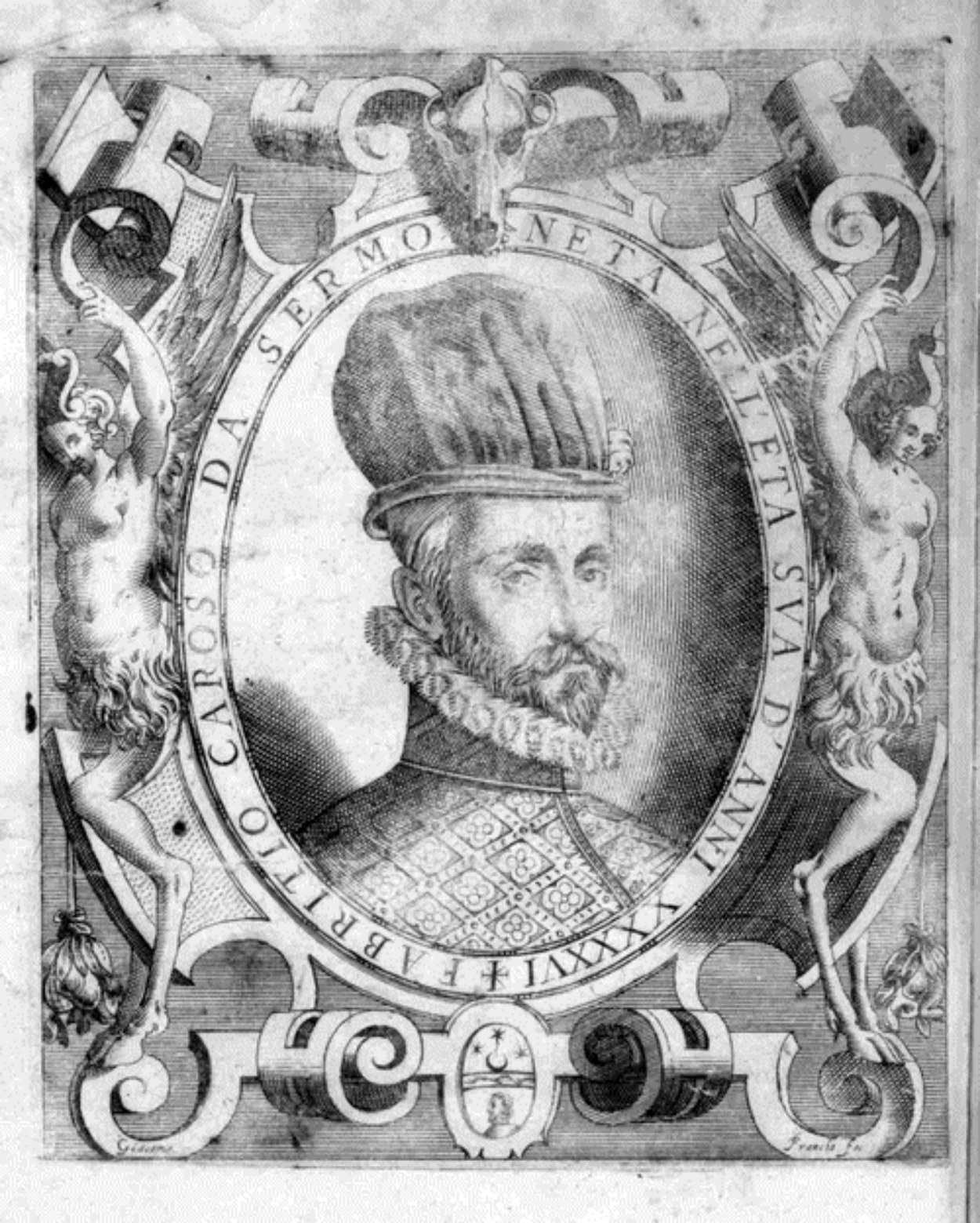
Fabritio Caroso da Sermoneta
- Medium:
- Woodcut
- Dance:
- Notation/Choreography
- Era:
- Pre-1700 (Renaissance/Baroque)
- Collection:
- Il Ballarino (1581)
- Source:
- Library of Congress
- Rights:
- Public domain — free to use, share and adapt.
- Recorded as:
- Public Domain
Caroso's *Il Ballarino* is the most important surviving text on Renaissance court dance, and this plate is part of that authoritative record. For historians and dancers, it offers concrete evidence of the posture, costume, and partnering conventions that defined courtly refinement in the late sixteenth century. The image shows that Renaissance dance was inseparable from elaborate dress and formal deportment—a total social performance, not a movement practice divorced from costume and ceremony.
What you are looking at
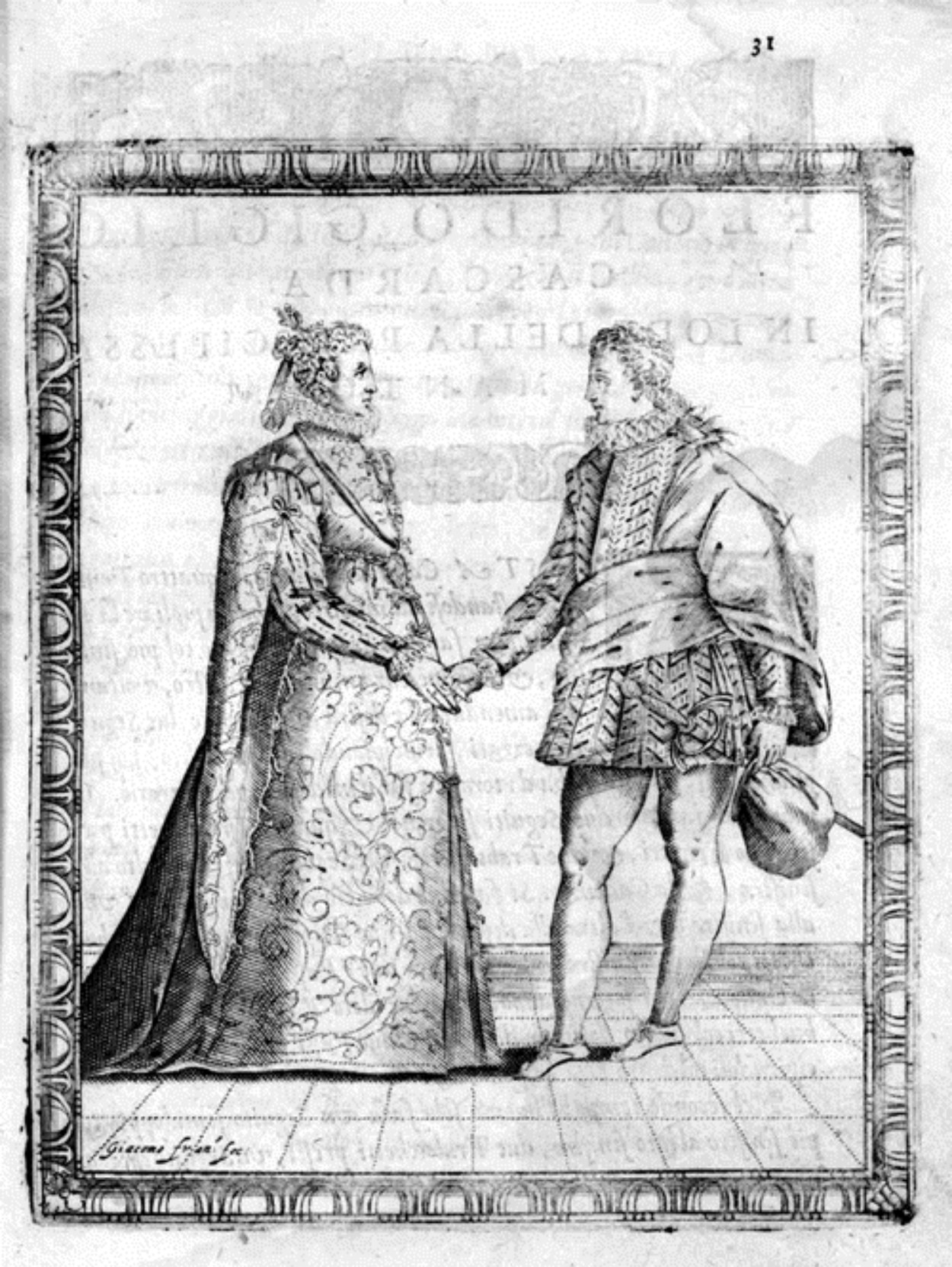
A man and woman in elaborate Renaissance court dress face each other with joined hands in what appears to be a formal dance instruction or demonstration. The woman wears a long gown with intricate patterned embroidery and a flowing train; her hair is bound up in the fashion of late-sixteenth-century Italy. The man wears a richly decorated doublet with elaborate sleeves, hose, and shoes, his hair styled in the period fashion. Both figures stand upright and composed against a plain background, their posture and positioning suggesting a moment of instruction or the beginning of a formal figure. The setting is purely theatrical—a tiled floor and blank space establish an indoor, courtly venue. This is a teaching image: it shows the proper stance, dress, and formal deportment required of dancers in the highest circles of Renaissance Italy.
The dancing
The couple stands in profile to the viewer, at ease but formally aligned. Their joined hands are at roughly waist height, suggesting a hand-hold rather than the full-body contact of a waltz or modern ballroom frame. Both dancers are upright, with weight seemingly settled into the legs—there is no visible lean, bend, or twist. The woman's free arm hangs naturally; the man's is similarly composed. The stance conveys nobility and restraint rather than momentum or effort, consistent with the courtly Italian dance vocabulary of the period. This is a static moment of greeting or opening position rather than a moment caught mid-movement.
The dance depicted
This plate illustrates one of the named dances documented in Caroso's *Il Ballarino*, though the specific dance title is not legible in the image. Caroso's manual systematically catalogued the social dances of the Venetian and Roman courts, each with prescribed steps, music, and ceremonial function. The couple's formal hand-hold and upright carriage suggest either a pavane, almain, or galliard—all foundational Renaissance court dances that required partners to move in parallel or in geometric figures across a hall. The emphasis on correct dress and posture indicates that these dances were as much about displaying one's station and refinement as about the movement itself. The woman's elaborate gown and the man's jeweled doublet are essential to the performance.
How it was made
This is a woodcut, a medium that allowed Caroso's publisher to produce multiple printed copies of the manual for circulation among the nobility and dancing masters of Italy and beyond. Woodcut was relatively economical compared to engraving, making books like *Il Ballarino* accessible to a wider audience than hand-painted or single-copy works. The medium's bold lines and clear silhouettes were well suited to the pedagogical purpose: the figures must be legible from a distance, and the costumes and postures must be immediately recognizable as markers of rank and correct practice. The decorative border frames the scene as a formal, authoritative teaching image.
About this work
This is one of the numbered instructional plates from Fabritio Caroso's *Il Ballarino* (Venice, 1581), a foundational printed dance manual of the Renaissance. Caroso was the most celebrated and documented dancing master of late-sixteenth-century Italy, and his book stands as the most comprehensive surviving record of Italian court dance practice from that era. The plate shows a man and woman in the formal dress and deportment required for courtly dancing, their joined hands and upright stance illustrating both the aesthetic and the physical discipline of Renaissance ballroom practice. As a printed woodcut, this image was designed to teach dancing masters and their pupils across Europe the proper form, and multiple copies survive in libraries and museums. It remains one of the most direct visual records we have of how Renaissance aristocrats were expected to move and present themselves.
How to look at it
Pay attention to the couple's posture: they are neither in a relaxed social stance nor in active movement. Instead, they embody a formal readiness—upright, composed, and aligned. This is an opening position or a moment of greeting, not a moment captured mid-step. Notice the precision of their dress: every detail of the embroidery, the jewels, the hose, and the hair arrangement was codified and mattered. The blank background and plain floor isolate the couple from any real architectural context, framing them as teaching models rather than as actors in a scene. The joined hands are the only point of physical contact, emphasizing restraint and formality over physicality.
The artist
Fabritio Caroso (c. 1527–after 1605) was an Italian dancing master active in Rome and Venice. He is known chiefly through his two published manuals: *Il Ballarino* (1581) and the expanded *Nobiltà di Dame* (1600). These texts document the named social dances of the Italian courts, each with prescribed choreography, music, and rules of etiquette. Caroso was celebrated in his lifetime as the preeminent teacher of nobility, and his books were reprinted, translated, and circulated across Europe. Unlike many dance masters of the period, Caroso left behind a printed, illustrated record of his teaching, making him one of the most documented figures in Renaissance dance history. His authority derived both from his own renown as a performer and from his systematic, written codification of courtly practice.
The period
In the late sixteenth century, social dancing was a core courtly skill and a marker of noble status. The courts of Venice, Rome, and other Italian city-states maintained elaborate systems of dance instruction and performance; dancing masters held prominent positions at court and charged high fees for lessons. The dances documented in Caroso's manuals—the pavane, galliard, almain, volta, and others—originated in France, Spain, and Italy and circulated across European courts. Printed manuals on dance became available in the sixteenth century, allowing knowledge to spread beyond direct apprenticeship. Caroso's *Il Ballarino* appeared at a moment when Italy was establishing itself as a center of courtly dance innovation, a reputation that would persist through the seventeenth century. The book's illustrations reflect contemporary costume conventions and the visual language of formal portraiture, adapting those conventions to the pedagogical goal of teaching correct deportment.
Where it lives
This plate is from *Il Ballarino*, a printed book published in Venice in 1581. The Library of Congress holds a copy. The woodcut is one of approximately 40 numbered instructional plates in the manual, each illustrating a different dance or position. The book was a commercial publication and was widely distributed, so multiple copies and impressions exist in archives and libraries across Europe and North America.
Dance in this work
Questions about this work
How do we know this shows a Renaissance dance and not just two people in period costume?
This plate is from Caroso's *Il Ballarino*, an explicitly pedagogical text cataloguing specific named dances. The positioning, the formal hand-hold, and the upright carriage are all consistent with the courtly dances of the Italian Renaissance—pavane, galliard, almain—as documented in other contemporary manuals. The image was not made to represent a scene; it was made to teach correct form.
What dance is this couple performing?
The specific dance title for this plate is not legible in the current image, and the catalogue record does not provide it. Caroso's plates are numbered and correspond to named dances in the text, but without the facing page or title, we cannot identify it with certainty. The formal, hand-held position suggests a pavane, almain, or galliard—all foundational Renaissance court dances.
Why is the woman's dress so elaborate?
In Renaissance courts, a woman's dress was a direct display of her rank, wealth, and access to luxury fabrics and embroidery. Dancing was a social performance in which costume was as important as movement. The quality and elaborateness of dress signaled noble status, and Caroso's manual captures this; the dress is not incidental to the dance but essential to it.
How many people danced together in Renaissance court dances?
Dances came in many forms: couple dances, group formations, and solo performances. This plate shows a couple, and Caroso's manual documents both coupled dances and group figures. The couple dance was a prestigious form, especially for formal ceremonies, and required a high degree of synchronization and grace between partners.
More Notation/Choreography artwork