49 works in this view — arrow keys or swipe to move between them.
Dance in Art
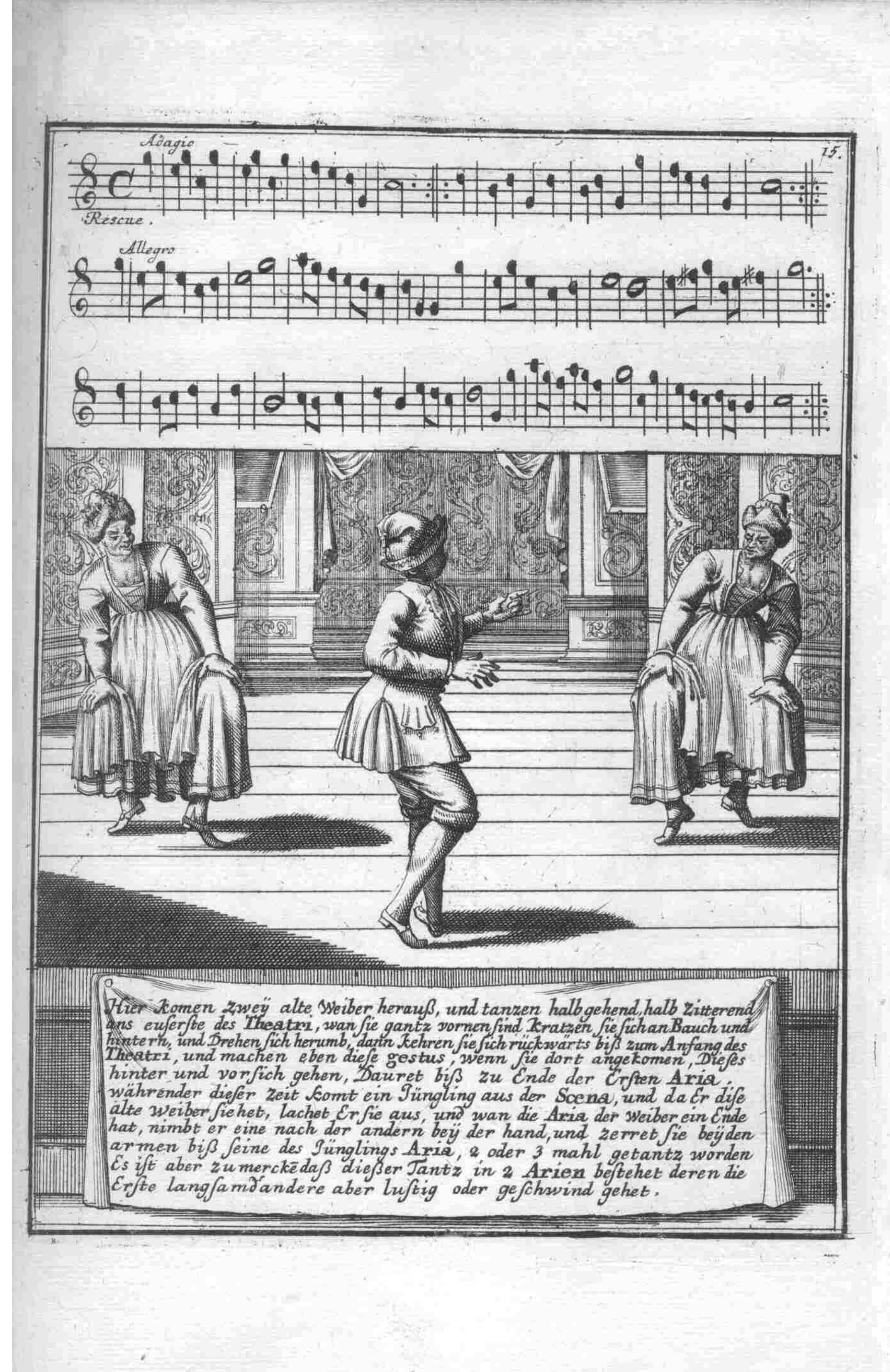
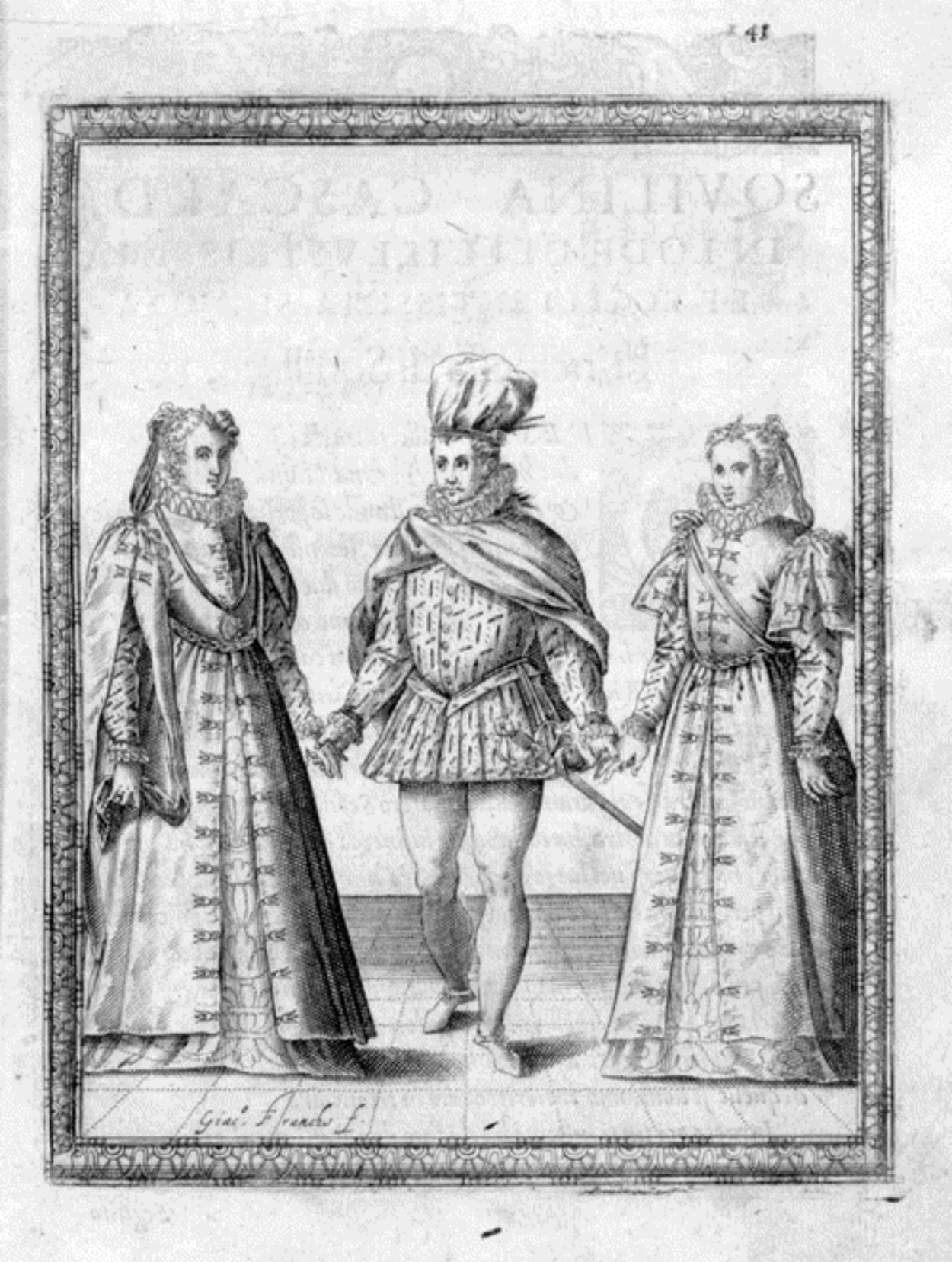
Caroso — Dance Plate (plate 15)
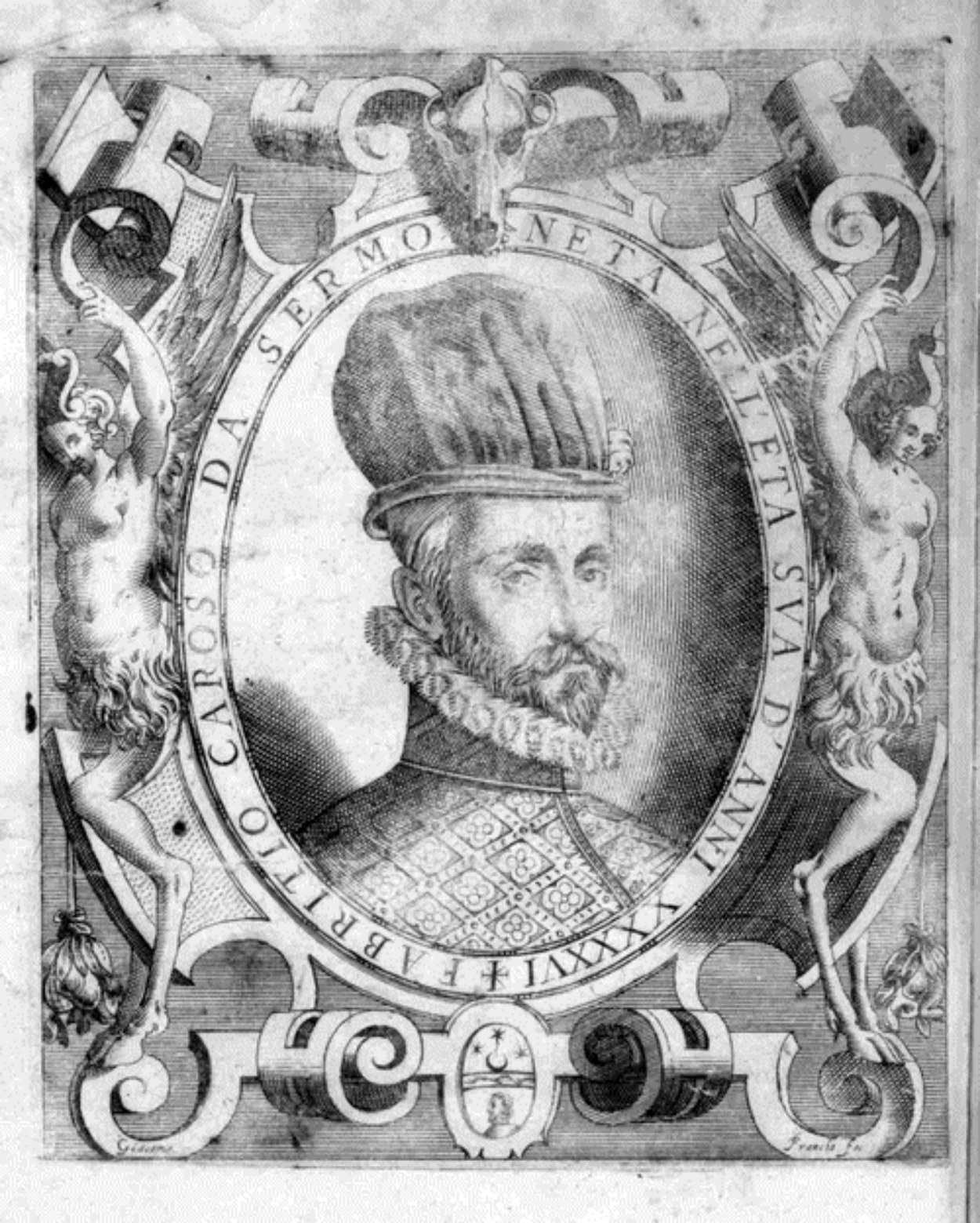
Fabritio Caroso da Sermoneta
- Medium:
- Woodcut
- Dance:
- Notation/Choreography
- Era:
- Pre-1700 (Renaissance/Baroque)
- Collection:
- Il Ballarino (1581)
- Source:
- Library of Congress
- Rights:
- Public domain — free to use, share and adapt.
- Recorded as:
- Public Domain
Caroso's *Il Ballarino* is one of the two most detailed surviving sources for actual Renaissance dance technique; his plates are the closest we have to photographs of how these dances were performed. For anyone studying the visual culture of the Renaissance court, the relationship between fashion and movement, or the history of dance notation and instruction, this work is primary evidence. The work also reveals that dance history was already being recorded and commodified by the late sixteenth century—the existence of such an elaborate manual shows that dance was valued as a learnable, teachable practice worthy of preservation.
What you are looking at
A woodcut illustration shows three figures in elaborate Renaissance court dress arranged symmetrically across a shallow stage. The central figure, wearing a plumed hat and short doublet with decorative cross-hatching, stands with legs apart in a commanding pose. To either side stand two women in long gowns with full skirts, their hair arranged with jewels and veils in the fashion of late-sixteenth-century Venice. All three wear richly patterned fabrics rendered through careful line-work typical of woodcut printing. The figures occupy a bare stage defined by a simple baseline, with no background detail—the focus is entirely on the dancers themselves and the precise rendering of their clothing. The composition is formal and frontal, inviting direct study of posture and dress.
The dancing
The three dancers are positioned in a near-symmetrical arrangement that emphasizes display over interaction. The man in the center stands upright with weight evenly distributed and legs extended, a stance of stable authority. The two women flank him, their bodies erect but turning slightly toward the center figure, their arms hanging naturally or held in gentle curves at their sides. The positioning suggests formal court protocol rather than dynamic movement; the bodies are poised rather than caught in action. The gap between the figures indicates they are not in a close hold or partnered embrace, but rather demonstrating their individual bearing and the elaborate detail of their garments.
The dance depicted
This plate illustrates the kind of ballroom dance that characterized Italian Renaissance court society in the 1580s—likely a pavan, galliard, or related dance of aristocratic ceremony. The composition emphasizes the visual spectacle of court dress and the formal etiquette of dance as a display of rank and breeding. Rather than capturing a specific moment of choreographed movement, the image presents the dancers as they would appear to courtly observers: stationary, composed, and resplendent. The lack of dynamic action is typical of Renaissance dance illustration, which documented the social and sartorial dimensions of courtly performance as much as the physical technique.
How it was made
A woodcut, printed from a carved wooden block. The technique allows bold, clear lines and strong contrasts that reproduce well in mass printing—essential for a practical dance manual that would be read and consulted by many dancers. The careful cross-hatching and parallel lines create texture and shadow without requiring fine gradation, making the work suitable for the letterpress printing of the period. Woodcut's graphic simplicity also served a pedagogical purpose: the clarity of line and form made it easy for a reader to study the precise arrangement of limbs and costume. This was not a unique, precious object but a page in a widely distributed instructional book.
About this work
This is one of the illustrative plates from Fabritio Caroso's *Il Ballarino*, a foundational dance manual published in Venice in 1581. Caroso's work catalogued the fashionable dances of the Italian Renaissance court and provided both written instruction and visual models for how a noble dancer should move and appear. This particular plate demonstrates how Renaissance dance illustration served dual purposes: it documented the choreography and etiquette of specific dances while also functioning as a fashion plate, displaying the silhouettes, fabrics, and ornamentation that marked a dancer as courtly and refined. The woodcut format allowed Caroso's work to circulate widely among the aristocratic and merchant classes who could afford the printed book and aspired to master its contents.
How to look at it
Look at the posture: all three dancers are upright and composed, with no weight shift or extension of the leg that would suggest a traveling step or jump. This stillness is deliberate and reveals Renaissance dance convention—much of the choreographic interest lay in the precise timing of steps taken in place, in arm movements, and in the spatial relationships between dancers, rather than in dramatic extensions or high jumps. Observe the dress as carefully as the bodies: the rich patterning, the fitted doublet on the man, the full skirts of the women. Caroso's manual was for the nobility; these are not simple folk dancers but aristocrats learning the dances that defined their social status. The formality of the composition—the frontal, symmetrical arrangement—mirrors the formality of the dance itself.
The artist
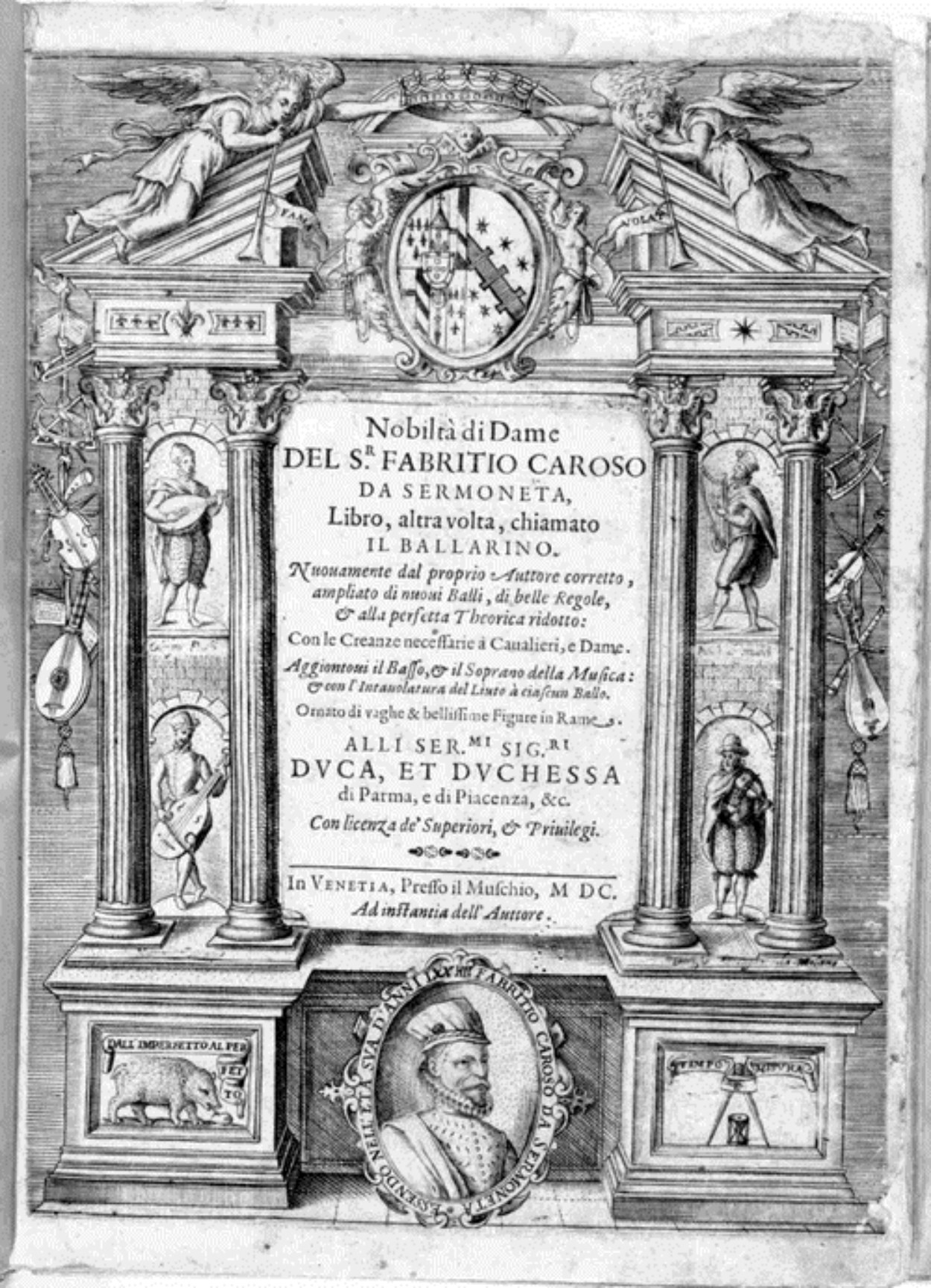
Fabritio Caroso da Sermoneta (c. 1526–after 1605) was a celebrated dance master active in Rome and Venice. He belonged to a professional class of male dance teachers who served the nobility and wrote treatises to codify and legitimize their art. *Il Ballarino* was his first major publication; a revised and expanded edition, *Nobiltà di Dame*, appeared in 1600. Caroso's work was practical and ambitious: he aimed to teach readers not only the steps of specific dances but the deportment, musicality, and social grace required to perform them as a courtier. His use of woodcut illustration alongside written instruction was innovative for a dance book and influenced how dance knowledge would be documented in print for centuries.
The period
The late Renaissance saw the formalization of court dance in Italy and throughout Europe. Dance was central to courtly life and education; the ability to dance well was a mark of nobility and refinement. The late sixteenth century also witnessed the emergence of the professional dance master—a figure distinct from the musician or courtier—and the publication of dance treatises that attempted to standardize and preserve choreography. Caroso's *Il Ballarino* appeared at the moment when the printing press was making such codification possible and when the Italian courts, particularly Venice and Rome, were at the height of their cultural influence. The elaborate dress depicted in the plates reflects the wealth and cosmopolitanism of these merchant-republic courts.
Where it lives
This woodcut is one of many illustrative plates bound into *Il Ballarino*, a printed book. The Library of Congress holds copies of the first edition (Venice, 1581). As a page from a printed book, it was designed for circulation among a specific audience of noble and wealthy readers who could afford the volume and had reason to study dance.
Dance in this work
Questions about this work
Is this a photograph or a drawing?
It is a woodcut—an image carved into a wooden block and printed. The parallel lines and bold contrasts are characteristic of woodcut printing, which was the dominant method for illustrating printed books in the Renaissance. It is not a photograph or a realistic depiction but a stylized representation made from a carved block.
What dance is being shown?
The specific dance is not certain from the plate alone. *Il Ballarino* contained instructions for many dances—pavans, galliards, branles, and others. The posture and dress suggest a formal, stately dance of the kind performed in aristocratic courts, but the exact choreography would require consulting Caroso's written descriptions.
Why are the dancers not moving?
They are shown in a posed, stationary moment rather than mid-leap or mid-turn. This was typical of Renaissance dance illustration. The goal was to show the dancers' bearing, alignment, and costume as clearly as possible so that a reader could understand how to stand and move with nobility and grace. Renaissance dance involved many steps performed in place, so a still image could convey essential information.
Why is the man in the center wearing such a short skirt?
That is a doublet—a fitted tunic worn over hose by Renaissance men of rank. The shortness of the garment allowed freedom of movement and displayed the legs and hose, which were fashionable for men. Women wore long skirts; men wore short doublets. Both were signs of nobility and proper courtly dress.
More Notation/Choreography artwork