49 works in this view — arrow keys or swipe to move between them.
Dance in Art
Caroso — Dance Plate (plate 16)
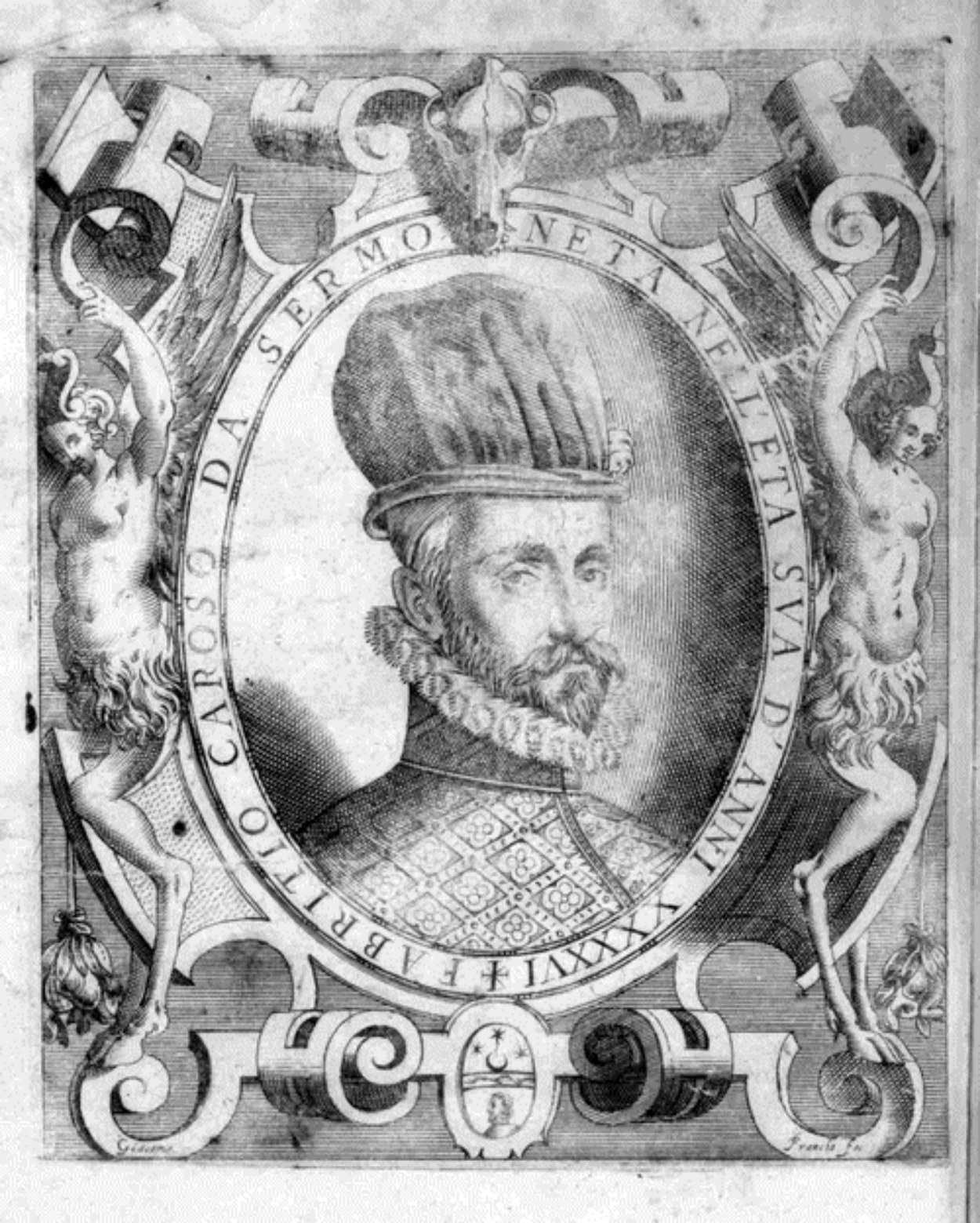
Fabritio Caroso da Sermoneta
- Medium:
- Woodcut
- Dance:
- Notation/Choreography
- Era:
- Pre-1700 (Renaissance/Baroque)
- Collection:
- Il Ballarino (1581)
- Source:
- Library of Congress
- Rights:
- Public domain — free to use, share and adapt.
- Recorded as:
- Public Domain
This image is one of the earliest printed attempts to freeze and teach dance through visual representation. Caroso's woodcuts were revolutionary in treating dance not as a narrative subject for painters but as a technical practice worthy of detailed pedagogical documentation—each plate a lesson in posture, timing, and courtly decorum. For any historian or dancer studying how Renaissance court dance actually worked, this is primary source material of irreplaceable value.
What you are looking at
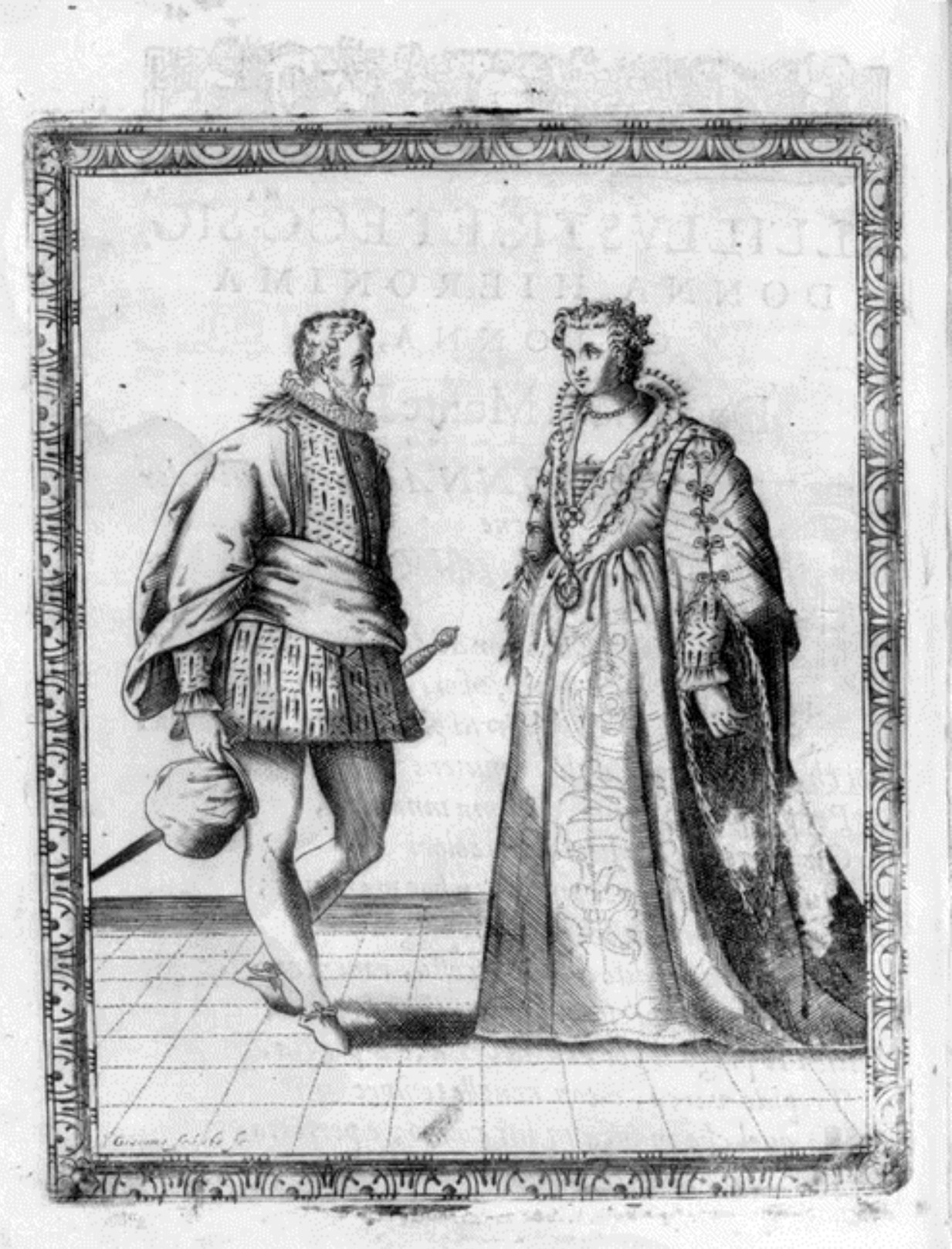
A woodcut depicting a Renaissance Italian couple in formal court dress, positioned facing each other in what appears to be an indoor courtly setting with a tiled floor. The man, on the left, wears ornate Renaissance military-style clothing: a decorative doublet with geometric patterning, a pleated skirt-like lower garment (probably slashed hose or a peplum), and a draped cape or cloak across one shoulder. He holds a plumed hat in one hand and gestures toward the woman with an open palm, his posture suggesting invitation or presentation. The woman, on the right, wears an elaborate gown with a long train, puffed sleeves decorated with embroidery or jewels, a high ruffled collar, and what appears to be a jeweled belt or girdle. Her hair is styled high and crowned. She stands in a composed, formal pose with her hands positioned at her sides. Both figures are rendered with careful attention to textile detail—the man's hose show fine cross-hatching to indicate fabric texture, and the woman's dress displays intricate linear patterns suggesting embroidery or brocade. The setting is minimal but clearly elite: a plain background with a geometric floor pattern establishes a formal interior space. A decorative border frames the entire composition, typical of printed book illustrations of the period.
The dancing
The man's weight appears forward and mobile, his right leg extended in a lunge or stepping position, his upper body angled toward his partner with an open, welcoming gesture. The woman maintains an upright, stationary posture with weight evenly distributed, her body aligned frontally. Their spatial relationship suggests the beginning or presentation moment of a dance—they are not yet in contact, but the man's gesture and forward momentum indicate imminent engagement. The formal, almost theatrical positioning and mutual regard between the figures suggests a structured court dance in which roles and sequences are defined rather than improvised.
The dance depicted
This plate depicts one of the balli or bassadanze catalogued in Caroso's *Il Ballarino*, a foundational printed source for Renaissance Italian court dance. The man's forward lunge and inviting gesture, combined with the woman's formal, receptive stance, suggest the opening of a paired dance, most likely a **pavane** or **galliard**—the two most prestigious court dances of late-sixteenth-century Italy. The careful attention to the man's leg position and the woman's composed readiness indicates Caroso's concern with teaching the precise geometry and deportment required of skilled dancers. This is instructional imagery: the woodcut freezes a specific moment in a choreographed sequence to be learned and replicated.
How it was made
This is a woodcut, a relief printing technique that allowed Caroso's choreographic treatise to circulate in multiple copies across Europe. Woodcut's bold lines and clear contrasts made it ideal for instructional imagery in a printed book—every detail of costume and posture needed to read at small scale and survive multiple printings. The technique's constraints shaped the composition: the figures are silhouetted clearly against a plain background, poses are legible and frontal, and anatomical precision gives way to clarity of line. This was not fine art but a functional teaching tool, one of the first uses of printed images to standardize and transmit dance technique.
About this work
This is a plate from Fabritio Caroso's *Il Ballarino* (Venice, 1581), the most influential printed dance manual of the Renaissance. Caroso documented the balli and bassadanze that defined courtly performance in late-sixteenth-century Italy, combining written choreographic notation with woodcut illustrations of dancers in the moment of performance. This particular plate captures an Italian Renaissance couple at the opening of a paired court dance—the man in ornate military-court dress, the woman in an elaborate gown with jewels and high ruff collar—frozen in the precise geometry and formal deportment that Caroso's technique demanded. The work belongs in a gallery about dance because it is simultaneously a historical document of actual performance practice, a manual for teaching dance technique, and an artifact of how dance knowledge circulated in print before photography.
How to look at it
Pay close attention to the man's right leg: it is extended in a clear stepping or lunging position, and the weight of his body is forward and mobile—this is not a static pose but a moment captured mid-action. Notice too the formality of his gesture: the open palm and upright carriage convey invitation and courtesy rather than passion or spontaneity. The woman's stillness and upright posture are not passivity but composure and readiness—a sign of skill and training in the court dance tradition. Together, the two figures enact a hierarchy of activity and response that was central to Renaissance court dance: the man initiates and displays, the woman receives and reciprocates with measured grace.
The artist
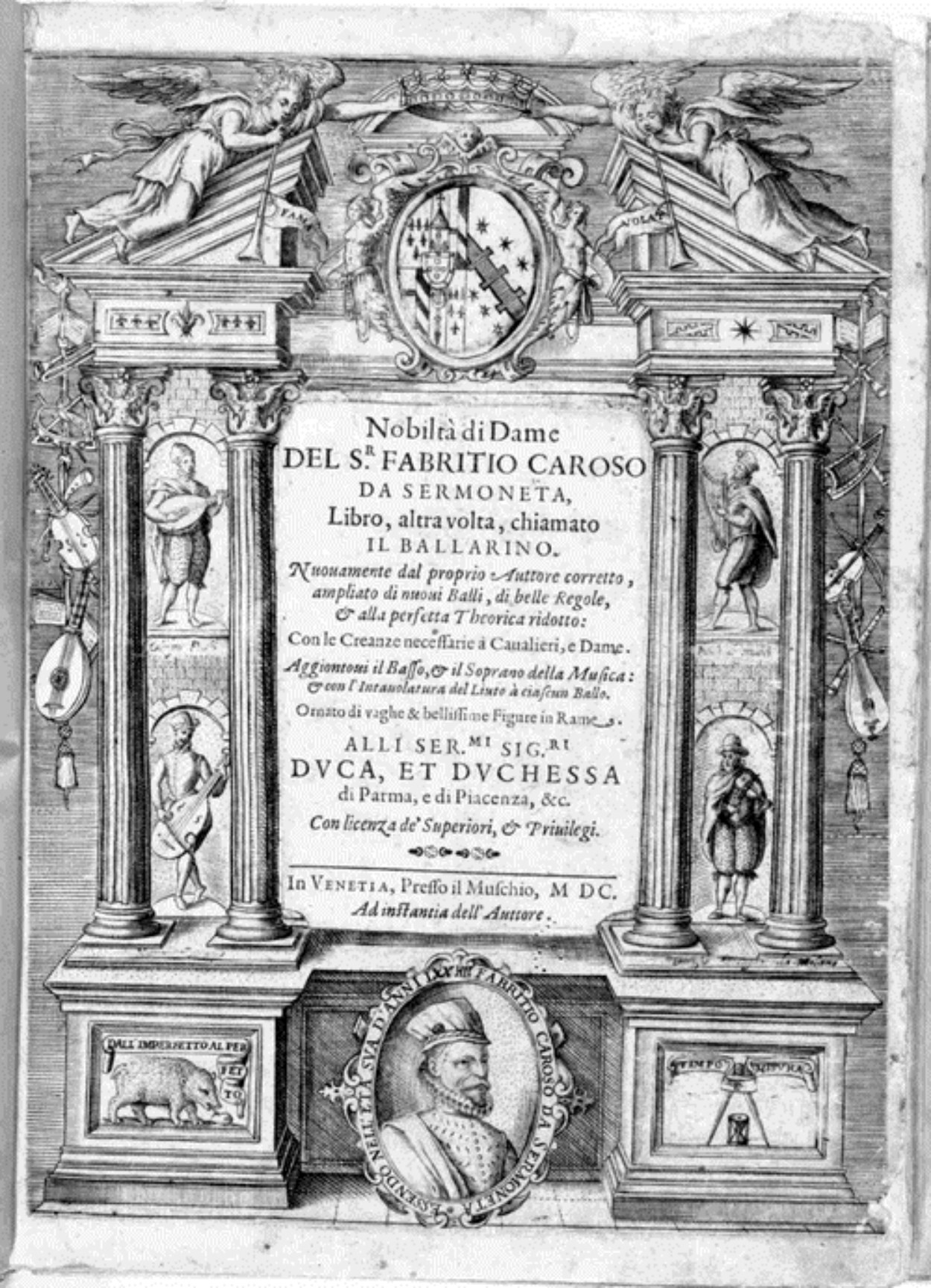
Fabritio Caroso da Sermoneta (c. 1526–after 1605) was an Italian dancing master active in Rome and other Italian courts during the second half of the sixteenth century. *Il Ballarino* (1581) was his first and most celebrated publication; a revised edition, *Nobiltà di dame*, appeared in 1600. Caroso was among the first dancing masters to have his choreographies printed and illustrated for wide circulation, making him central to the professionalization and codification of Renaissance dance. His notation system and pedagogical approach influenced dance instruction across Europe for generations. He wrote for an elite courtly audience but with an eye to permanence: his printed work ensured that his choreographies and technique would outlast any single performance or dancer.
The period
In the late sixteenth century, court dance in Italy was at its peak of refinement and prestige. The balli and bassadanze were not entertainment spectacles but intimate, formally structured dances performed by courtiers as a display of grace, nobility, and discipline. The printing revolution allowed dance—traditionally transmitted orally and kinesthetically from master to student—to enter the realm of documented knowledge. Caroso's *Il Ballarino* appeared at a moment when the Italian Renaissance was consolidating its cultural authority and looking to fix and transmit its achievements in printed form. In the broader history of dance notation and documentation, Caroso's work predates Beaumont and Feuillet's French notation system (which emerged in the 1680s) and remains one of the only detailed records we have of how Renaissance court dance actually looked and was structured.
Where it lives
This is a woodcut plate from *Il Ballarino* (Venice, 1581), one of the foundational printed dance manuals of the Renaissance. The work is held at the Library of Congress and is part of the rare printed heritage of Renaissance dance pedagogy. As one of the 127 plates in Caroso's treatise, this image was both a teaching tool—used by dancing masters and aspiring courtiers to learn technique—and a display of courtly prestige, disseminating Italian Renaissance ideals of grace and nobility.
Dance in this work
Questions about this work
What dance is being shown here?
Caroso's *Il Ballarino* documents many different balli and bassadanze, and without seeing the accompanying text for this specific plate it is difficult to identify which one with certainty. However, the formal posture, the man's forward stepping position, and the stately dress suggest a **pavane** or **galliard**—the two most prestigious court dances of the era. The opening moment of invitation and the rigid, courtly deportment are consistent with both.
Who would have danced these dances?
The balli in Caroso's manual were performed by nobility and wealthy courtiers—primarily aristocratic men and women who used dance as a display of breeding, education, and courtly accomplishment. Dance was not yet a profession; it was a social and political skill, a way of demonstrating grace and obedience to courtly codes. Caroso himself was a dancing master who taught these dances to elite students.
Why is the woman so still?
In Renaissance court dance, the woman's role often involved responding to the man's initiative. Her stillness and composed posture here convey attentiveness and skill—she is ready to move when the dance requires it. This was not a passive role but a trained one, demanding as much precision and control as the man's more visible gestures.
What do the clothes tell us?
The ornate dress—the man's patterned doublet and plumed hat, the woman's jeweled gown and high ruff—confirms this is elite courtly performance. Caroso's dancers wore the full formal dress of the court, not special dance costumes. The clothes themselves were part of the dance: managing the volume and weight of the gown, moving within the constraints of the doublet and hose, were technical challenges the dancer had to master.
More Notation/Choreography artwork