49 works in this view — arrow keys or swipe to move between them.
Dance in Art
Caroso — Dance Plate (plate 17)
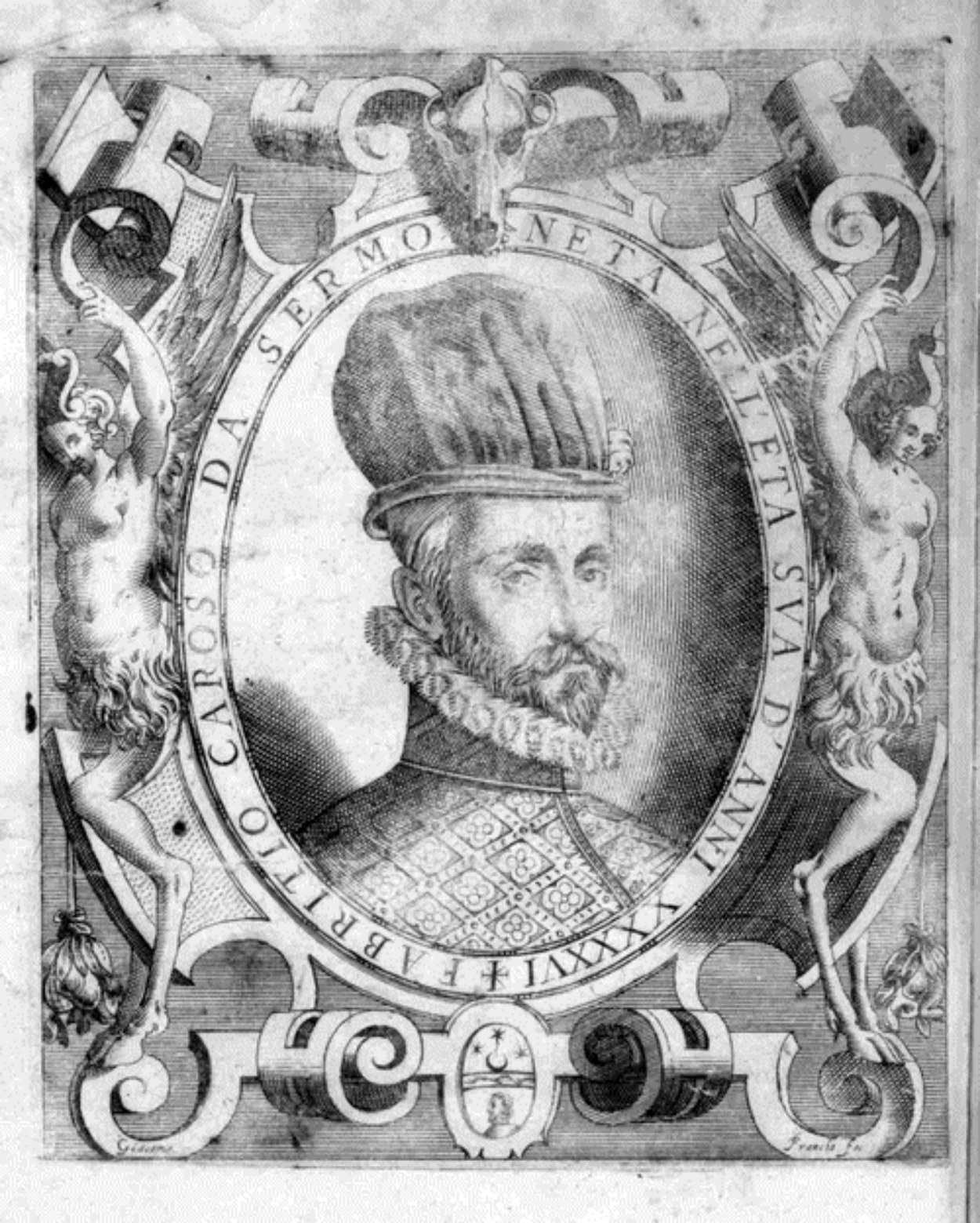
Fabritio Caroso da Sermoneta
- Medium:
- Woodcut
- Dance:
- Notation/Choreography
- Era:
- Pre-1700 (Renaissance/Baroque)
- Collection:
- Il Ballarino (1581)
- Source:
- Library of Congress
- Rights:
- Public domain — free to use, share and adapt.
- Recorded as:
- Public Domain
For historians of Renaissance dance, this plate is evidence—not merely illustration—of how a specific courtly dance was structured, initiated, and presented. The woodcut shows us not a naturalistic moment but a codified pose; learning to read that pose is learning to read the grammar of Renaissance courtship and power. For anyone interested in how dance was transmitted before film or video, Caroso's manual and its plates represent the state of the art: expensive, carefully produced, and designed for a literate elite who could afford both the book and the leisure to study it.
What you are looking at
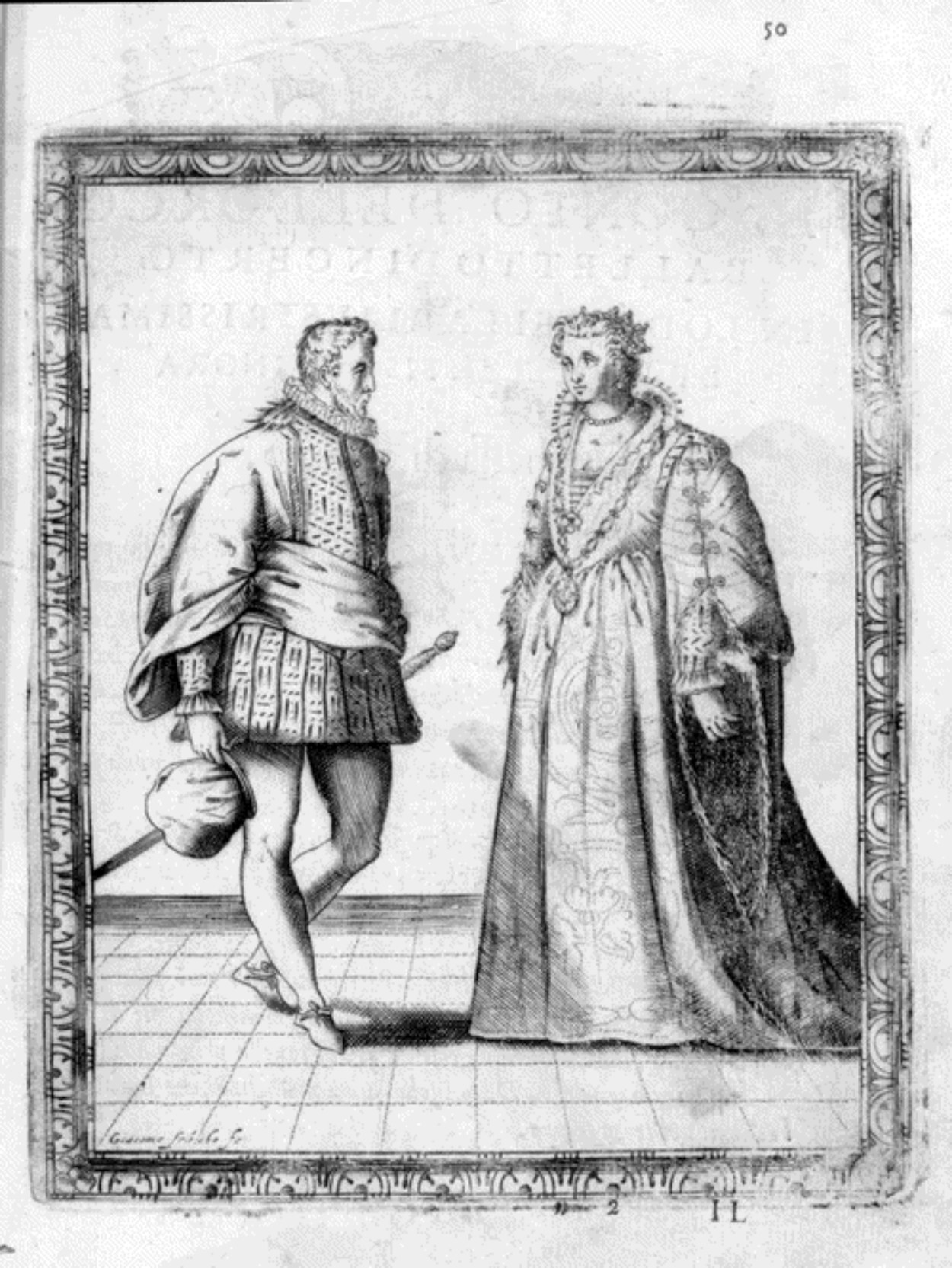
A woodcut depicting a couple in elaborate Renaissance court dress facing one another in a moment of formal interaction or salutation. The man, positioned left and shown in three-quarter view, wears a short pleated tunic with decorative banding, a patterned doublet, and close-fitting hose; he holds a feathered hat in one hand and gestures expressively with the other. The woman, on the right, stands in a long gown with patterned fabric and fur-trimmed sleeves, wearing a jeweled collar and an elaborate headdress adorned with curled feathers or ornamental coils. Both figures occupy a shallow stage space defined by a tiled floor and framed by an ornate classical border. The composition is frontal and symmetrical, presenting the two dancers as complementary figures in a formal court ritual rather than in dynamic motion.
The dancing
The man's weight appears shifted, with one leg extended, while his raised arm suggests a moment of address or invitation—a typical courtly salutation. The woman stands upright with her body presented frontally, her arms at rest. Neither figure displays the active footwork or turn typical of social dance; instead both are posed in the formal, mannered positions that characterized court etiquette. The spatial relationship between them—close but not in contact—suggests the opening moment of a dance or a formal greeting preceding one.
The dance depicted
This is a documentation of Renaissance Italian court dance, most likely depicting either a pavane (a stately processional dance) or the opening stance of a galliard or other courtly measure. The image captures the moment of approach or salutation that preceded the actual dance figures—a standard convention in choreographic notation of the period. Caroso's *Il Ballarino* catalogued the court dances of late 16th-century Venice and Milan; this plate represents one of the named choreographies with prescribed steps and patterns that the manual's readers were expected to learn and perform.
How it was made
This is a woodcut, a relief-printing technique that allowed for relatively economical reproduction and wide circulation of the manual. Woodcut's linear clarity and capacity for fine detail made it ideal for rendering the intricate pleating, banding, and ornamental detail of Renaissance court dress—elements essential to identifying and distinguishing one dance from another in a period when costume was inseparable from movement vocabulary. The decorative border is typical of printed books of the period and signals the work's origin as part of a bound, prestigious publication.
About this work
Caroso's *Il Ballarino* (1581) is one of the two most authoritative written and illustrated sources for Renaissance Italian court dance, surpassed only by Thoinot Arbeau's *Orchésographie* (1588). This plate presents one of the choreographies catalogued in the manual—a named dance with a prescribed sequence of steps that courtiers were expected to master and perform. The woodcut does not depict the dance in action but rather the formal moment of approach and greeting that opened it, a compositional choice that was standard in early modern dance notation. The emphasis falls entirely on costume, posture, and the rituals of courtly address, making clear that Renaissance court dance was as much about deportment and social hierarchy as it was about footwork.
How to look at it
Notice first the dress: every pleating, every ornament, every jewel is rendered with precision because costume was part of the dance's identity and syntax. The man's gesture is not vigorous but controlled and courtly—the moment frozen is one of address and respect, not kinetic climax. The woman's stillness and frontality mirror conventions of feminine deportment in courtly contexts. The tiled floor and the formal frame signal that this is a documented, repeatable sequence rather than a spontaneous social moment—look at the composition as notation, not as natural movement.
The artist
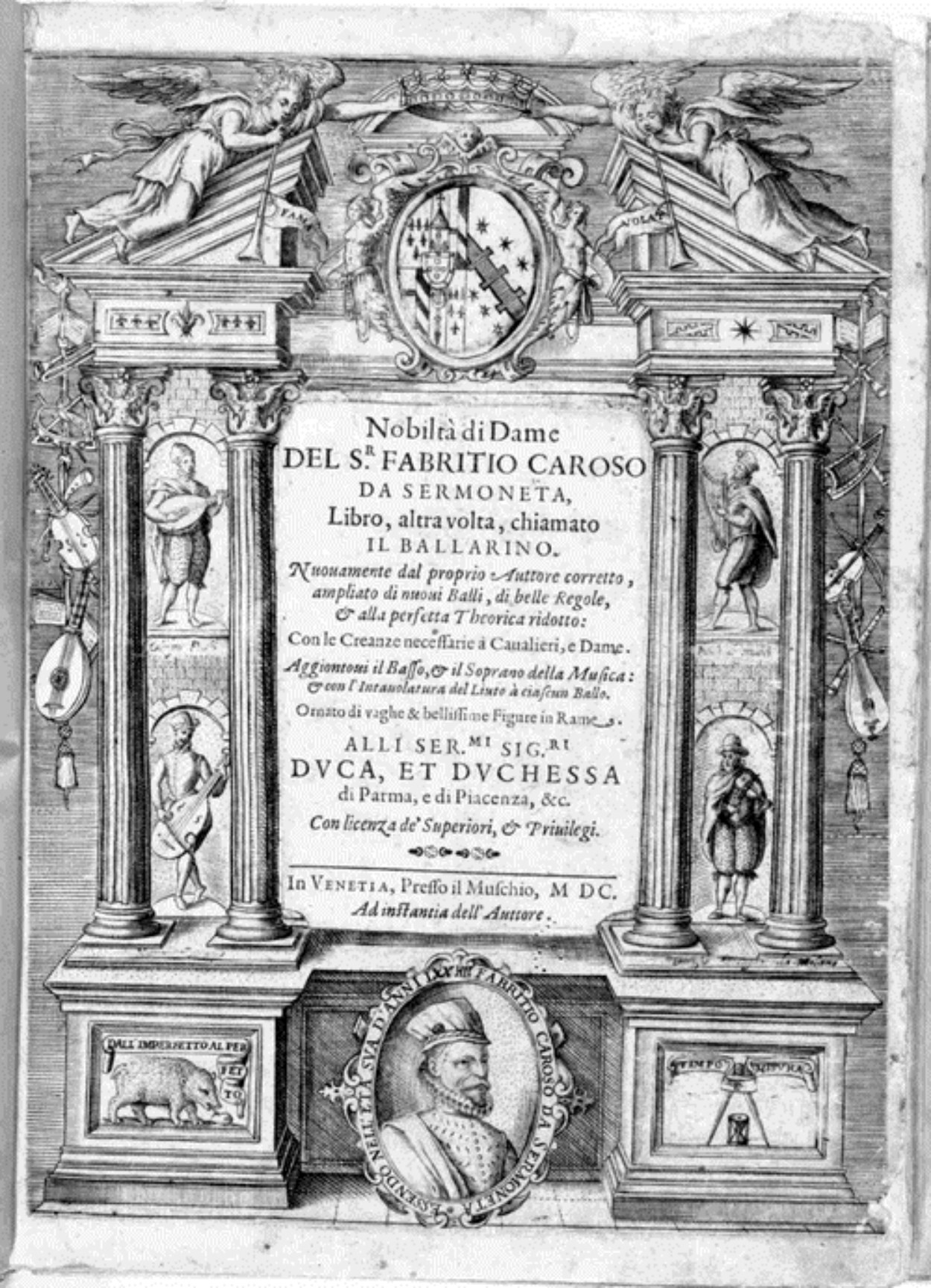
Fabritio Caroso da Sermoneta (c. 1535–c. 1605) was a Venetian choreographer and dancing master of the late Renaissance whose manuals are foundational texts in dance history. *Il Ballarino* (1581) was followed by an expanded edition, *Nobiltà di dame* (1600). Caroso's work represents the peak of the Italian tradition of courtly dance and its documentation; his systematic cataloguing of named dances with prescribed steps, detailed costume notes, and woodcut illustrations set a standard for dance transmission that influenced practice across Europe.
The period
The late 16th century saw a flowering of dance manuals across Europe, concurrent with the development of new notational systems and printing technologies that made such manuals feasible. In Italy, the tradition of court dance had been cultivated since the 15th century and reached its most sophisticated form in the courts of Venice, Milan, and the papal states. Dance was a courtly accomplishment tied to display, diplomacy, and the performance of social rank; manuals like Caroso's were both practical guides for practitioners and prestige objects for patrons. The period coincides with the height of the Italian Renaissance and the consolidation of court culture as the dominant mode of aristocratic life.
Where it lives
This plate is from *Il Ballarino*, a printed book published in Venice in 1581 by the printer Giacomo Vincenti. The work is held in the Library of Congress and is part of a growing digital collection of early modern dance manuals and related materials. It represents one of hundreds of woodcut plates in Caroso's manual, each documenting a named dance.
Dance in this work
Questions about this work
What dance is this showing?
We cannot identify the specific named dance from the image alone without reference to Caroso's accompanying text, which would have described the precise sequence of steps and figures. The plate shows the opening salutation—a formal moment that opened many Renaissance court dances. The text of *Il Ballarino* names the dance and prescribes its choreography; this image is the visual record of how it should begin.
Is this a still from a real performance?
No. This is a stylized, posed representation designed to teach a code of movement and deportment. The couple is arranged in a formal, symmetrical composition that would never occur naturally in a dance; it is a notation device. Caroso's plates are teaching tools, not documentary images of an actual moment.
What was Renaissance court dance like to dance?
Renaissance court dances were governed by strict rules of posture, spacing, and sequencing. They were slow and processional (like the pavane) or incorporated quick, intricate footwork (like the galliard). They were performed by trained courtiers in formal dress and were as much about displaying rank and refinement as about movement. The dances were learned from written and illustrated manuals like this one.
Why does the woman look so stiff?
Formal posture and minimal movement were signs of courtly refinement and feminine virtue. The woman's frontality and stillness reflect the conventions of Renaissance court etiquette and the limited role women were afforded in the social choreography of the court. Her costume and composure were what mattered most.
More Notation/Choreography artwork