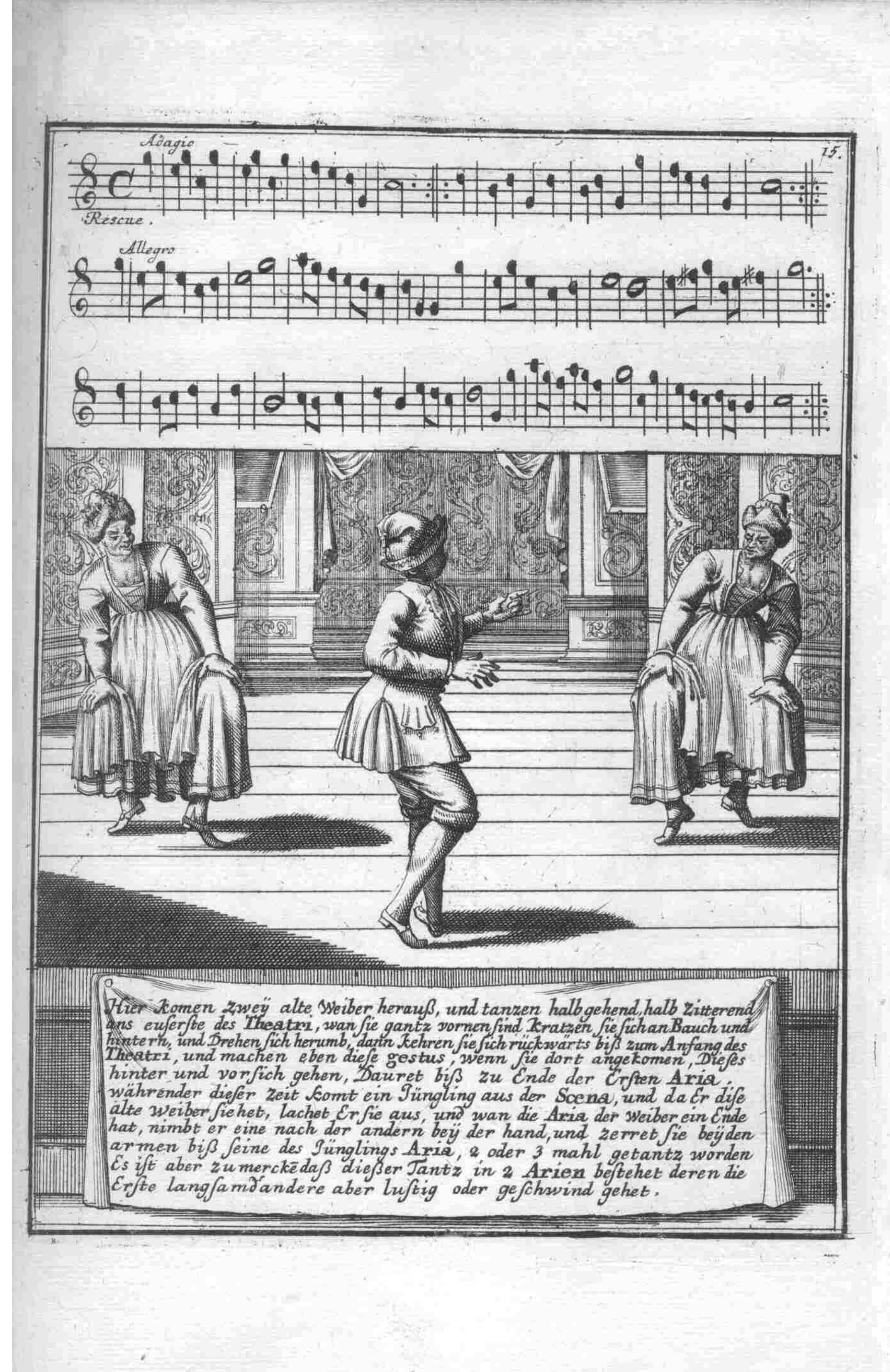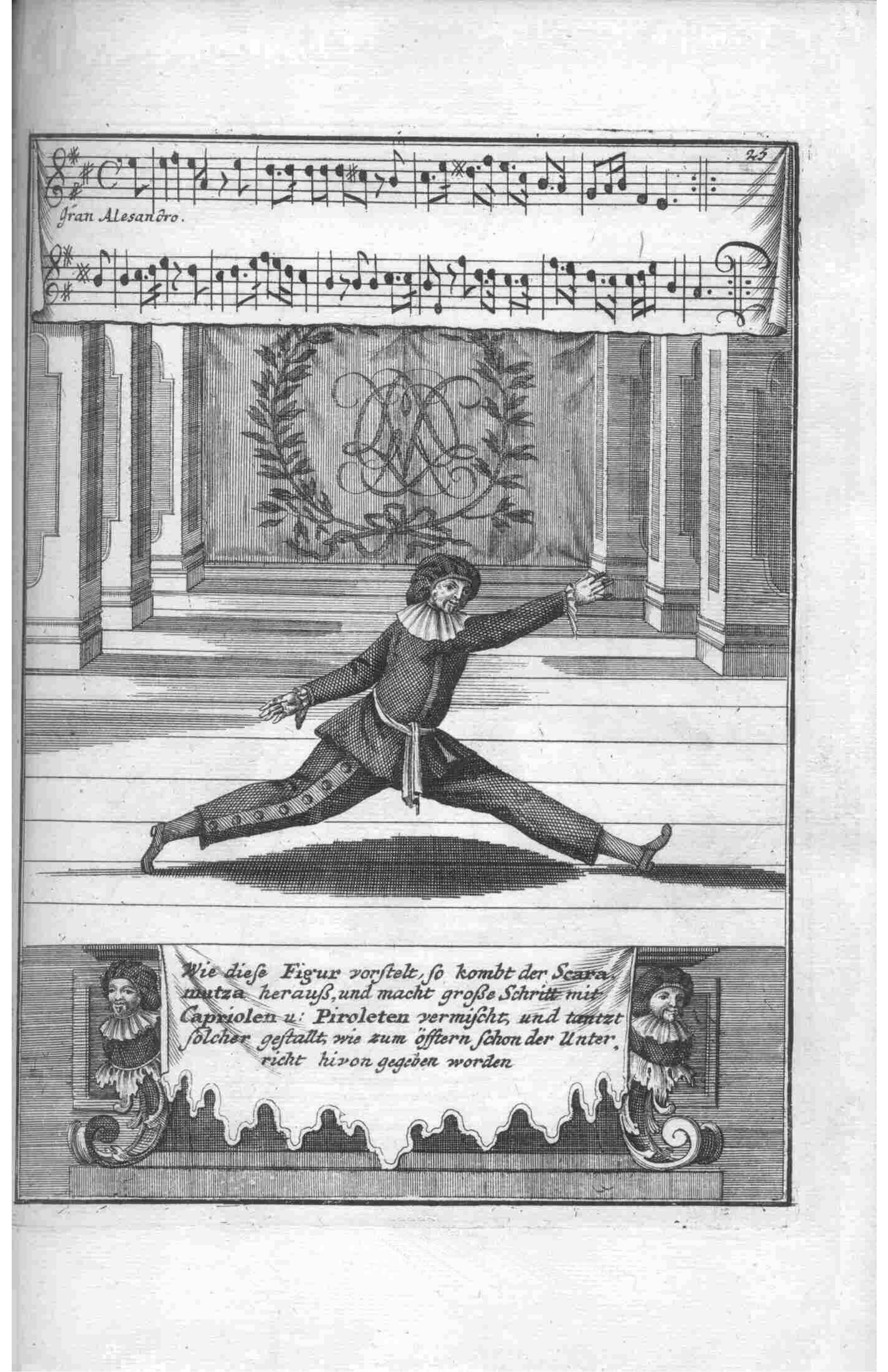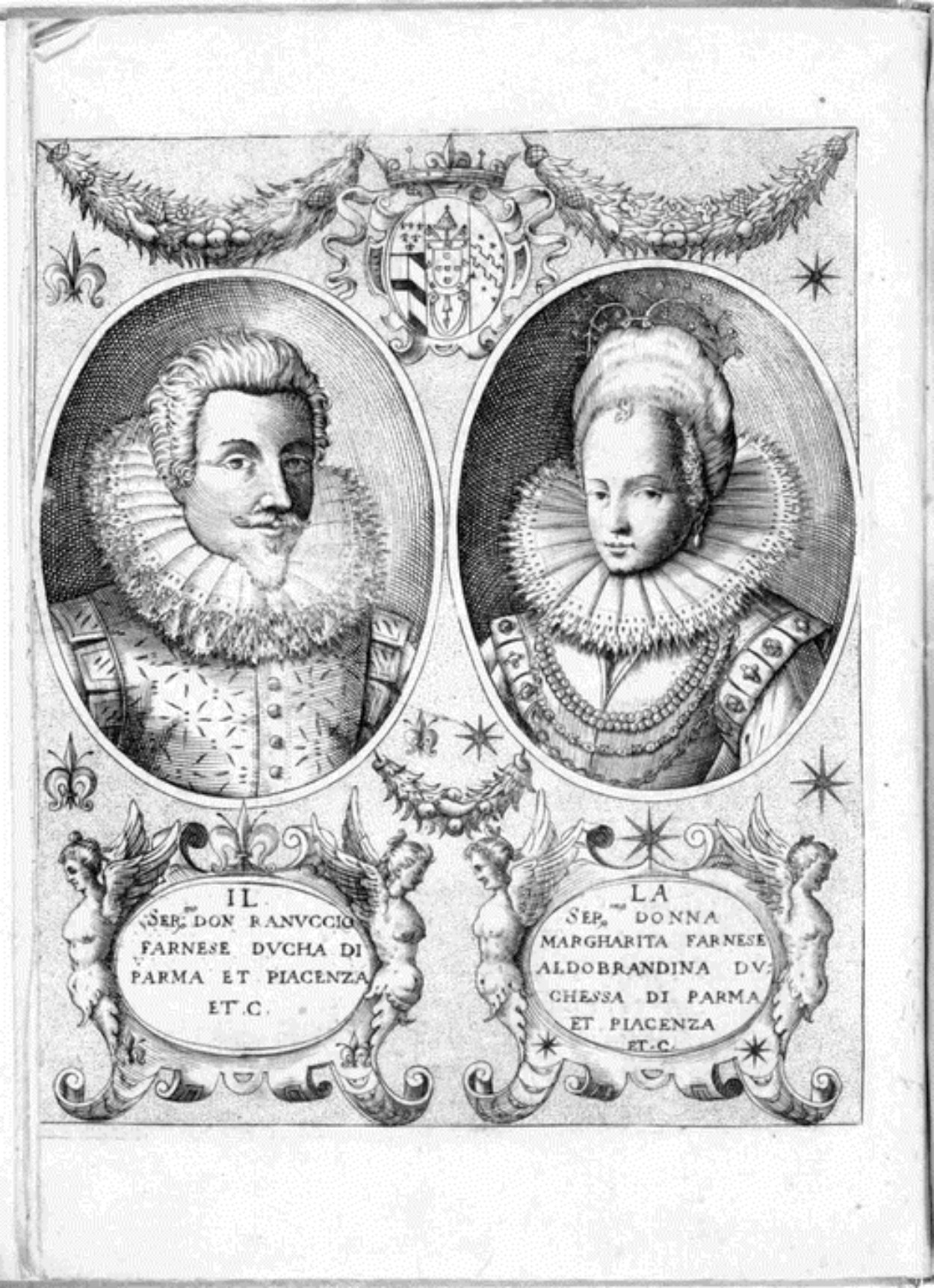
49 works in this view — arrow keys or swipe to move between them.
Dance in Art
Caroso — Dance Plate (plate 21)
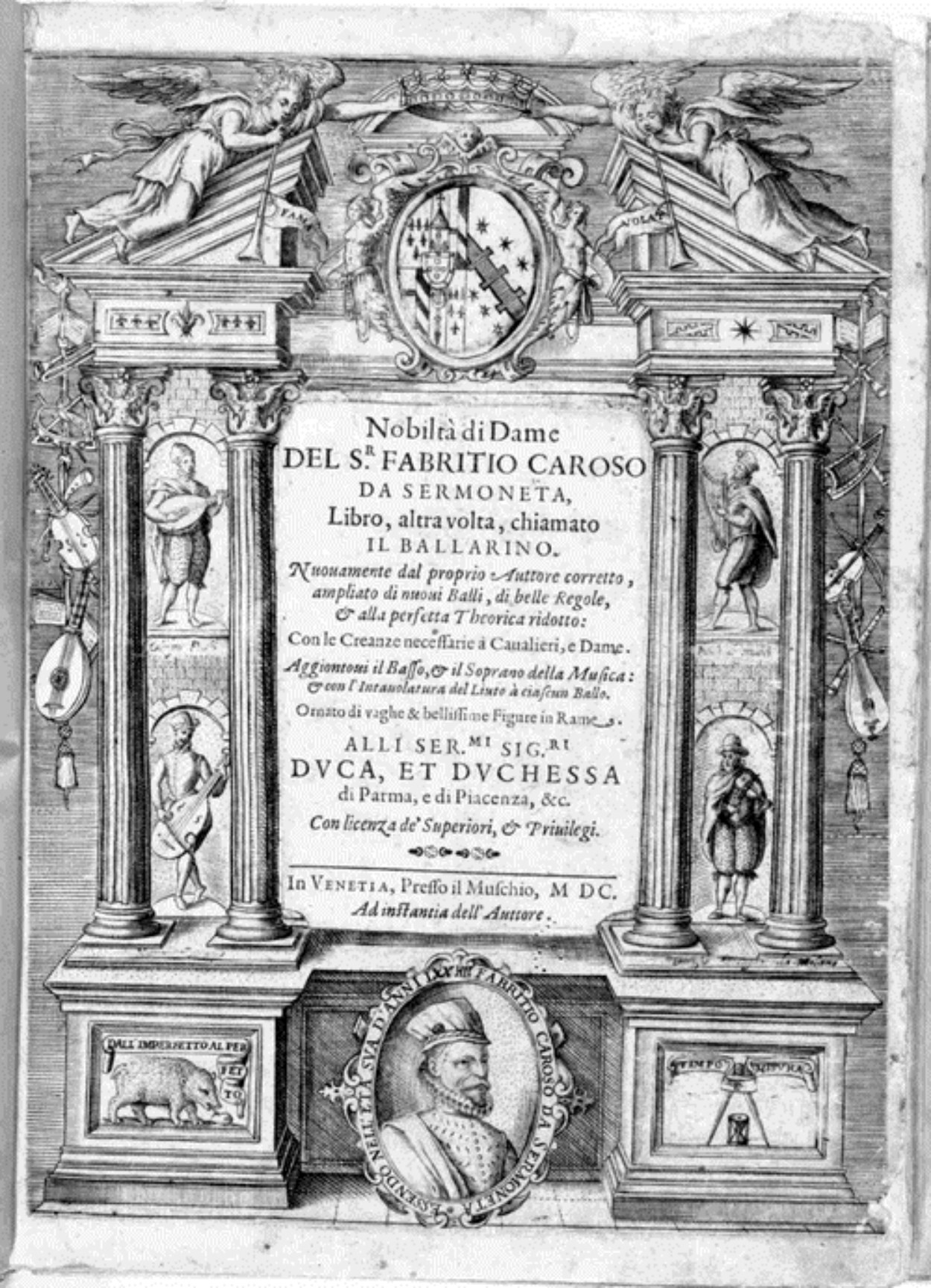
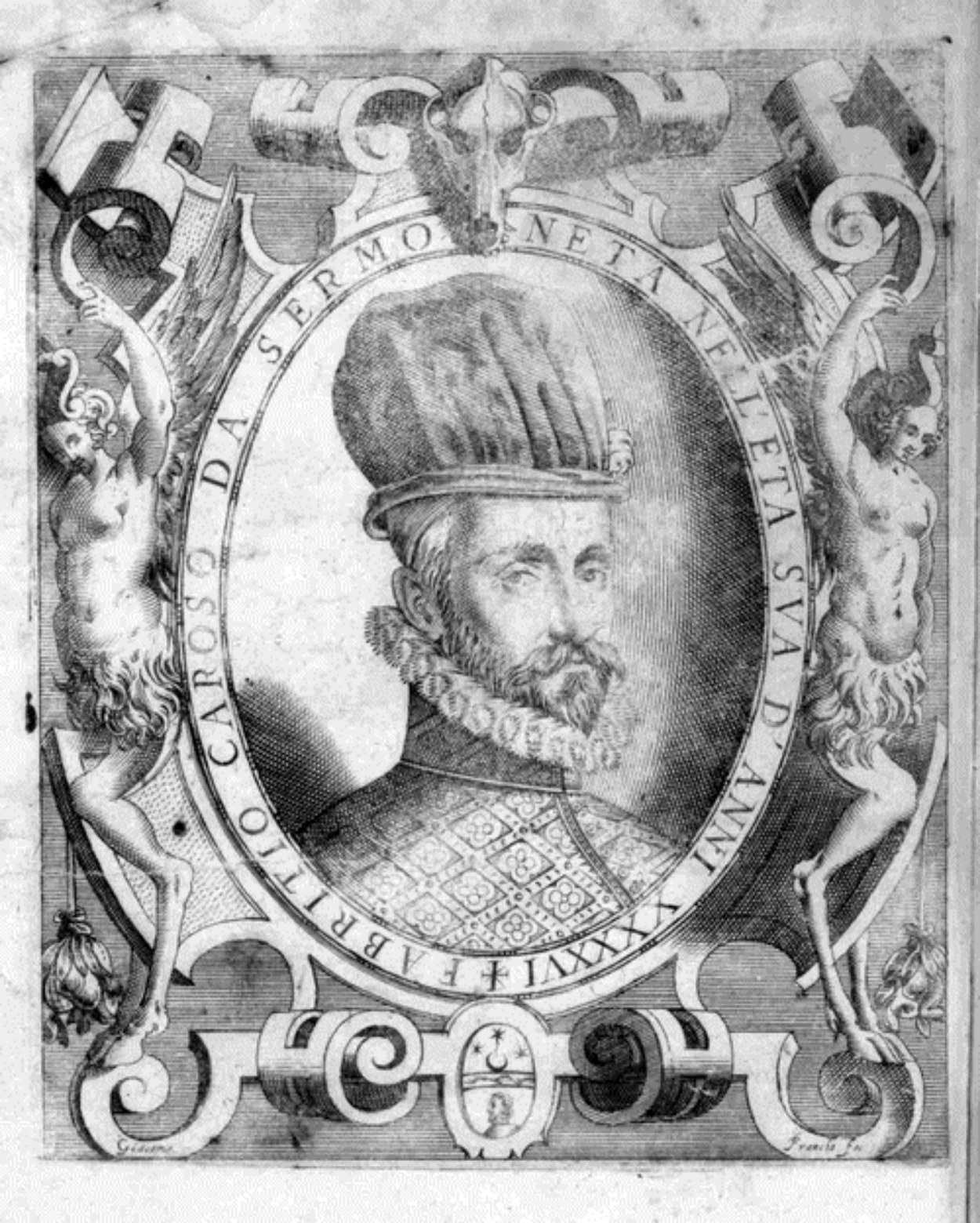
Fabritio Caroso da Sermoneta
- Medium:
- Woodcut
- Dance:
- Notation/Choreography
- Era:
- Pre-1700 (Renaissance/Baroque)
- Collection:
- Il Ballarino (1581)
- Source:
- Library of Congress
- Rights:
- Public domain — free to use, share and adapt.
- Recorded as:
- Public Domain
For dance historians, this is a primary source documenting actual Renaissance court choreography and the movement vocabulary that shaped European dance for centuries. For anyone interested in the visual culture of the Renaissance court, it reveals how dance was taught, recorded, and understood as a mark of noble status and courtly sophistication.
What you are looking at
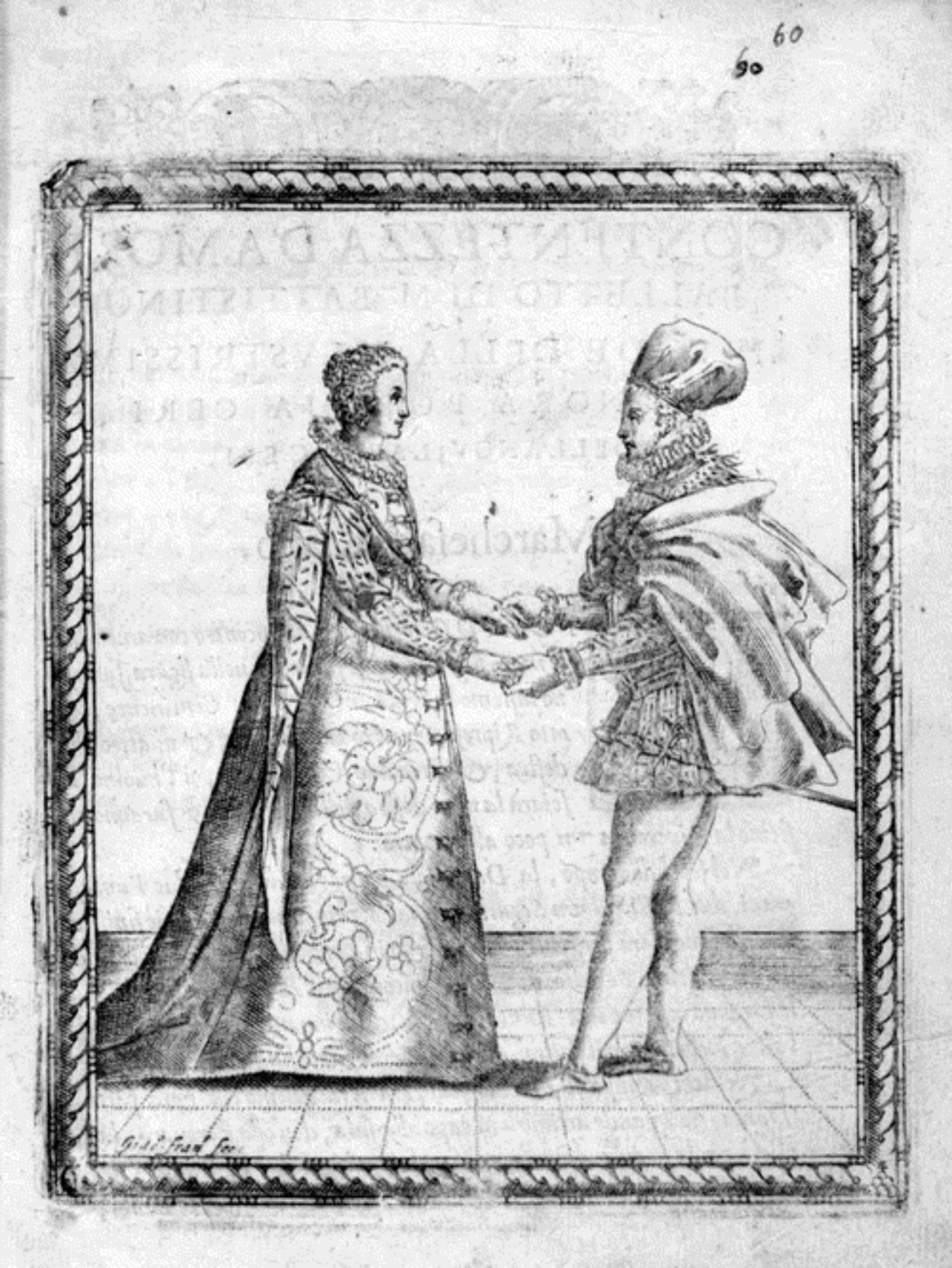
A woodcut depicts two figures in an ornate Renaissance interior, frozen in a moment of formal courtly interaction. On the left stands a woman in an elaborately patterned gown with a long train that extends behind her; the dress is richly embroidered or brocaded with scrollwork motifs. She wears her hair in a fashionable upsweep typical of late-16th-century Italian court dress. On the right is a male figure in shorter doublet and hose, with a plumed cap and a draped cloak or cape over one shoulder. The two face each other with hands joined or nearly joined at chest height, their bodies angled toward one another in a formal, symmetrical pose. The setting is minimal—a plain floor and neutral background—which concentrates attention entirely on the figures and their precise positioning. The light is even and shadowless, as is typical of woodcut, and the engraver has used fine parallel hatching to suggest fabric texture and volume.
The dancing
Both dancers are upright and composed, with weight evenly distributed. Their hands meet at the center of the composition in what appears to be a formal greeting or opening position rather than a closed ballroom hold. The woman's posture is particularly erect, with her shoulders back and her free arm positioned naturally at her side. The man is slightly turned in profile, his weight forward on his leading leg, suggesting he may be about to step or has just stepped into position. The vertical alignment and careful symmetry of the pose suggest a formal, prescribed moment from a choreographed sequence rather than a spontaneous movement.
The dance depicted
This is almost certainly a dance from an Italian Renaissance court repertoire—the dances documented in Caroso's *Il Ballarino*. The formal hand-joining and upright posture are consistent with the basse danse or one of its Italian variants (such as the pavane or galliard), which were the foundation of courtly dance in late-16th-century Italy. The moment captured appears to be a salutation or opening formation rather than a turn or traveling step. Without access to the text accompanying this plate in Caroso's manual, the specific dance cannot be identified with certainty, but the elegance and formality of the pose, combined with the publication context, indicate this represents one of the dignified processional or salutation dances that defined Renaissance court performance.
How it was made
This is a woodcut, a relief printing technique well suited to the clear, bold lines and high contrast needed for instructional illustration. Woodcuts allowed for mass production of copies and made Caroso's dance manual accessible to a broad courtly audience across Europe. The technique's strength lies in its ability to render costume detail and overall compositional clarity; the parallel hatching creates the illusion of fabric drape and three-dimensionality without the subtlety possible in engraving. The sharpness of the line work and the precision of the pose suggest the engraver was working from a careful drawing, likely by Caroso himself or a dance master under his direction, ensuring accuracy for readers learning the choreography.
About this work
This woodcut is one of the instructional plates from Fabritio Caroso's *Il Ballarino*, a foundational Renaissance dance manual published in Venice in 1581. It documents a moment from one of the courtly dances performed in the Italian princely courts of the late 16th century. Rather than a narrative or theatrical scene, this is a technical illustration—a frozen moment designed to teach dancers the precise positioning and deportment required for Renaissance court dance. The work is both a historical record of movement and a window into the highly codified aesthetics of courtly performance, where formal posture, luxurious dress, and controlled gesture communicated social status and courtly refinement.
Caroso's manual was the most widely circulated dance instruction book of its era, consulted by courtiers and dancing masters throughout Europe. This plate exemplifies the publication's dual purpose: to preserve choreographic knowledge in an age before notational systems, and to disseminate aristocratic culture and standards of behavior through the medium of print.
How to look at it
Attend to the precise placement of the hands and the alignment of the bodies: this is not casual or expressive movement, but a moment of formal presentation. The woman's elaborate dress and composed posture embody the aristocratic ideal of dignified restraint; her gown is as much part of the dance as her body, requiring careful management as she moves. Notice the symmetry of the composition and the careful balance of the two figures—this reflects the Renaissance love of proportion and harmony in both dance and visual art. The neutrality of the setting directs all attention to the human figures and their formal relationship, a hallmark of instructional illustration.
The artist
Fabritio Caroso da Sermoneta (c. 1526–1605) was an Italian dance master and theorist whose *Il Ballarino* (1581) and its expanded revision *Nobiltà di dame* (1600) were the most authoritative records of Renaissance Italian court dance. He was active in Rome and at various Italian courts, and his manuals were consulted and copied throughout Europe well into the 17th century. Caroso's approach combined practical instruction with an ideology of courtly elegance; his dances were designed to display the dancer's control, nobility, and refined taste. The woodcuts in his manuals were executed with care to ensure clarity for readers attempting to learn from the page.
The period
The late 16th century saw an explosion of printed dance manuals, driven by the rise of the Renaissance court as a center of cultural production and the printing press as a technology for distributing knowledge. In Italy, the basse danse and its variants (pavane, galliard, volta) had evolved into increasingly complex courtly forms. Dance was understood as essential to aristocratic education and social competence—a way of displaying grace, control, and adherence to courtly values. Caroso published *Il Ballarino* at a moment when Italian dance culture was at its height, and his manual helped codify and export that culture. Visually, the woodcut technique was ideal for instructional purposes; the bold lines and clear compositions made the plates easy to read and copy, facilitating the spread of Caroso's choreography.
Where it lives
This woodcut is from *Il Ballarino*, Fabritio Caroso's printed dance manual published in Venice in 1581. The work is held by the Library of Congress. It is one of a series of instructional plates integrated into the text to illustrate specific dances and movements.
Dance in this work
Questions about this work
How do we know what dance this is?
The plate is numbered (plate 21) and keyed to the text of *Il Ballarino*, which describes the specific dance and its choreography. Without seeing the text alongside the image, the precise identity of the dance cannot be certain, but the formal hand-joining and upright posture are consistent with the basse danse or a related Italian court dance. The publication context and Caroso's systematic approach make it clear this represents an actual, teachable choreography rather than a generic 'dancing couple.'
Why is the woman's dress so elaborate?
Aristocratic women's dress in the Renaissance court was extremely ornate and costly, a visible marker of status and wealth. The embroidered or brocaded gown shown here would have been difficult and expensive to make, and dancing in such a garment required specific skills—managing the train, maintaining posture despite the weight and restriction of the fabric. Caroso's dances were designed with this dress in mind, and the discipline required to move gracefully in such clothes was itself part of the courtly ideal.
What is this woodcut teaching?
The plate freezes a specific moment in a choreographed dance—in this case, what appears to be a formal greeting or opening formation. Dancers using the manual would study the positioning of the hands, the angle of the bodies, the posture, and the distance between the partners. They would then learn the steps that preceded and followed this moment by reading the text. The image thus combines the visual clarity of a frozen moment with the textual guidance needed to execute the full choreography.
How was this woodcut made?
A woodblock was carved in relief, with the lines and areas meant to print raised and the background recessed. The block was then inked and pressed onto paper. Woodcuts allow for sharp, clear lines and bold contrasts, ideal for instructional purposes. Once carved, a single block could be used to print hundreds or thousands of copies, making Caroso's manual affordable and distributable in ways that manuscript copies could never be.
More Notation/Choreography artwork