49 works in this view — arrow keys or swipe to move between them.
Dance in Art
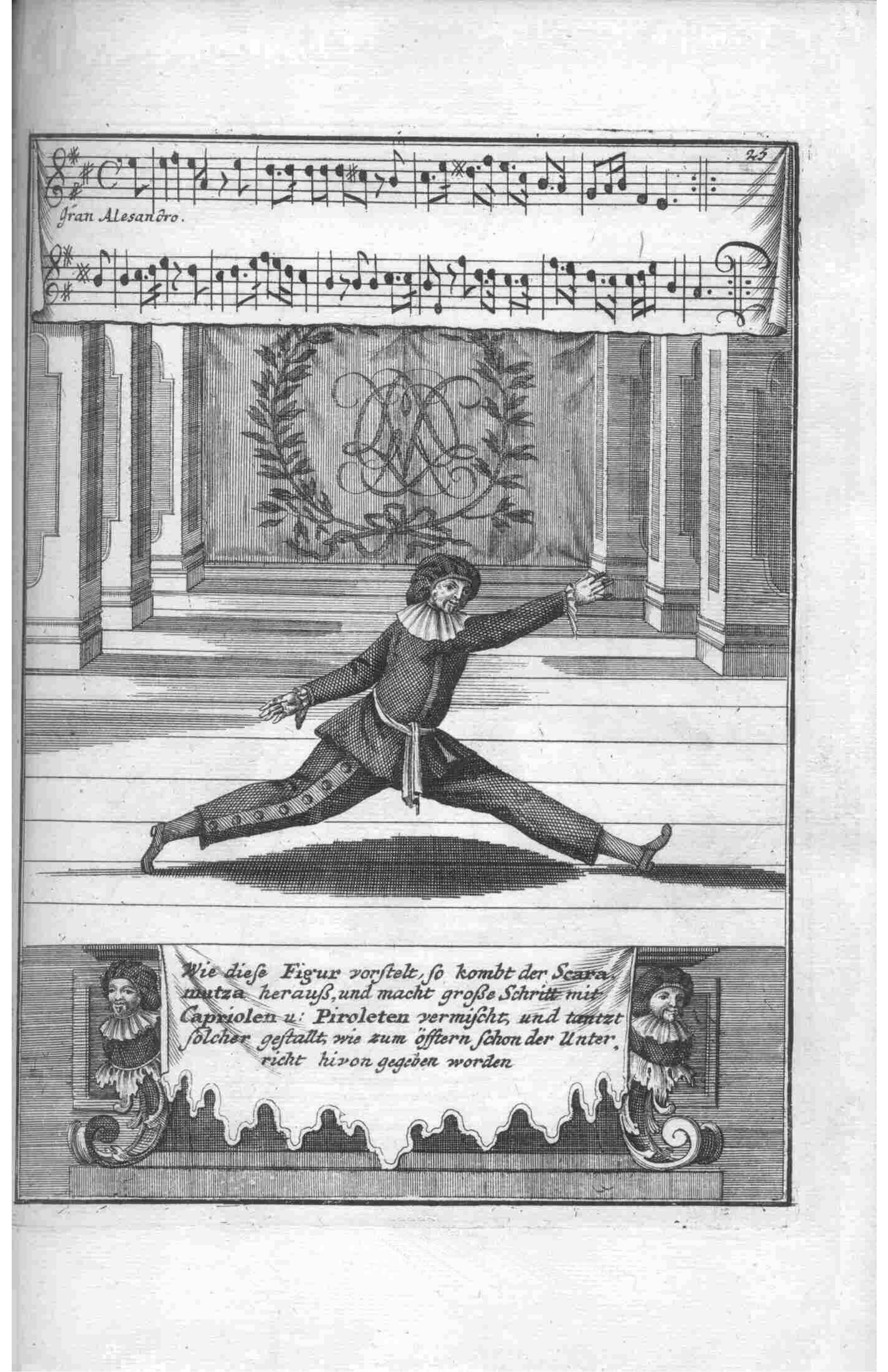
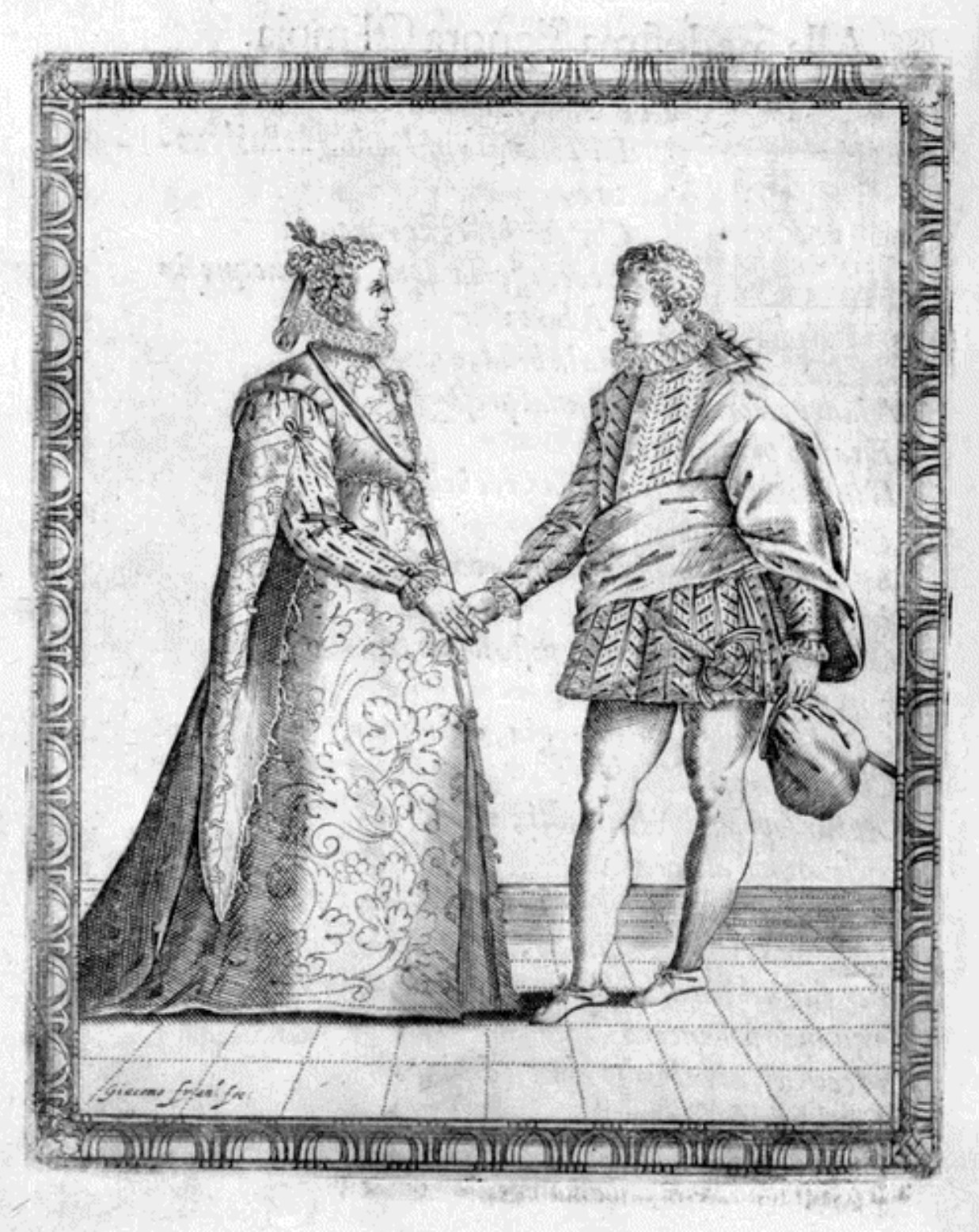
Caroso — Dance Plate (plate 23)
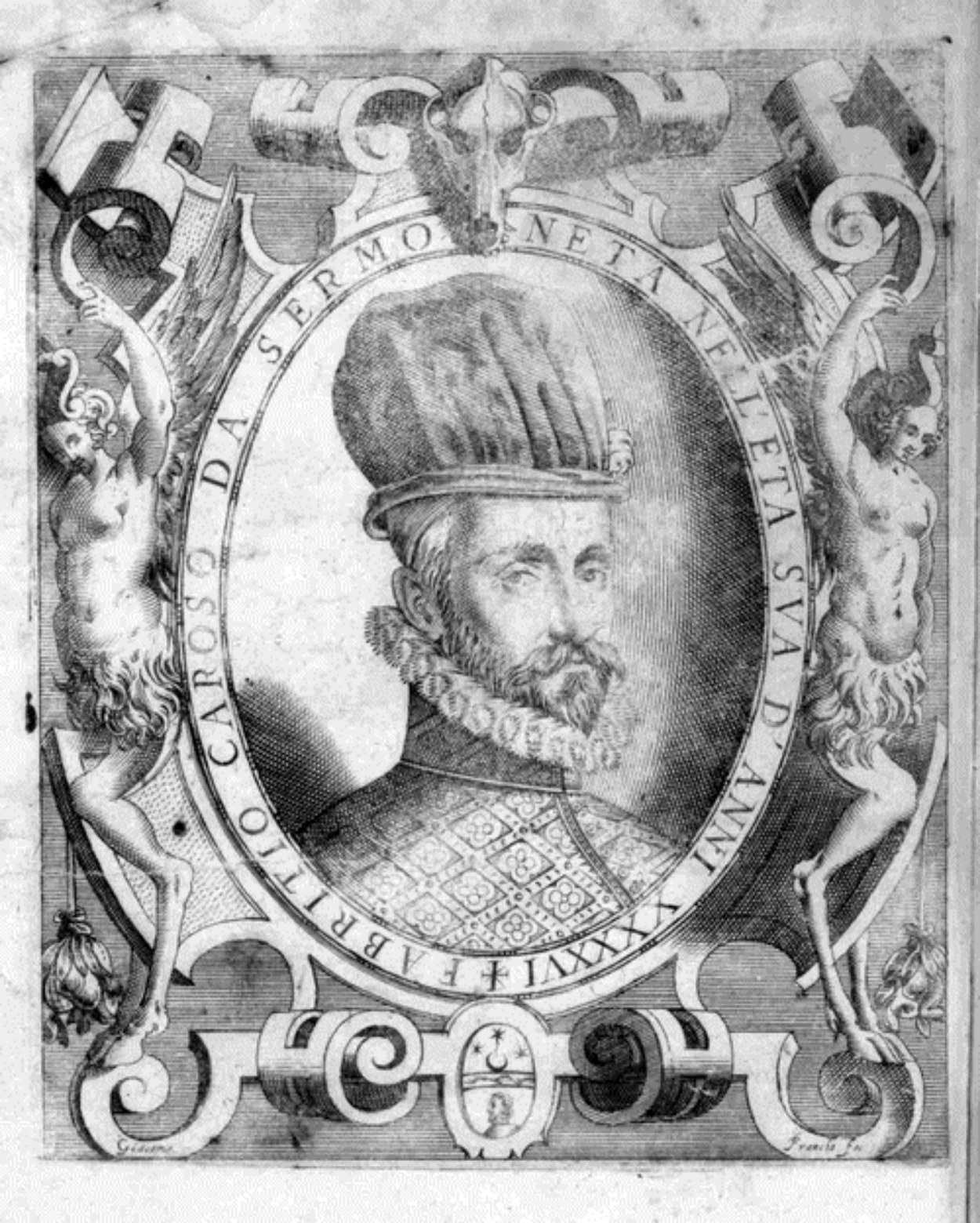
Fabritio Caroso da Sermoneta
- Medium:
- Woodcut
- Dance:
- Notation/Choreography
- Era:
- Pre-1700 (Renaissance/Baroque)
- Collection:
- Il Ballarino (1581)
- Source:
- Library of Congress
- Rights:
- Public domain — free to use, share and adapt.
- Recorded as:
- Public Domain
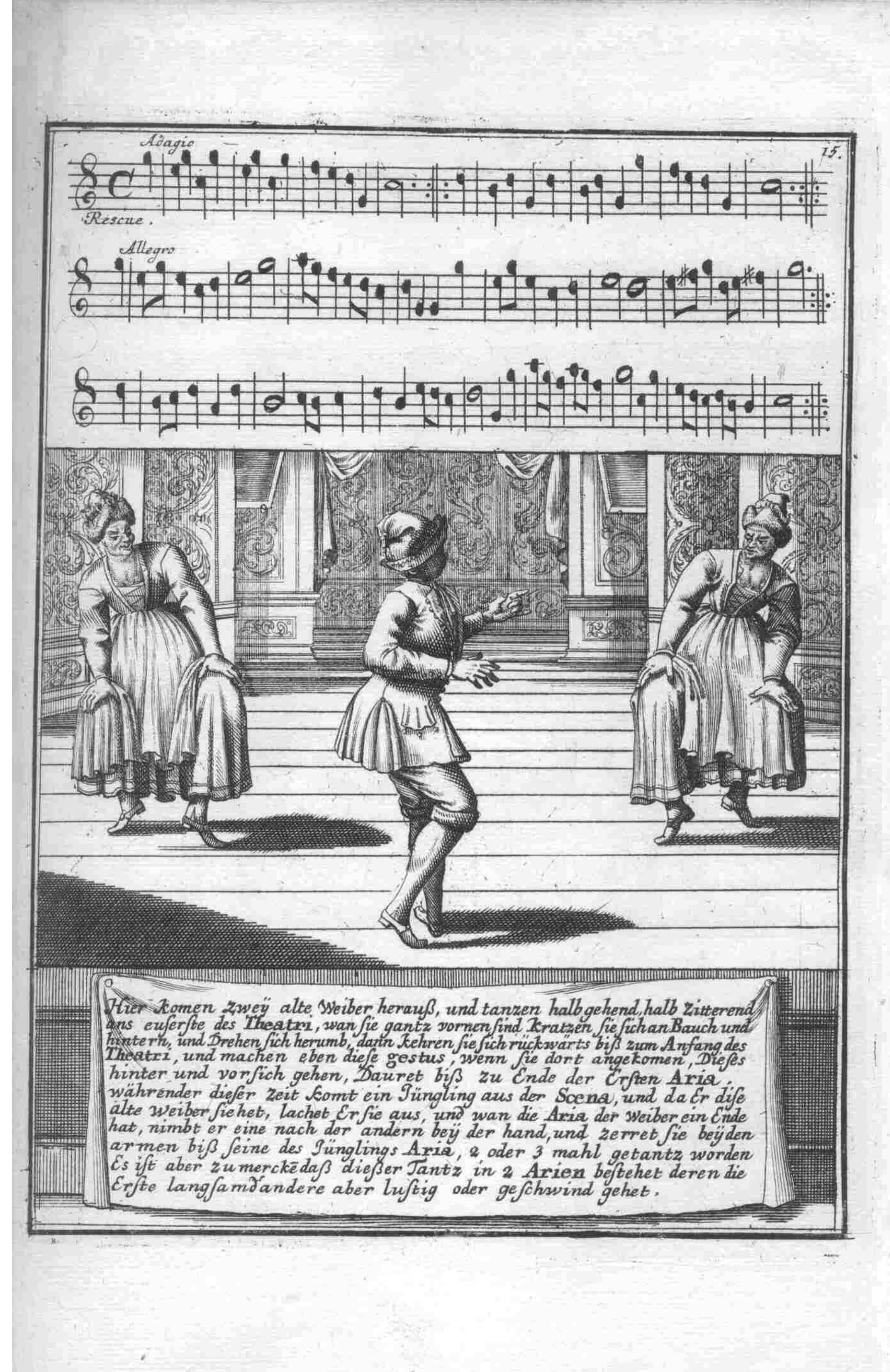
For historians of Renaissance dance and for dancers reconstructing period technique, Caroso's plates are invaluable primary evidence of how courtly dance was actually executed — what the body did, how partners related, what the aesthetic values were. This image captures a moment frozen in the act of documentation: the artist is not depicting a moment of natural human behavior, but rather a carefully posed demonstration of correct form, making it one of the earliest and most precise records of European social dance technique.
What you are looking at
A woodcut depicting two richly dressed figures in an interior space defined by a checkered floor. On the left stands a woman in an elaborate gown with a high collar, her dress densely patterned with scrollwork embroidery; a long train extends behind her and her hair is bound in an ornamental net. On the right stands a man in doublet and hose, his garment intricately decorated with geometric patterning, and he wears short breeches. The two figures face each other in profile, their right hands clasped in what appears to be a formal greeting or dance position. The scene is framed by a decorative border typical of Renaissance woodcut ornament. The composition presents a moment of courtly interaction — whether a dance hold, a ceremonial greeting, or the introduction to a choreographed sequence — rendered with the precise linear detail characteristic of woodblock printing.
The dancing
The two dancers stand upright with controlled posture, neither figure leaning or shifting weight. Their bodies are presented in profile and nearly face-to-face, with joined right hands at approximately waist height. The woman's arm is extended at a moderate angle; the man's mirrors hers. Neither figure displays the dynamic weight shift or lifted carriage of active movement — both are presented as if frozen in a formal position or at the moment of initial contact. The composition emphasizes stillness and symmetry rather than momentum.
The dance depicted
This is a dance demonstration from Caroso's *Il Ballarino*, the foundational choreographic manual of late Renaissance Italian court dance. The plate illustrates one of the named dances catalogued in the text — likely a pavane, galliard, or volta based on the formal hand-hold and upright carriage typical of Cinquecento court dances. The joined-hands position and the deliberate, static presentation suggest Caroso is documenting an opening position or a specific moment in a choreographed sequence. The couple's formal dress and the interior setting confirm this as aristocratic social dance of the highest refinement, performed at court rather than in popular contexts.
How it was made
This is a woodcut, a relief-printing technique in which an image is carved into the surface of a wooden block, with ink applied to the raised areas. Woodcut allowed Caroso to produce multiple copies of his choreographic diagrams for wide distribution among the Italian nobility and beyond — essential for a practical dance manual meant to teach specific steps and figures to performers who could not access live instruction. The technique's characteristic bold lines, high contrast, and economy of detail well suited the didactic purpose: each figure is rendered with clarity sufficient to read posture and costume, without extraneous detail that would obscure the essential information about body position and the relationship between partners.
About this work
This is one of thirty-eight woodcut plates in Fabritio Caroso da Sermoneta's *Il Ballarino* (Venice, 1581), the most comprehensive and influential dance manual of the Renaissance. *Il Ballarino* catalogued the courtly dances of late-Cinquecento Italy — pavanes, galliards, voltae, and branles — with combinations of steps, timing, and partner positions set out in both written notation and visual demonstration. The woodcuts function as visual scores: each plate shows a couple in one of the constituent positions or moments of the choreography, allowing a reader to understand not only which steps to perform but how partners should orient to one another, how to hold hands, and how to move through space together. This particular image captures the opening moment of a formal dance — the partnered stance and joined hands from which a sequence of steps would unfold. The plate demonstrates how Renaissance dance pedagogy worked: through the combination of written instruction (present in the book's text) and visual exemplification (the role of these woodcuts), a distant student could learn the dances of the Italian court.
How to look at it
Attend first to the joined hands and the angle at which they meet — this detail communicates the specific hold and the spatial relationship the dance required. Notice the upright posture of both figures and the absence of dynamic weight shift; this stillness is not lifelessness but rather the moment of formal readiness before movement begins, a convention in Renaissance dance pedagogy of showing the position from which steps would be executed. Look at the precise rendering of the dress: the woman's embroidered gown and the man's geometric-patterned doublet are not arbitrary details but documentation of the actual attire worn in the Italian court, which tells us about the context and audience for this dance. The woodcut's bold lines and high contrast are not limitations but design choices suited to their purpose — the image had to be clear enough to be read from a printed page and legible enough to be instructive to someone learning at a distance from the master.
The artist
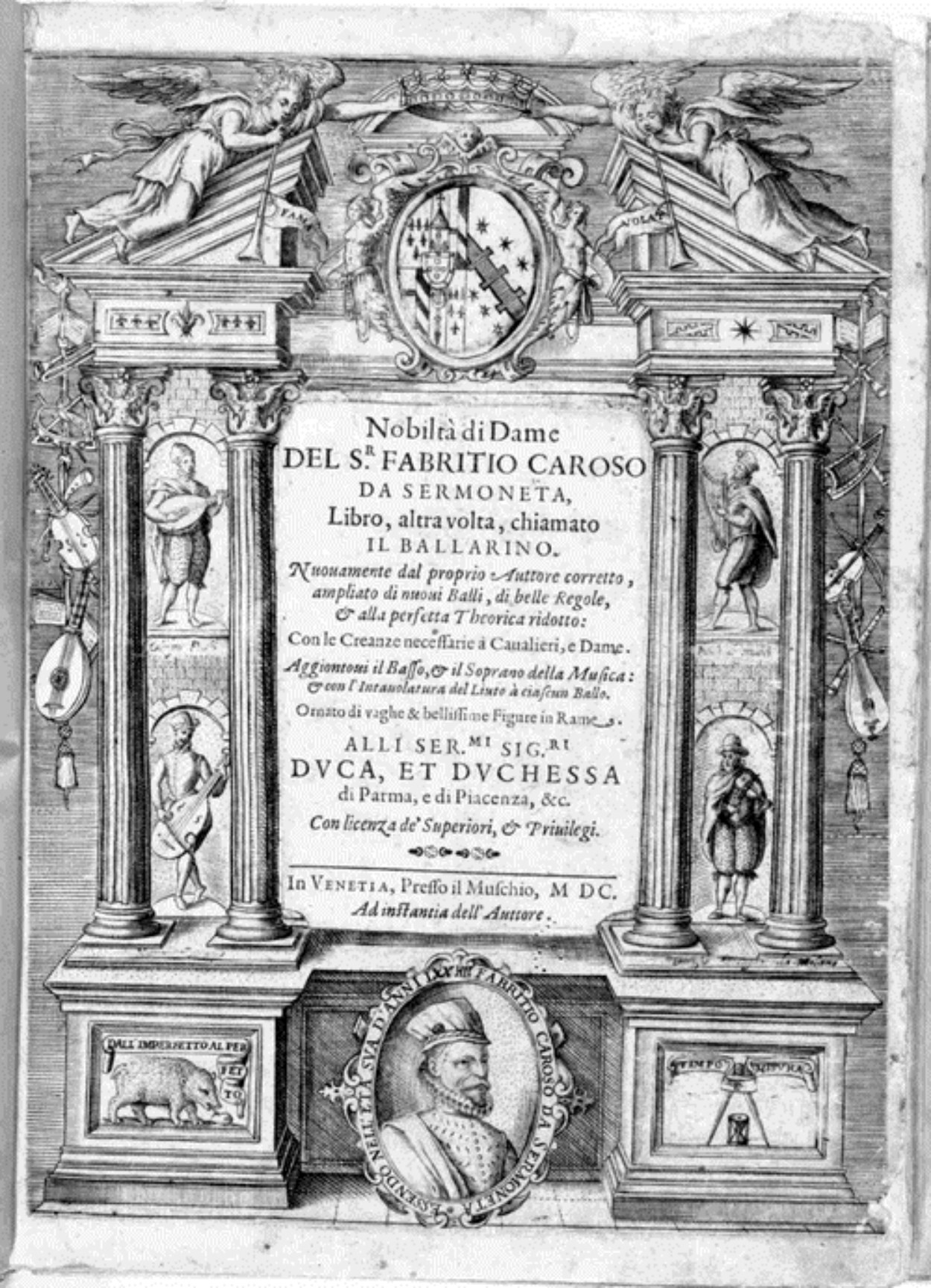
Fabritio Caroso da Sermoneta (c. 1526–after 1605) was the leading dance master of the Renaissance Italian court. Born in the Papal States, he worked in Rome and later Venice, establishing himself as the preeminent choreographer for aristocratic entertainment in late-sixteenth-century Italy. *Il Ballarino* (1581) and its expanded revision *Nobiltà di Dame* (1600) were the most widely distributed and influential dance manuals of the era, translated and adapted across Europe. Caroso's approach combined precise written notation with visual demonstration through woodcuts, creating a format that could be understood by readers across linguistic boundaries. His dances emphasized elegance, control, and the aesthetic of courtly sprezzatura — an appearance of effortless mastery — and his manuals became the standard reference for aristocratic social dance practice well into the seventeenth century.
The period
The Renaissance court dance of Italy in the 1580s was at the height of its refinement and complexity. The pavane, galliard, and volta — the dances Caroso documented — had evolved over several decades into forms of considerable technical sophistication, performed not merely as recreation but as a display of courtly virtue, education, and status. Dance was integral to courtly life: it demonstrated breeding, grace, and the ability to move in harmonious partnership with others, making it a form of social and political communication. The printing and wide distribution of Caroso's manual in 1581 coincided with the peak of Italian Renaissance court culture; the manual's influence extended northward into France and England, where it was adapted and translated, cementing Caroso's role in establishing the vocabulary and aesthetics of European court dance for generations to come. The use of woodcut as a medium for dance instruction was itself an innovation — it made choreography reproducible and portable in a way that manuscript notation alone could not achieve.
Where it lives
*Il Ballarino* is held in the Library of Congress. This particular plate (numbered 23 in the sequence) is one of thirty-eight woodcut illustrations integral to the printed manual, not a separate work of art but part of the book's apparatus for teaching dance.
Dance in this work
Questions about this work
Is this a real dance performance or a posed demonstration?
It is a posed demonstration created specifically for the printed manual. Caroso worked with dancers to show the correct position and body alignment for each step or figure in his choreography. The stillness and formality of the pose reflects the pedagogical purpose: the woodcut is meant to teach by example, showing a student the exact position they should aim to replicate. It is documentation, not a snapshot of a moment in an actual performance.
What dance is being shown?
The exact dance cannot be determined from the image alone; it depends on the text that accompanies plate 23 in the original manual. Based on the formal hand-hold and upright carriage, it is most likely an opening position from a pavane, galliard, or volta — the three principal dances of the Cinquecento court. A reader of the full manual would know which dance by consulting the facing page.
Why is the image so detailed and ornate?
The elaborate dress is historically accurate: this is how the Italian nobility actually dressed for courtly dance in the 1580s. The detail also serves a pedagogical function — it situates the dance in a specific social and temporal context, reminding the reader that these were elite forms of recreation, performed by aristocrats in formal attire. The precision of the woodcut technique allows this level of detail to be reproduced clearly across multiple printed copies.
How was this used as a dance manual?
A reader would use the text and the woodcut together. The written text (in Italian and later in other languages) would describe the steps — how many steps to each side, the direction and timing of movement. The woodcut would show the starting or key position from which those steps would be executed. By combining written instruction with visual example, a distant student could learn the dance without direct access to a master, though live instruction from a trained dance master was still considered essential for true mastery.
More Notation/Choreography artwork