49 works in this view — arrow keys or swipe to move between them.
Dance in Art
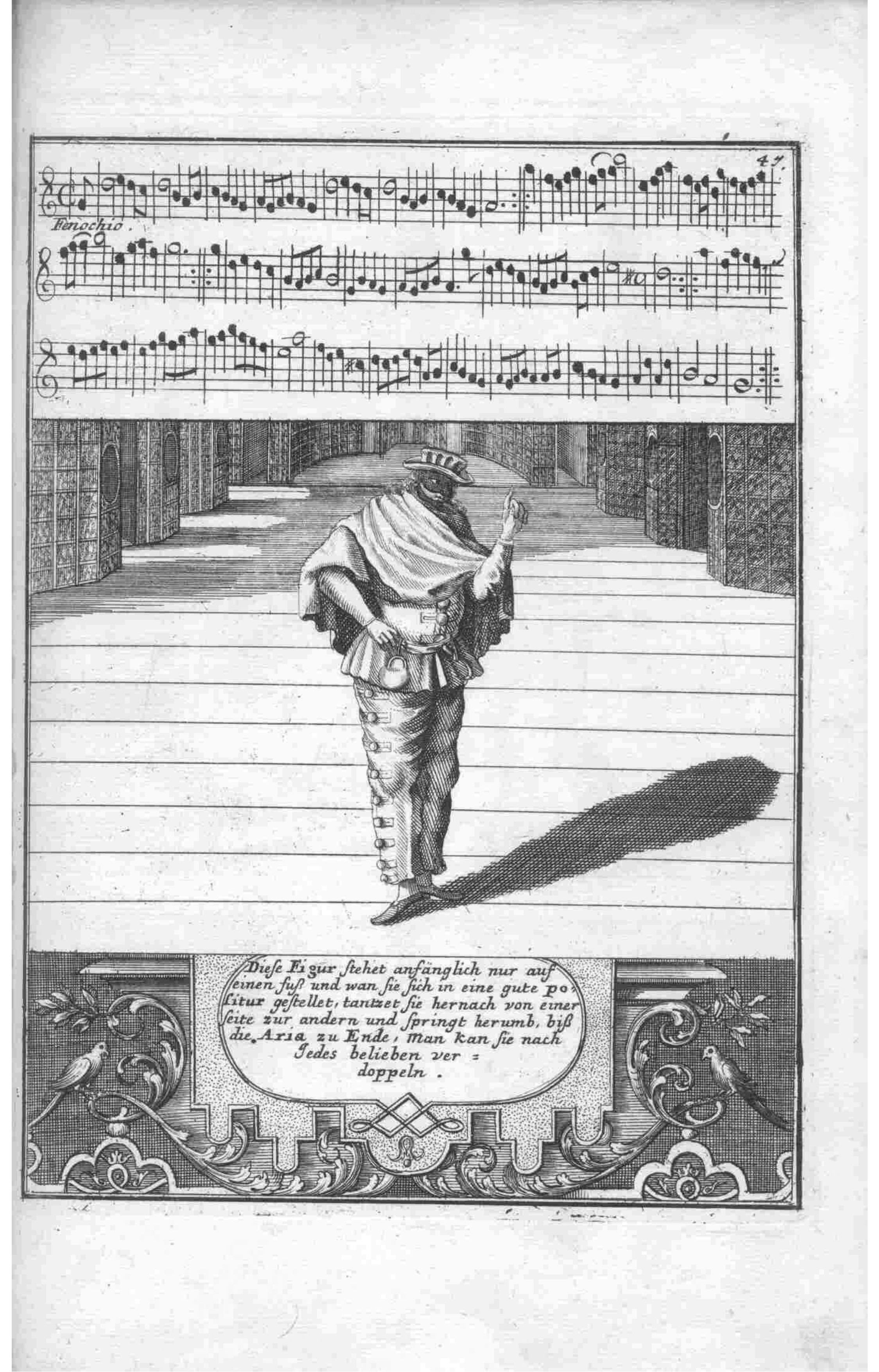
Solo Dancer — Plate 46
Gregorio Lambranzi
- Medium:
- Copper-plate engraving
- Dance:
- Notation/Choreography
- Era:
- 1700s (Enlightenment/Minuet Era)
- Collection:
- Nuova e curiosa scuola de' balli theatrali (1716)
- Source:
- Library of Congress
- Rights:
- Public domain — free to use, share and adapt.
- Recorded as:
- Public Domain
Lambranzi's plates are among the earliest illustrated records of how European theatrical dancers actually moved and presented themselves, offering visual evidence that complements surviving notations and written descriptions. For historians and performers, they clarify the physical and aesthetic values of early 18th-century courtly and theatrical dance—the posture, costume, gesture, and spatial presence that made up the lived practice of the form. And as printed objects, they reveal how dance was beginning to circulate as a subject worthy of public instruction and visual culture, not merely court privilege.
What you are looking at
A solo male dancer occupies the stage in three-quarter profile, standing in a theatrical interior suggested by draped curtains and geometric wall paneling visible behind him. He wears elaborate court dress: a plumed hat, a white cape or cloak draped over one shoulder, fitted dark breeches with visible buttons or decoration down the leg, and heeled shoes. His left arm is raised and extended, fingers spread in an expressive gesture; his right arm rests lower. The dancer's body is upright and composed, weight settled on both feet in a stable stance. The setting is plainly a raised stage, indicated by the horizontal floorboards beneath his feet and the architectural framing that suggests an interior performance space. His shadow falls sharply to the right, indicating a directional light source. Above the figure, three staves of musical notation indicate the accompaniment for this choreographed solo.
The dancing
A single male dancer in a composed, relatively still posture: feet placed firmly, torso upright, the upper body animated primarily through arm position and hand gesture. The left arm curves upward from the body with palm open; the right arm hangs lower. Neither arm is fully extended; both are curved and graceful rather than angular. His head is turned slightly to address the viewer. The stance suggests nobility and control rather than vigorous movement or virtuosity; this is an attitude of refined presentation rather than spectacular action.
The dance depicted
This is a choreographed theatrical dance from the early 18th-century European court tradition, most likely a minuet or similar courtly solo number danced as entertainment or exhibition. The figure is caught in what appears to be a moment of sustained gesture and presence—the kind of posed, dignified carriage that was central to courtly dance of this era. The musical notation above confirms this is a scored, choreographed piece, not an improvised or social dance. The setting and costume mark this as formal theatrical dance rather than court social dancing, and the pose suggests the dancer is in a moment of expressive presentation, perhaps the introduction or a sustained phrase of the piece.
How it was made
This is a copper-plate engraving, a printmaking technique requiring the image to be incised into a polished copper plate and then inked and printed. The fine parallel lines (hatching and cross-hatching) visible throughout—particularly in the curtains, clothing, and shadow—are characteristic of engraving's ability to render tone and texture through line density. This technique allowed for precise, reproducible images suitable for circulation in a printed book, making it accessible to musicians, dancers, and patrons across Europe. The clarity and detail suggest skilled execution and an intended audience of educated readers who could follow both notation and image.
About this work
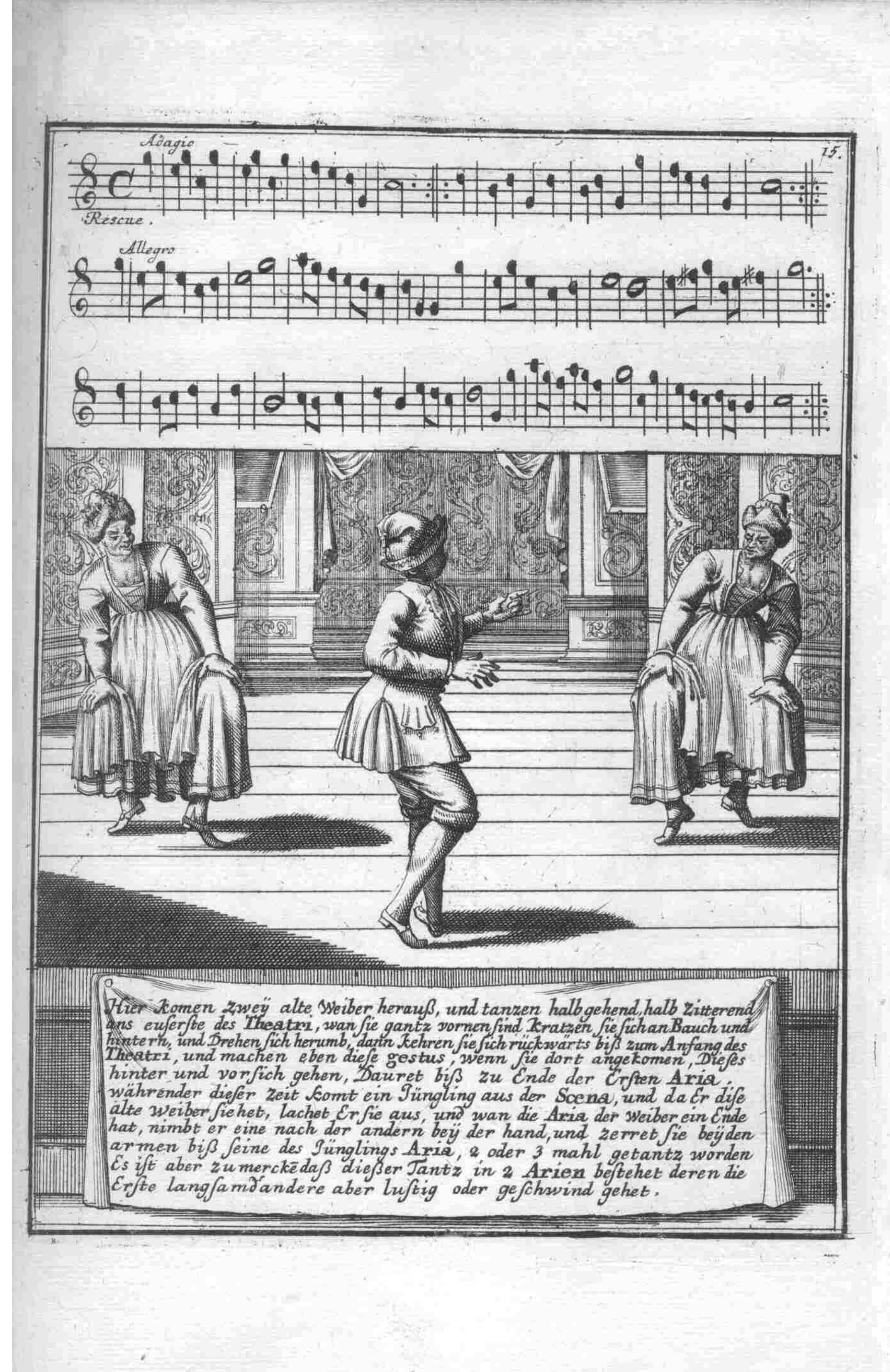
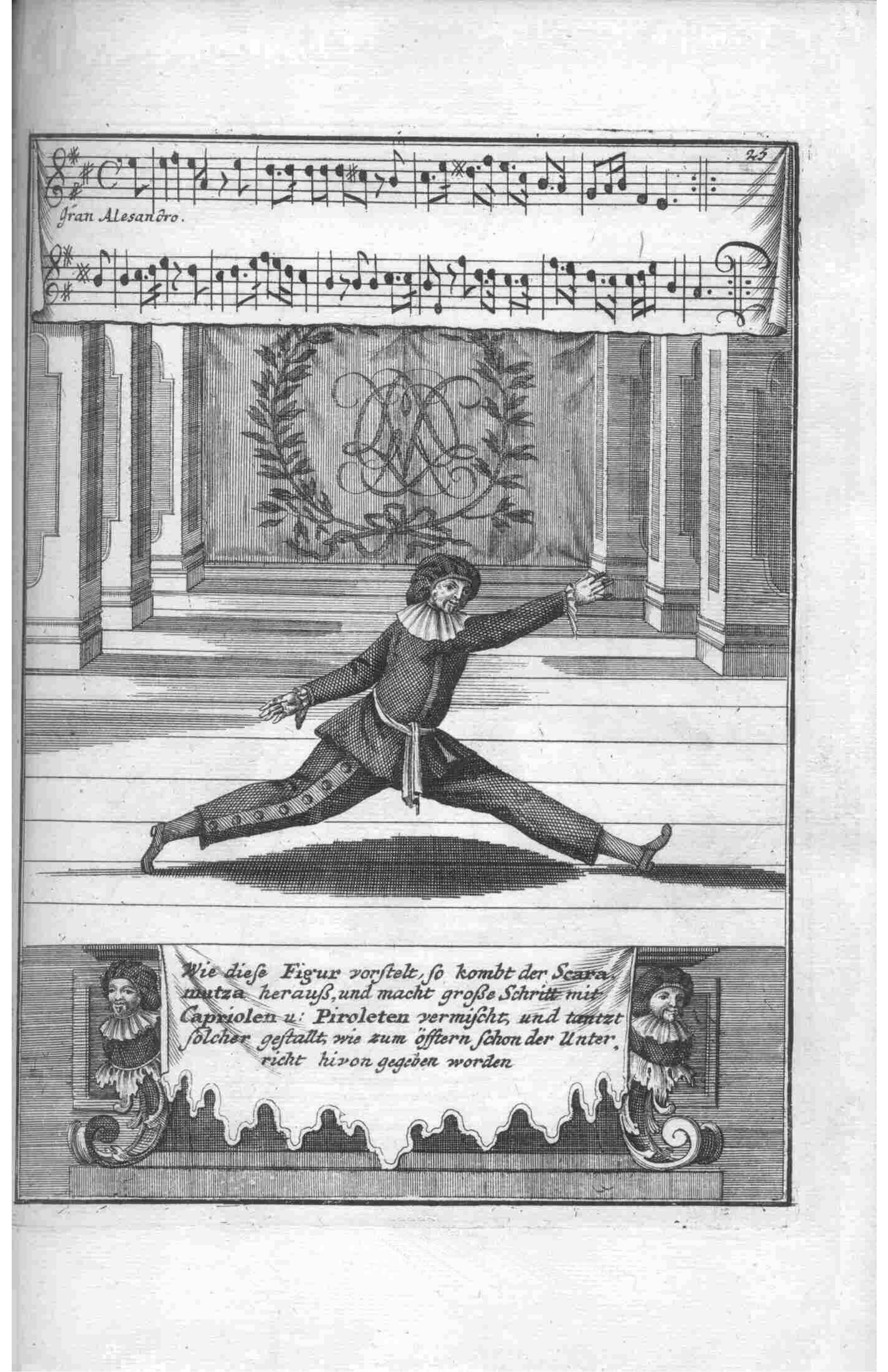
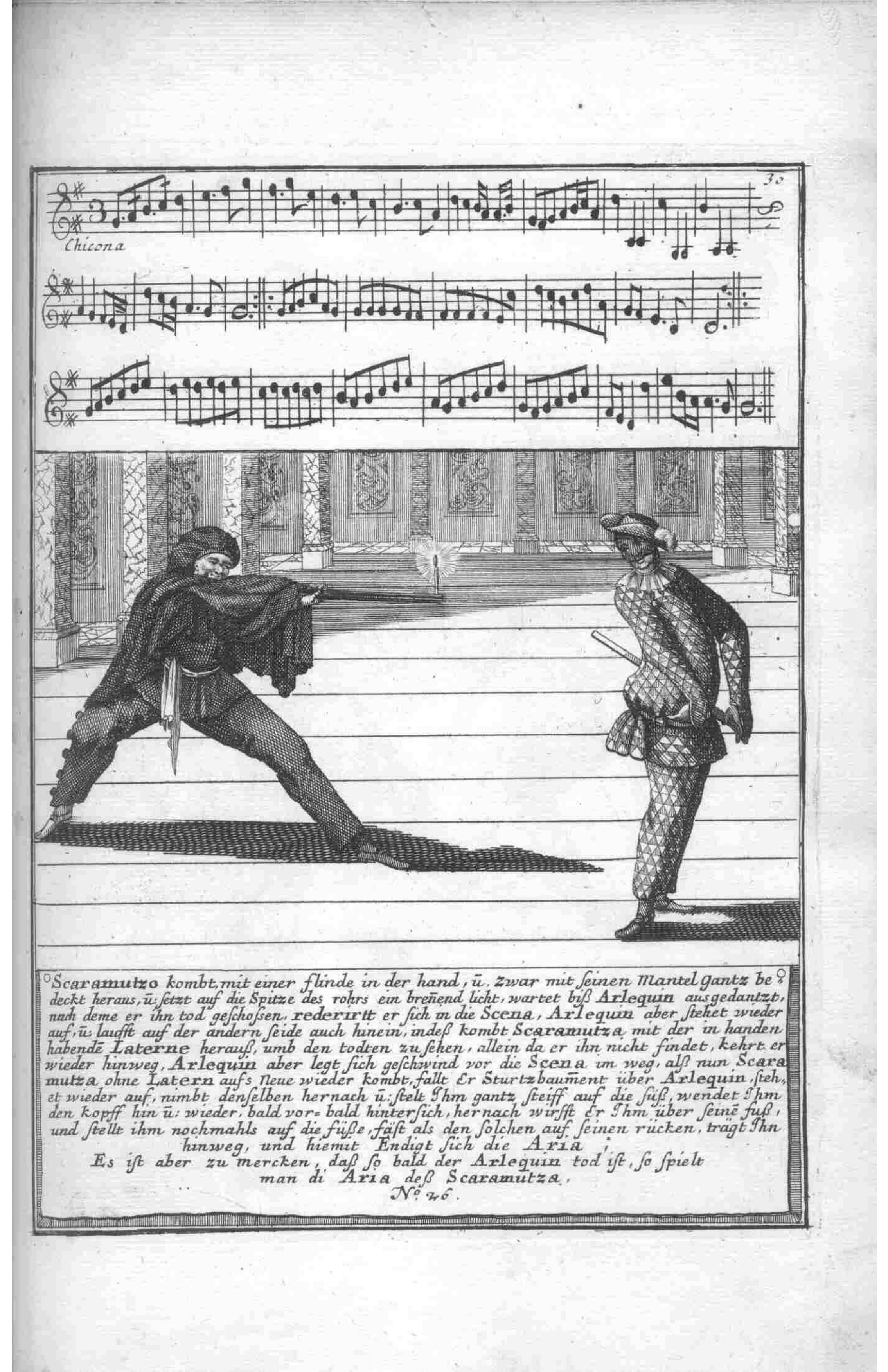
This is one of forty-six plates from Gregorio Lambranzi's *Nuova e curiosa scuola de' balli theatrali* (Nuremberg, 1716), a foundational manual of early 18th-century theatrical dance. Each plate pairs a notated musical score with an engraved figure of a costumed dancer caught in a characteristic pose, forming a visual-musical record of courtly and theatrical dance as it was performed and taught in the Germanic lands. Lambranzi's work documents the formal vocabulary of the dance immediately preceding the Classical ballet tradition: it shows us court dress, professional theatrical posture, and the refined geometry of movement that was cultivated in this period. As a printed, widely circulated object with text in German, it represents a moment when theatrical dance was codified for an educated secular audience—not merely preserved in choreographic notation for specialists, but illustrated and published to demonstrate the dignity and artistry of the dance itself.
How to look at it
Notice the dancer's stillness and composure—he is frozen not in a moment of maximal extension or obvious virtuosity, but in a poised, presentational attitude. This reflects a crucial aesthetic of early 18th-century courtly dance: elegance and nobility of carriage mattered as much as complexity of footwork, and the ability to hold a dignified pose with eloquent arm and hand gesture was a primary skill. Look at the costume: the plumed hat and draped cape mark this as theatrical rather than everyday court dress, and they frame the upper body in a way that emphasizes gesture. The musical notation above the figure invites you to hear the dance as inseparable from its accompaniment; this is choreography matched to specific music, not free movement. Compare this figure to any later classical ballet image and you will see how much the body's alignment, the arm position, and the very conception of nobility have changed.
The artist
Gregorio Lambranzi (or Lambranzi) was an Italian dance master and choreographer active in Nuremberg in the early 18th century, where he held a position teaching dance to the nobility and merchant class. His *Nuova e curiosa scuola* (1716; a second expanded edition followed in 1728) was printed in Nuremberg by the publisher Wolffgang Mauritius Endter and represents one of the most sustained and systematic attempts to document choreographed theatrical dance through the combined media of music notation and engraved illustration. The work is addressed to "anyone who loves dancing" and combines practical instruction with the visual prestige of engraved portraiture—suggesting Lambranzi understood his dancers as worthy subjects for the printmaking technologies typically reserved for nobility and important personages.
The period
This plate was made in 1716, a period of intense codification of courtly and early theatrical dance in Europe. Louis XIV's Académie Royale de Danse had been established nearly fifty years earlier (1661), and systems for notating dance were being refined and debated: Raoul-Auger Feuillet's system of choreographic notation, first published in 1700, was becoming the standard for recording and disseminating dances across Europe. Simultaneously, the minuet was becoming the dominant social and theatrical dance form across the continent, and the costume and carriage visible in Lambranzi's plates reflects this fashion. This was also a period when theatrical dance was beginning to separate visibly from social dance—dancers were increasingly professional performers in court spectacles and public entertainments rather than trained courtiers who danced as part of social ritual. Lambranzi's work documents this transitional moment, presenting theatrical dancing as a distinct and teachable art form worthy of publication and study.
Where it lives
This plate is from Gregorio Lambranzi's *Nuova e curiosa scuola de' balli theatrali*, a printed manual first published in Nuremberg in 1716. As a page from a published book, it was intended for wide circulation among musicians, dance masters, and educated patrons—not a unique object, but part of a reproducible edition. The source here is the Library of Congress.
Dance in this work
Questions about this work
Who actually danced these steps, and for whom?
Lambranzi's book documents theatrical dances performed in court spectacles and public entertainments in German-speaking territories, chiefly for noble audiences. The dancers were professional performers or trained courtiers, not the general nobility. Lambranzi himself taught in Nuremberg, so these solos likely represent the kinds of dances he choreographed for or taught to his students and patrons.
Can you actually learn these dances from the book?
Partially. The musical notation and the engraved figure show what the music was and what a characteristic moment of the dance looked like, but they do not give detailed step-by-step instructions. Lambranzi's book is best understood as a record and advertisement of dances that a reader would learn from a living teacher—the images allow you to visualize the style and carriage, but the full choreography would require a trained dance master to demonstrate.
What is the notation at the top?
That is the musical score for the dance—most likely in the system that was standard in German-speaking lands at the time, possibly Feuillet notation or a similar system. Each plate pairs a specific piece of music (often a minuet or other courtly dance form) with a visual image of a dancer performing to it, showing that the dance and music were inseparable and choreographed together.
Why engrave these instead of painting or drawing?
Engraving allowed multiple printed copies to be made from a single plate, making it possible for Lambranzi's book to reach dancers, musicians, and patrons across Europe. A painted or drawn original would have remained in one place. The fine line work of engraving also allowed for precise detail in costume and setting that would have impressed readers and lent prestige and authority to the publication.
More Notation/Choreography artwork